




Related: Fit for Duty: Training, Education Protect Pupil Transportation Against National Drug Abuse Spike
School Transportation and the Legalization of Marijuana
There is no gray area on testing, yet either willingly or unwillingly, drivers are still finding themselves on the wrong side of this issue, says Ronna Weber, a consultant working with the American Bus Association.
by Ronna Weber
June 7, 2019
As safety-sensitive employees, school bus drivers are obviously required to follow state and local laws as well as a number of federal regulations specific to their job.
Photo: File photo
3 min to read
California became the first state to legalize medical marijuana in 1996. Today, more than half of states have legalized medical or recreational marijuana, or both. While the growth of legalized marijuana may benefit those with a medical need, it complicates the landscape dramatically for others.
In response to changing state laws, the U.S. Department of Transportation (DOT) issued statements in 2009, 2012, and 2016 addressing legalized marijuana and transportation personnel. These statements definitively note that even when allowed under a state law “it remains unacceptable for any safety-sensitive employee subject to drug testing to use marijuana.”
This is important as marijuana is still classified as a Schedule 1 controlled substance under federal law. In addition, the DOT’s drug and alcohol testing regulations do not authorize “medical marijuana” as a valid medical explanation for a positive drug test result.
As safety-sensitive employees, school bus drivers are obviously required to follow state and local laws as well as a number of federal regulations specific to their job. As such, drivers are subject to pre-employment, post-accident, reasonable suspicion, and random drug and alcohol screenings. In addition, employers are required to conduct drug testing in accordance with the regulations. Clearly for employers and employees, there is no gray area on testing, yet either willingly or unwillingly, drivers are still finding themselves on the wrong side of this issue.
This issue has even found its way to the courts. The Massachusetts Supreme Judicial Court ruled in February 2019 on a case in which a driver admitted having used marijuana but disputed whether he was “legally intoxicated.” The justices recognized the following in their opinion:
“We acknowledge that it is often difficult to detect marijuana impairment because the effects of marijuana consumption vary greatly among individuals.”
In addition, the justices recognized the lack of a definitive field test for marijuana use as there is for alcohol. The Judicial Court ruled that the police could still arrest those driving under the influence of marijuana if the officer observes signs of use, as occurred in this case.
While this all seems cut and dry, it really isn’t. What happens when a driver realizes after the fact that they ate the wrong thing at a party? At a time when drivers can be hard to find, where is the line in the sand?
With advance planning, the ultimate answer is simple. Employers have the right to maintain and enforce “zero-tolerance” drug policies. And regardless of state law, employees can still be fired for off-duty marijuana use and, depending on state law, could risk losing their commercial driver’s license (CDL) for life.
So, what steps should an employer take to ensure clarity?
Maintain and consistently enforce a zero-tolerance drug policy.
Adopt a policy that prevents drivers from accepting food or drink from adult passengers.
Educate drivers that marijuana is often in baked goods or other products, making it difficult to detect.=
Encourage drivers to ask questions before they eat or drink in any situation where others contribute food.
Recognize that state laws can change, so be vigilant.
Encourage your drivers to look out for themselves and the safety of those they transport when they are on and off duty.
Practice safety first above all else.
Additionally, while we can hope that those traveling with children are not bringing marijuana with them, the responsibility lies with the employer and their employees to know the state law where they are located and those where they travel as adult passengers may not realize the laws regarding the transporting of marijuana.
Subscribe to Our Newsletter
More Safety

How to Build a Better School Bus Driver Training Program
Is it time to strengthen your driver training? Here’s how to pick the right talent and improve recruitment, retention, and safety. This video is brought to you by IC Bus.
Read More →
Recent School Bus Accidents Leave 2 Dead, 2 Injured
Four school bus crashes in Florida, Illinois, and Georgia highlight risks in transportation lots, at bus stops, and during student loading and unloading.
Read More →
Sponsored•September 8, 2026
When Every Second Matters, Clarity Keeps Routes Moving
From routine delays to urgent incidents, strong communication practices help drivers, dispatchers, schools, and families respond with confidence.
Read More →

What Happens When a School Bus Catches Fire — and What Can Help
School bus fires are rare but can be devastating. Learn how advances in fire suppression and asset protection help fleets detect fires earlier, reduce damage, and improve safety.
Read More →
Geotab Launches Tool to Help Fleets Investigate Road Incidents
Geotab Investigations combines telematics data, video, documents, and other evidence to help fleets reconstruct incidents, resolve claims, and determine what happened.
Read More →
Texas Sixth Grader Wins 2026 National School Bus Safety Poster Contest
Sai Darshana Yekolu of Moseley Middle School in Prosper, Texas, was named the newest winner for her artwork, bringing the theme of “Safe Rides, Everyday Heroes” to life.
Read More →
Sponsored•August 27, 2026
Doing More With Less: How Transportation Directors Can Prioritize Safety Amid Budget Uncertainty
With diesel prices soaring and nearly one-third of transportation directors expecting budget cuts, maintaining student safety has never been more challenging. Download this guide to learn how leading districts are prioritizing risk, funding critical safety technology, and building stronger budget cases with data.
Read More →
Walton County Schools Adds Gatekeeper Stop-Arm Enforcement System
The Florida district will deploy Gatekeeper’s updated Student Protector technology, which now incorporates AI to improve video evidence.
Read More →
How To Build a More Secure School Bus Yard During and After Hours
As thefts and overnight security threats continue, school transportation leaders are combining stronger operational practices with AI-enabled surveillance to better protect buses, facilities, and staff.
Read More →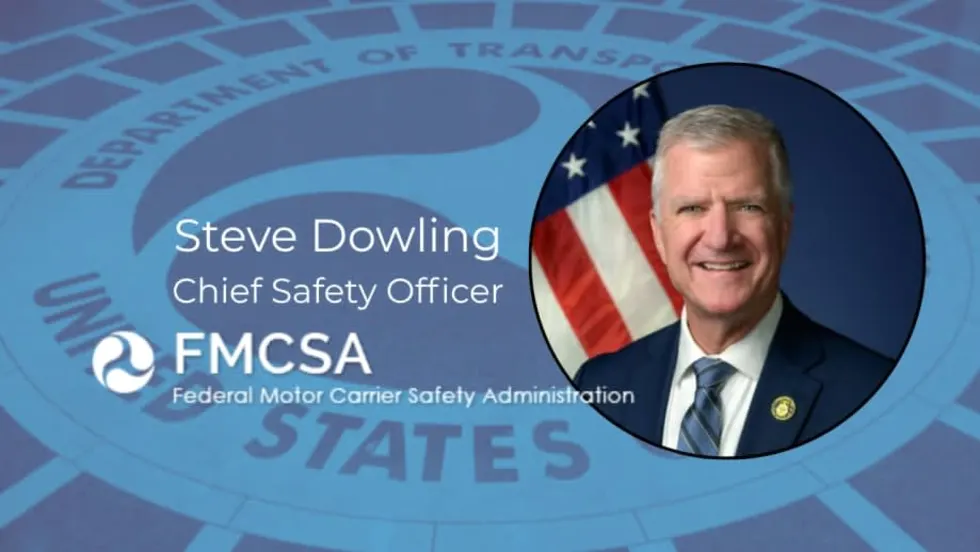
FMCSA Names New Chief Safety Officer: What School Bus Operators Should Know
Steve Dowling is set to lead the federal agency's efforts to advance commercial motor vehicle safety and reduce crashes, fatalities, and injuries on the nation's roadways.
Read More →