




School Bus Fires Highlight Need for Preventive Measures
With a rash of blazes in recent months — one fatal — pupil transportation officials boost inspection and replacement of older buses. Evacuation drills and fire suppression also come into focus.
Getty image © sandsun
Getty image © sandsun
Getty image © sandsun
Getty image © sandsun
There has been no shortage of school bus fires in the news lately. Reports in the past few months have included:
• An empty school bus in Massachusetts caught fire while warming up.
• School buses in Alabama and South Carolina caught fire while students were on board (all were safely evacuated).
• Tragically, a school bus in Iowa caught fire and took the lives of its driver and a student.
In fact, in the U.S., between one and two school bus fires occur every day, according to a 2016 study by the John A. Volpe National Transportation Systems Center, titled “Motorcoach and School Bus Fire Safety Analysis.”
The reasons for the fires seem endless: turbocharger, engine, and mechanical failures occur; wires loosen or rub against engine parts; old parts lose their integrity; tires explode; circuit boards become overloaded; and leaks release inflammatory fluids.
Fortunately, few injuries or fatalities have resulted from the fires. From 2006 to 2010, bus and trackless trolley fires caused an average of 22 injuries a year and less than one fatality a year, according to the National Fire Protection Association.
However, given the prevalence of school bus fires, it’s imperative that pupil transporters take every precaution to keep them to a minimum — a task that requires constant vigilance, updating school bus safety procedures, maintaining equipment, and training.
“There’s no magic bullet to preventing school bus fires,” says Max Christensen, Iowa’s state director of pupil transportation. “Rather, it’s a series of small measures that can lower the number of school bus fires and, when they do happen, ensure no one is hurt.”
Troubleshooting
Inspection and maintenance are the backbone of school bus fire prevention, and that’s the first thing the South Carolina Department of Education (DOE) addressed when its school buses started catching fire more frequently.
“With the uptick in fires and issues, we did a complete review of the fleet immediately,” says Ryan Brown, the South Carolina DOE’s chief communications officer.
Following the top-to-bottom inspections, buses with equipment or mechanical problems were repaired or taken off the road immediately, Brown says.
South Carolina also upped its inspection schedule. While it normally inspects buses five to seven times a year, it made seven inspections a year mandatory for its fire-prone 1995 and 1996 rear-engine buses. The state also brought in an outside automotive engineering company and engineers from the bus manufacturer to review its maintenance and safety procedures.
“You don’t want people grading their own practices,” Brown says. “It was important to have the manufacturers, their engineers, and a third-party opinion validate our practice.”
In North Carolina, the Department of Public Instruction (DPI) also intensified its inspection and maintenance procedures after recent school bus fires. DPI issued a memo directing counties to reinspect every model year 1998 to 2003 bus with a Caterpillar engine and, if needed, repair them.
The North Carolina DPI memo further said that inspectors performing 30-day inspections should pay close attention to the battery wire on a bolt that goes through the fire wall on FS-65 chassis Freightliners, and to be on the lookout for oil and fluid leaks.
Driver inspections are also crucial in preventing school bus fires. After the Iowa fire in December, Christensen stressed that the state’s school bus drivers should conduct thorough inspections of their buses before every trip, checking for leaks; ensuring that all exits operate correctly; and making sure that all emergency equipment is current and close to the driver.
“With the uptick in fires and issues, we did a complete review of the fleet immediately.” Ryan Brown, chief communications officer
South Carolina Department of Education
Taking Pre-Emptive Action
The best way to handle school bus fires is to extinguish them immediately, and that’s where fire suppression systems come in. When the temperature reaches a certain degree, the fire suppression system releases a mist or powder that extinguishes the fire. It also alerts the bus driver that there’s a fire, though in some cases the alert may be an afterthought.
“There may be a bus fire, but it’s put out before the driver’s aware there’s a bus fire,” says Brette Fraley, executive director of transportation for Kanawha County Schools in Charleston, West Virginia.
Kanawha County Schools has already installed Fogmaker fire suppression systems on all its special-needs buses and is currently putting them on its rear-engine buses as well. Fraley says that the systems give students with disabilities the extra time they may need to evacuate a bus. For rear-engine buses, he adds, the systems can put out a fire that the driver might be unaware of.
The fire suppression systems also make economic sense, according to Fraley. The systems that Kanawha County Schools has implemented cost $2,650 per bus, and they are guaranteed for 10 years and are interchangeable between buses. The cost to recharge a canister is $1,500.
“Every time a bus burns, the taxpayers have lost a $100,000 asset,” Fraley says. “Given that, $2,650 is not a big deal. … [Fire suppression systems] are a good insurance policy.”
To prevent school bus fires, the South Carolina DOE, too, took preventive action. It installed heat sensors, which alert the driver anytime a bus overheats, in all the engine compartments of its 1995 and 1996 buses.
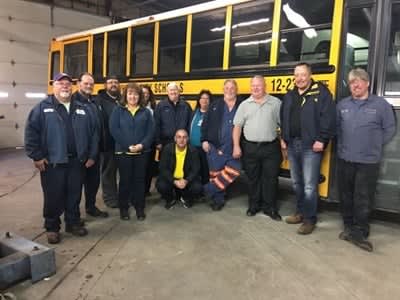
Kanawha County Schools in West Virginia has been equipping buses with Fogmaker fire suppression systems. Seen here, maintenance staff and supervisors went through training during installation.
Replacing Aging Buses
While the South Carolina DOE has taken steps to prevent fires on its older, problematic Type D rear-engine buses, the real solution is replacing them, according to Brown.
“Some design flaws exacerbated other problems in terms of structural and mechanical issues,” he says. “Those are the buses ending up in actual fires. Those are the ones we’re pushing to get off the roads as quickly as possible.”
As replacing buses comes with a hefty price tag, the South Carolina DOE is buying many of its new school buses with a master lease program. Rather than spending at least $20 million upfront for new buses, the DOE buys new buses with a loan secured by the treasurer’s department and makes annual payments on each one for five years. Brown says the bank will secure the loan as long as the DOE gets recurring funding from the South Carolina General Assembly. The DOE hopes to use the lease-to-own model for the majority of its school bus purchases in the future.
“The master lease program allows us to get many more buses, and we can get them on the road as quickly as possible,” Brown says.
He adds that the new buses will have significantly lower maintenance and fuel costs and will be outfitted with state-of-the-art safety features.
Real-World Practice
School bus drivers also play an essential role in ensuring that students safely evacuate the bus in case of a fire or other emergency. Simply put, this is a skill best taught by doing.
Kanawha County Schools provides such training to its school bus drivers. In addition to lectures and videos, the district’s drivers get hands-on experience. After a safety supervisor demonstrates the procedures, the drivers, while videoed, perform the evacuation process on a bus fitted out for safety instruction. Then the drivers watch themselves in action.
“The camera is a good training tool,” Fraley says. “The drivers watch what they did in the training exercise. Then they can discuss the process, what went wrong, and ask questions.”
Also, school bus evacuation drills can make a world of difference in preparing students to safely escape a burning bus. Christensen, the Iowa state director, says that a fully loaded school bus can be evacuated in under a minute if the students have practiced evacuation drills.
During the drills, students should learn:
• When to evacuate a bus.
• The types of evacuations (front, rear door, roof, and side window).
• The importance of evacuating in a calm and orderly fashion.
• How to operate emergency equipment and open the emergency exits.
• Where to go and what to do once the bus has been evacuated.
In addition, older students should be designated to help the young ones in an emergency evacuation. Finally, the students should perform an actual evacuation.
“The speed of the evacuation and the safety of the children involved are directly related to how well they have been trained,” Christensen says. “Performing the drills on a regular basis and educating the students as to how to do it correctly is so very important.”
More Safety

How to Build a Better School Bus Driver Training Program
Is it time to strengthen your driver training? Here’s how to pick the right talent and improve recruitment, retention, and safety. This video is brought to you by IC Bus.
Read More →
Recent School Bus Accidents Leave 2 Dead, 2 Injured
Four school bus crashes in Florida, Illinois, and Georgia highlight risks in transportation lots, at bus stops, and during student loading and unloading.
Read More →
When Every Second Matters, Clarity Keeps Routes Moving
From routine delays to urgent incidents, strong communication practices help drivers, dispatchers, schools, and families respond with confidence.
Read More →

What Happens When a School Bus Catches Fire — and What Can Help
School bus fires are rare but can be devastating. Learn how advances in fire suppression and asset protection help fleets detect fires earlier, reduce damage, and improve safety.
Read More →
Geotab Launches Tool to Help Fleets Investigate Road Incidents
Geotab Investigations combines telematics data, video, documents, and other evidence to help fleets reconstruct incidents, resolve claims, and determine what happened.
Read More →
Texas Sixth Grader Wins 2026 National School Bus Safety Poster Contest
Sai Darshana Yekolu of Moseley Middle School in Prosper, Texas, was named the newest winner for her artwork, bringing the theme of “Safe Rides, Everyday Heroes” to life.
Read More →
Doing More With Less: How Transportation Directors Can Prioritize Safety Amid Budget Uncertainty
With diesel prices soaring and nearly one-third of transportation directors expecting budget cuts, maintaining student safety has never been more challenging. Download this guide to learn how leading districts are prioritizing risk, funding critical safety technology, and building stronger budget cases with data.
Read More →
Walton County Schools Adds Gatekeeper Stop-Arm Enforcement System
The Florida district will deploy Gatekeeper’s updated Student Protector technology, which now incorporates AI to improve video evidence.
Read More →
How To Build a More Secure School Bus Yard During and After Hours
As thefts and overnight security threats continue, school transportation leaders are combining stronger operational practices with AI-enabled surveillance to better protect buses, facilities, and staff.
Read More →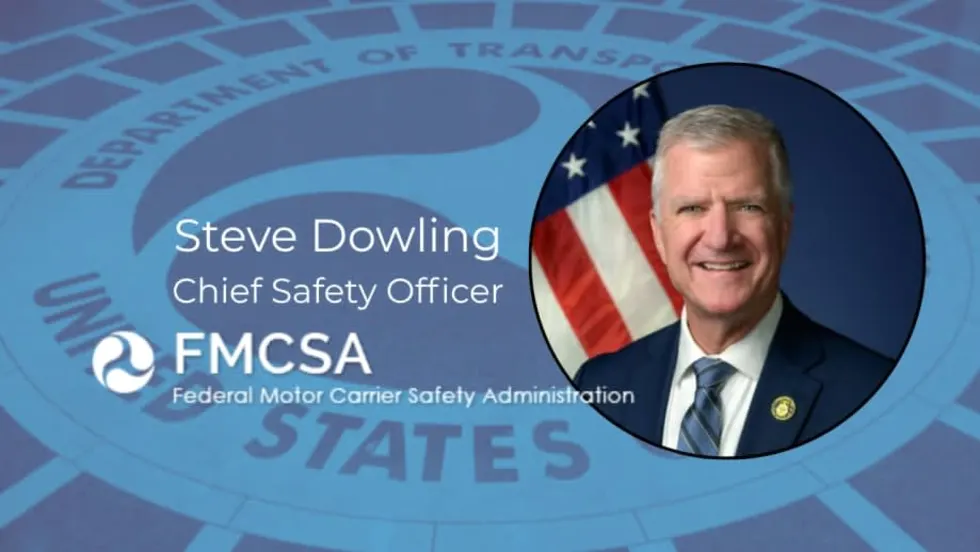
FMCSA Names New Chief Safety Officer: What School Bus Operators Should Know
Steve Dowling is set to lead the federal agency's efforts to advance commercial motor vehicle safety and reduce crashes, fatalities, and injuries on the nation's roadways.
Read More →