




Roof Strobes Draw Crucial Attention
Being large and yellow, school buses are inherently some of the most noticeable vehicles on the road. But in certain conditions, such as inclement wea...

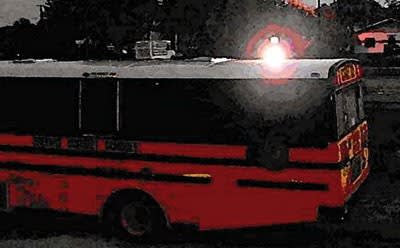
Being large and yellow, school buses are inherently some of the most noticeable vehicles on the road. But in certain conditions, such as inclement weather and low light, some added conspicuousness can help other motorists see the bus in time to stop safely, preventing collisions and illegal passbys.
The myriad lights required on school buses are key deterrents for these incidents. But one type of light not always found on school buses is the roof-mounted strobe.
These strobes are positioned on the longitudinal centerline of the roof, usually close to the rear but sometimes in the front. Their lenses are typically clear or amber, and the lights have an output of around 10 joules. Their intense flashing action can be another effective element in bolstering safety.
Attracting attention
Some operations, such as Henry County School System in McDonough, Ga., have roof-mounted strobes turned on whenever the bus is in transit. Beverly Skipper, director of transportation at Henry County, says that the frequency of accidents in which school buses are rear-ended by other vehicles has dropped significantly since the state included the strobes in its bus specifications.
"We still get those types of accidents, but they're not as common as they used to be," Skipper says.
The district has found the strobes to be particularly effective in foggy and smoky conditions. Skipper says that the relatively low cost of the units — about $100 per bus in Henry County's experience — is well worth the added safety they provide.
Skipper recommends that any school bus operation not already using the strobes look into them. "It is worth installing them, because they do save lives," she says.
Iowa Park (Texas) Consolidated Independent School District requires its bus drivers to run their strobes at all times. The policy was adopted at the request of the local police department.
Kent Chapman, who handles fleet maintenance and dispatching at the district, says the strobes' benefit is clear. "It's an attention-getter — it makes [motorists] aware that there's a vehicle ahead that is probably traveling slowly," he says.
Donna Sullivan, assistant director of transportation at Manhattan-Ogden (Kan.) Public Schools, says that her operation quickly saw the benefit of roof strobes after equipping their fleet a few years ago. "We always keep track of stop-arm violations, and there was a significant drop after we put strobe lights on the buses," Sullivan says.
State by state
Regulations on roof-mounted strobes vary by state. In a survey of state directors of pupil transportation, SBF found that at least 17 states require the strobes on school buses (42 of the 50 states responded). The other 25 states that responded allow the strobes but don't require them.
Several of the states that require the strobes said that they began doing so within the past 15 years.
Mike Simmons, state director in Arkansas, says that the state's School Bus Safety Act of 1995 mandated that all school buses be equipped with a strobe as well as a crossing arm beginning July 1, 1997.
In other states, buses manufactured after a certain date must have a strobe. Delaware, for example, requires buses built after Jan. 1, 2001, to be equipped with a strobe.
Ron Love, state director in Delaware, says that the state decided to follow the strobe usage recommended by the 2000 National School Transportation Specifications and Procedures. The specs call for a white strobe to be wired to activate "when the amber alternately flashing signal lamps are activated, continuing through the full loading or unloading cycle, with an override switch to allow activation of the strobe lamp anytime for use in inclement weather." A pilot lamp in the driver's area indicates when the strobe is in use.
State specs often call for the strobes to be mounted on the longitudinal centerline in the rear third of the roof, but some states allow them near the front as well. Mississippi gives bus operators the option of installing a strobe above the driver's head area or near the rear.
Maine allows both forward and rear roof-mounted strobes, and they can be white or red as long as both are the same color. Some other states allow or specify amber for strobe color.
Though all of the states responding to SBF's survey allow the strobes, some have restrictions on when they can be used. In California, school bus drivers may only use the strobes when visibility is reduced to 500 feet or less due to such atmospheric conditions as fog, rain, snow, smoke or dust. The conditions do not include the darkness between a half-hour after sunset and a half-hour before sunrise.
In Michigan, school bus drivers may only use the strobes during inclement weather, loading or unloading of passengers, hindrance in visibility of the bus or, unlike California, a half-hour after sunset until a half-hour before sunrise.
Some states that don't require the strobes still see widespread use of them. For instance, Indiana doesn't have a strobe mandate, but state director Pete Baxter says that a survey in 2000 found that about 78 percent of the state's school buses were equipped with them.
The strobes are also not required in New York, but state director Marion Edick says that the purchase of them is an aidable expense. "Our program office opinion [of the strobes] is favorable," Edick says. "They are especially good in fog and winter storms."
Strobe specifics
A number of companies supply roof-mounted strobes for school bus applications.
Aeroflash Signal has been making strobes for school buses since the early 1980s. Currently, the low-profile M420 and the M100 are the company's more popular offerings for pupil transporters. Most opt for a 10-joule output, and some order optional branch guards for added protection.
Heavy Duty Bus Parts offers several strobe models from different manufacturers, but its most popular unit is its own HDBP model. The 12-volt, self-contained strobe is about 4-1/2 inches tall and 6-3/4 inches in diameter. The strobe can be set to double- or quad-flash. It double-flashes 40 times per minute.
SoundOff Signal supplies school bus operators with strobes that are designed for heavy-duty use. Most states specify a low-profile, 4-inch dome with a branch guard and a clear lens for white light output when ordering from SoundOff. The company's most commonly used model is the 3107LCC, but the 7202LCC is often chosen for maximum light output.
Specialty Manufacturing supplies low- and high-profile strobes in energy levels ranging from 10 to 18 joules. They are fully encapsulated for protection against weather conditions, and their rugged aluminum bases provide vibration resistance and heat dissipation. The strobes single- or double-flash and are available with amber, clear, red, blue or green lenses.
Weldon Technologies offers its 7150 series 360-degree strobe. The unit is available in a low- or high-profile size (4.8 or 6.7 inches). The strobe functions in 12 to 14 volts. Its base, which can be die cast or polycarbonate, mounts with three screws. Lenses are available in red, amber or clear.
More Safety

HopSkipDrive Reports Progress on Safety Advisory Council
More than a year after forming the council, independent safety experts have helped shape new rider-safety features and policy progress, with a new goal to address rider behavior.
Read More →
What the 2026 National School Bus Safety Month Resolution Means for Student Transportation
The bipartisan resolution highlights illegal school bus passing, student safety during loading and unloading, and the need for driver training and public education.
Read More →
School Bus Stop-Arm Violations Decline 53% Across Verra Mobility Programs
Verra Mobility shares how school bus stop-arm cameras and school zone safety programs are changing driver behavior, reducing violations, and protecting students.
Read More →
Most Bus Crashes Aren’t Your Fault. Here’s How to Prove It.
A guide for what to do in between a school bus crash and a claim: what to preserve, who to notify, and how to keep the facts available when they matter.
Read More →
National School Bus Safety Week 2026: Tips, Toolkits & Resources to Keep Students Safe
School bus safety takes more than awareness. Explore expert tips, enforcement strategies, and free resources to help protect students on every ride.
Read More →
2 Killed, Dozens Injured in Florida School Bus Crash
A multi-vehicle collision caused a Polk County school bus carrying 37 students to overturn on its way to Winter Haven High School.
Read More →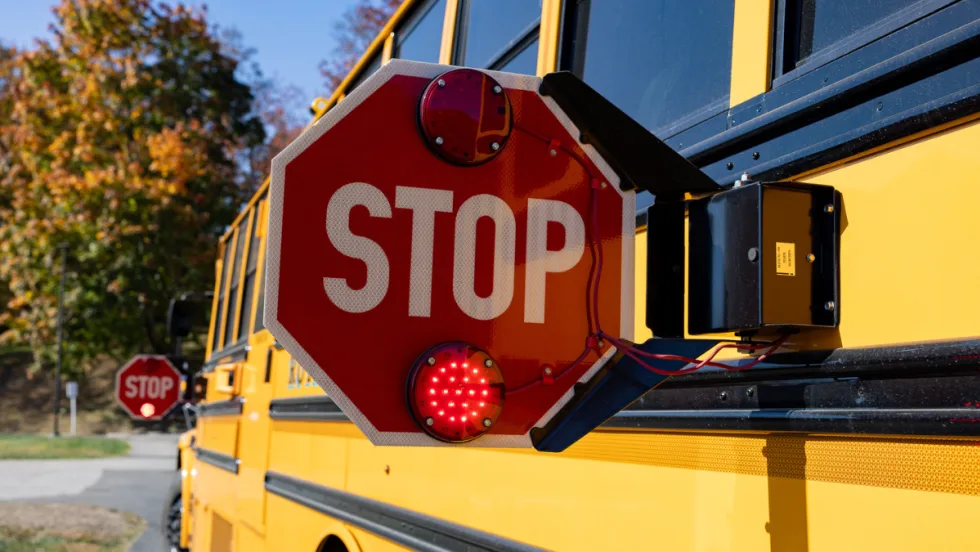
Illegal School Bus Passing Drops 24% in New York Districts
With fewer than 5% of citations involving repeat offenders, Westchester County officials said enforcement, education, and community partnerships are helping change driver behavior.
Read More →
School's Back. Here's What Happened to Traffic, Speeding & Distraction
What happens to traffic when school resumes? New data analysis examines changes in distracted driving, congestion, and speeding around schools.
Read More →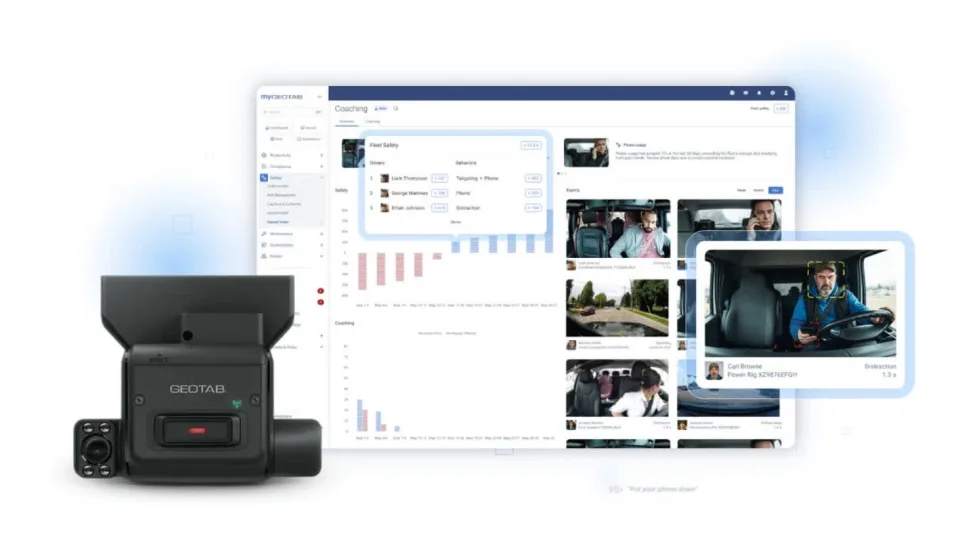
Geotab Expands Fleet Safety Tools With Video Coaching, Risk Insights
New safety and video capabilities aim to help fleet managers assess risk, support drivers, and take targeted action through video coaching, red-light violation detection, and more.
Read More →
How to Build a Better School Bus Driver Training Program
Is it time to strengthen your driver training? Here’s how to pick the right talent and improve recruitment, retention, and safety. This video is brought to you by IC Bus.
Read More →