




Rising costs, security and bus eligibility cuts are key issues
Having held a variety of leadership roles in the industry, Don Carnahan brings diverse insight to his second term as president of NAPT. Here, he shares his perspectives on changes and challenges in pupil transportation.

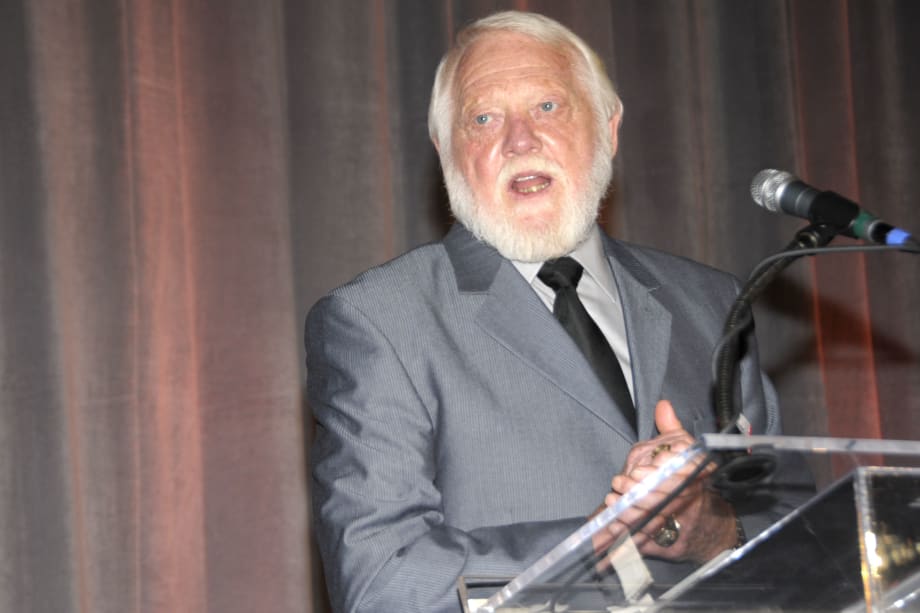
Don Carnahan’s second term as NAPT president began in October. The first was 1997-99. Photo by Jaime Gallego.
Fourteen years after concluding his last presidency of NAPT, Don Carnahan has taken the reins of the association for another two-year term.
Carnahan, who is vice president of business development in pupil transportation for Zonar Systems, has had one of the more diverse careers in the industry.
During his previous term as NAPT president, 1997-99, he was a regional director for school bus contractor Laidlaw. Before that, he served as state director of pupil transportation in Washington. He also chaired the 11th National Congress on School Transportation in 1990.
SBF Executive Editor Thomas McMahon spoke with Carnahan about his new term as president, how the industry has changed since his last term, and current issues impacting the transportation of students.
SBF: What are some of your key goals as you start this term as president of NAPT?
DON CARNAHAN: The first thing I want to say is that NAPT as an organization has an excellent staff and an excellent executive director. It’s not like there’s anything that’s broken that needs to be fixed. So I think in a nutshell, I would say that my first goal is to try to do everything I can as president to make it as efficient and effective as possible for the NAPT staff to do their jobs.
There is a strategic plan in place, and one of my major goals is to try to figure out ways to more efficiently and effectively get the board interaction to make it easier to accomplish those goals and objectives.
That being said, one of the things that I really want to try to do is to get all of the organizations in the industry to work a little more cooperatively together on getting the industry messages out there so that it will have some impact on the public. We do a pretty good job of preaching to the choir and talking to ourselves about what we do, but I’m hoping that we can figure out some way to do a better job of communicating that to the public at large and to the rest of the education community. I think it’s important that we figure out a way to do that, because it certainly doesn’t have the desired impact if we just talk to each other — especially if we’re just complaining about how things are.
You served as NAPT president before. What are some ways that the industry has changed since then, and what remains the same?
There’s always been the need and desire for more resources, because it’s a state-funded activity. And different states at different times go through different gyrations in terms of their ability to fund their state obligation. So I think the whole idea of the funding mechanisms that the school systems rely on for resources is pretty much the same. It may be a little worse now, just because money is tight everywhere.
Back when I was president the first time, ‘97-99, we were always dealing with fuel prices. They’d go up and up and up, and about the time somebody figured out a way to deal with it, maybe adjusting the funding level, then they’d go back down. So nobody did anything. It was kind of a self-correcting issue before anybody stepped in and provided the financial resources to make up for the shortfall.
[PAGEBREAK]
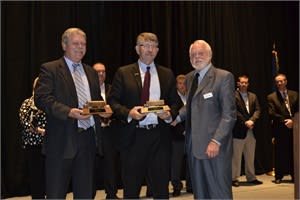
At the 2013 NAPT Summit, Carnahan (right) presented the American School Bus Council’s School Bus Champions award to Washington State Superintendent Randy Dorn (center) and his chief of staff, Ken Kanikeberg. Both have been instrumental in increasing pupil transportation funding and protecting regional coordinator positions.
One thing that seems to be the case now: I don’t know that fuel prices are really going to go down anymore. I think there are initiatives at work that want to keep the price of fuel as high as it is now, and that’s frustrating because I think that there are things we could be doing in this country that would help supply. Even though it’s a global system, supply and demand still has an impact on the pricing of things. Until we have a surplus, or all of it that we want, I think that we’re going to be stuck with high prices.
To be honest, if somebody could figure out a way to lower the cost at the well or at the pump, I’m afraid the government would tax something on it to make up the difference to keep [the price] up where it is right now.
Back in ‘97, there were ideas about alternative power sources and energy sources for making school buses do what they need to do, and none of them were working out very well. At the time, I don’t think they were necessarily engineered for student safety to the level that they needed to be compared to the existing power mechanisms. But we’re seeing a lot more going on now with alternative energy sources for powering the school buses.
Another change is that we have increasing bus prices that are just crazy. Whether it’s a clean air requirement or this or that, you just can’t manufacture a school bus at the reasonable prices that school districts were buying them for back in ‘97-99. Since then, the prices have gone up dramatically just on the clean air requirements. I think that the absolute cost of a school bus is a bigger factor in the cost of doing business than it used to be, and I don’t see that changing. And it’s not the fault of the manufacturers. It’s just the cost of doing business and the cost of what it takes to build a compliant vehicle.
We were dealing with school districts keeping buses longer than they should have, back when I was president before, and I know that at that time everybody was thinking, “Oh, we’ve got to get rid of those pre-77 school buses so that they meet the current safety standards.” I don’t know if anybody has any school buses that old anymore. Now, there’s a push to get rid of the buses that don’t meet the current clean air standards. But because the buses cost so much, that’s not easy to do.
Now, I don’t have any statistics on what’s going on with school bus replacement activities. When I was a state director, I could give you down to the gnat’s eyebrow how many old buses there were and whether school districts were on school bus replacement cycles that made sense so that they were operating a modern fleet. Because of the cost of school buses and just the financial resources that are available, I think there’s probably still a problem with people not replacing their school buses as regularly as they should.
[PAGEBREAK]
The other thing that has really impacted the industry was the 9/11 experience. That kind of upset the whole apple cart in terms of what you need to be concerned about to just be safe in general, and the different things that you need to do for security and safety, and the different kinds of things that you need to be looking out for. [The Department of] Homeland Security has done a pretty good job of offering programs that try to make people more alert about things that are going on. But it doesn’t look like crazy activities are ever going to stop. Whether it’s somebody that wants to hijack a school bus and take hostages to make a point, or whether it’s coming from terrorist activity or some idiot, it has become a more prevalent problem that we as an industry need to be aware of and deal with, and we’re planning on doing that.
The safety and security committee that NAPT has fired up is alive and well, and we’re trying to figure out what kind of protocols need to be put together for best practices in dealing with [security issues]. That’s definitely different than it was back when I was president before.
You’re probably one of the few NAPT presidents who has been a state director and worked on the contracting side as well. Do you see that kind of broad experience as giving you an advantage in leading the association?
I do think it helps. One of the things that everybody’s guilty of is this “us and them” and “they do what they do and we do what we do” [mentality]. I think that from my experience, I can see all of the common elements, and when you look at all the common elements, there are more similarities than there are differences. I have an appreciation for what it’s like to be in the shoes of a state director and how state directors need to think about different things that NAPT needs to be talking about. And the same thing for the contractors.
If there is ever any kind of an attitude to form an opinion about what other people might think about an issue, I think I probably have a better perspective about what the other groups’ opinions would be on it. And that’s why I made the point that I did before about how it’s important that we get all of the players together on as many things as we can, for the survival of the industry.
You’ve expressed concerns about cuts in student eligibility for riding the school bus. Is that still a big issue?
Yes, it is. We’re going to do as much as we can to get the word out so that the eligibility to ride a school bus isn’t something that is eliminated lightly by [school] boards.
I certainly hope that we can influence our own people that are responsible for running the program to cherish that student eligibility as something that is important to their mission, rather than it be their first stroke of a brush in trying to save money.
It’s still a problem. Hopefully we can figure out a way to turn it around. I don’t know if we can do that or not, but I’m sure that some of the people that have made those decisions have made it in a crisis mode. I’m optimistic that things aren’t going to stay in a crisis all the time. It should be on everybody’s mind that they need to increase the eligibility for the school bus to provide the safest way to and from school that can be provided. And I think that should be one of our goals and our mission.
More Management

EverDriven Launches Route Consolidation Calculator to Estimate Diesel Savings
As diesel prices hit record highs, the largest alternative transportation provider says a 10% route consolidation could save a 120-route district more than $78,000 a year in fuel alone.
Read More →
Zum Secures Continued Financing Support for School Bus Expansion
Generate Private Credit has financed approximately $75 million in school bus deployments across three states, supporting more than 500 buses as Zum expands across the county.
Read More →
Beyond Discipline: A Different Approach to Student Behavior on the Bus
After implementing a dean of students program in Oregon, North Clackamas is seeing positive improvements. Here’s how it worked. The Route is brought to you by IC Bus.
Read More →
A Dean of Transportation's Different Approach to Student Behavior on the School Bus
After implementing a dean of students program in Oregon, North Clackamas is seeing positive improvements on the bus. Here’s how it worked.
Read More →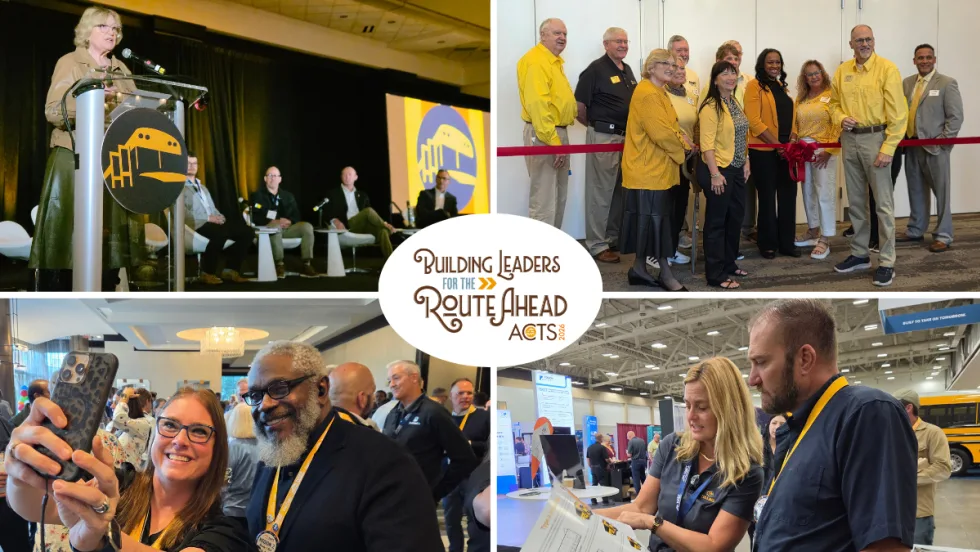
Inside NAPT ACTS 2026: Highlights from Louisville
From federal updates and student behavior strategies to new school bus technology and industry awards, see highlights from NAPT ACTS 2026 in Louisville.
Read More →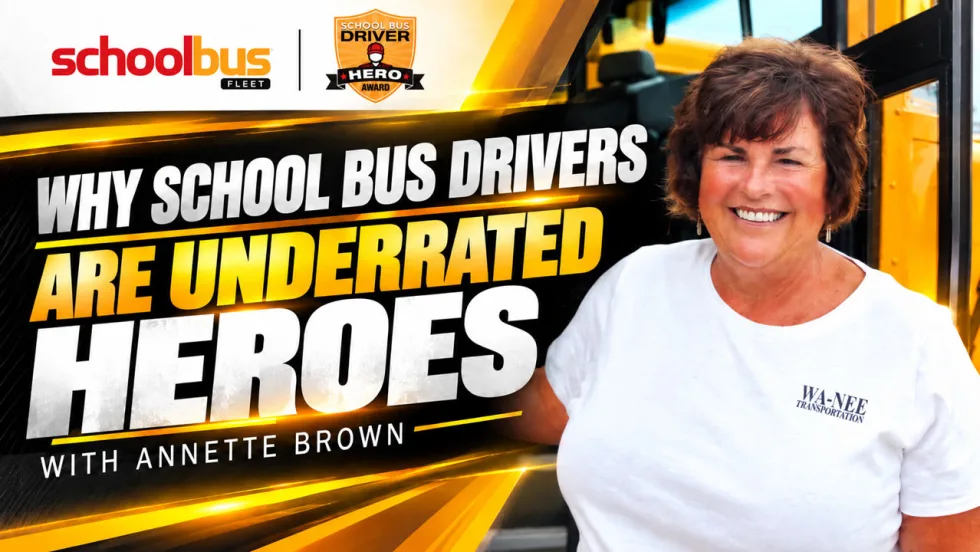
Meet the 2025 School Bus Driver Hero Winner: Annette Brown
We caught up with Wa-Nee Community Schools' Annette Brown on site at SBFX, where she was named the 2026 School Bus Driver Hero Award winner. Hear about her reaction, what she loves most about being a school bus driver, and more!
Read More →
Predictability Is Like Ketchup (According to 6-Year-Olds)
To students, a different school bus can feel like a full-blown crisis. One driver reflects on why familiar routines, showing up on time, and being reliably boring matter more than we think.
Read More →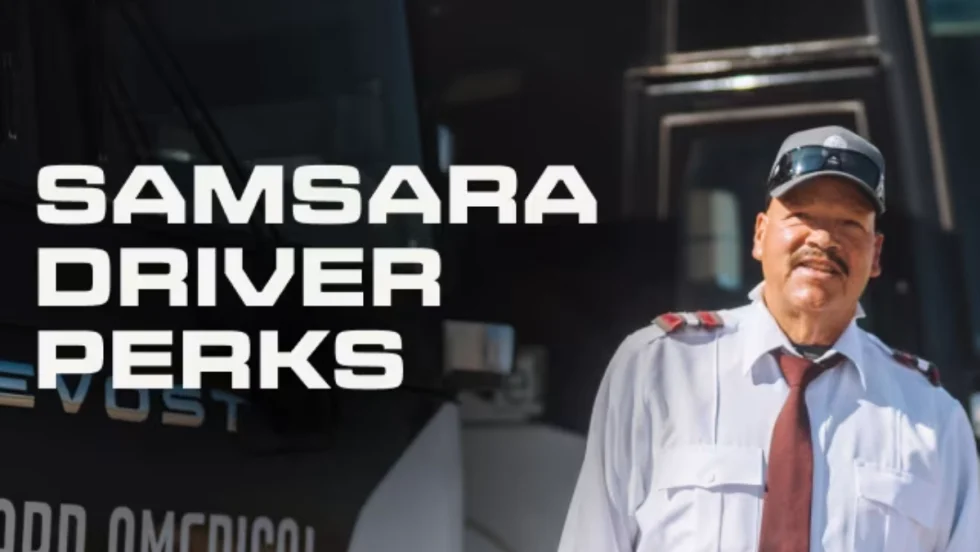
Samsara Launches Free Driver Rewards Program
The new Driver Perks program gives eligible professional drivers access to discounts and offers without adding a cost for participating fleets.
Read More →
How Tax-Exempt Municipal Leases Can Help Finance School Buses
Let’s explore school bus financing options, including municipal leases, vendor payable accounts, and balloon payments, and how they can help stretch fleet budgets.
Read More →
Nominate Rising School Transportation Pros Under 40!
We’re searching for the next generation of leaders making an impact across the K-12 student transportation industry to recognize as SBF’s 2027 Trailblazers. Nominations are open now!
Read More →