


Q&A: Large Bus Manufacturers
Key executives at the three large bus OEMs weigh in on industry developments and challenges.

Thomas Built Buses
John O’Leary
President and CEO
How are the Type C and Type D markets looking for the 2007-08 school year?
The market spiked up by approximately 4,000 units in 2006, primarily due to EPA 2007 engine pre-buy activity. It appears the market is retreating to its previous annual level of approximately 40,000 buses in 2007.
Do you expect the prices of the raw materials (steel, rubber, copper, etc.) to continue to climb? If so, will school bus prices need to be adjusted upward?
Yes, school bus prices, like most things in life, will continue to trend upward. Higher energy costs and rapid development in other countries continues to put pressure on the cost and availability of raw materials for all manufacturers. However, we do not expect to see truly large increases again until the next round of EPA emission changes in 2010.
In a recent SCHOOL BUS FLEET survey, 52% of respondents described the quality of new school buses as “good”; 17.9% as “excellent”; 18.5% as “fair”; and 3.5% as “poor” (8.1% had no opinion). How does that fit with your assessment of customer satisfaction in general?
I’m not surprised by the survey results. People naturally tend to compare the quality of commercial vehicles to their personal automobiles. Due in large part to sheer volume and frequent turnover, automobile quality has improved at a faster rate than that of trucks and buses. Unlike car companies, none of the school bus OEMs can spend a billion dollars on tooling and automation for each product line, so we are much more vulnerable to human error.
Layer on top of that a level of complexity that is easily 100 times that faced by the car companies and you can begin to understand the challenge we all face. Despite this, operators are able to run buses significantly longer, in some cases twice as long, as they did as recently as 10 or 15 years ago. So, quality is definitely improving, but expectations continue to rise, and rightly so. At Thomas we spend a lot of time and resources on employee training and improving product quality. As we implement the DaimlerChrysler Production System and Six Sigma, we are seeing measurable gains.
What are the key concerns of your customers these days in regard to your Type C and Type D products?
Customers today are asked to do more with less. This results in longer school bus lifecycles and the need for reliability to keep their costs down. Some customers who were replacing buses every 10 years are now mandating 20-year life spans. This is only possible because the quality of buses today makes this economically feasible. That goes hand-in-hand with the level of service they receive from their local dealer. If a bus does break down, they need to quickly get it fixed because, in all likelihood, they don’t have a large number of spare buses.
Are you sensing a lot of customer anxiety about the care and maintenance of 2007 EPA-compatible engines and aftertreatment systems?
New technology usually brings some anxiety, and there is no doubt that the ’07 engines will have a learning curve from an operational and service perspective. We’re pleased that this industry sees the environmental benefits of the 2007 EPA engine and is leading the charge to purchase this clean technology.
Looking 10 years into the future, can you predict how school bus design and engineering might change to adapt to customer needs?
Digital technology is having a significant impact on our industry. Multiplex wiring is now available from a number of manufacturers. In 10 years, it is likely that every bus will have a GPS system as well as some type of student tracking technology. Ten years is probably too soon for the more advanced forms of alternative fuels such as hydrogen, so clean diesel will continue to be the fuel of choice in our industry for some time to come.
[PAGEBREAK]
IC Corporation
Michael Cancelliere
Vice president and general manager of Bus Vehicle Center
How are the Type C and Type D markets looking for the 2007-08 school year?
The markets are shaping up as we had expected. Due to increased activity that we saw in 2006 driven by the emissions changes, industry volumes are down slightly for conventional and transit products in 2007.
Has there been any market shift in favor of the Type C over the Type D school bus, or vice-versa?
Currently, we do not see any significant marketplace shifts. The balance between Type C and Type D school buses has remained constant over the past few years. For the most part, customers who have typically been conventional customers have remained, and likewise for transit products. There are some factors on the horizon that could affect this trend, so we continually listen to customer needs and stay attuned to the market.
Do you expect the prices of the raw materials (steel, rubber, copper, etc.) to continue to climb? If so, will school bus prices need to be adjusted upward?
We continue to see signs that raw material prices will maintain an upward trend. As a corporation, we relentlessly pursue ways to control costs. For example, we’re bringing on new tire suppliers and sourcing more components overseas. Since 75 to 80 percent of our total costs are related to the cost of materials, this will continue to impact our marketplace pricing.
In a recent SCHOOL BUS FLEET survey, 52% of respondents described the quality of new school buses as “good”; 17.9% as “excellent”; 18.5% as “fair”; and 3.5% as “poor” (8.1% had no opinion). How does that fit with your assessment of customer satisfaction in general?
I think the results are representative of what we hear from our customers. This represents an opportunity for us and other OEMs to continuously improve our quality. There is no reason why more customers should not rate our products as excellent. Consequently, we continue to invest in the quality of our products at both the design and manufacturing level.
What are the key concerns of your customers these days in regard to your Type C and Type D products?
We have been hearing from our customers that they are looking for overall product enhancements in our type D products. It has been several years since we have refreshed these products, and we are excited for the new products we will be releasing in the next six months.
Are you getting more inquiries about placement of three-point belt systems on your large buses (as well as your Type A vehicles)?
Yes, we have seen inquiries on the rise regarding seat belt systems in general for our products. At the recent NSBA show in San Francisco, seat belts were on the minds of many of the school board members in attendance. We are closely monitoring state legislation, and working to provide education to the industry on seat belts through the American School Bus Council.
Looking 10 years into the future, can you predict how school bus design and engineering might change to adapt to customer needs?
I believe that the underlying need from our customers will not change over the next 10 years: providing the safest form of transportation to and from school for our children. How we go about this has changed, and will continue to evolve in the future. Emissions regulations, GPS technology, RFID tracking, seat belts, structural safety, vehicle quality and cost structure are just some of the continuing enhancements we are seeing. As another example, IC Corporation showcased a concept low-floor school bus last year at the NAPT conference that provided an improved method of loading and unloading both special-needs and non-special-needs passengers. This type of creative thinking will continue to be needed to respond to customer needs in the future.
[PAGEBREAK]
Blue Bird Corp.
Roger Howsmon
Senior vice president of school bus sales and marketing
How are the Type C and Type D markets looking for the 2007-08 school year?
The Type C and Type D markets are looking very strong for the 2007-08 school year. Blue Bird anticipates a strong order book moving into the year.
Has there been any market shift in favor of the Type C over the Type D school bus, or vice-versa?
A market shift has been seen toward the Type C product over the Type D, mostly due to transportation budgets. Our Type C Vision product’s popularity has grown tremendously with a record-breaking number of Vision sales last year, and the trend is continuing into the 2007-08 school year. Blue Bird, however, is continually working on improving manufacturing and unit cost on our Type D All American products, which may impact this trend in the future.
Do you expect the prices of the raw materials (steel, rubber, copper, etc.) to continue to climb? If so, will school bus prices need to be adjusted upward?
While it is impossible to know what the prices of raw materials will do in the coming months, current trends certainly point toward steady price increases for these components. While school bus pricing will need to be adjusted to some degree if raw material costs rise, Blue Bird will do its best to keep pricing as steady as possible. Improvements to our manufacturing processes and sourcing may help to maintain pricing.
In a recent SCHOOL BUS FLEET survey, 52% of respondents described the quality of new school buses as “good”; 17.9% as “excellent”; 18.5% as “fair”; and 3.5% as “poor” (8.1% had no opinion). How does that fit with your assessment of customer satisfaction in general?
Customers expect Blue Bird to build quality products. Every day, Blue Bird strives to build quality buses with on-time delivery. We have also recently added experienced quality control staff from the automotive industry to ensure that our customers receive the high standards they expect.
What are the key concerns of your customers these days in regard to your Type C and Type D products (e.g., durability, reliability, dealer service, etc.)?
Price still remains the highest concern of our customers. Rising fuel costs coupled with any industry increases due to the 2007 engines and raw material costs remain prevalent as customer concerns. A secondary concern is the service and reliability of the new 2007 engines.
Are you sensing a lot of customer anxiety about the care and maintenance of 2007 EPA-compatible engines and aftertreatment systems?
As previously stated, customers are relaying anxiety regarding the new 2007 engines and aftertreatment systems and the availability of ultra low sulfur diesel fuel. To help alleviate these concerns, Blue Bird is working with our dealer network to ensure that training and support is provided to ease any misgivings or apprehension toward the new systems.
Are you getting more inquiries about placement of three-point belt systems on your large buses (as well as your Type A vehicles)?
Yes, Blue Bird is seeing an increase on bus orders equipped with three-point belt systems.
Looking 10 years into the future, can you predict how school bus design and engineering might change to adapt to customer needs?
The future of school bus design is a difficult question to answer. It will depend greatly on changes in federal and state specifications, as we may see the federal government taking on a larger role in student transportation. Alternative fuels are also an emerging market towards which I believe we will see aggressive action taken.
More Management
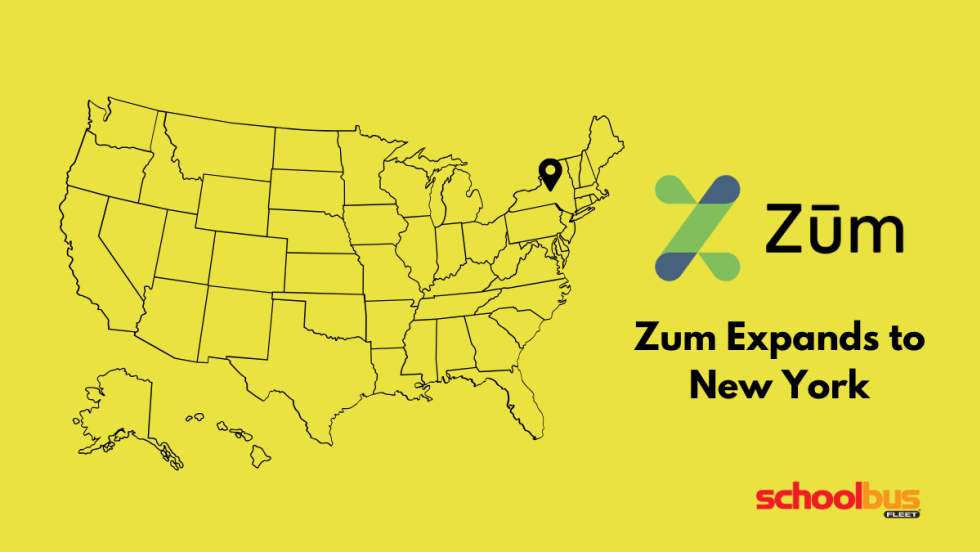
Zum Reaches 19 States With New York Expansion
The addition of the Empire State to the student transportation company's roster marks a growing expansion in the Northeast as it scales its tech and school bus services.
Read More →
First Student Updates Its Parent App
First View connects both yellow bus and alternative transportation, giving families one platform to track student trips for the new school year, with 15 languages supported.
Read More →
The Back-to-School Checklist Every Director Should Complete Before the First Bell
Help your transportation team start the school year strong with these tips for contingency planning, communication, fleet visibility, technology, and trip management.
Read More →
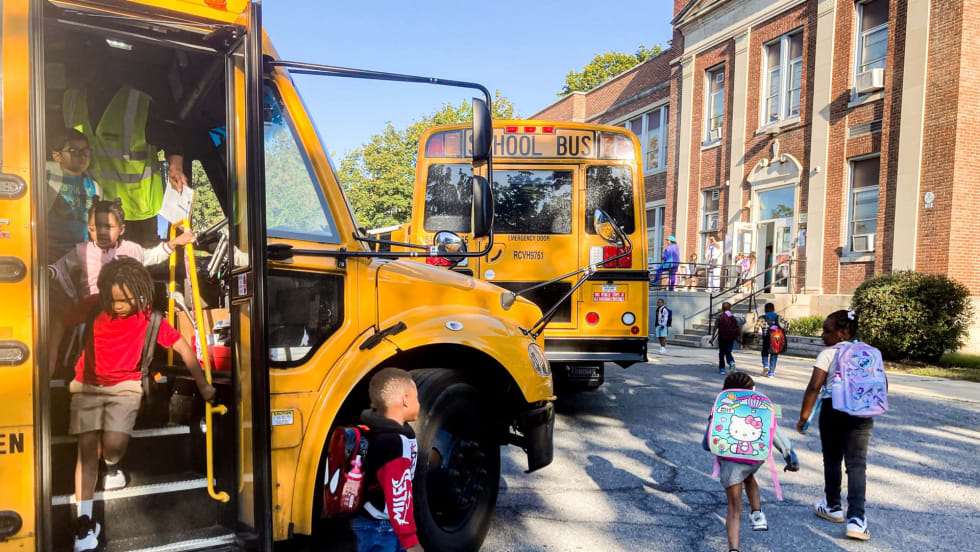
How a New York District Cut Nearly $1M in Transportation Costs While Expanding Bus Access
A data-driven overhaul with BusRight reduced Poughkeepsie City School District's planned routes from 26 to 17 while extending school bus service to about 1,200 additional students.
Read More →
Budgets Down, Enrollment Shifting: What the Data Says Districts Should Watch
School transportation departments face two converging challenges this year: tightening budgets and shifting enrollment. Most districts still address these issues separately, but the assumption that either trend will simplify operations is proving incorrect.
Read More →
These 8 School Transportation Companies Made the 2026 Inc. 5000 List
Find out which school transportation contractors, technology providers, and suppliers ranked among America’s fastest-growing private companies.
Read More →
The Link Between Emotional Intelligence and School Bus Safety
How can emotional intelligence help transportation pros navigate stress, manage change, and build stronger relationships? Listen to find out.
Read More →
What Emotional Intelligence Has to Do With School Bus Safety
In this video, discover how emotional intelligence can help transportation leaders and drivers navigate stress, manage change, and build stronger relationships. The Route is sponsored by IC Bus.
Read More →
Beyond Two-Way Radios: School Bus Communications Evolve With Push-to-Talk Over Cellular
PRYME Radio and PositionPTT join forces to advance hands-free radio use and reduce distracted driving. See how PoC compares with traditional radios on range, cost, safety, and connectivity.
Read More →
Have School Districts Adapted to Bus Driver Shortages or Simply Accepted Less Service?
According to a recent report from HopSkipDrive, many districts appear to have recalibrated what "normal" transportation service looks like.
Read More →