




Q&A: Budgetary Challenges Pressure the Whole Industry
Tom Cellitti, vice president/general manager of International Truck and Engine Corp.’s Bus Vehicle Center, got a working introduction to school buses ...

Tom Cellitti, vice president/general manager of International Truck and Engine Corp.’s Bus Vehicle Center, got a working introduction to school buses at his parish grade school, where he was assigned the task of cleaning the buses.
“We had 1961 International B170s with Carpenter bodies,” Cellitti recalls. “I can remember that clearly to this day.” As one of the perks of the job, he was allowed to start the engines and turn on the flashers. “I was 8 or 9 years old, and thought it was cool.”
These days, Cellitti’s responsibilities are quite a bit larger. As vice president/general manager of the Bus Vehicle Center, he oversees International’s bus division, which comprises a mix of chassis, body and engine accountability.
With the budget pressures facing school districts, the school bus manufacturing community has been struggling to maintain a strong balance sheet. SBF Editor Steve Hirano recently spoke with Cellitti about how his company is handling these pressures and about how his role at International has been influenced by his affiliation with several pupil transportation organizations.
When did you start working for International?
I started in January 1975. This is my 29th year. My father worked for International as an engineer.
My career started as foreman of the Melrose Park engine plant, where they make the DT 466. I was plant manager from 1985 through 1990. When International bought AmTran, I was given the challenge to form the Bus group and grow our business. So, I’ve been in the bus business since then.
Part of my charge was to figure out how to fit AmTran into the total bus business to best serve the customer. We did that in steps. In 1990, we owned a third of American Transportation, and we bought out American Transportation in August 1995.
How have you enjoyed your tenure in the bus business?
It’s really been great because we always ran our Melrose Park engine plant as a family, and I was very lucky to end up in the school bus industry, which is a very closely knit industry. You don’t see many industries where the associations work together and where the customers are focused on the goal of moving schoolchildren safely. So I feel very lucky to be able to contribute to such an important industry.
What has been your most satisfying experience so far?
It has been implementing the IC integration strategy where we, over the past four years, developed and introduced an IC bus and set up an IC distribution network. Also, one of the most enjoyable things was starting up our Tulsa, Okla., bus plant [which opened in the summer of 2001] and expanding our Conway, Ark., plant to increase our capacity. A lot of great people helped make that happen. I’ve been lucky to have people like Bob Whitehouse, Dan Herman, Bob Douglas and John Fay plus many others on our team who are committed to our customers.
It is the International and IC people who have made a difference with the one-stop shopping from our IC and International dealers, which has made a big impact on the overall bus-buying experience.
What’s the current capacity of the Tulsa plant?
Our one-shift capacity is between 30 and 40 buses a day. We’re at 33 a day right now. And we have the ability to flex higher if the industry demand increases. The start-up has been really good for a new facility. We believe the quality and the people are the best you could find.
So you have no regrets about choosing Tulsa?
No, we have a great workforce, and the city of Tulsa and the state of Oklahoma have been very supportive. They’re a part of our team. I’m there at least once a month to make sure the employees understand where the business is going. Also, we bring a lot of customers there. The plant sells itself.
In addition to your business responsibilities, you also have responsibilities with several pupil transportation organizations. Tell me about that side of your involvement in the industry.
One of the best parts about this business is the people. It is through these organizations that I’ve met a lot of dedicated professionals. As I’ve said many times, International makes trucks for a lot of different vocations, and none of them have the organizations that are as devoted as the school bus industry. I belong to NAPT [National Association for Pupil Transportation], NASDPTS [National Association of State Directors of Pupil Transportation Services], NSTA [National School Transportation Association], PTSI [Pupil Transportation Safety Institute], the IAPT [Illinois Association for Pupil Transportation] and the NAPT Foundation. I’ve served on the boards of NASDPTS, PTSI and the NAPT Foundation. The people I’ve met in the industry have one focus — making sure that every day students are transported safely to and from school. They are improving this process on an on-going basis. It is vitally important that all of the associations work together to be heard as one voice. The SBIC [School Bus Information Council] has done a great job of this.
How has the new IC brand been received?
It has been well received. The IC brand allowed us to bring our integrated bus business together from American Transportation to IC Corporation as a wholly owned subsidiary of International Truck and Engine Corp.
It was rolled out about a year ago and has been received very well. The customers like it because it’s easy to understand. They know who we are. They understand that the IC shield stands for protection and that we stand behind our products and protect our passengers. Customers also link it to the International heritage. The black and yellow colors are school bus colors. And if you look at the logo above the door, you’ll notice that the black horizontal lines are black rub rails. So there’s a lot of thought behind the IC brand and image. We’re very proud of it, but more important than the IC brand and its logo is the brand promise: IC listens, understands and delivers the best way to move our customers ahead on the road and in their operation. We are committed to taking care of the owner, exciting the driver, delighting the maintainer and protecting the passenger.
We want to understand the customers we serve, and we know that we can’t be everything to everybody. We’ve got to focus on what we think is right. The real test is “Do we live up to our brand promise?” I believe we live up to our brand promise, as you will see, when we introduce our new bus product lineup in 2004.
One of the things you unveiled at the NAPT trade show in Greensboro, North Carolina, last November was your integrated lap/shoulder belt system. Have you seen a lot of interest?
Clearly, NHTSA [National Highway Traffic Safety Administration] reaffirmed the industry’s position that compartmentalization is a safe and effective means to protect children. But as we’ve seen, some states and customers will desire the three-point lap/shoulder belt system. So we focused on that and introduced our product at NAPT. We believe that over time, the customers who require two-point belts will probably convert to three-point belts. At this point, that hasn’t happened, but we think it will. Right now, we offer the lap/shoulder belt option like many other options. We will have it available for 2003 school delivery for any buses ordered with it.
What do you think of the EPA’s Adopt-a-Bus program, which encourages the replacement of older school buses with new, cleaner-burning buses through partnerships with private industry?
Many in the school bus industry are concerned with how pupil transportation and the yellow school bus were being portrayed. It’s very important for all of us and all of our customers to send a message that we take our jobs seriously and don’t want the industry to be portrayed in a negative light. International supports any program that will help provide funding to put newer and cleaner-burning green diesel buses on the road. At this time, however, the program lacks funding, so we’re not sure where the program is going. We are involved with industry leaders to make sure the program portrays school buses in the right light and does provide funding to our customers. With that, we will be in a position to support it.
One of the key issues facing school districts these days is funding. How has this impacted you?
School districts continue to be under pressure to cut costs, both operating and capital investment. Their funding, in some cases, has been reduced. Buses will also cost more in the future due to continuing and tightening EPA emissions and FMVSS regulations. These costs will impact the whole industry over the next few years. This is a reality of the economy we are in at the present time. Our job is to provide the best value to our customers. Best value does not always mean lowest price. It does mean lowest operating cost. We believe the market today is going to be impacted by this lack of funding. We hope to increase our share in the market by providing customers with products and services that keep their costs lower over time.
What is the greatest challenge facing school bus manufacturers?
It would be great if leaders in every state and in Washington, D.C., would make pupil transportation a top priority. We support every effort to put more children on newer and cleaner-running school buses. The impact on society would be very positive. That’s our greatest challenge, to get more funding for the safe transportation of schoolchildren.
More Management

EverDriven Launches Route Consolidation Calculator to Estimate Diesel Savings
As diesel prices hit record highs, the largest alternative transportation provider says a 10% route consolidation could save a 120-route district more than $78,000 a year in fuel alone.
Read More →
Zum Secures Continued Financing Support for School Bus Expansion
Generate Private Credit has financed approximately $75 million in school bus deployments across three states, supporting more than 500 buses as Zum expands across the county.
Read More →
Beyond Discipline: A Different Approach to Student Behavior on the Bus
After implementing a dean of students program in Oregon, North Clackamas is seeing positive improvements. Here’s how it worked. The Route is brought to you by IC Bus.
Read More →
A Dean of Transportation's Different Approach to Student Behavior on the School Bus
After implementing a dean of students program in Oregon, North Clackamas is seeing positive improvements on the bus. Here’s how it worked.
Read More →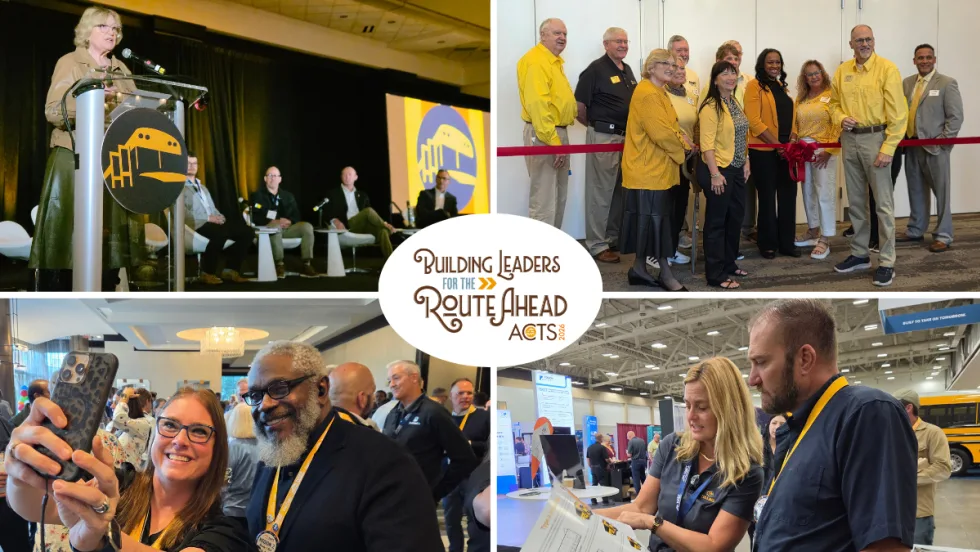
Inside NAPT ACTS 2026: Highlights from Louisville
From federal updates and student behavior strategies to new school bus technology and industry awards, see highlights from NAPT ACTS 2026 in Louisville.
Read More →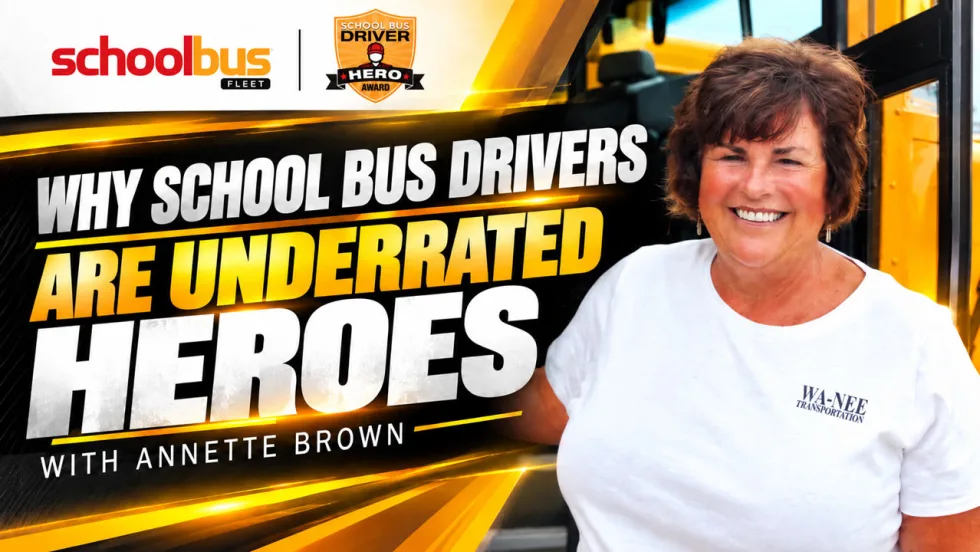
Meet the 2025 School Bus Driver Hero Winner: Annette Brown
We caught up with Wa-Nee Community Schools' Annette Brown on site at SBFX, where she was named the 2026 School Bus Driver Hero Award winner. Hear about her reaction, what she loves most about being a school bus driver, and more!
Read More →
Predictability Is Like Ketchup (According to 6-Year-Olds)
To students, a different school bus can feel like a full-blown crisis. One driver reflects on why familiar routines, showing up on time, and being reliably boring matter more than we think.
Read More →
Samsara Launches Free Driver Rewards Program
The new Driver Perks program gives eligible professional drivers access to discounts and offers without adding a cost for participating fleets.
Read More →
How Tax-Exempt Municipal Leases Can Help Finance School Buses
Let’s explore school bus financing options, including municipal leases, vendor payable accounts, and balloon payments, and how they can help stretch fleet budgets.
Read More →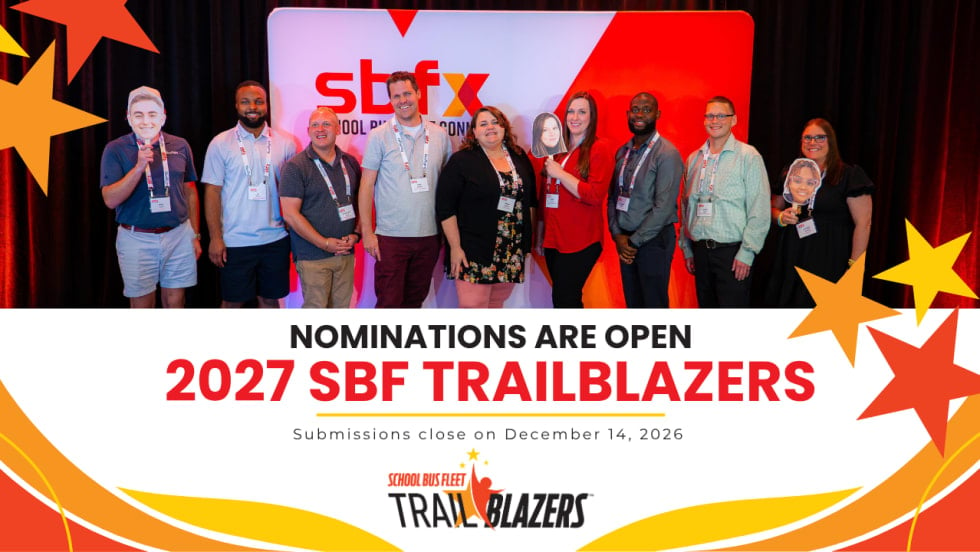
Nominate Rising School Transportation Pros Under 40!
We’re searching for the next generation of leaders making an impact across the K-12 student transportation industry to recognize as SBF’s 2027 Trailblazers. Nominations are open now!
Read More →