




Positive interactions encourage peaceful bus ride
While surveillance cameras and assigned seating can help in addressing student behavior problems on the school bus, officials say that getting to know passengers, handling discipline issues in a positive way and acknowledging proper bus etiquette are also effective ways to keep troublesome behavior at bay. Here, we share the specifics of several programs and initiatives based on these approaches.

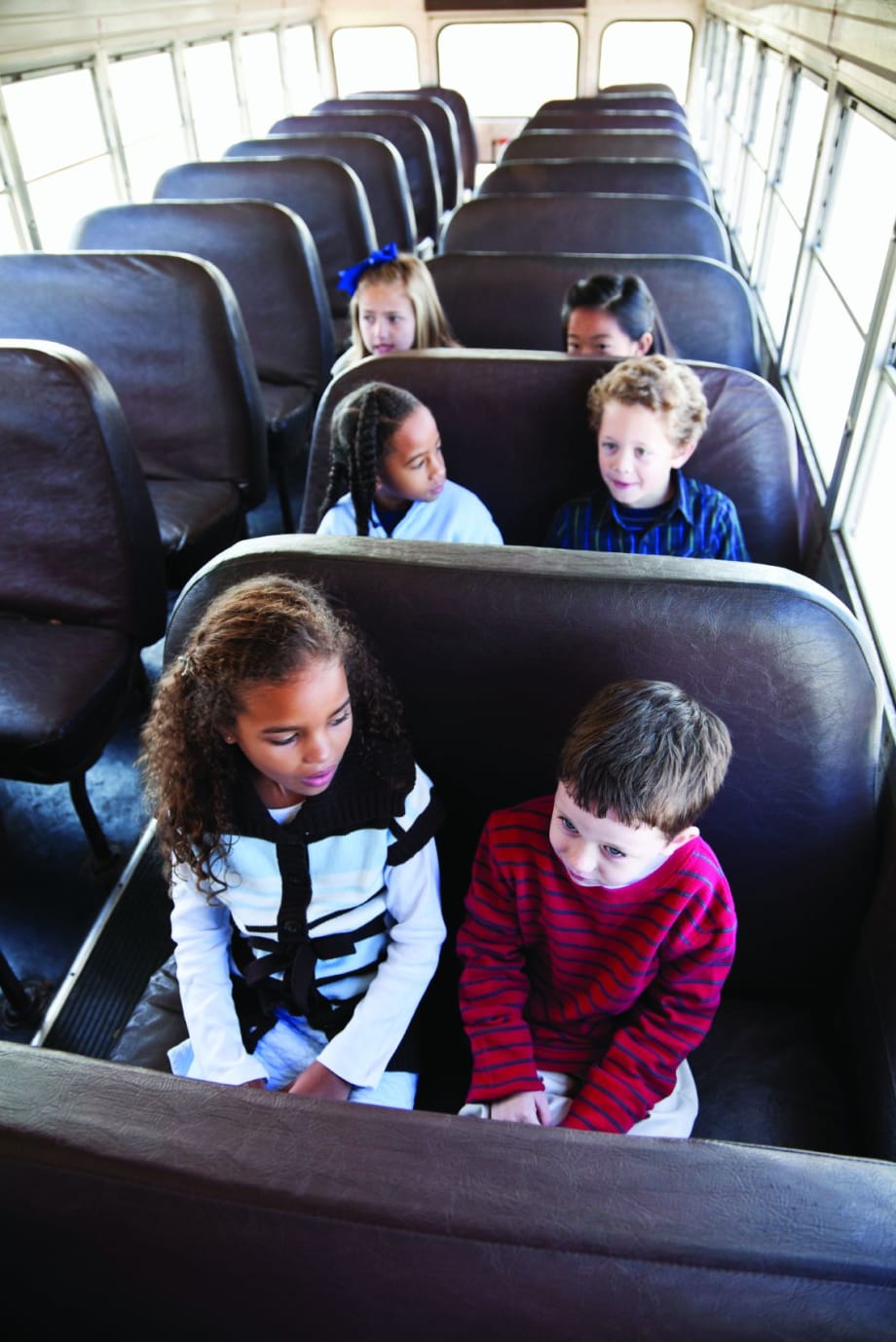
© iStockimage.com/kali9
There are many means through which pupil transportation operations can keep student behavior on the school bus under control. Officials say that assigned seating can help; having video surveillance cameras installed on the bus is also effective.
John Nunes, transportation director at Vail (Ariz.) School District, says that all of his district’s buses have cameras, and the newest buses are outfitted with eight cameras inside.
Transportation department personnel review the video footage frequently, and Nunes says they operate “as transparently as possible for the parents. We invite parents to come and watch the videos,” if there is an incident involving their child.
Antonio Mlynek, transportation supervisor for special education at Washington Elementary School District #6 in Phoenix, says that building relationships with students and communicating with parents and teachers also contribute to a safe and positive bus environment.
“Greet students by name as they enter and leave the bus, and this includes parents and teachers — write down their names on your route sheet so you can remember them,” Mlynek says. “This will impress them and gain more respect and support from them, especially when you need their help to deal with behavioral issues.”
Nunes agrees, and says these are key components of a program at his operation that has significantly reduced problematic incidents among the ridership.
District sees success with PBIS program
During the 2011-12 school year, Vail School District incorporated a Positive Behavior Intervention and Support (PBIS) program into its transportation department.
Nunes says that prior to starting the program, which is implemented district-wide, he had 47 long-term bus suspensions, and upon completion of the first year of the program, he had nine suspensions.
“At the base of the program is positive questioning and positive interaction,” Nunes explains. “Instead of saying to a student, ‘You did this wrong, don’t ever do that again,’ you ask, ‘Is that something you should be doing? What would be the correct behavior?’”
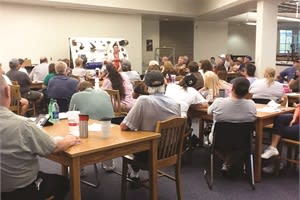
Bus drivers and monitors at Vail (Ariz.) School District receive instruction on the operation’s Positive Behavior Intervention and Support program during their in-service training.
The bus drivers and aides were given guidelines on how to enforce the program, and they received training in small groups on how to effectively communicate with students. Nunes has two expectations of drivers and aides: They must not use any harsh language toward students under any circumstances, and they must engage with students as much as possible to help build positive relationships with them.
If a driver or monitor has an issue with a student, they address him or her by teaching an expectation of better behavior through positive questioning. Then, on the same day, the student’s parents are contacted by phone to explain what happened and how the transportation personnel addressed the incident. Parents are then asked to discuss the incident with their child so that the positive intervention is reinforced at home.
“We must engage the parents as much and as early as possible for an intervention to change a behavior, and that turned out to be the single biggest success piece of the whole program,” Nunes says. “Parents like the fact that we let them know something has happened and that we’re dealing with it from a positive standpoint. In situations where parents became actively engaged, they realized we were partners in keeping their children safe.”
Peaceful School Bus Program benefits drivers, students
Another program in which positive interactions with and among students play a large role is the Peaceful School Bus Program. It is being practiced at several schools within Chesterfield (Va.) County Public Schools, including Robious Elementary, J.A. Chalkley Elementary and Alberta Smith Elementary.
The program accommodates each school’s needs, but in general, the counselors meet with the riders of each bus before school at least once in the fall, winter and spring. In the meetings, students establish rules for the bus with the help of the counselors, and then they discuss what they like and don’t like about the bus, and solutions to problems.
The counselors also work actively with the district’s transportation staff.
Connie Honsinger, counselor at Alberta Smith Elementary, says she walks the bus loop with the principal and assistant principal every morning and afternoon. If problems arise on the bus, the drivers are encouraged to tell Honsinger and her colleagues so that they can address the situation immediately.
Honsinger adds that in meetings with the school staff, the bus drivers share their concerns regarding students, and the staff asks how they can best help the drivers.
Drivers who serve Robious Elementary and J.A. Chalkley Elementary also meet with the schools’ staff, and they are invited to the morning meetings with the students.
[PAGEBREAK]
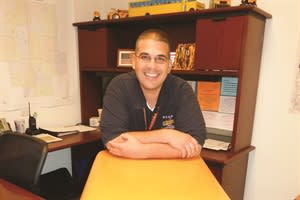
Antonio Mlynek, transportation supervisor for special education at Washington Elementary School District #6 in Phoenix, says certificates, points programs and coupons for prizes have helped generate good behavior among his operation’s ridership.
“I noticed that this helps the students to develop more of a positive, respectful relationship [with the bus driver],” J.A. Chalkley Counselor Stacy Hassler says. “The bus drivers have stated they appreciate that we are doing the program because it makes them feel more respected and included as a member of our staff.”
The counselors say their students have responded positively to the Peaceful School Bus Program.
“The students love the bus meetings and beg me to do more!” says Marigrace Wilkes, counselor at Robious Elementary.
Honsinger says the program “drives home the point that kids are responsible for making their bus the way they want it to be, and when they know that adults are watching what they’re doing on the bus and care about it, it makes a big difference.”
She adds that in its third year of implementation, her school has seen a 68% reduction in bus discipline referrals.
Coupons, bus points, certificates motivate students
Washington Elementary School District #6’s transportation department has several initiatives in place to help facilitate proper behavior among bus passengers.
Mlynek says some of the district’s schools have “coupons” that teachers distribute for good behavior. Transportation staff members also distribute the coupons to students who attend those schools. Students who receive the coupons are eligible to win a prize, such as an iPod.
The department created certificates as well that the staff hands out to students.
“It can truly make a difference,” Mlynek says. “I remember when I was a driver and I handed out my own certificates, I had students that I ran into a few years later that told me they still have it on their wall in their bedroom.”
Special-education students’ teachers, bus drivers and bus assistants also worked together to create a “Bus Points” program.
“The student must accumulate a certain number of points, showing improvement in particular behaviors,” Mlynek explains. “Once the student reaches a certain number of points, the bus driver and/or the bus assistant will come to the classroom and play a game — a card game, a board game, etc. — as a reward. This not only improves the behavior of the student, it improves the relationship with the transportation staff.”
In the past school year, Mlynek began a program called “Coffee Talk.”
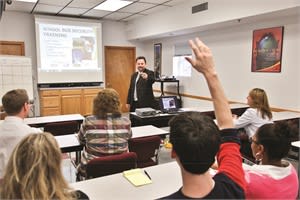
James Rogan, director of safety and training at The Trans Group in Spring Valley, N.Y., says the operation uses information from School Bus Safety Co.’s The Driver Training Course as part of its student management training. The contractor also emphasizes to drivers the importance of getting to know the students they transport.
“I brought together transportation staff to meet with special-education teachers at the school sites where they transport students,” he explains. “This was an open forum for transportation staff to ask general questions or discuss scenarios that could help with student management in this particular program (each school site is dedicated to a certain disability, such as autism). This also allowed teachers to discuss perceptions that the transportation staff may have about how teachers handle situations.”
Contractor utilizes School Bus Safety Co. training program
For school bus contractor The Trans Group in Spring Valley, N.Y., a big component of student management training for the drivers focuses on the importance of getting to know the students they transport.
James Rogan, director of safety and training, says that when drivers are familiar with their passengers and know where they are in their growth and development, it makes it easier to understand why the students may act out in a specific way.
During training sessions, information is shared with drivers on how elementary, middle and high school students think.
Rogan adds that The Trans Group uses material from School Bus Safety Co.’s The Driver Training Course for student management training.
“There are different components of student management in the program,” he says. “There’s a section on how to handle kids, and then another component is ‘Preparing Students to Learn,’ which is all about making sure they [drivers] are sensitive to the students’ needs at the beginning of the day — making sure they’re not yelling at them, that they’re not being bullied, etc. — to prepare them for school.”
Among the operation’s recommended practices for addressing student behavior issues is to use a four-step progressive discipline approach. For the first infraction, the student is issued a verbal warning. For a second infraction, another verbal warning is given and the student’s parents are notified. For a third incident, a warning is issued, and it is recommended that riding privileges are suspended until school officials meet with the student’s parents. For a fourth infraction, a warning is given and temporary or permanent removal from the bus is recommended.
More Safety

How to Build a Better School Bus Driver Training Program
Is it time to strengthen your driver training? Here’s how to pick the right talent and improve recruitment, retention, and safety. This video is brought to you by IC Bus.
Read More →
Recent School Bus Accidents Leave 2 Dead, 2 Injured
Four school bus crashes in Florida, Illinois, and Georgia highlight risks in transportation lots, at bus stops, and during student loading and unloading.
Read More →
When Every Second Matters, Clarity Keeps Routes Moving
From routine delays to urgent incidents, strong communication practices help drivers, dispatchers, schools, and families respond with confidence.
Read More →

What Happens When a School Bus Catches Fire — and What Can Help
School bus fires are rare but can be devastating. Learn how advances in fire suppression and asset protection help fleets detect fires earlier, reduce damage, and improve safety.
Read More →
Geotab Launches Tool to Help Fleets Investigate Road Incidents
Geotab Investigations combines telematics data, video, documents, and other evidence to help fleets reconstruct incidents, resolve claims, and determine what happened.
Read More →
Texas Sixth Grader Wins 2026 National School Bus Safety Poster Contest
Sai Darshana Yekolu of Moseley Middle School in Prosper, Texas, was named the newest winner for her artwork, bringing the theme of “Safe Rides, Everyday Heroes” to life.
Read More →
Doing More With Less: How Transportation Directors Can Prioritize Safety Amid Budget Uncertainty
With diesel prices soaring and nearly one-third of transportation directors expecting budget cuts, maintaining student safety has never been more challenging. Download this guide to learn how leading districts are prioritizing risk, funding critical safety technology, and building stronger budget cases with data.
Read More →
Walton County Schools Adds Gatekeeper Stop-Arm Enforcement System
The Florida district will deploy Gatekeeper’s updated Student Protector technology, which now incorporates AI to improve video evidence.
Read More →
How To Build a More Secure School Bus Yard During and After Hours
As thefts and overnight security threats continue, school transportation leaders are combining stronger operational practices with AI-enabled surveillance to better protect buses, facilities, and staff.
Read More →
FMCSA Names New Chief Safety Officer: What School Bus Operators Should Know
Steve Dowling is set to lead the federal agency's efforts to advance commercial motor vehicle safety and reduce crashes, fatalities, and injuries on the nation's roadways.
Read More →