




Planning keeps buses running during rough weather
Thorough bus inspections, pre-planning stops and operating the bus more slowly than usual will help to maximize driver and student safety. Areas on routes where drivers can pull over if necessary should be documented, and all stakeholders should maintain an open line of communication.

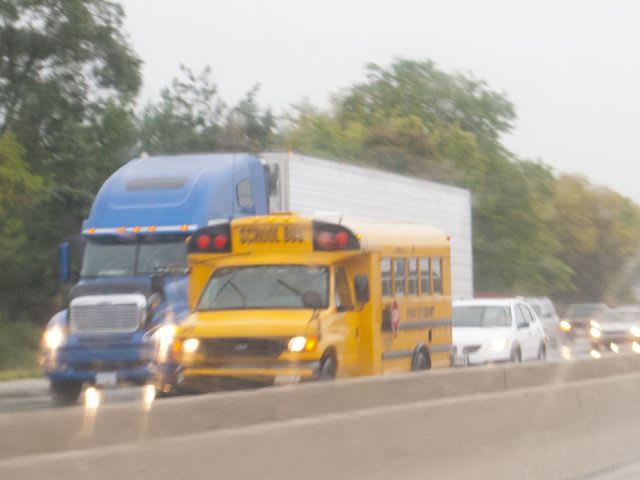
Photo courtesy of J. J. Keller & Associates Inc.®
Keeping a pupil transportation operation running smoothly can be challenging in and of itself, and harsh environmental conditions such as heavy snow or rain, fog and other types of inclement weather can throw a wrench in the gears if everyone isn’t prepared for it.
What’s necessary to prepare and to keep bus drivers and students safe when they’re on a route? Officials say that among other factors, operations should have a clear policy in place that outlines what drivers can do if they encounter severe weather on the road that presents a potential safety hazard for them and their students.
And, although it may seem to be common sense, they say that school bus drivers must use extra caution when traversing the roads.
“Your defensive driving skills must be at their highest, and you have to be aware of your surroundings,” says Marcia Hahn, transportation director at Wenatchee (Wash.) School District #246. She is also a school bus driver trainer instructor for the state of Washington.
Hahn adds that pre-planning vehicle stops, utilizing the bus’ mirrors and driving more slowly than normal are extremely important when driving in inclement weather.
Maneuvering and inspecting the bus
Thomas Bray, senior editor, transportation management, for J.J. Keller & Associates, agrees with Hahn.
“In terms of traction, that’s a matter of being careful with the amount of braking and power used and being more selective about where you bring a vehicle to a stop so that you don’t end up stuck,” he says. “The other thing about driving slower in inclement weather is that it helps other motorists get acclimated to the bus on the road. Sudden stops or turns in adverse weather put other drivers in situations where they have to react to you, which is not a good situation to be in.”
As a school bus driver trainer instructor for the state of Washington, and at her own operation, Hahn teaches drivers about vehicle dynamics and how to maintain optimum control of a school bus under varying driving conditions.
For example, she says she teaches an “on-off-on” method with the throttle if the bus is in a skid. “If you put your foot on the brake, you’re going to lose traction, but if you throttle, then go off the throttle to make an evasive turn or move and then get back on the throttle, you can actually regain better control of your vehicle than by applying the brake,” Hahn explains.
“You have to be cognizant of what the weight transfer is going to do to the footprint of the bus on that surface.”
In terms of pre-planning stops, Hahn recommends stopping 10 to 12 feet back from the bus stop, particularly if a driver is operating a rear-engine bus, because on compact snow and ice, the front end of the bus has a tendency to slide.
Students should receive training to stand back from the sidewalk as the bus is approaching and should look for the driver’s signal to prepare to board the bus only after the front end has stopped moving, Hahn adds.
Bray also says bus drivers should make sure that all of the windows, lights and mirrors on the bus remain as clean as possible, and vehicle inspections are critical.
“That’s everything from making sure that the heat is working to making sure that the tires are good,” Bray says. “Windshield wipers not working, the defroster not working, the heater not working, tires without enough tread — these are all problems that can lead to serious issues, and they should be corrected before they become a problem.”
[PAGEBREAK]
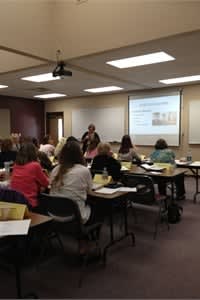
When training drivers, Marcia Hahn, transportation director at Wenatchee (Wash.) School District #246, says that pre-planning stops and driving the vehicle more slowly than normal are extremely important while driving in inclement weather.
Policies and procedures to follow
No matter how well prepared a bus driver is to maneuver the vehicle in different types of weather conditions, it may reach a point where it’s too treacherous for him or her to continue on the route and the driver must pull off the road.
In the event of this, industry consultant Dick Fischer says it’s important for drivers to establish ahead of time safe haven areas on their routes.
“It’s not so much for the cities as for the rural areas, especially in the Midwest,” says Fischer, who recently retired but remains active in pupil transportation. “An option must be given to the drivers to pull into a safe haven area and wait until it’s safe to continue traveling. Drivers know their routes best, and you have to have confidence in them that they will use their common sense. Safe haven areas could be in a farm house, a service station or a shopping center parking lot. It will depend on the drivers’ routes, and they should list those safe haven areas on the route sheet for substitute drivers.”
Safe areas on a route are especially important in areas prone to tornadoes. If a tornado is present, Fischer says the driver should stop the vehicle and have his or her passengers lie flat in the nearest ditch, depression or ravine. If a ditch or ravine is not nearby, the students should lie flat, face down and away from the vehicle and power lines.
In his in-service training program on bad weather, Fischer provides recommendations for operating a school bus in other types of conditions as well. For example, when driving in heavy rain or hail, he instructs drivers to keep the bus moving slowly, turn on the hazard lights, and use the low-beam headlights so that other motorists will be able to see the bus. The driver should also increase the distance between the bus and other vehicles on the road.
Likewise, if a bus driver has limited visibility on a route due to smoke, fire or a dust storm, the bus’ low-beam headlights and hazard lights should be used, and Fischer also encourages drivers to sound the horn occasionally.
“If you get caught in a dust storm and decide to stop, make certain your vehicle is as far off the roadway as possible, set the parking brake and make sure your foot is off the brake pedal so that the stop lights are off,” he advises. “Turn off your lights so other traffic will not think you are moving and cause a rear-end collision. Set out breakdown reflectors behind your vehicle.” He emphasizes that the bus should not be evacuated. Rather, students should move from the rear of the bus to the front.
Fischer also suggests that in extremely heavy snow or other harsh weather, it could be advantageous to delay school bus service until conditions improve.
“If you have an accident [because of the bad weather], the number of hours you spend on an accident outweighs the number of hours you would spend with the bus parked,” he says.
There are members of the transportation team at Spotsylvania (Va.) County Public Schools who are responsible for checking the weather forecast and communicating with drivers, state police, and sheriff’s office and department of highway officials during periods of inclement weather.
Director of Transportation Kermit Shaffer says the drivers avoid slick roads, and the operation closes when heavy snow or ice are imminent or present.
Early-morning runs
Hahn is in her office before 4 a.m. and checks road conditions during inclement weather. She says that the area Wenatchee School District #246 serves has a drier snow, so school start times and yellow bus transportation are rarely delayed because of inclement weather.
Hahn adds that they have found that it’s more beneficial for her operation’s buses to head out on the roads early, ahead of the rest of the motoring public, because the snow and/or ice is still fresh on the roads.
“By the time the motoring public has done their commute, there’s a glaze or glare on the roads,” she explains. “Glare on the ice is typically a sign that tires have been going over the ice and are melting it, and it’s forming another layer of water on the ice. That results in a reduction of available friction.”
Make information easily accessible
Hahn’s operation has also established alternate bus stops that are used when inclement weather makes regular bus stops difficult or unsafe for the students and school buses to reach. She says she will call local radio stations to inform them that the inclement weather stops are being used, and the stations can then pass the information on to their listeners.
“In the fall, we notify parents of students who will go to those inclement weather stops and tell them where they will be and the approximate times that the buses will be there,” she adds. “The information is also accessible to parents on our website.”
At Spotsylvania County Public Schools, numerous outlets are used to disseminate information to the transportation staff and other affected parties if there are weather-delayed starts. Shaffer says announcements are made via the radio and television. Auto-dial phone messages and a texting and e-mail alert system have also been used. Information is also posted on the district’s website.
He notes that one of the most important assets in dealing with inclement weather is the relationship the transportation department staff has formed with other entities, such as the state police and the Virginia Department of Transportation.
More Safety

How to Build a Better School Bus Driver Training Program
Is it time to strengthen your driver training? Here’s how to pick the right talent and improve recruitment, retention, and safety. This video is brought to you by IC Bus.
Read More →
Recent School Bus Accidents Leave 2 Dead, 2 Injured
Four school bus crashes in Florida, Illinois, and Georgia highlight risks in transportation lots, at bus stops, and during student loading and unloading.
Read More →
When Every Second Matters, Clarity Keeps Routes Moving
From routine delays to urgent incidents, strong communication practices help drivers, dispatchers, schools, and families respond with confidence.
Read More →

What Happens When a School Bus Catches Fire — and What Can Help
School bus fires are rare but can be devastating. Learn how advances in fire suppression and asset protection help fleets detect fires earlier, reduce damage, and improve safety.
Read More →
Geotab Launches Tool to Help Fleets Investigate Road Incidents
Geotab Investigations combines telematics data, video, documents, and other evidence to help fleets reconstruct incidents, resolve claims, and determine what happened.
Read More →
Texas Sixth Grader Wins 2026 National School Bus Safety Poster Contest
Sai Darshana Yekolu of Moseley Middle School in Prosper, Texas, was named the newest winner for her artwork, bringing the theme of “Safe Rides, Everyday Heroes” to life.
Read More →
Doing More With Less: How Transportation Directors Can Prioritize Safety Amid Budget Uncertainty
With diesel prices soaring and nearly one-third of transportation directors expecting budget cuts, maintaining student safety has never been more challenging. Download this guide to learn how leading districts are prioritizing risk, funding critical safety technology, and building stronger budget cases with data.
Read More →
Walton County Schools Adds Gatekeeper Stop-Arm Enforcement System
The Florida district will deploy Gatekeeper’s updated Student Protector technology, which now incorporates AI to improve video evidence.
Read More →
How To Build a More Secure School Bus Yard During and After Hours
As thefts and overnight security threats continue, school transportation leaders are combining stronger operational practices with AI-enabled surveillance to better protect buses, facilities, and staff.
Read More →
FMCSA Names New Chief Safety Officer: What School Bus Operators Should Know
Steve Dowling is set to lead the federal agency's efforts to advance commercial motor vehicle safety and reduce crashes, fatalities, and injuries on the nation's roadways.
Read More →