




Parkway launches CNG bus project with $1.5M grant
After securing federal highway funds, the Missouri school district buys 30 compressed natural gas buses and builds a fast-fill fueling station. Here's a look at how Parkway won the grant and what it expects with the new buses including savings in fuel and maintenance costs.

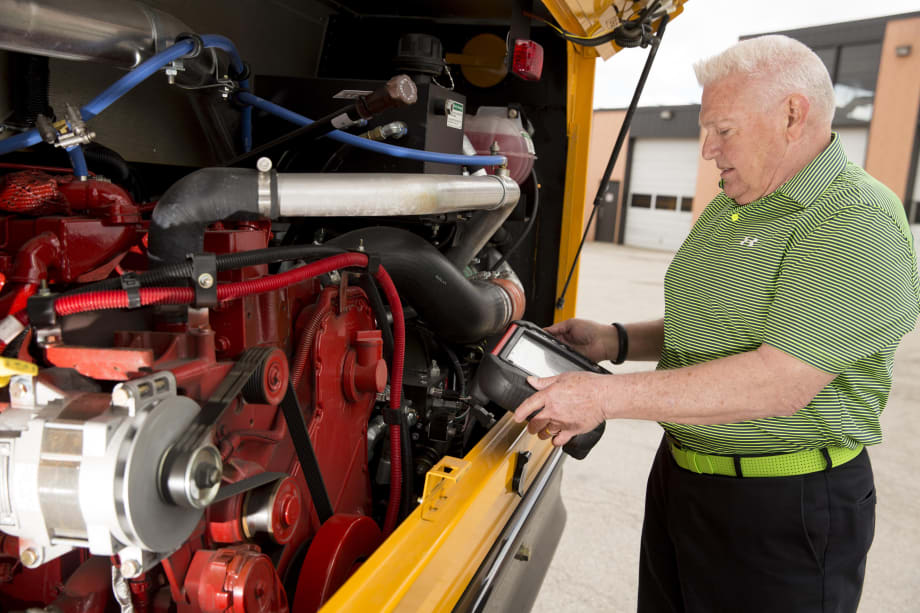
Fred Matlack, manager of fleet maintenance at Missouri's Parkway School District, does a final engine inspection on one of the district's new compressed natural gas buses before assigning it to a driver.
When Will Rosa’s school district applied for a federal highway grant to buy compressed natural gas (CNG) school buses, he says that they initially got “some strange looks.”
The East-West Gateway Council of Governments, which administers federal highway grants in the St. Louis region, “had never seen someone like a school district there applying for money. It’s mostly for highways,” says Rosa, the director of transportation for Parkway School District, which is based in the St. Louis suburb of Chesterfield, Mo.
But the district had a compelling purpose for the funds: to improve air quality at schools and throughout the community, and to reduce students’ exposure to pollutants. The district noted in its grant application that the number of its students who suffer from asthma and allergies has “skyrocketed” over the past 10 years.
Rosa says that although he and his team “weren’t really confident” after the first meeting with East-West Gateway Council of Governments officials, “We won the award. … They liked that we were doing the right thing for kids.”
The award was sizable: $1.5 million, to be used for buying CNG school buses and building a CNG fueling station. The project would make Parkway one of just two districts in the state to use CNG buses, and the district’s new fueling station would be one of only a few CNG facilities in the region.
Lower fuel costs
Parkway acquired 30 CNG school buses, which were delivered this fall and winter. The grant covered 80% of the additional cost of each CNG bus compared to the cost of comparable diesel buses.
The new units, easily identified by their bright green rub rails (which Rosa notes is helpful to first responders), are 72-passenger Thomas Built Saf-T-Liner HDX CNG buses, purchased through Midwest Bus Sales. They make up 20% of Parkway’s total school bus fleet of 150, the rest of which are diesel.
Rosa says that Parkway has long been a “green-friendly” district in other ways — from running a recycling center (which is now outsourced) to installing solar panels on facility roofs — so shifting to alternative fuels is a natural extension of that mindset.
As for the reasoning on choosing CNG specifically, Rosa cites multiple factors, including lower emissions, reducing dependence on foreign oil and fuel cost savings.
“The cost of crude oil is going to increase,” he says. “Natural gas is domestically produced and available.”
With the lower price of natural gas compared to diesel, Parkway estimates that it will save around $100,000 in fuel costs in the next school year with the 30 CNG buses.
Another benefit that Parkway quickly noticed with the CNG buses is their quieter operation. That has a positive impact both for the community outside the bus and for the students and driver inside the bus.
“Some of the neighbors and parents have commented about the quietness of the buses on our Facebook page,” Rosa says. On board, “The kids are quieter — they’re not talking as loudly.”
Fred Matlack, Parkway’s manager of fleet maintenance, says that he has gotten good feedback from the drivers who have taken the wheel of the new CNG buses. One of those drivers is his wife.
“She loves it,” Matlack says, adding that the quieter onboard environment is a particularly popular feature. “She says, ‘Half the time I have to look in the mirror to make sure the kids are still awake.’”
Fewer oil changes
Parkway also expects savings related to maintenance and longevity with the new CNG buses. For example, oil change intervals will likely be more than twice as long.
“Most of our diesels go maybe 6,000 miles” between oil changes, Matlack says. For the CNG buses, “It should be 15,000 miles. We’re looking at maybe one or one and a half oil changes per year.”
As for vehicle life, Parkway’s diesel buses have been on a 10-year replacement cycle. For the CNG buses, the district anticipates longer engine life, possibly enabling them to stay in service 13 to 15 years, although Matlack acknowledges that it’s still “too early to tell.”
Parkway’s technicians took part in a basic maintenance training program for the CNG buses with Thomas Built representatives. Matlack said that they are also looking at having a more intensive training session and roundtable discussion “so everyone understands how the fuel system works.”
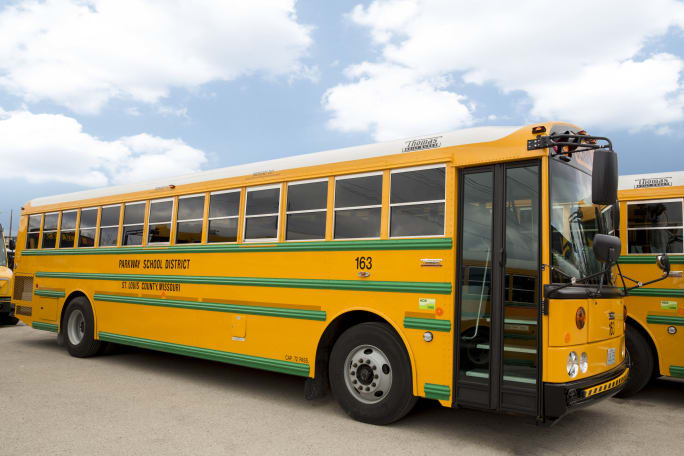
Parkway acquired 30 Thomas Built CNG buses, all easily identified by their bright green rub rails.
Fast-fill fueling
In addition to subsidizing the higher purchase price of the new buses, the highway grant that Parkway received was intended to cover 80% of the cost of the CNG fueling station. However, the district later decided to make some modifications that increased the price of the station, so the grant actually covered less than 80% of the cost.
Parkway had initially planned to install time-fill fueling equipment, but they later decided to go with fast-fill infrastructure.
“It’s a better fit for our property and our needs,” Rosa says of the fast-fill option.
For a time-fill application, vehicles are refueled overnight for around 10 to 12 hours. The fast-fill application, Rosa says, “is just like going to the gas station — it takes five to 10 minutes” to refuel.
Parkway’s new Saf-T-Liner HDX CNG buses, which are Type D (transit style), have 65-gallon fuel tanks. As of press time, Rosa said that his operation was just starting to track data like the buses’ range and fuel economy.
Future purchases
Parkway typically buys about 10 new buses a year. Having just acquired 30 new units, the district won’t buy more for another three years. After that, Parkway plans to get back on its normal replacement cycle and to grow the CNG contingent of the overall fleet — school buses as well as “white fleet” vehicles, such as district cars, vans and trucks.
Still, Rosa notes that he doesn’t expect to completely transition his school bus fleet to CNG. “There will always be a need for diesel,” particularly for longer activity trips, he says.
Rosa acknowledges that getting Parkway’s CNG project off the ground would have been difficult without the grant money. But he says that even if the district doesn’t get more grant money in the future, it should still be economically feasible to buy more CNG buses “because our fueling station is built” and because of the cost savings that are expected over the life of the buses.
Of course, the district could still secure more grant funding down the road.
“There are all different kinds of grants that are available if you’re sharp enough to go and find them,” Matlack says. “Hopefully in the future we’ll find some more grant money.
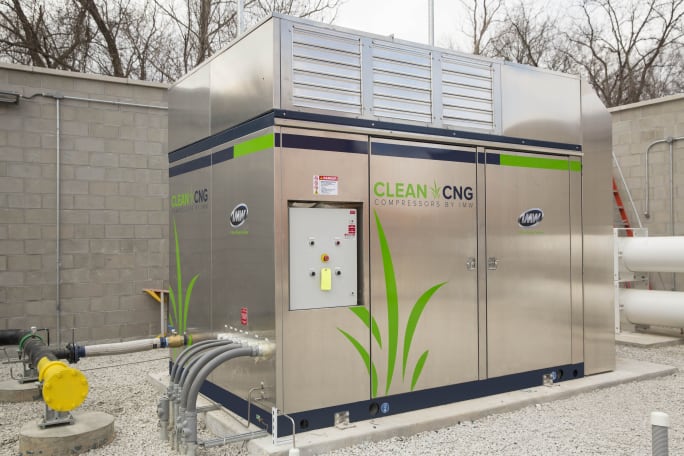
Parkway won a $1.5 million grant to buy the CNG buses and to build a CNG fueling station.
Celebrating CNG
To promote the CNG project, Parkway planned to hold a dedication event on April 3 at one of the district’s high schools.
The district assembled a team to plan the celebration and to develop a video about the CNG project. The event, dubbed “Growing Up Green,” was expected to draw district students and staff, community members and local dignitaries.
“We’ll have the 30 CNG buses rolling in, a band, politicians, a video, hot dogs, T-shirts,” Rosa said in late February. “It will be fun.”
Key points from Parkway's grant application
For its CNG bus project, Parkway School District applied for a federal highway grant through the East-West Gateway Council of Governments. Parkway Director of Transportation Will Rosa says that grants are typically used for highway projects, but council officials were impressed by Parkway’s proposal and its mission of “doing the right thing for kids.” Here are highlights from the district’s grant application narrative, which was written by Denise Pupillo, Parkway’s director of grant writing and gifted students:
- Each day … our students, school staff, parents and neighborhoods are exposed to toxins and emissions that cause health problems like heart disease, asthma, emphysema and cancer.
- The health benefits directly associated through transitioning from diesel to CNG buses for students, teachers and administrators near or at schools are numerous, and this project directly aligns to the region’s transportation plan.
- The number of students in Parkway School District suffering from asthma and allergies [has] skyrocketed over the past 10 years.
- Parkway’s project goal is to acquire funds needed to purchase 30 CNG school buses and a fueling station to immediately reduce the amount of emissions emitted into the environment.
- Parkway and its partners are committed to this project and, if funded, will continue supporting the project financially by purchasing additional CNG buses and approximately 100 other on-site vehicles through our own replacement cycle.
- We intend to have our students be a part of this project in each phase … through ongoing student forums, field site visits and mentorships.
More Alternative Fuels

CALSTART and Forth Combine to Form Catalyst Mobility
The new name represents a renewed vision for the nonprofit focused on advancing clean, equitable, and affordable transportation solutions that move people and goods.
Read More →
Alt-Fuel Moves: New Buses, Charging Hubs & Real-World EV Testing
Propane and electric school bus deployments continue to grow as districts add new vehicles, expand charging infrastructure, and gather more real-world operating data.
Read More →
Fewer Electric School Bus Models Reshape the U.S. Market
WRI’s latest buyer’s guide points to a consolidating electric school bus market, but fewer options may reflect a maturing industry rather than fewer meaningful choices for school bus operators.
Read More →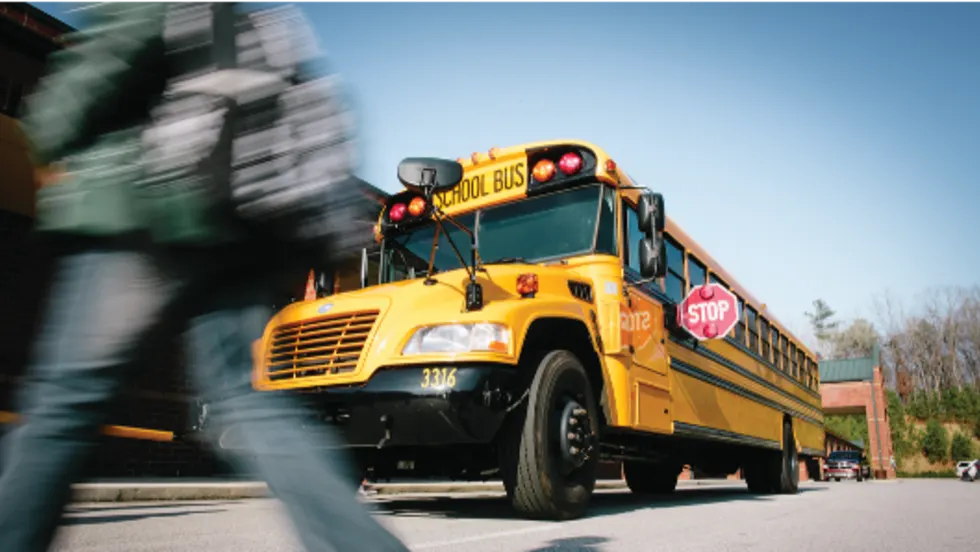
The Fuel Budget You Can Actually Predict: How Propane Autogas Keeps Money in the Classroom
Learn how propane autogas helps school districts manage fuel costs with predictable pricing, lower maintenance, and reduced emissions from former transportation director Joel Stutheit.
Read More →
Hendrickson, Driventic Introduce New Electric Powertrain for School Buses
ELECTRAAX, the electrified, lightweight drive axle offers integrated ePowertrain efficiency and modular flexibility for Class 6–7 school bus use.
Read More →
The Mobility House Joins PowerFlex in Fleet Electrification Deal
The acquisition combines intelligent charging software, bidirectional charging expertise, and fleet electrification services to support the growing adoption of electric school buses across North America.
Read More →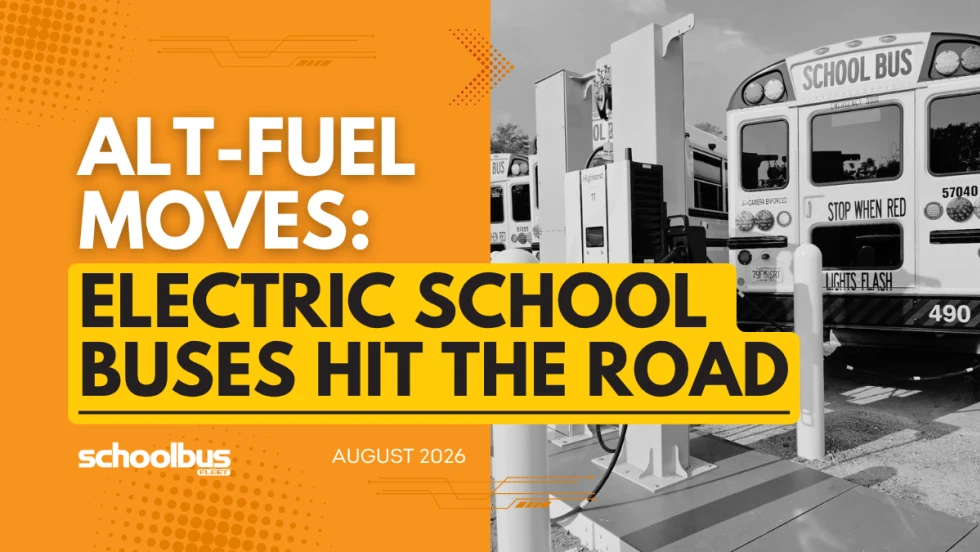
Alt-Fuel Moves: Electric School Bus Investments Hit the Road
See which districts across the U.S. are putting electric school buses into service, expanding charging infrastructure, and planning the next phase of fleet electrification.
Read More →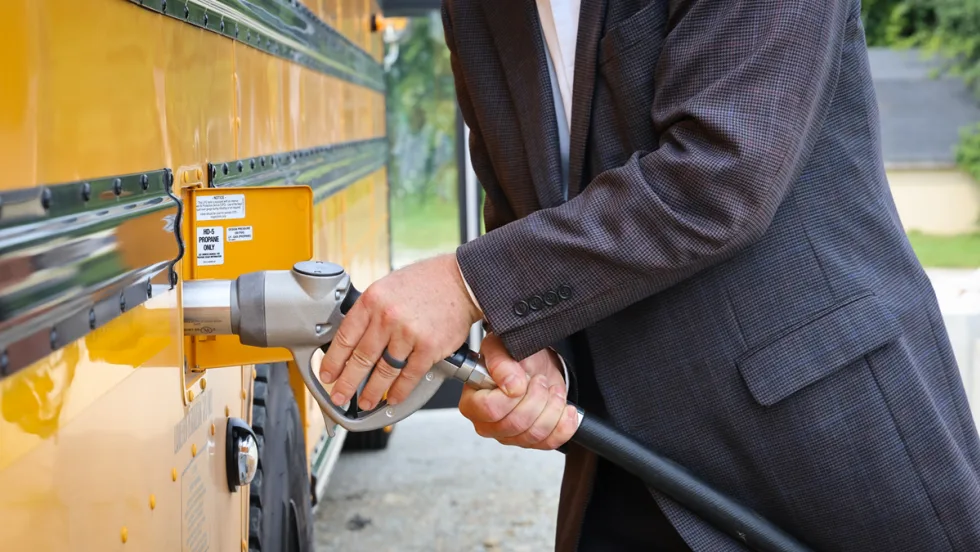
With Fuel Volatility Ahead, School Districts Turn to Propane
While diesel prices peaked above $5 this spring, districts with propane autogas-powered fleets paid under $2 per gallon, according to PERC.
Read More →
EPA Unveils Proposed Changes to 2027 Heavy-Duty Engine Rules
The federal agency has proposed changes to next year’s targets that would eliminate DEF derates, ease warranty requirements, and retain current NOx emissions standards.
Read More →
Alt-Fuel Moves: EV Charging & Infrastructure Projects Gain Momentum
The latest developments include new funding, charging infrastructure, utility investments, and fleet technologies designed to support the transition to electric school buses nationwide.
Read More →