



Our friends in the shop deserve recognition, too
We often describe school bus drivers as the backbone of the pupil transportation industry. Certainly, in sheer numbers, they are the dominant force. A...
We often describe school bus drivers as the backbone of the pupil transportation industry. Certainly, in sheer numbers, they are the dominant force. And, because of their daily contact with the public, they no doubt have the greatest influence on the industry’s image. But they are not the only critical link in a successful transportation program. Behind every great corps of bus drivers is a great maintenance program. Even the best drivers can’t get from point A to point B safely and punctually unless their buses are kept in top working order. That’s no simple task, either. School bus maintenance programs rely on well-trained mechanics, skilled supervisors, properly outfitted garages and increasingly complex electronic diagnostic tools to get the job done with a minimum of drama and maximum of cost efficiency. Top shops merit recognition
That’s why we’ve chosen to recognize 10 exemplary school bus maintenance programs in North America. We selected the school districts and contractors based on several criteria, including training, preventive maintenance, efficiency, safety, innovation, inspection records and morale. Size was not a factor in our screening process. The largest operation, San Diego Unified School District, maintains more than 500 buses, while the smallest, Fort Dodge (Iowa) Community School District, takes care of fewer than 50 buses. As you might expect, each maintenance program profiled in this issue boasts a highly capable staff — with many technicians certified by ASE — and a clean, well-organized garage. One of the common threads among this year’s selections is an accent on training and education. In fact, at the best operations, mechanics are hungry for training. Without a constant emphasis on improvement of skill sets and knowledge, a maintenance program will grow stagnant very quickly. Training offered by vendors and local colleges can help to keep the staff up to speed on the latest chassis, engine and body enhancements. Attendance of state association meetings, especially those that emphasize garage strategies, should be routine, but budget shortfalls are causing some mechanics to miss these important gatherings. School districts and contractors that don’t send as many people as they can to these meetings are realizing a false economy. The knowledge gained at these meetings more then compensates for their cost. Another common thread among our 10 selections is a solid working relationship between the maintenance staff and the bus drivers. Mutual respect is what binds these groups. If that is missing, then communication will be compromised, as will the effective resolution of steering, brake and other on-the-road problems that drivers need to accurately and immediately convey to the maintenance staff. Finally, exemplary maintenance programs have exemplary leadership, whether it’s provided by the transportation supervisor, a shop foreman or a lead mechanic. The best leaders understand that commitment is key at all levels. Having technical knowledge is essential, but learning how to make people commit to their responsibilities on a day-to-day basis is just as important. Just to avoid confusion
This article should not be confused with our “Great Fleets Across America” competition, which recognizes entire transportation operations, one from each state. By the way, if you would like to submit a nomination for our “Great Fleets” competition, you can fill out our online form, which is linked to the front page of our Website, www.schoolbusfleet.com. Judging from the enthusiasm generated by last year’s competition, the 2002 “Great Fleets” event is sure to draw an impressive array of entries. I hope to see yours among them.
More Maintenance
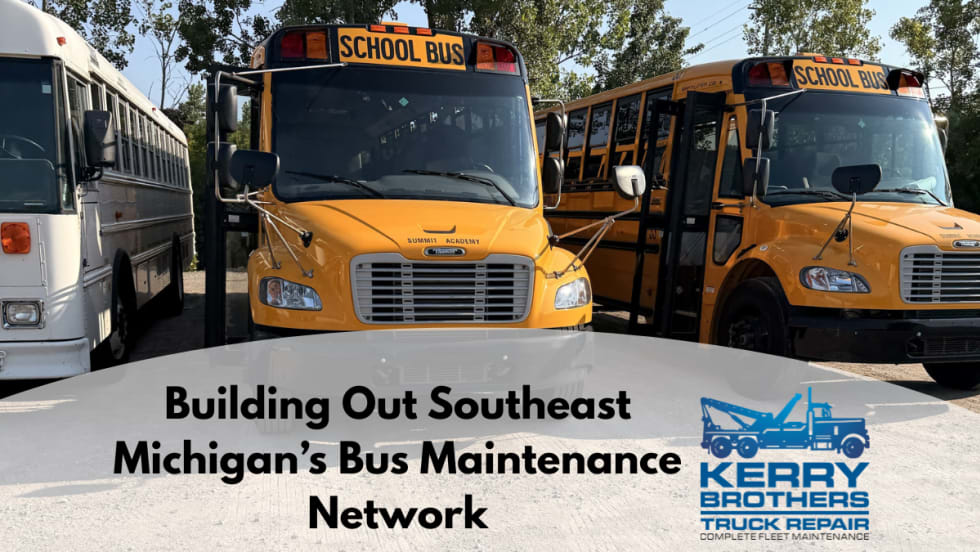
Kerry Brothers Grows Michigan School Bus Repair Network
The acquisition of Downriver Truck and Bus expands Kerry Brothers’ school bus maintenance footprint across southeast Michigan, adding repair capacity, diagnostic resources, and state inspection support.
Read More →
Noregon Introduces CAN Bus Diagnostic Tool, Expands JPRO Features
CAN Mentor and the latest JPRO update aim to simplify vehicle network diagnostics and improve repair efficiency for technicians of all experience levels.
Read More →
Cummins on Smarter, Simpler Engine Innovation
Cummins discusses its first-ever gasoline engine for school buses, EPA 2027, and why bus fleets still want durable, simpler internal combustion options.
Read More →
Report: 72% of Diesel School Buses Now Use Advanced Low-Emission Engines
New data shows advanced low-emission diesel technology continues expanding across school bus fleets, even as electric bus adoption gains momentum.
Read More →
Vampire Tools' CAIMAN 7.5-Inch Multi-Purpose Screw Extractor Long-Nose Pliers with Crimper
Vampire Tools introduced the VAMPLIERS Caiman 7.5-inch multi-purpose pliers, combining screw extraction, cutting, crimping, and gripping functions into a single tool designed for fleet maintenance professionals.
Read More →
How Advanced Diagnostics Helps Bus Fleets Stay Ahead of Repairs
Chat with Noregon’s Kevin Smallhorn at ACT Expo about bus diagnostic tools, telematics integration, CNG maintenance support, and strategies to help reduce downtime and improve uptime.
Read More →
How School Bus Fleets are Getting Ahead of Breakdowns
Don’t let bus downtime wear you down. Here’s how bus operators are shifting from manual processes to AI-powered, data-driven maintenance systems for improved reliability and safety.
Read More →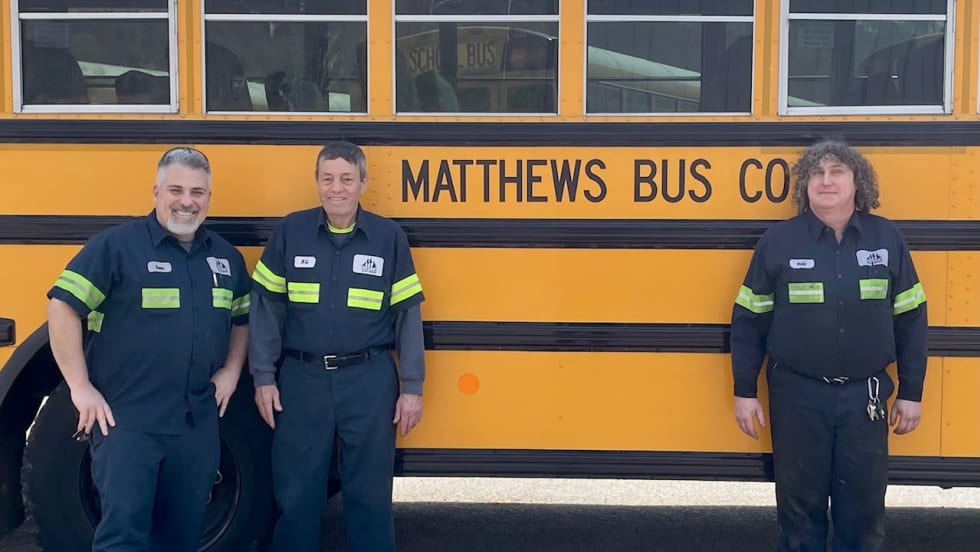
Pennsylvania School Bus Maintenance Team Praised for Dedication to Safety
Matthews Bus Company’s West Jefferson received a letter of commendation from the Pennsylvania State Police for their fleet inspections.
Read More →
From Chaos to Clarity: How School Districts Are Running Leaner Transportation Operations
Covering 38 routes on a Friday afternoon. Buses idling while routes overlap. Parents calling nonstop about late arrivals. Sound familiar? This whitepaper explores how district transportation leaders solved these exact problems — and what measurable results followed.
Read More →
2026 School Bus Fleet Vendor Directory & Buyer's Guide
Searching for the right equipment, technology, or services for your school transportation program? This industry guide brings together manufacturers and suppliers across the entire school bus market, all in one place. Download it to find the partners who can help move your operation forward.
Read More →