




NTSB releases documents in Omaha crash
WASHINGTON, D.C. — The National Transportation Safety Board (NTSB) has made public more than 800 pages of investigative documents on the Oct. 13, ...

WASHINGTON, D.C. — The National Transportation Safety Board (NTSB) has made public more than 800 pages of investigative documents on the Oct. 13, 2001, crash of a school bus in Omaha, Neb., that resulted in four deaths and more than two dozen minor to severe injuries.
The NTSB documents, released on Jan. 21, include transcripts of interviews with many of the students on the bus as well as drivers of other vehicles in the three-bus, two-van convoy.
The bus was taking Seward High School band members home after a competition at a high school in Omaha when it struck a guardrail, rolled 270 degrees to the right and fell about 50 feet before landing in a creek.
NTSB investigators who conducted the interviews focused on the passengers’ recollections of the moments just before, during and after the crash.
The majority of the students interviewed said they escaped the bus through two roof hatches, one near the front of the vehicle and the other near the rear. Some of the students said they were unaware of the emergency exit windows at the rear of the bus — a 78-passenger transit-style bus manufactured by Thomas Built Buses. Investigators pointed out that luggage racks obscured the Emergency Exit signs at the rear of the bus.
During their questioning, investigators also learned that six of the 18 students interviewed did not recall receiving bus evacuation training for several years.
The following is taken from an interview with Adrian Moravec, a 15-year-old student who suffered a broken pelvis, collapsed lung and ruptured spleen in the crash. He was interviewed by Henry Hughes of the NTSB:
Hughes: “How long have you been riding school buses?”
Moravec: “Oh, since . . . a long time.”
Hughes: “Your whole school career?”
Moravec: “Yeah.”
Hughes: “Is that reasonable?”
Moravec: “Yeah.”
Hughes: “Do you recall ever having had any safety classes that concern themselves with evacuating from the bus?”
Moravec: “No.”
Hughes: “Not necessarily a class, but any instruction on the bus where the driver maybe said, ‘We’re going to do an evacuation drill?’”
Morave: “Not that I can remember.”
Marshall Adams, superintendent of Seward School District, denied that evacuation drills were not being conducted. “We have followed the state requirements on evac drills, and have always filled out the paperwork,” he told the Lincoln Journal Star.
The bus driver, a 22-year-old college student, had just started his third year driving for Seward School District and normally drove a 1991 59-passenger Thomas conventional bus. He had driven the 78-passenger transit-style bus involved in the crash only three or four times in the previous two years.
According to a report prepared by Dr. Paul Sind-Prunier, group chair of the NTSB’s Human Performance Group, the driver’s post-crash drug and alcohol tests were negative. In addition, he held a current physical examination card. On the night prior to the trip, he went to bed about midnight and went to work about 7 a.m.
Witnesses described the driver, who suffered critical injuries in the crash, as quiet, yet friendly. None of them had observed anything unusual about his attitude or behavior on the day of the accident. One parent in one of the buses behind the accident bus said the vehicle was frequently off-center, aligned too close to the right side of the road.
The NTSB’s investigative materials will be used in the preparation of a final report this fall.
More Safety

HopSkipDrive Reports Progress on Safety Advisory Council
More than a year after forming the council, independent safety experts have helped shape new rider-safety features and policy progress, with a new goal to address rider behavior.
Read More →
What the 2026 National School Bus Safety Month Resolution Means for Student Transportation
The bipartisan resolution highlights illegal school bus passing, student safety during loading and unloading, and the need for driver training and public education.
Read More →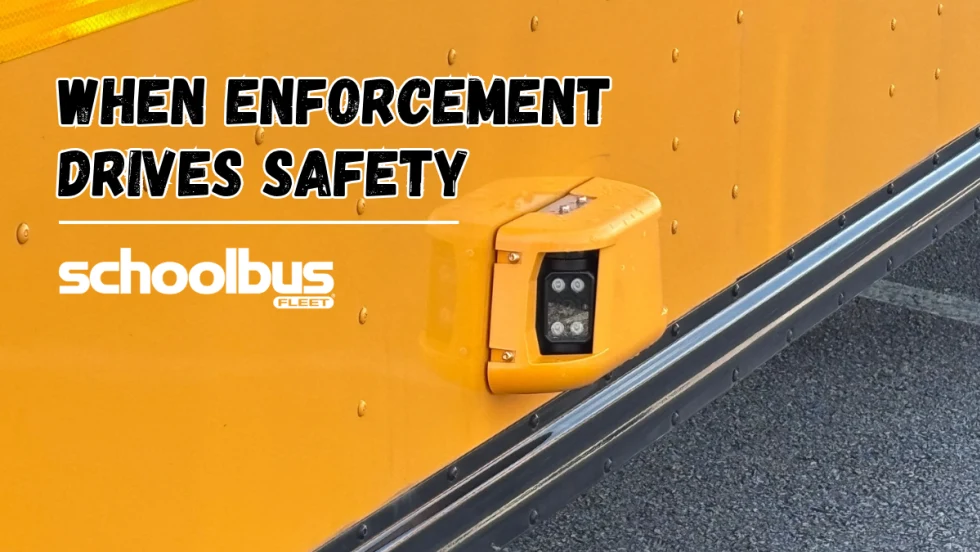
School Bus Stop-Arm Violations Decline 53% Across Verra Mobility Programs
Verra Mobility shares how school bus stop-arm cameras and school zone safety programs are changing driver behavior, reducing violations, and protecting students.
Read More →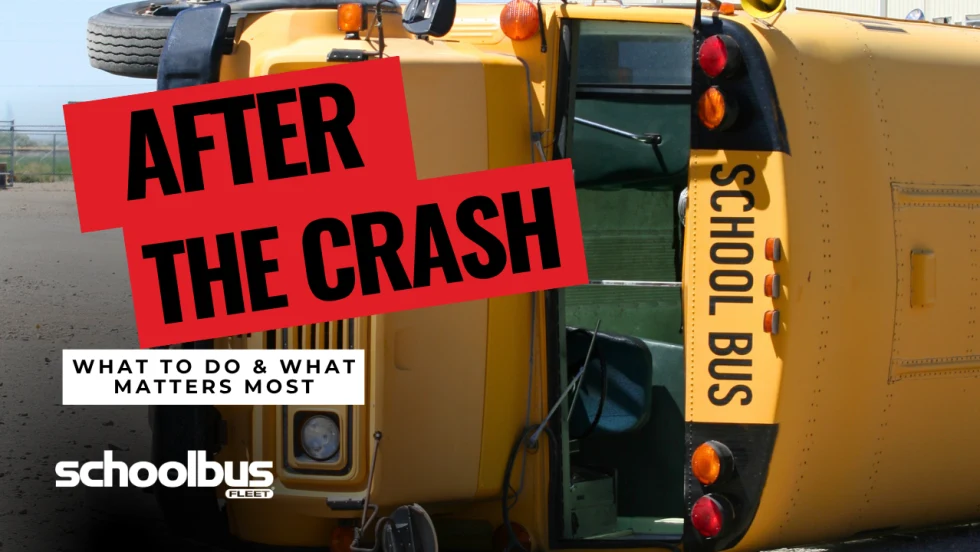
Most Bus Crashes Aren’t Your Fault. Here’s How to Prove It.
A guide for what to do in between a school bus crash and a claim: what to preserve, who to notify, and how to keep the facts available when they matter.
Read More →
National School Bus Safety Week 2026: Tips, Toolkits & Resources to Keep Students Safe
School bus safety takes more than awareness. Explore expert tips, enforcement strategies, and free resources to help protect students on every ride.
Read More →
2 Killed, Dozens Injured in Florida School Bus Crash
A multi-vehicle collision caused a Polk County school bus carrying 37 students to overturn on its way to Winter Haven High School.
Read More →
Illegal School Bus Passing Drops 24% in New York Districts
With fewer than 5% of citations involving repeat offenders, Westchester County officials said enforcement, education, and community partnerships are helping change driver behavior.
Read More →
School's Back. Here's What Happened to Traffic, Speeding & Distraction
What happens to traffic when school resumes? New data analysis examines changes in distracted driving, congestion, and speeding around schools.
Read More →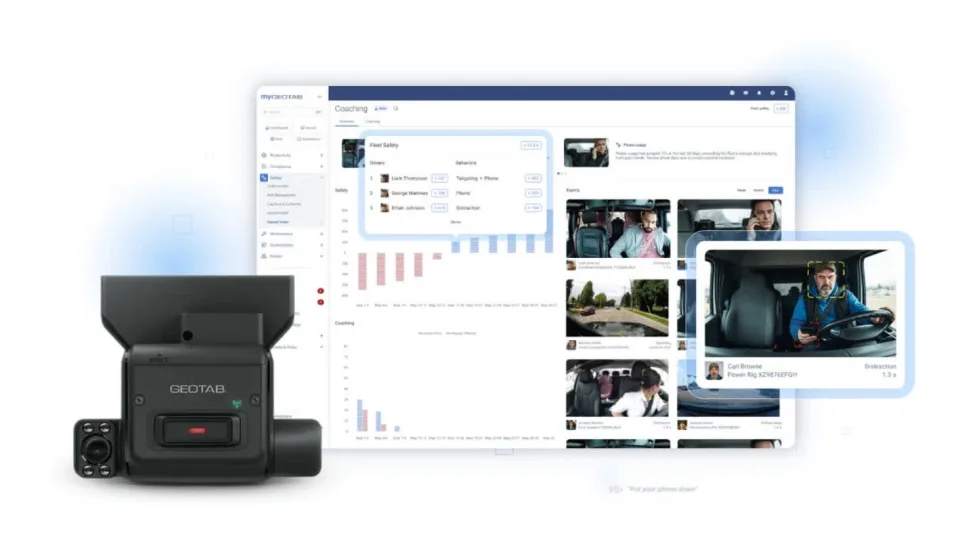
Geotab Expands Fleet Safety Tools With Video Coaching, Risk Insights
New safety and video capabilities aim to help fleet managers assess risk, support drivers, and take targeted action through video coaching, red-light violation detection, and more.
Read More →
How to Build a Better School Bus Driver Training Program
Is it time to strengthen your driver training? Here’s how to pick the right talent and improve recruitment, retention, and safety. This video is brought to you by IC Bus.
Read More →