




NSTA Advocacy in Action — What is MAP-21, and how does it affect our industry?
MAP-21 stands for “Moving Ahead for Progress for the 21st Century.” It was the most recent multi-year surface transportation reauthorization bill, and is past due to be reauthorized.

Ronna Weber is executive director of the National School Transportation
MAP-21, TEA-21, SAFETEA-LU and ISTEA are all acronyms for the last four multi-year surface transportation reauthorization bills over the last 23 years.
MAP-21 stands for “Moving Ahead for Progress for the 21st Century.” It was the most recent reauthorization bill, enacted in 2012, and is past due to be reauthorized.
These bills are often referred to as “highway bills.” There have been multiple extensions of each to keep programs funded and running while Congress negotiates the next big bill. So why are they important?
In short, these bills authorize funding and policy for all the major federal transportation programs that affect the school bus industry, including the federal highway, transit, motor carrier, highway safety and vehicle safety programs. These reauthorization bills are by far the most impactful legislation affecting school buses that Congress considers. Historically, they are multi-year bills because of the long lead time needed for planning and construction of highways and transit systems, which receive the bulk of the funding.
So why does it take so long to negotiate and pass this bill?
• First and most important, the primary funding mechanism for these programs, the Highway Trust Fund, is funded 95% by federal fuel taxes, which have not been raised since 1993. Due to a variety of factors over the last decade, including higher fuel economy automobiles, overall lower vehicle miles traveled, and the decision to delay or not purchase automobiles, the fund has not kept pace with funding levels for the federal program. Congress has saved the Highway Trust Fund from bankruptcy with multiple infusions from the general Treasury to keep transportation programs going.
• Second, all bills must be revenue-neutral, meaning if you add programmatic funding in one area, you have to find savings in another to pay for it. Because there is no political will to raise fuel taxes, Congress is finding it more difficult to find other sources of revenue without raising taxes. This is the main reason reaching agreement on these bills is becoming even more challenging.
• Third, reauthorization bills are huge pieces of legislation always containing several new policy provisions. MAP-21 was over 1,000 pages of text.
• Finally, because the bill affects so many programs, there are many congressional committees of jurisdiction (see table below) with many competing priorities and hurdles to scale before an agreement can be reached.
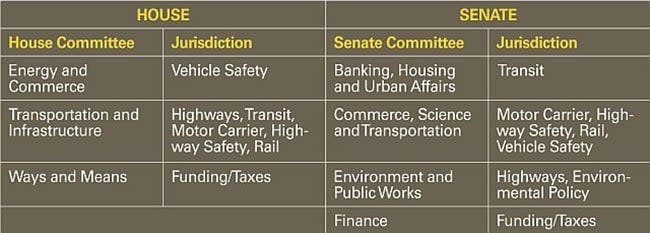
This table shows the various congressional committees that have a role in the highway bill reauthorization process and the programs under their jurisdiction.
Most importantly, how does this bill affect school bus transportation?
MAP-21 directed the Federal Motor Carrier Safety Administration (FMCSA) to complete 29 new rulemakings affecting commercial motor vehicle operators and drivers. Those new rulemakings did not include any of the ones that were already underway at FMCSA. MAP-21 also directed FMCSA to implement 34 programmatic changes and complete 15 reports.
Examples of a few of the mandated rulemakings include electronic on-board recorders; patterns of safety violations; safety fitness determination; a unified registration system; and drug and alcohol clearinghouse.
There are several other provisions in MAP-21 that impact school transportation. The National Highway Traffic Safety Administration was given a safety grant to address teen traffic safety, allowing states to use a portion of their funding to improve traffic safety for teen drivers.
In addition, the public transit program has contained protections against encroachment from public transit agencies in the provision of home-to-school private school bus transportation and charter bus transportation for many decades. These protections must be preserved in every bill.
The National School Transportation Association (NSTA) is working on many issues regarding MAP-21 reauthorization, but our top priorities include limiting the FMCSA’s ability to dramatically increase minimum insurance requirements on school bus operators; reforming the Compliance, Safety and Accountability program and scoring system; and preserving the school bus and charter protections in the transit programs.
NSTA also raised concerns about legislation that has been introduced to authorize hair follicle testing as a Department of Transportation-approved alternative method for drug testing, which may also be included in the reauthorization.
More Safety
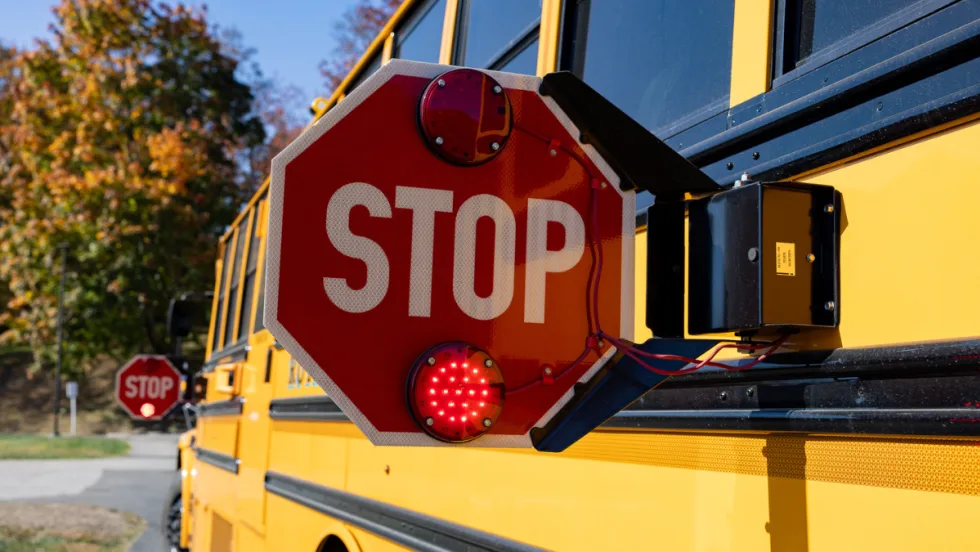
Illegal School Bus Passing Drops 24% in New York Districts
With fewer than 5% of citations involving repeat offenders, Westchester County officials said enforcement, education, and community partnerships are helping change driver behavior.
Read More →
School's Back. Here's What Happened to Traffic, Speeding & Distraction
What happens to traffic when school resumes? New data analysis examines changes in distracted driving, congestion, and speeding around schools.
Read More →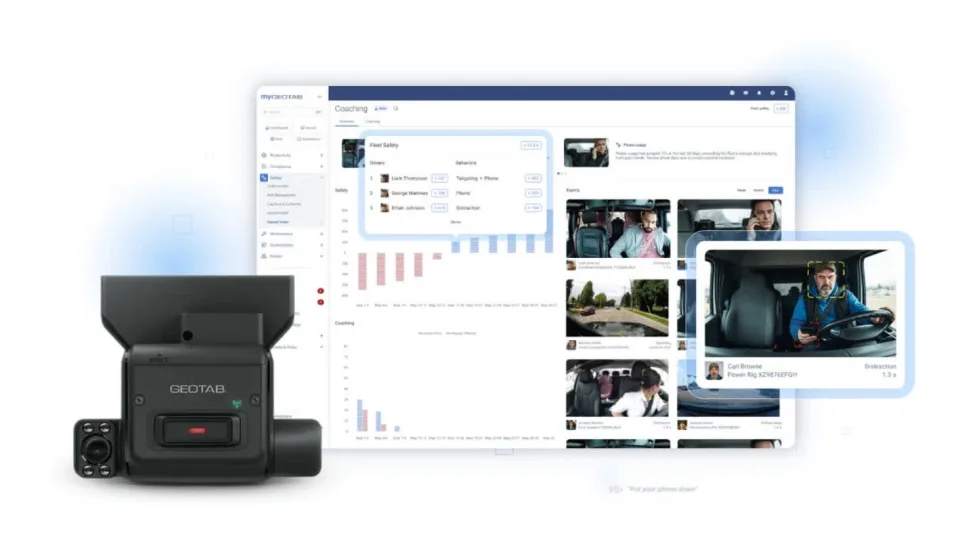
Geotab Expands Fleet Safety Tools With Video Coaching, Risk Insights
New safety and video capabilities aim to help fleet managers assess risk, support drivers, and take targeted action through video coaching, red-light violation detection, and more.
Read More →

How to Build a Better School Bus Driver Training Program
Is it time to strengthen your driver training? Here’s how to pick the right talent and improve recruitment, retention, and safety. This video is brought to you by IC Bus.
Read More →
Recent School Bus Accidents Leave 2 Dead, 2 Injured
Four school bus crashes in Florida, Illinois, and Georgia highlight risks in transportation lots, at bus stops, and during student loading and unloading.
Read More →
When Every Second Matters, Clarity Keeps Routes Moving
From routine delays to urgent incidents, strong communication practices help drivers, dispatchers, schools, and families respond with confidence.
Read More →
What Happens When a School Bus Catches Fire — and What Can Help
School bus fires are rare but can be devastating. Learn how advances in fire suppression and asset protection help fleets detect fires earlier, reduce damage, and improve safety.
Read More →
Geotab Launches Tool to Help Fleets Investigate Road Incidents
Geotab Investigations combines telematics data, video, documents, and other evidence to help fleets reconstruct incidents, resolve claims, and determine what happened.
Read More →
Texas Sixth Grader Wins 2026 National School Bus Safety Poster Contest
Sai Darshana Yekolu of Moseley Middle School in Prosper, Texas, was named the newest winner for her artwork, bringing the theme of “Safe Rides, Everyday Heroes” to life.
Read More →
Doing More With Less: How Transportation Directors Can Prioritize Safety Amid Budget Uncertainty
With diesel prices soaring and nearly one-third of transportation directors expecting budget cuts, maintaining student safety has never been more challenging. Download this guide to learn how leading districts are prioritizing risk, funding critical safety technology, and building stronger budget cases with data.
Read More →