




Related: Pupil Transportation Associations Unite to Support School Bus Safety Bill
NSTA Advocacy in Action — Bringing School Bus Safety Advocacy to Capitol Hill
As we continue to evolve school bus manufacturing, design, and equipment, let’s also evolve laws, penalties, and — most importantly — driver mindset, when it comes to careless and distracted driving around stopped school buses.
by John Benish Jr.
August 27, 2019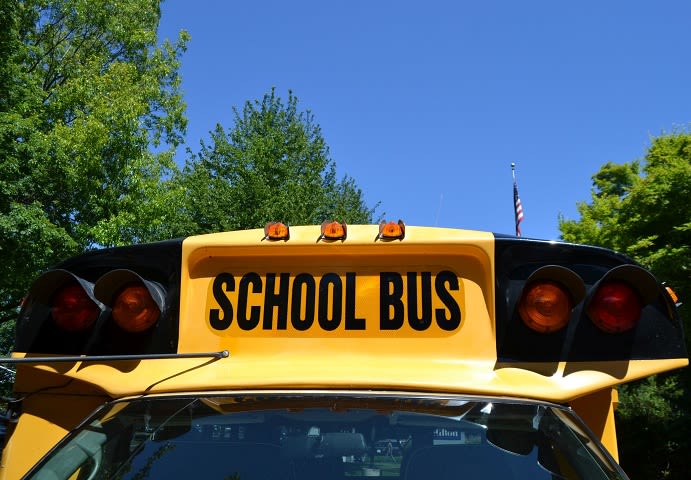
File photo
3 min to read
File photo
On July 24, I was proud to be named 32nd president of the National School Transportation Association (NSTA). This honor was bestowed upon me at the conclusion of our annual meeting and convention in Austin, Texas.
Almost immediately upon being handed “the gavel,” my wife Christie and I headed directly to Washington, D.C., where I was scheduled to testify the next day before the House Transportation and Infrastructure Committee’s Highways and Transit Subcommittee. I was one of six panelists invited, and our shared endeavor was “examining the federal role in improving school bus safety.”
I felt fortunate to participate in this hearing for many reasons, but two immediately rose to the top of my list. First, my fellow panelists represented a cross-section of expertise: a Maine legislator, a labor union representative, an expert from the National Transportation Safety Board, and advocates for state motor vehicle agencies. Second, I could tell from the depth of their passion and knowledge that these individuals were well-intentioned advocates for the children we transport every school day. Each of us had five minutes to testify and emphasize key points that we hoped would resonate with House committee members.
In my testimony, I highlighted the fact that “the school bus is the safest vehicle on the road.” If you are involved even remotely in school transportation, you may have heard this statement before. Clearly, I felt comfortable using it in my testimony because it truly is borne out of U.S. Department of Transportation (DOT) statistics. And while the dedicated men and women involved at all levels of the school transportation industry should be proud of our industry’s impeccable track record, we still must strive for perfection. The schoolchildren we transport deserve nothing less.

John Benish Jr. is the president of the National School Transportation Association.
Not surprisingly, most of the House committee members who attended the hearing either knew or sensed that the industry had a stellar safety record, but I believe that they were surprised by one of my statements: “Despite the unparalleled safety record of school bus transportation, school bus riders remain vulnerable during the portion of their trip when they are waiting at bus stops, crossing streets, and loading or unloading from the school bus.” I believe this statement also provided important context in the subcommittee’s deliberations.
Additionally, the National Association of State Directors of Pupil Transportation recently released its annual illegal school bus passing survey, and the findings are breathtaking. Almost 131,000 school bus drivers in 39 states observed 95,319 illegal school bus passing incidents in one day.
I’d like to say that we have made headway in curbing this alarming trend, but we have not, as the results showed an approximate 12% increase from the previous year. What’s worse: in my testimony I mentioned a family who lost three children in Rochester, Ind., because an oncoming motorist failed to stop for the school bus that was picking them up. That incident alone should have been enough for Congress to quickly address this problem, but it wasn’t.
Truthfully, any school bus accident is devastating, and the industry continues to evolve the design and equipment on the yellow bus. Meanwhile, these types of accidents are preventable, and something has to be done immediately, which is why NSTA continues to gather support of the STOP for School Buses Act of 2019. This bipartisan piece of legislation directs the U.S. DOT to review state laws, enforcement and penalties, technology, driver education, distraction, and other issues that could prevent this illegal activity. It also calls upon the DOT to create a public safety messaging campaign on the danger of illegally passing stopped school buses.
As we continue to evolve school bus manufacturing, design, and equipment, let’s also evolve laws, penalties, and — most importantly — driver mindset, when it comes to careless and distracted driving around stopped school buses.
Subscribe to Our Newsletter
More Safety

How to Build a Better School Bus Driver Training Program
Is it time to strengthen your driver training? Here’s how to pick the right talent and improve recruitment, retention, and safety. This video is brought to you by IC Bus.
Read More →
Recent School Bus Accidents Leave 2 Dead, 2 Injured
Four school bus crashes in Florida, Illinois, and Georgia highlight risks in transportation lots, at bus stops, and during student loading and unloading.
Read More →
Sponsored•September 8, 2026
When Every Second Matters, Clarity Keeps Routes Moving
From routine delays to urgent incidents, strong communication practices help drivers, dispatchers, schools, and families respond with confidence.
Read More →

What Happens When a School Bus Catches Fire — and What Can Help
School bus fires are rare but can be devastating. Learn how advances in fire suppression and asset protection help fleets detect fires earlier, reduce damage, and improve safety.
Read More →
Geotab Launches Tool to Help Fleets Investigate Road Incidents
Geotab Investigations combines telematics data, video, documents, and other evidence to help fleets reconstruct incidents, resolve claims, and determine what happened.
Read More →
Texas Sixth Grader Wins 2026 National School Bus Safety Poster Contest
Sai Darshana Yekolu of Moseley Middle School in Prosper, Texas, was named the newest winner for her artwork, bringing the theme of “Safe Rides, Everyday Heroes” to life.
Read More →
Sponsored•August 27, 2026
Doing More With Less: How Transportation Directors Can Prioritize Safety Amid Budget Uncertainty
With diesel prices soaring and nearly one-third of transportation directors expecting budget cuts, maintaining student safety has never been more challenging. Download this guide to learn how leading districts are prioritizing risk, funding critical safety technology, and building stronger budget cases with data.
Read More →
Walton County Schools Adds Gatekeeper Stop-Arm Enforcement System
The Florida district will deploy Gatekeeper’s updated Student Protector technology, which now incorporates AI to improve video evidence.
Read More →
How To Build a More Secure School Bus Yard During and After Hours
As thefts and overnight security threats continue, school transportation leaders are combining stronger operational practices with AI-enabled surveillance to better protect buses, facilities, and staff.
Read More →
FMCSA Names New Chief Safety Officer: What School Bus Operators Should Know
Steve Dowling is set to lead the federal agency's efforts to advance commercial motor vehicle safety and reduce crashes, fatalities, and injuries on the nation's roadways.
Read More →