




North Carolina deploys 13 buses with lap/shoulder belt systems
RALEIGH, N.C. — A program that could shed some light on the practicality and effectiveness of lap/shoulder belt systems in large school buses is u...

RALEIGH, N.C. — A program that could shed some light on the practicality and effectiveness of lap/shoulder belt systems in large school buses is underway in North Carolina.
Thirteen conventional school buses equipped with lap/shoulder belt systems manufactured by C.E. White have been put into operation at 11 North Carolina school districts.
Derek Graham, North Carolina’s director of pupil transportation, said the buses were delivered to the school districts in early December and began hitting the streets in mid-January.
Graham said the program has been more than a year in the making, pre-dating the release of the National Highway Traffic Safety Administration’s report on occupant protection, which was issued in 2002.
“It started when we saw the C.E. White product at the NAPT trade show in Nashville in 2001,” Graham said. Talks were begun with representatives of C.E. White and Thomas Built Buses, which already had the state’s order of buses in the manufacturing pipeline.
Once the logistics were squared away, Graham’s staff at the Department of Public Instruction began approaching districts to see if they would be willing to accept modifications to their buses, namely the installation of lap/shoulder systems.
Eleven districts agreed, and it was decided that 13 buses would be fitted with the C.E. White system.
Graham said the impetus for the program was two-fold: “While there may be minimal benefit in reducing the number of fatalities, we want to find out if there’s a reduction in injuries and an improvement in rider behavior,” he said. “The only way to find out is to try it and see.”
The lap/shoulder belt systems are installed on Thomas’ 72-passenger conventional buses. Instead of the traditional three/three seating configuration with 39-inch seats, the buses have a three/two setup with 45- and 30-inch seats. This will reduce design capacity from 72 to 60 passengers.
But Graham pointed out that the three/two configuration can actually boost capacity in some cases. “If they can sit three high school students on a 45-inch seat, that would increase capacity,” Graham said, explaining that, in general, only two high school students will fit on a standard 39-inch seat.
Because the C.E. White seats are slightly deeper than standard seats, the bus was lengthened slightly to accommodate 12 rows, Graham said. “The same number of rows would not fit in the same bus,” he said. “The people at Thomas suggested lengthening the bus rather than decreasing the capacity.”
The buses will be used at a variety of schools at the 11 districts — nine elementary schools, eight middle schools, three high schools and one K-12 school.
Graham said the transportation directors at each of the districts have been asked to lay out the expectation that the restraint systems will be used. “But it’s not anything that we’ve told them to require,” he added.
The transportation directors were also told to select a variety of routes in terms of disciplinary problems. “We asked them to not necessarily pick their best-behaved routes,” Graham said. To benchmark the response to the lap/shoulder belt systems, video footage was taken of the affected routes before the new buses were deployed. Once the buses have been on the road for a few months, a before-and-after video comparison will be performed.
The Center for Urban Affairs at North Carolina State University is helping to gather information about the effectiveness of the restraint systems. Researchers already have gathered pre-implementation data from parents and principals regarding their perceptions and opinions about school bus safety. “We’ll be real curious to see if the opinions change after the buses have been out there for a couple of months,” Graham said.
Perhaps the most instructive feedback will come from the drivers, however. They’ll be assessing changes in behavior on their buses and will try to get a handle on the usage rate of the belt systems.
Graham said he is keeping an open mind about the results of the program. “It may not accomplish what we thought it would, but it may accomplish things we didn’t expect,” he said. The information gathered from the program will be analyzed for future procurement. “We have a fleet of 13,000 buses that we replace. We wouldn’t want to replace them without some data behind us,” Graham said.
More Safety
Illegal School Bus Passing Drops 24% in New York Districts
With fewer than 5% of citations involving repeat offenders, Westchester County officials said enforcement, education, and community partnerships are helping change driver behavior.
Read More →
School's Back. Here's What Happened to Traffic, Speeding & Distraction
What happens to traffic when school resumes? New data analysis examines changes in distracted driving, congestion, and speeding around schools.
Read More →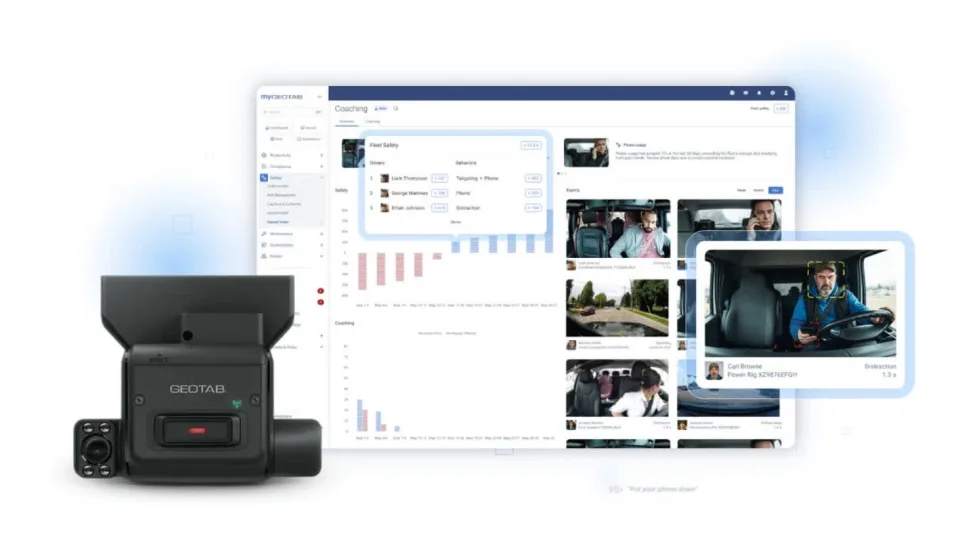
Geotab Expands Fleet Safety Tools With Video Coaching, Risk Insights
New safety and video capabilities aim to help fleet managers assess risk, support drivers, and take targeted action through video coaching, red-light violation detection, and more.
Read More →

How to Build a Better School Bus Driver Training Program
Is it time to strengthen your driver training? Here’s how to pick the right talent and improve recruitment, retention, and safety. This video is brought to you by IC Bus.
Read More →
Recent School Bus Accidents Leave 2 Dead, 2 Injured
Four school bus crashes in Florida, Illinois, and Georgia highlight risks in transportation lots, at bus stops, and during student loading and unloading.
Read More →
When Every Second Matters, Clarity Keeps Routes Moving
From routine delays to urgent incidents, strong communication practices help drivers, dispatchers, schools, and families respond with confidence.
Read More →
What Happens When a School Bus Catches Fire — and What Can Help
School bus fires are rare but can be devastating. Learn how advances in fire suppression and asset protection help fleets detect fires earlier, reduce damage, and improve safety.
Read More →
Geotab Launches Tool to Help Fleets Investigate Road Incidents
Geotab Investigations combines telematics data, video, documents, and other evidence to help fleets reconstruct incidents, resolve claims, and determine what happened.
Read More →
Texas Sixth Grader Wins 2026 National School Bus Safety Poster Contest
Sai Darshana Yekolu of Moseley Middle School in Prosper, Texas, was named the newest winner for her artwork, bringing the theme of “Safe Rides, Everyday Heroes” to life.
Read More →
Doing More With Less: How Transportation Directors Can Prioritize Safety Amid Budget Uncertainty
With diesel prices soaring and nearly one-third of transportation directors expecting budget cuts, maintaining student safety has never been more challenging. Download this guide to learn how leading districts are prioritizing risk, funding critical safety technology, and building stronger budget cases with data.
Read More →