




NHTSA targets release of school bus final rule
ATLANTA — The National Highway Traffic Safety Administration (NHTSA) plans to issue a final rule on school bus safety early next year. The rule wi...

ATLANTA — The National Highway Traffic Safety Administration (NHTSA) plans to issue a final rule on school bus safety early next year.
The rule will be the result of the agency’s Notice of Proposed Rulemaking (NPRM) from last year that recommended changes to enhance school bus passenger crash protection.
Terrance Schiavone, southeastern regional administrator for NHTSA, gave an update on the rulemaking effort at the Southeastern States Pupil Transportation Conference in Atlanta in mid-July.
The key proposals of the NPRM are to require lap-shoulder belts instead of only lap belts on small school buses, provide guidance for voluntary installation of lap-shoulder belts on large buses, and raise the minimum seat back height from 20 to 24 inches on all new school buses.
Schiavone said that the NPRM drew more than 120 comments from the general public, school transportation providers, bus and seat belt manufacturers, industry associations and other groups.
Among those who commented from the general public, 75 percent favored installation of seat belts on school buses. School transportation providers and manufacturers generally supported the NPRM’s proposal to develop voluntary standards for lap-shoulder belts on large school buses.
Schiavone said that NHTSA is currently testing new lap-shoulder belt-equipped school bus seats made by SafeGuard and M2K. The testing is scheduled to be completed this fall.
After the crash tests and NPRM comment analysis are completed, the final rule will be issued. Schiavone said that NHTSA expects to issue the final rule in winter 2009.
Rae Tyson, a spokesperson for NHTSA, said in an e-mail that he could not comment on whether the key elements of the NPRM will be in the final rule.
However, Tyson noted one point in the NPRM that NHTSA is re-evaluating: its finding that lap-shoulder belt systems on school buses would require approximately 15 inches of seat width per passenger.
The new SafeGuard and M2K systems that NHTSA is testing fit three smaller students on a 39-inch seat, equating to 13 inches of seat width per passenger.
“The seat width was one of the issues raised in comments to the NPRM, and the final rule will address those comments,” Tyson said.
In Schiavone’s presentation at the Southeastern States conference, he said that NHTSA recommends that pupil transportation providers consider lap-shoulder belts for large buses if there would be no reduction in the number of children transported. The new generation of lap-shoulder-belt seats could eliminate the potential for capacity loss that was inherent in older systems.
While NHTSA has said that lap-shoulder belts could enhance safety on large buses, it has not concluded whether lap belts on large buses are helpful or potentially harmful, as some in the pupil transportation industry have asserted.
On that front, NHTSA studied crash data from New York state, which has required lap belts on school buses since 1987. But Schiavone said that the data were limited and did not lead to a conclusion.
“The influence on the overall occupant protection of lap belts on large school buses is undetermined,” Schiavone said in his presentation.
Another element of the NPRM that Schiavone addressed was NHTSA’s approval to use Section 402 federal highway safety funds to cover the additional cost of equipping school buses with seat belts.
Schiavone said that the agency’s stance has not changed, despite some high-profile opposition. The Governors Highway Safety Association had said that such use of Section 402 funds could be detrimental to other safety needs, such as programs to reduce drunken driving and to increase occupant protection for the general population.
Also during his Southeastern States presentation, Schiavone said that NHTSA has been working on updated training programs for pupil transporters.
The agency has revised its School Bus Driver In-Service Safety Series and plans to make it available on the NHTSA Website beginning this fall, in conjunction with the NAPT conference. The program includes a new module on emergency evacuation in addition to modules on such topics as special needs, crossing safety and adverse weather conditions.
NHTSA also revised and has begun distributing its Child Passenger Restraint Systems on School Buses National Training. Next year, the agency will begin producing a how-to video on that topic, to be released in 2010.
More Safety

How to Build a Better School Bus Driver Training Program
Is it time to strengthen your driver training? Here’s how to pick the right talent and improve recruitment, retention, and safety. This video is brought to you by IC Bus.
Read More →
Recent School Bus Accidents Leave 2 Dead, 2 Injured
Four school bus crashes in Florida, Illinois, and Georgia highlight risks in transportation lots, at bus stops, and during student loading and unloading.
Read More →
When Every Second Matters, Clarity Keeps Routes Moving
From routine delays to urgent incidents, strong communication practices help drivers, dispatchers, schools, and families respond with confidence.
Read More →

What Happens When a School Bus Catches Fire — and What Can Help
School bus fires are rare but can be devastating. Learn how advances in fire suppression and asset protection help fleets detect fires earlier, reduce damage, and improve safety.
Read More →
Geotab Launches Tool to Help Fleets Investigate Road Incidents
Geotab Investigations combines telematics data, video, documents, and other evidence to help fleets reconstruct incidents, resolve claims, and determine what happened.
Read More →
Texas Sixth Grader Wins 2026 National School Bus Safety Poster Contest
Sai Darshana Yekolu of Moseley Middle School in Prosper, Texas, was named the newest winner for her artwork, bringing the theme of “Safe Rides, Everyday Heroes” to life.
Read More →
Doing More With Less: How Transportation Directors Can Prioritize Safety Amid Budget Uncertainty
With diesel prices soaring and nearly one-third of transportation directors expecting budget cuts, maintaining student safety has never been more challenging. Download this guide to learn how leading districts are prioritizing risk, funding critical safety technology, and building stronger budget cases with data.
Read More →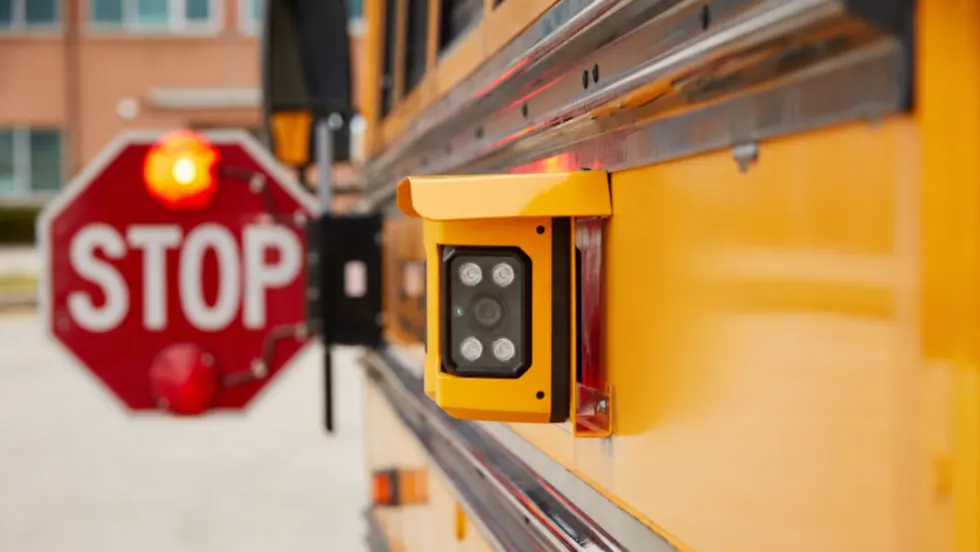
Walton County Schools Adds Gatekeeper Stop-Arm Enforcement System
The Florida district will deploy Gatekeeper’s updated Student Protector technology, which now incorporates AI to improve video evidence.
Read More →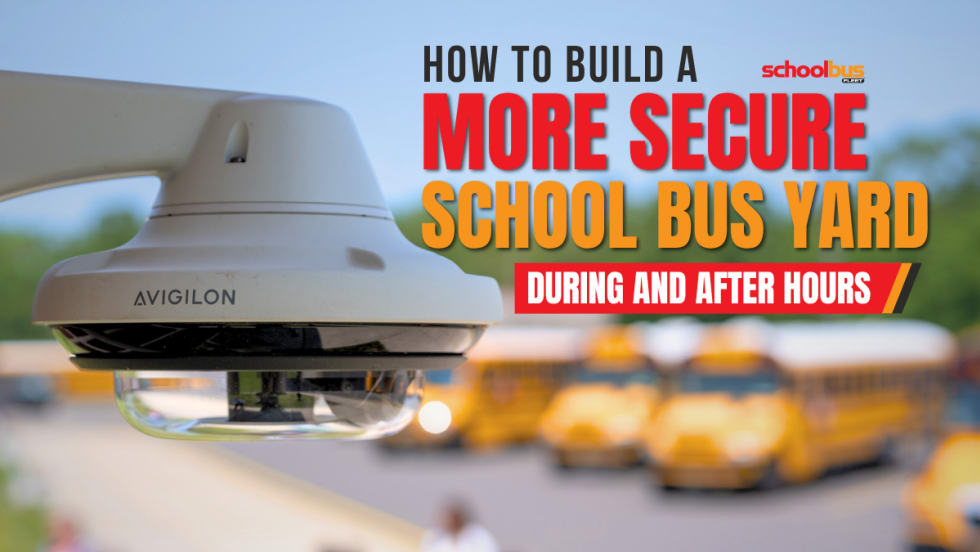
How To Build a More Secure School Bus Yard During and After Hours
As thefts and overnight security threats continue, school transportation leaders are combining stronger operational practices with AI-enabled surveillance to better protect buses, facilities, and staff.
Read More →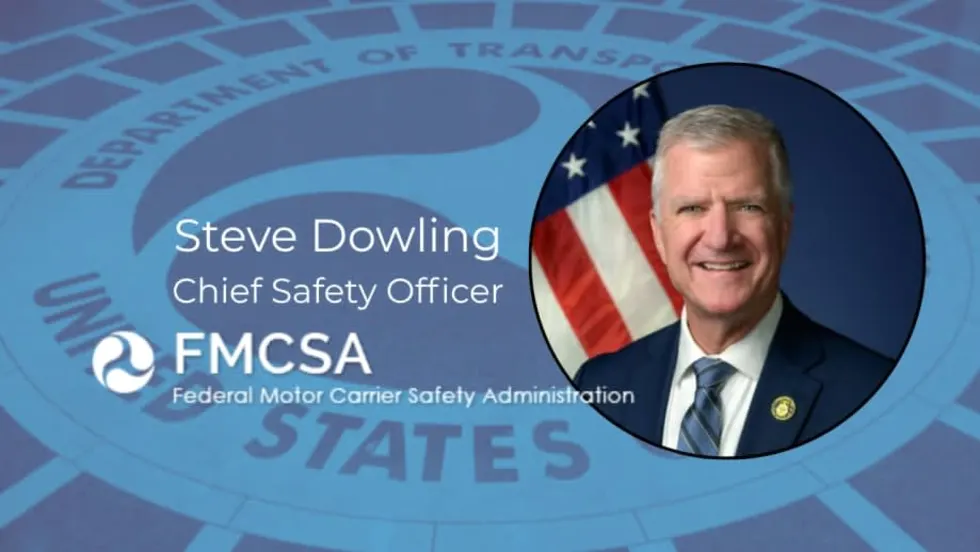
FMCSA Names New Chief Safety Officer: What School Bus Operators Should Know
Steve Dowling is set to lead the federal agency's efforts to advance commercial motor vehicle safety and reduce crashes, fatalities, and injuries on the nation's roadways.
Read More →