




NAPT News & Views — NHTSA Proposes Project to Gather Seat Belt Info
NAPT's executive director says that eliminating confusion, getting answers, and having additional information would go a long way toward advancing state and local consideration of lap-shoulder belts in school buses.
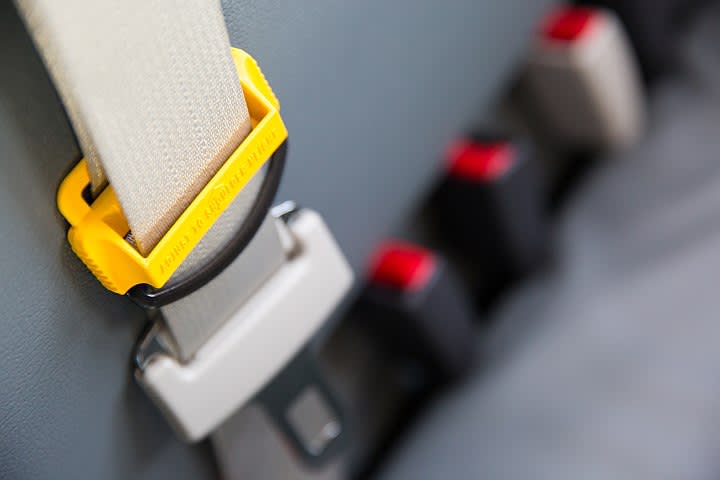
Photo courtesy Des Moines (Iowa) Public Schools
Photo courtesy Des Moines (Iowa) Public Schools
The National Highway Traffic Safety Administration (NHTSA) wants to collect information from states and school bus officials primarily about seat belts, but also about bus driver distraction. Before doing so, NHTSA must solicit public comment and then get the survey methodology approved by the White House’s Office of Management and Budget.
While we applaud NHTSA for its recent focus on pupil transportation, we are troubled that the agency cites the industry’s “resistance” against installing seat belts on school buses as the core premise for its proposed information collection effort. We believe “resistance” is the wrong characterization of the industry’s perspective.
Actually, there are mixed messages from NHTSA and some unaddressed operational concerns.
For example, at the 2015 NAPT Summit, NHTSA announced a dramatic shift in its policy about belts on large school buses.
Then-Administrator Mark Rosekind stated, “NHTSA has not always spoken with a clear voice on the issue of seat belts on school buses. So let me clear up any ambiguity now: NHTSA’s policy is that every child on every school bus should have a three-point seat belt.”
Despite Rosekind’s pronouncement, ambiguity remains.
Specifically, there are a variety of regulatory documents — NHTSA’s official public record — that are in conflict with the agency’s new policy. To our knowledge, these documents have not been redacted, retracted, or otherwise modified.
So, in the interest of advancing consideration of seat belts by states and school districts, we consistently ask NHTSA to clear up the confusion. Resistance? We’ll let you be the judge.
We also point out to NHTSA that after every serious school bus crash, the question most often asked by the media is “Why don’t school buses have seat belts?” In these situations (frankly, especially in these situations), NHTSA typically stays out of the fray. The most that they usually say is something like “it is commonly known that the use of seat belts has improved safety for other types of vehicles.”
But for those other vehicles, seat belts are required — NHTSA mandates them. Additionally, those other vehicles are crash-tested by NHTSA and the Insurance Institute for Highway Safety in front, side, rear, and rollover scenarios at higher crash speeds. School buses are not.

Mike Martin is executive director of the National Association for Pupil Transportation.
We believe it is NHTSA’s job — their obligation — to clearly explain to the general public why they treat school buses differently from other vehicles, particularly passenger cars. This has become more important than ever since Rosekind’s announcement in 2015.
We also believe that NHTSA’s proposed information gathering project needs to be more representative of the nation, and not just “school districts who have implemented, or are planning to implement, seat belts on their school buses.” It would be tremendously helpful to understand why states have chosen not to mandate seat belts on their school buses, especially since state directors of pupil transportation as a whole support them.
The state and local focus of analysis seems increasingly centered on how student behavior improvement and bus driver satisfaction relate to the use of belts on buses. While important collateral benefits, those are not the questions being asked after a serious crash. Rather, at those moments, all attention is on whether or not seat belts would have prevented a fatality or reduced serious injuries.
We believe strongly that advancing seat belts in school buses as the right choice should have its major emphasis on passenger crash protection in all scenarios, particularly those that are likely to require expeditious emergency evacuation.
We also believe it’s important to seek information from many jurisdictions, and especially those that do not have seat belt requirements, to understand their challenges, priorities, and questions.
Finally, as the Government Accountability Office pointed out in its January 2017 report on school bus safety, “states play a primary role in overseeing school bus safety … and states have their own mechanisms to use state crash data to identify and use federal grant programs to address highway safety issues in their state. … At present, no states identified school bus safety as a priority area in applications for the State and Community Highway Safety Grant Program or Motor Carrier Safety Assistance Program.”
We believe this is also a matter that should be discussed as part of the proposed NHTSA project. It’s important to understand the reluctance of state policymakers to engage in these grant programs.
All in all, NAPT supports NHTSA’s efforts to dig deeper into this matter, and we are pleased that they seem genuinely interested in exploring the issues, especially the operational issues. Seat belts remain a front burner discussion in our industry, and NAPT is committed to being actively engaged in the conversation.
We believe eliminating confusion, getting answers, and having additional information would go a long way toward advancing state and local consideration of lap-shoulder belts in school buses. How about you?
More Management

How to Build a Better Driver Training Program
Ready to boost up your school bus instructor training? Here’s how to pick the right talent and improve recruitment, retention, and safety.
Read More →
CALSTART and Forth Combine to Form Catalyst Mobility
The new name represents a renewed vision for the nonprofit focused on advancing clean, equitable, and affordable transportation solutions that move people and goods.
Read More →
What Makes a Great School Bus Driver Trainer?
Choosing the right school bus driver trainer takes more than experience. Learn six keys to selecting and developing trainers and evaluating program effectiveness.
Read More →

School Bus Contractors Expand Through New Deals, Acquisitions & Partnerships
STA's Canadian division acquires Ontario-based G&L Stevenson Transport while Durham School Services adds a new district contract in California, First Student adds a New Jersey contract, and Minnesota Coaches acquires Halo Transportation.
Read More →
Logan Bus Company Rolls Out AI Phone System for NYC School Bus Families
A summer pilot found that AI agents could handle most routine calls, freeing up time for customer service staff to focus on emergencies and complex family concerns.
Read More →
From Intent to Impact: What I Learned About Leadership from TAPT
A Texas transportation supervisor shares lessons on self-awareness, accountability, managing stress and building trust — and why investing in leadership development matters at every stage of your career.
Read More →
NAPT Names 2026 Award Recipients, Hall of Fame Inductee
Who earned national recognition for their work in student transportation? This year, NAPT named five recipients of its 2026 awards for service, safety, and leadership, plus its newest Hall of Famer.
Read More →
2026 State of Student Transportation Report
Driver shortages. Rising costs. Growing safety expectations. More data, but not enough time to act on it. The 2026 State of Student Transportation Report reveals what transportation leaders say is putting the most pressure on their operations—and where they’re investing next. See how your priorities compare.
Read More →
How to De-Escalate an Angry Person: 5 Steps for Handling Workplace Conflict
What makes emotions run high, and how should you handle an angry colleague or parent? Follow these steps for staying calm, listening, showing empathy, and resolving conflict.
Read More →
What Readiness Looks Like This School Year
Learn about the challenges shaping the 2026–2027 school year, from persistent driver shortages and budget pressure to technology and readiness gaps. See how school districts are responding and adapting in Zonar’s 2026 Back-to-School Readiness Report.
Read More →