




NAPT News & Views — NAPT and Partners Develop New Way to Screen Drivers
NAPT negotiated an agreement to provide a proprietary, customized version of The Judgment Index — called The School Bus Driver Judgment & Risk Index.
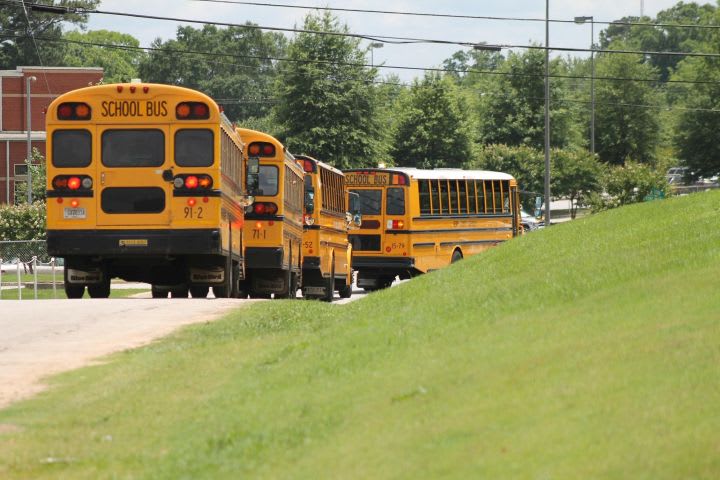
NAPT negotiated an agreement to provide a proprietary, customized version of The Judgment Index — called The School Bus Driver Judgment & Risk Index. File photo courtesy JD Hardin
NAPT negotiated an agreement to provide a proprietary, customized version of The Judgment Index — called The School Bus Driver Judgment & Risk Index. File photo courtesy JD Hardin
By the time you read this, the launch of the School Bus Driver Judgment & Risk Index will be in full swing. It’s also the focus of this column for two important reasons:
First, we as an industry continue to face a shortage of potential drivers. It’s among our most vexing problems. But regardless of the hiring market, we need to ensure that our drivers are the best.
Second, NAPT believes the operations side of the industry should send federal policymakers a strong signal that we are the linchpins of the pupil transportation system, and our outstanding safety and performance record is as important to us as it is to anyone.
For example, the NAPT board believes the November 2016 school bus crash in Chattanooga, Tennessee, that resulted in the deaths of six students should be a catalyst for change in the way we recruit and train drivers. As of press time, the National Transportation Safety Board has not yet issued a final report on that crash, but because self-starting on safety is our culture, we are not waiting for such a report to call our industry to action.
Since that horrific incident, we focused on our strategic goal of providing school transportation professionals with resources to improve their communication and decision-making capabilities. Using data we collected from a survey last fall about driver recruitment and retention, we identified a superior product called The Judgment Index that can help everyone hire safer drivers.
Going a big step further, we negotiated an exclusive agreement to provide a proprietary, customized version of The Judgment Index — called The School Bus Driver Judgment & Risk Index.
This index is not an IQ or rational intelligence profile. How many of you know someone who scored exceptionally well on an IQ test and is extremely book smart, but doesn’t know enough to come in out of the rain?
Nor is this an emotional balance profile. It is not designed to measure the possibility of psychological dysfunction, though it will give you critical information about the impact of stress on judgment.
It is also not a personality profile, like the Myers-Briggs Type Indicator. These types of assessment tools suggest that certain personality types or character traits will result in certain kinds of competency (or lack thereof). But personality profiles are not a sufficient predictor of performance.
The NAPT board believes the November 2016 school bus crash in Chattanooga, Tennessee, that resulted in the deaths of six students should be a catalyst for change in the way we recruit and train drivers.
The qualities of successful employees and the capacity for good judgment in their local environment are distinctly measured and numerically applied, in this case to the unique work environment and culture of school transportation. The School Bus Driver Judgment & Risk Index specifically measures things like:
• The ability to recognize, evaluate, and take action to solve a problem in an effective and safe manner.
• Trainability.
• Capacity and “energy” to deal with difficult people and difficult situations while maintaining a positive degree of control and direction.
• Capacity to stay focused in the midst of high activity, noise, “traffic,” and disruptions.
• Capacity to follow directions with accuracy.
• Capacity to take proper care of the physical work environment and surroundings. People with strong scores will have greater awareness of dynamics such as road or weather conditions. People who score poorly would not slow down on wet streets, for example.
• Capacity to stay focused on that which is most necessary, most critical, and most significant.
There are 15 different categories in the index, each of which has been targeted to help you put safer drivers in your vehicles.

Mike Martin is executive director of NAPT.
If you use the School Bus Driver Judgment & Risk Index as your front-line screening assessment, you might eliminate the need for any of the other screenings you use if a candidate scores below your acceptable threshold for judgment.
And, in the event of a driver-related accident, you can more easily show due diligence in hiring safe drivers and publicly demonstrate to parents and the community your strong commitment to the safety of their children.
The School Bus Driver Judgment & Risk Index provides quantifiable insight into a person’s judgment and decision-making capacities. It’s been peer reviewed and scientifically validated. It’s also affordable — just $40 per test — easy to use, and usually takes no more than 10 to 15 minutes to complete.
Candidly, we believe it should become part of the industry standard for school bus driver recruitment and retention, because good judgment is fundamental to the success of any organization.
The index will be launched officially at the 2017 NAPT Annual Conference and Trade Show in Columbus, Ohio, Nov. 3 to 7 (see story on pg. 34). This alone is good reason to come to Columbus. We believe attendees will be excited to return to their school districts with information to showcase this important new tool in driver recruitment.
Visit www.naptconference.org or www.napt.org for more information on the conference and the School Bus Driver Judgment & Risk Index.
More Safety

Doing More With Less: How Transportation Directors Can Prioritize Safety Amid Budget Uncertainty
With diesel prices soaring and nearly one-third of transportation directors expecting budget cuts, maintaining student safety has never been more challenging. Download this guide to learn how leading districts are prioritizing risk, funding critical safety technology, and building stronger budget cases with data.
Read More →
How To Build a More Secure School Bus Yard During and After Hours
As thefts and overnight security threats continue, school transportation leaders are combining stronger operational practices with AI-enabled surveillance to better protect buses, facilities, and staff.
Read More →
FMCSA Names New Chief Safety Officer: What School Bus Operators Should Know
Steve Dowling is set to lead the federal agency's efforts to advance commercial motor vehicle safety and reduce crashes, fatalities, and injuries on the nation's roadways.
Read More →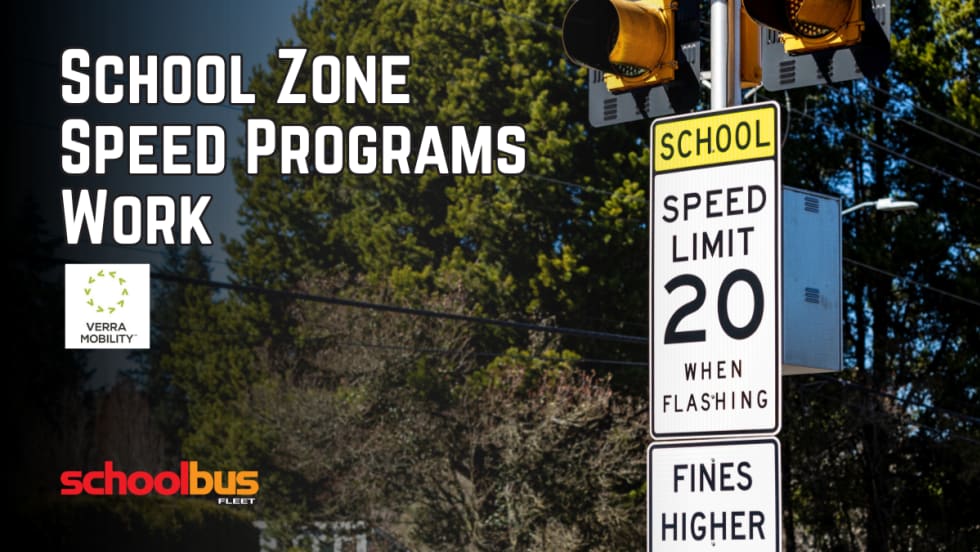
New Study Finds School Zone Speed Safety Cameras Cut Speeding Violations 97%
A Florida university's research demonstrates that Verra Mobility's automated enforcement changes driver behavior and significantly improves school zone safety.
Read More →
What Changed in DOT’s New National Roadway Safety Strategy?
The federal agency's new plan shifts its focus to safer people, roads and vehicles, with a new three-pronged approach instead of five. One outlined action even addresses a key industry concern around illegal school bus passing.
Read More →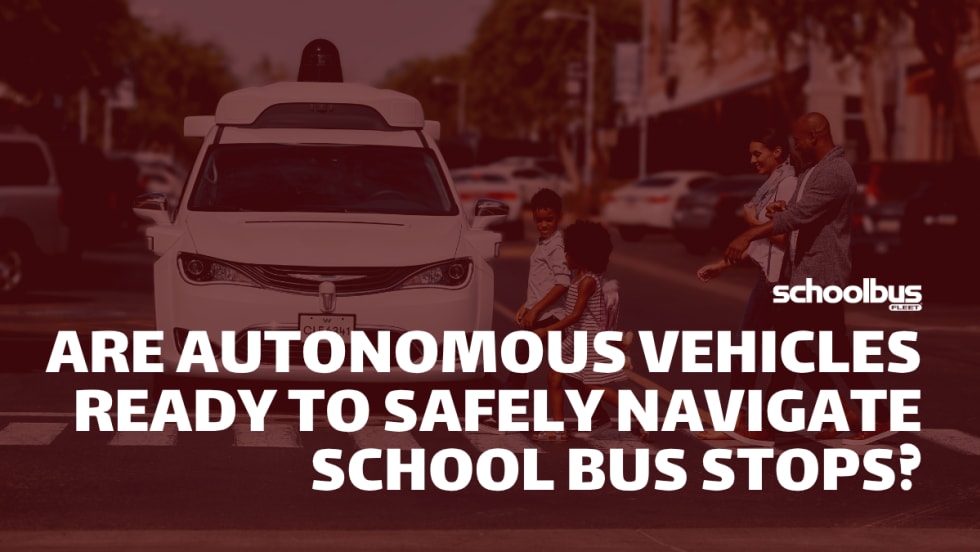
Are Autonomous Vehicles Ready to Safely Navigate School Bus Stops?
NHTSA is accelerating autonomous vehicle deployment through new safety standards and commercial approvals. See why school transportation leaders are watching.
Read More →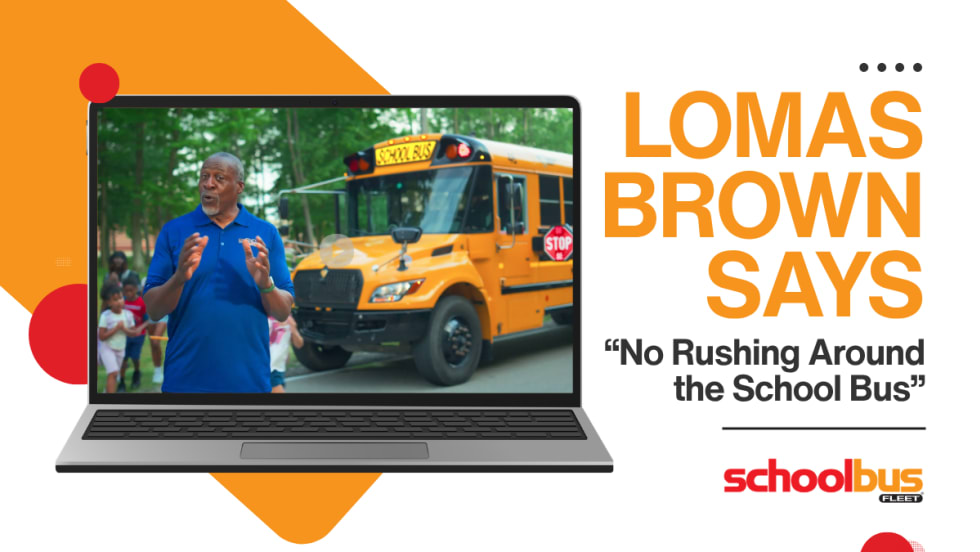
NFL Star Lomas Brown Kicks Off New Illegal School Bus Passing PSA
Just in time for the back-to-school season, the former Detroit Lions offensive tackle took time to record a video encouraging motorists to slow down around school buses.
Read More →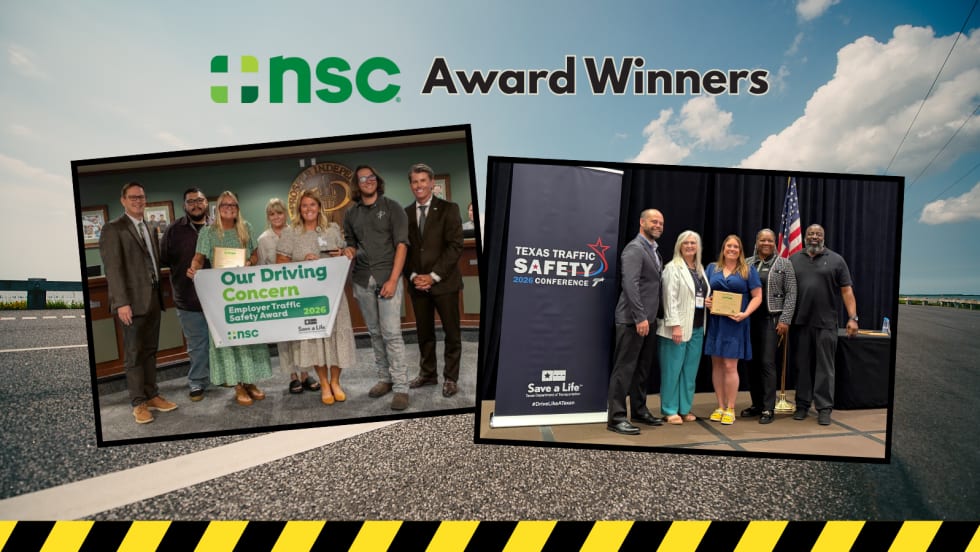
How Two Texas Districts Built Award-Winning Safety Programs
Learn how Prosper ISD and Rockwall ISD earned National Safety Council honors through hands-on training, safety culture, and strategies that reduced transportation incidents.
Read More →
NHTSA Releases 10-Year Review of Fatal School Bus Crashes
The latest federal analysis reinforces the safety of school buses while identifying where school-age pedestrians and other motorists remain most at risk.
Read More →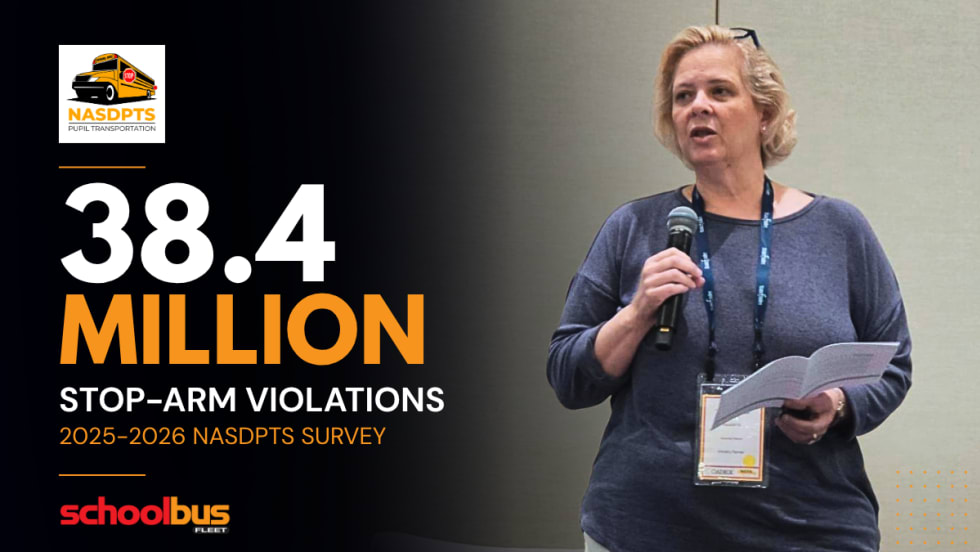
2026 NASDPTS Survey: Data Shows Further Reduction of Illegal Passing
New data is in! School bus stop-arm passings are down to 38.4 million violations per year, about a 2.3% decrease from last school year — but passings on the right side of the bus are higher than ever.
Read More →