




NAPT News & Views — Distracted driving: high on the national policy agenda
Distracted driving means different things to different people. But it seems clear that this subject will continue to be at the top of the national agenda as policymakers in Washington seek the proper balance between innovation, convenience and safety.
Distracted driving is a topic that has risen to the top of the agenda among policymakers inside the beltway of Washington, D.C., especially National Transportation Safety Board (NTSB) Chairman Deborah Hersman, who recently upped the ante on the public policy conversation.
During a distracted driving forum that she convened in March, Hersman publicly criticized companies that are developing the growing list of in-car information technologies, arguing that they are slowing efforts to reduce the hazards of distracted driving.
“If the technology producers focused more on what is safe than what sells, we’d see highway fatalities go down,” she said.
Hersman was alluding to the fact that a race is on among vehicle manufacturers and their product suppliers to develop and bring to market what some would call “revolutionary” and others would call “radical” technology to make driving more interactive with our busy lives.
“We have got to dispel the myth of multitasking,” she said. “We are still learning what the human brain can handle. What is the price of our desire to be mobile and connected at the same time?”
Hersman has framed the public policy question that is being debated right now.
At the federal level, U.S. Transportation Secretary Ray LaHood has made distracted driving the centerpiece of his efforts to improve motor vehicle safety. His Department of Transportation (DOT) calls it a “dangerous epidemic.” LaHood encourages, cajoles and consistently prods states to pass tough laws against texting and using cell phones while driving, and has ongoing public awareness campaigns to reduce the 3,092 deaths (9.4 percent of all fatalities) that the agency attributed to driver distraction in 2010.
Yet, DOT statistics also show that the traffic fatality rate has been declining for many decades and is now the lowest in history, even with the explosion of cell phone use and new vehicle technology in our lives.
Cell phones are ubiquitous, and the public is very accustomed to using them, including in their vehicles. Consequently, state legislatures are struggling to strike the right balance between individual and community expectations when regulating this technology. There are many variations of laws being passed. Here’s the current rack up:
• No state bans all cell phone use (hand-held and hands free) for all drivers, but many prohibit use by some drivers (often young, learning drivers).
• Nine states and D.C. prohibit use of hand-held phones.
• 35 states and D.C. ban texting while driving.
• 19 states prohibit school bus drivers from using cell phones when passengers are present (many school bus operators have policies banning use by drivers).
When states consider bans or restricted-use policies, one of the challenges that invariably is raised by opponents is that distraction can come in many forms. Critics of bans argue that if government bans the use of cell phones today, they will surely ban something else tomorrow.
Another concern raised by federal officials is the complexity of the new gadgetry in cars. According to a March 29 piece in USA Today (“New technology challenges car dealers — and buyers”), some auto dealers are hiring “geeks” to help the sales team and customers understand all the infotainment, navigation and electronic safety features.
The DOT recently issued voluntary guidelines for automakers that offer built-in systems used for infotainment and navigation.
The recommendation is that no task take longer than two seconds and that vehicles be stopped and in park before drivers can enter navigation commands or use social networking sites such as Facebook and Twitter.
The Association of Global Automakers told attendees of the NTSB forum in March that anti-distracted driving initiatives should be based on data.
“When integrating the convenience features demanded by today’s consumers, factors such as safety, usability and comprehension are all considered,” officials said.
Hersman admitted that the NTSB hasn’t investigated accidents where navigation systems were found to be a cause.
As previously mentioned, in the world of yellow transportation, many states and even more school bus operators prohibit drivers from texting and using cell phones. But even so, we are not immune to the effects of distracted driving.
For example, the NTSB considers texting a contributing factor in the August 2010 crash involving a pickup truck and two school buses in Gray Summit, Mo., in which two were killed and 35 were injured. The agency found that the pickup truck driver was distracted by frequent texting before the crash.
Distracted driving means different things to different people. But it seems clear that this subject will continue to be at the top of the national agenda as policymakers in Washington seek the proper balance between innovation, convenience and safety.
For more information, we recommend visiting www.dot.gov, www.ntsb.gov and www.ghsa.org.
Mike Martin is executive director of NAPT. Barry McCahill is president of McCahill Communications Inc. and NAPT public affairs consultant.
More Safety
Illegal School Bus Passing Drops 24% in New York Districts
With fewer than 5% of citations involving repeat offenders, Westchester County officials said enforcement, education, and community partnerships are helping change driver behavior.
Read More →
School's Back. Here's What Happened to Traffic, Speeding & Distraction
What happens to traffic when school resumes? New data analysis examines changes in distracted driving, congestion, and speeding around schools.
Read More →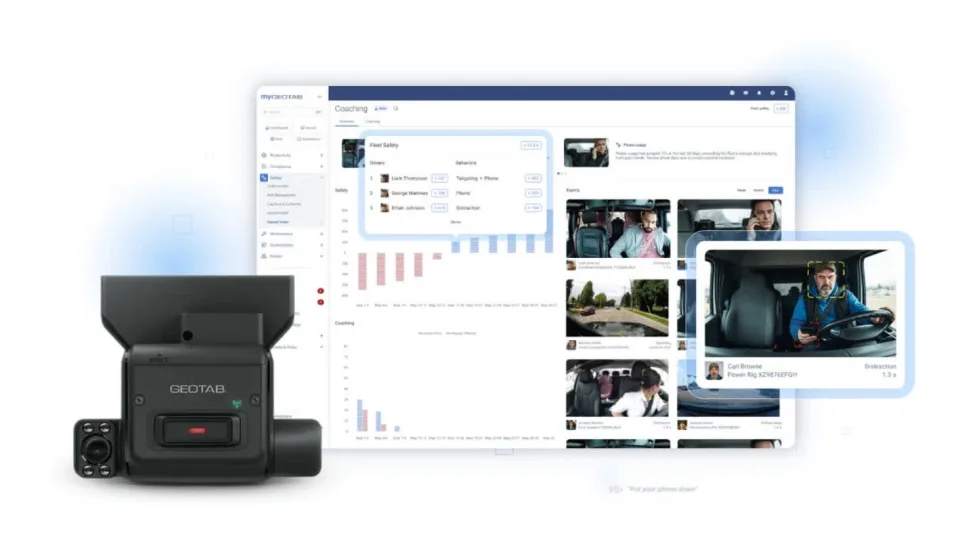
Geotab Expands Fleet Safety Tools With Video Coaching, Risk Insights
New safety and video capabilities aim to help fleet managers assess risk, support drivers, and take targeted action through video coaching, red-light violation detection, and more.
Read More →
How to Build a Better School Bus Driver Training Program
Is it time to strengthen your driver training? Here’s how to pick the right talent and improve recruitment, retention, and safety. This video is brought to you by IC Bus.
Read More →
Recent School Bus Accidents Leave 2 Dead, 2 Injured
Four school bus crashes in Florida, Illinois, and Georgia highlight risks in transportation lots, at bus stops, and during student loading and unloading.
Read More →
When Every Second Matters, Clarity Keeps Routes Moving
From routine delays to urgent incidents, strong communication practices help drivers, dispatchers, schools, and families respond with confidence.
Read More →
What Happens When a School Bus Catches Fire — and What Can Help
School bus fires are rare but can be devastating. Learn how advances in fire suppression and asset protection help fleets detect fires earlier, reduce damage, and improve safety.
Read More →
Geotab Launches Tool to Help Fleets Investigate Road Incidents
Geotab Investigations combines telematics data, video, documents, and other evidence to help fleets reconstruct incidents, resolve claims, and determine what happened.
Read More →
Texas Sixth Grader Wins 2026 National School Bus Safety Poster Contest
Sai Darshana Yekolu of Moseley Middle School in Prosper, Texas, was named the newest winner for her artwork, bringing the theme of “Safe Rides, Everyday Heroes” to life.
Read More →
Doing More With Less: How Transportation Directors Can Prioritize Safety Amid Budget Uncertainty
With diesel prices soaring and nearly one-third of transportation directors expecting budget cuts, maintaining student safety has never been more challenging. Download this guide to learn how leading districts are prioritizing risk, funding critical safety technology, and building stronger budget cases with data.
Read More →