




NAPT News & Views — Blue Jeans and Yellow School Buses
According to NAPT's executive director, if, as Giorgio Armani once said, “Jeans represent democracy in fashion,” then school buses are their educational equivalent.
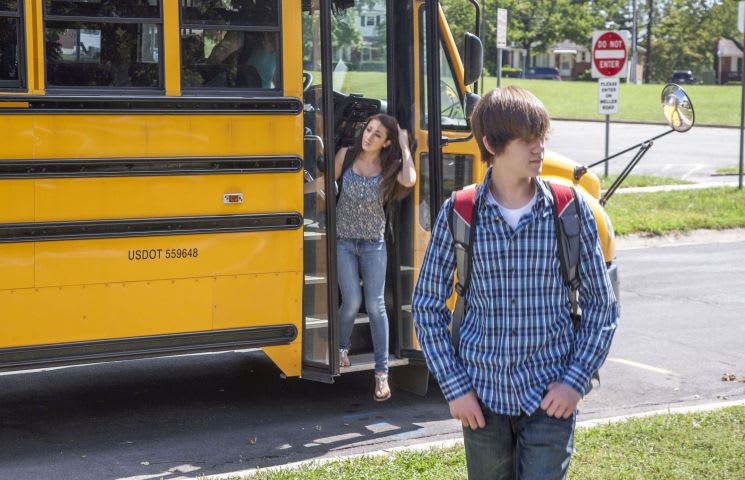
Photo courtesy NHTSA
Photo courtesy NHTSA
I bought a new pair of jeans recently — Levi’s 501 Shrink-to-Fit, the same jeans I’ve worn my entire life. They’re made of rigid, unwashed denim. You wear them on your waist, not your rear end. They have a long rise, a button fly instead of a zipper, and rivets that secure the corner of each pocket. You know, old school jeans.
Levi’s touts the fact that their jeans have been around since 1873, when “workers who’d flocked to the American West in search of fortune needed pants that could work and endure.” There’s a fascinating documentary on the Levi’s website that explains the evolution of these iconic jeans. To put it succinctly, “As American industry evolved, so did the 501. It changed as work changed. Today, the 501 continues to serve all sorts of workers for all sorts of work.”
If, as Giorgio Armani once said, “Jeans represent democracy in fashion,” then school buses are their educational equivalent. So, in that spirit, I’ve decided to write my column this month about why it’s so important for everyone in school transportation to be increasingly aware of the changing role school transportation plays in your local community.
A recent survey of parents of school-age children, conducted by Doyle Research Associates on behalf of the industry-backed American School Bus Council (ASBC), reveals parents believe the social interaction a school bus provides for their kids and the convenience a ride in a school bus provides are the most important aspects of ridership. Parents want their children to have a smooth, relaxing start and finish to the school day. It’s no surprise, therefore, that parents remain concerned about the safety of their children, and they are particularly concerned about bullying on the bus and at bus stops.
While most parents believe school buses are safe and see drivers playing an important role in this, reporting by the mainstream media is the main reason most parents think school buses are unsafe. This feedback is extremely valuable, especially in today’s lightning-fast world of digital communication.
While our legal system is based on the premise that someone is “innocent until proven guilty,” that’s not necessarily true in social media, where even seemingly small missteps — real or imagined — can have profound impacts.
The fall 2017 news cycle about celebrities, politicians, and media personalities accused of sexual misconduct, predatory behavior, and other improper and deplorable actions should be a reminder that even a single such incident, or alcohol/drug use, involving a school bus driver can become national news instantly and spread like wildfire on Twitter, Facebook, and other social media platforms.
Suffice it to say, performance expectations for school bus operations in general, and school bus drivers in particular, are higher today than ever.
For the most part, people in school transportation consistently and conscientiously seek ways to improve. The military calls it the theory of “zero defects.” Whatever you call it, zero tolerance for bad behavior and unfailingly reliable performance must be our passionate resolve, particularly because most parents expressed strong support for school bus service when informed about ASBC’s three pillars of ridership. Those pillars are:
1. A school bus is designed to be safer than other vehicles; it is the statistically safest way to travel to and from school.
2. On average, one school bus carries the equivalent passenger load of 36 cars and therefore helps to keep over 17 million cars off roads each year.
3. School buses increase the likelihood that school-aged children will arrive at school safely, on time, and ready to learn.
The parents in the survey also made recommendations that our industry could put into effect to allay concerns and potentially increase ridership. Among them:
• Ensure expeditious evacuation in emergency situations and provide related training.
• Provide lap-shoulder belts.
• Encourage and ensure that drivers create better relationships with students and their families.
• Consider hybrid and electric buses.

Michael Martin is executive director of NAPT.
This is good news because, as regular readers of this column and this magazine know, these are all front-burner topics of discussion in our industry.
A multitude of changes in education-related transportation are headed your way this year. Many of them are already underway, and some will be here before you realize.
The Levi’s documentary once again provides some insight, emphasizing that when, in the 1930s, people started wearing Levi’s 501s for their look, “nonetheless function always informed its evolving design.” That’s an important point to remember in the new year.
In closing, I again encourage you to stay abreast of and learn more about the role of school transportation in your community. I also encourage you to remain intensely focused on learning new things and to fine-tune older, proven strategies.
By the same token, I will continue to use this column and other communications during the year to raise topics and discuss issues that are relevant and important to your work.
More Management

How to Build a Better Driver Training Program
Ready to boost up your school bus instructor training? Here’s how to pick the right talent and improve recruitment, retention, and safety.
Read More →
CALSTART and Forth Combine to Form Catalyst Mobility
The new name represents a renewed vision for the nonprofit focused on advancing clean, equitable, and affordable transportation solutions that move people and goods.
Read More →
What Makes a Great School Bus Driver Trainer?
Choosing the right school bus driver trainer takes more than experience. Learn six keys to selecting and developing trainers and evaluating program effectiveness.
Read More →


School Bus Contractors Expand Through New Deals, Acquisitions & Partnerships
STA's Canadian division acquires Ontario-based G&L Stevenson Transport while Durham School Services adds a new district contract in California, First Student adds a New Jersey contract, and Minnesota Coaches acquires Halo Transportation.
Read More →
Logan Bus Company Rolls Out AI Phone System for NYC School Bus Families
A summer pilot found that AI agents could handle most routine calls, freeing up time for customer service staff to focus on emergencies and complex family concerns.
Read More →
From Intent to Impact: What I Learned About Leadership from TAPT
A Texas transportation supervisor shares lessons on self-awareness, accountability, managing stress and building trust — and why investing in leadership development matters at every stage of your career.
Read More →
NAPT Names 2026 Award Recipients, Hall of Fame Inductee
Who earned national recognition for their work in student transportation? This year, NAPT named five recipients of its 2026 awards for service, safety, and leadership, plus its newest Hall of Famer.
Read More →
2026 State of Student Transportation Report
Driver shortages. Rising costs. Growing safety expectations. More data, but not enough time to act on it. The 2026 State of Student Transportation Report reveals what transportation leaders say is putting the most pressure on their operations—and where they’re investing next. See how your priorities compare.
Read More →
How to De-Escalate an Angry Person: 5 Steps for Handling Workplace Conflict
What makes emotions run high, and how should you handle an angry colleague or parent? Follow these steps for staying calm, listening, showing empathy, and resolving conflict.
Read More →
What Readiness Looks Like This School Year
Learn about the challenges shaping the 2026–2027 school year, from persistent driver shortages and budget pressure to technology and readiness gaps. See how school districts are responding and adapting in Zonar’s 2026 Back-to-School Readiness Report.
Read More →