




NAPT News & Views — A Call for Civil Discourse in the Aftermath of Parkland
As members of a tight-knit community of people who care deeply and passionately about the safety of children, I believe we owe the victims of the Parkland massacre … a serious, nonpartisan, productive conversation about school safety.
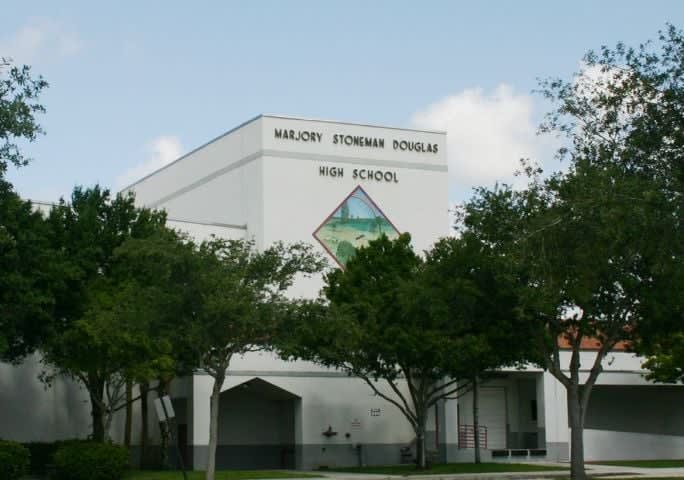
Photo by Formulanone, via Wikimedia Commons
Photo by Formulanone, via Wikimedia Commons
When I first heard about the mass murder of 17 people at Marjory Stoneman Douglas High School in Parkland, Florida, on Feb. 14, I was flabbergasted. This attack was like another hard punch to the gut of anyone and everyone who cares about kids, about our education system, about America in general.
Like many of you, I wondered what to do, how to cope with the feelings of anger, frustration, and despair that were stuck in my craw. I thought about making a public statement, but the usual words that came to mind seemed trite and perfunctory. Besides, the airwaves and the internet were quickly filled with talking heads offering their viewpoints, many before they knew nothing more than the basic facts. I definitely didn’t want to do that.
Moreover, candidly, I wasn’t sure what to say. It seemed obvious to me that a “statement” would not really be helpful, especially since NAPT is neither a partisan organization, nor expert in any of the other politically charged issues that dominated media coverage after the shooting. Now, several weeks down the road, it all seems clearer to me.
As members of a tight-knit community of people who care deeply and passionately about the safety of children, I believe we owe the victims of the Parkland massacre — and all of the other victims of school shootings, for that matter — a serious, nonpartisan, productive conversation about school safety, as opposed to the acrimonious, agenda-driven finger pointing that is happening in Washington.
I also believe we need to begin objectively discussing societal factors that are likely contributing to, if not motivating, these shootings that did not occur when many of us were growing up. Admittedly, this is a complicated task for a nation that prefers quick fixes. But I think it is imperative; in fact, I believe it’s long overdue.
In that vein, Dodge County (Wis.) Sheriff Dale Schmidt wrote, “Following every mass killing, I ask myself, what has happened to our society? … I think perhaps we are not evaluating the true root cause. … It’s my belief that the root cause starts with our youth lacking basic skills including respect for authority figures like parents and teachers, the ability to cope with conflict and the ability to handle rejection. Further issues like mental health and alcohol/drug use also play a role.”
Whether you agree with Schmidt or not is somewhat irrelevant. The fact is a school bus full of children is an attractive, vulnerable target for anyone who wants to do them harm. Within our professional community, we must collaborate to make sure that our excellent record in transportation safety is paralleled by heightened but reasonable security. We must set aside emotion, do our homework, speak carefully, and act wisely and proportionally.

Michael Martin is executive director of NAPT.
As a first step on that path, we held a webinar on March 7 conducted by a leading researcher on school and mass shootings, who discussed one way to influence positive change. Dr. Jaclyn Schildkraut is an assistant professor of public justice at the State University of New York at Oswego. She is the co-author of Mass Shootings: Media, Myths, and Realities and has a new book, Mass Shootings in America: Understanding the Debates, Causes, and Responses, coming out later this year. Her research has been published in academic journals and has been featured in a host of news sources, both in the U.S. and internationally.
In a paper that explores the reporting of mass shootings, Schildkraut notes that, in general, media coverage:
1. Overemphasizes the shooters.
2. Highlights the most extreme examples for comparison.
3. Relies heavily on the use of statistics, particularly victim counts, while omitting any national data that could ground these events in the larger discourse of violence in the nation.
Schildkraut documents her own and other research on how, in covering mass shootings, the news media uses various “claims makers” who influence public perception and policy, and that among the problems with claims making “is that often these problems are not put into context, but instead blown out of proportion. Yet, given the standing of the claims maker, these claims are often taken as accurate.”
Schildkraut also argues that rhetoric and claims without context can lead to “feel-good legislation” rather than meaningful discourse and effective solutions.
Schildkraut says that the media “should continue to focus on remembering the victims, particularly as individuals and not as a number, rather than glorifying the perpetrators for the next would-be shooter to emulate. They should report these stories with restraint and proportionality, and with information the public can use to make informed judgments about rampage shootings and their occurrence, as infrequent as they are, within society.”
I encourage all of you to visit the NAPT website and read Dr. Schildkraut’s paper. It’s worth your time. Personally, I think she makes a lot of valid points. What do you think?
More Safety
HopSkipDrive Reports Progress on Safety Advisory Council
More than a year after forming the council, independent safety experts have helped shape new rider-safety features and policy progress, with a new goal to address rider behavior.
Read More →
What the 2026 National School Bus Safety Month Resolution Means for Student Transportation
The bipartisan resolution highlights illegal school bus passing, student safety during loading and unloading, and the need for driver training and public education.
Read More →
School Bus Stop-Arm Violations Decline 53% Across Verra Mobility Programs
Verra Mobility shares how school bus stop-arm cameras and school zone safety programs are changing driver behavior, reducing violations, and protecting students.
Read More →
Most Bus Crashes Aren’t Your Fault. Here’s How to Prove It.
A guide for what to do in between a school bus crash and a claim: what to preserve, who to notify, and how to keep the facts available when they matter.
Read More →
National School Bus Safety Week 2026: Tips, Toolkits & Resources to Keep Students Safe
School bus safety takes more than awareness. Explore expert tips, enforcement strategies, and free resources to help protect students on every ride.
Read More →
2 Killed, Dozens Injured in Florida School Bus Crash
A multi-vehicle collision caused a Polk County school bus carrying 37 students to overturn on its way to Winter Haven High School.
Read More →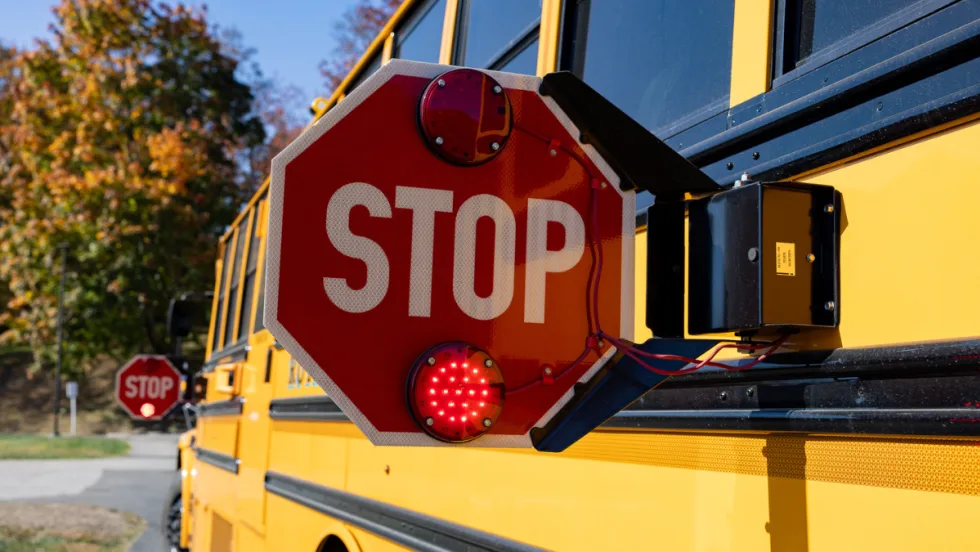
Illegal School Bus Passing Drops 24% in New York Districts
With fewer than 5% of citations involving repeat offenders, Westchester County officials said enforcement, education, and community partnerships are helping change driver behavior.
Read More →
School's Back. Here's What Happened to Traffic, Speeding & Distraction
What happens to traffic when school resumes? New data analysis examines changes in distracted driving, congestion, and speeding around schools.
Read More →
Geotab Expands Fleet Safety Tools With Video Coaching, Risk Insights
New safety and video capabilities aim to help fleet managers assess risk, support drivers, and take targeted action through video coaching, red-light violation detection, and more.
Read More →
How to Build a Better School Bus Driver Training Program
Is it time to strengthen your driver training? Here’s how to pick the right talent and improve recruitment, retention, and safety. This video is brought to you by IC Bus.
Read More →