




NAPT News & Views
NAPT's SBIC still industry sentinel Several recent school bus crashes have led to a flurry of activity at the School Bus Information Cle...
NAPT's SBIC still industry sentinel
Several recent school bus crashes have led to a flurry of activity at the School Bus Information Clearinghouse (SBIC; www.schoolbusinfo.org). NAPT (www.napt.org) created SBIC, formerly called the School Bus Information Council, in 1998 as an open source of information about school buses.
SBIC uses a Website stocked with the latest industry data and a toll-free phone hotline to provide reporters, state offi cials and consumers with information about school buses seven days a week, 365 days a year.
SBIC also has a “School Bus Fact Sheet” that is sent to major news outlets where a serious incident or crash occurs so that reporters have the background information they need to write in a balanced way about the school bus industry and its performance.
In addition to working with the media, SBIC can also help school transportation service providers respond to emergency situations. We try to give callers helpful advice that is very bottom line and plain English. It should be an essential phone call to help deal effectively with a difficult situation — (888) FOR-SBIC (367-7242).
For example, if there has been a school bus crash and children have been injured or killed, emotions will be running high. Parents will be wondering why there are no seat belts on school buses and likely have other questions. The media will demand answers.
Most spokespeople respond by saying there are no safety belts because they cost too much, or there is no budget for them. However, this is usually not true, and chances are the issue hasn’t even been evaluated locally.
So why is this a common refrain? Because under pressure, most people don’t know what else to say. The questions stem from an emotional circumstance, and it’s human nature to want to “do something” when a tragedy occurs. But it doesn’t help anyone to provide misinformation.
So what should you say? Here are some suggested responses often used by SBIC that are more appropriate when a tragedy occurs and a media cycle is running:
First, it is very important for people to know that school bus professionals across America begin every school day trying to ensure the highest level of safety for all children in their care. Second, please remember that school transportation professionals are also parents and grandparents, which means they are grieving along with everyone else where the incident occurred.
It’s important to give the police and other professional law enforcement agencies time to thoroughly investigate the circumstances of any crash. It’s their job to objectively ascertain and evaluate what happened. Afterwards, we can all have a fact-based discussion on what — if anything — might prevent a similar occurrence.
School buses are inherently safer than passenger cars. For that reason, the National Highway Traffic Safety Administration (NHTSA) decided many years ago to, instead of putting belts in buses, use another approach: high-backed, well-padded, closely-spaced seats that provide excellent “automatic” protection in most crashes. The safety record over many decades with this approach has been the best in the transportation industry.
Important: The school transportation industry is not opposed to the installation of safety belts or any other safety approach that can be shown through fact-based science that it would improve the safety of children riding in school buses. But because the safety of our children is at issue, and because large school buses already provide an extraordinarily safe environment for riders, many people cannot support any proposed safety measure that is not grounded in scientifically validated tests, studies and analyses.
This is why the largest trade association in the school bus industry — NAPT — formally petitioned NHTSA over a year ago, demanding them to perform the testing and research necessary to determine whether its past decisions on school bus safety need to be reevaluated, and whether frequently-touted safety measures, such as the installation of lap-shoulder belts, actually would improve safety. NHTSA is still deciding what to recommend.
In the meantime, we need to be mindful that seat belts are not a panacea. There is little evidence that shows seat belts would dramatically improve school bus safety. In fact, there is evidence that in some crashes, they could actually do more harm than good.
The addition of a new proposed safety feature — like seat belts — may have the unintended consequence of reducing the overall safety of school buses in a variety of circumstances, including emergency evacuations (which occur far more often than injury- or death-producing crashes); side-impact crashes or rollovers; and by reducing the student capacity of a school bus, forcing children to get to school by some other, less-safe means.
Again, if you need advice when a crash or other serious school bus-related incident occurs in your community, immediately call SBIC’s toll-free number — (888) FOR-SBIC (367-7242). We will be glad to try to help you.
Mike Martin is executive director of NAPT. Barry McCahill is president of McCahill Communications Inc. in Eagle, Idaho, the former director of communications for NHTSA, and has been a strategic communications advisor for NAPT for the last 10 years.
More Management
How to Build a Better Driver Training Program
Ready to boost up your school bus instructor training? Here’s how to pick the right talent and improve recruitment, retention, and safety.
Read More →
CALSTART and Forth Combine to Form Catalyst Mobility
The new name represents a renewed vision for the nonprofit focused on advancing clean, equitable, and affordable transportation solutions that move people and goods.
Read More →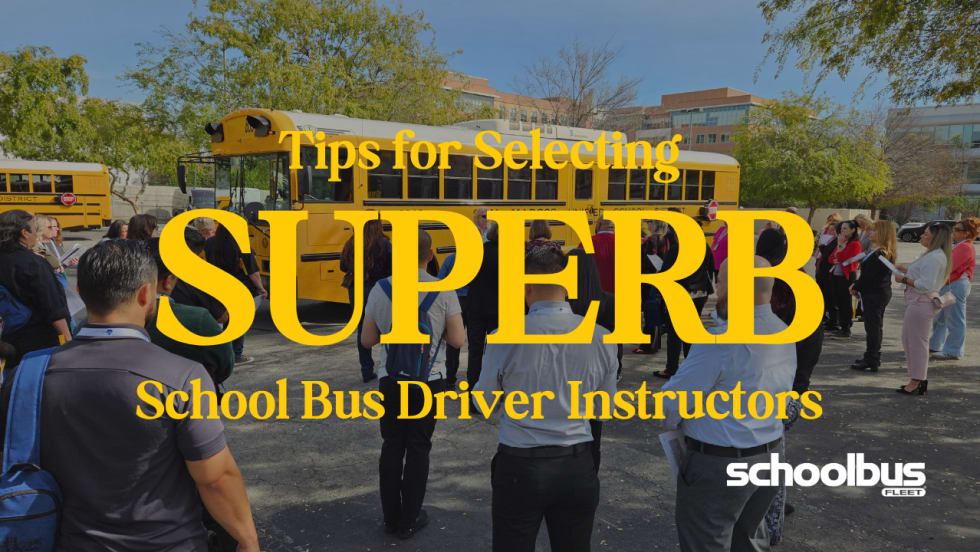
What Makes a Great School Bus Driver Trainer?
Choosing the right school bus driver trainer takes more than experience. Learn six keys to selecting and developing trainers and evaluating program effectiveness.
Read More →


School Bus Contractors Expand Through New Deals, Acquisitions & Partnerships
STA's Canadian division acquires Ontario-based G&L Stevenson Transport while Durham School Services adds a new district contract in California, First Student adds a New Jersey contract, and Minnesota Coaches acquires Halo Transportation.
Read More →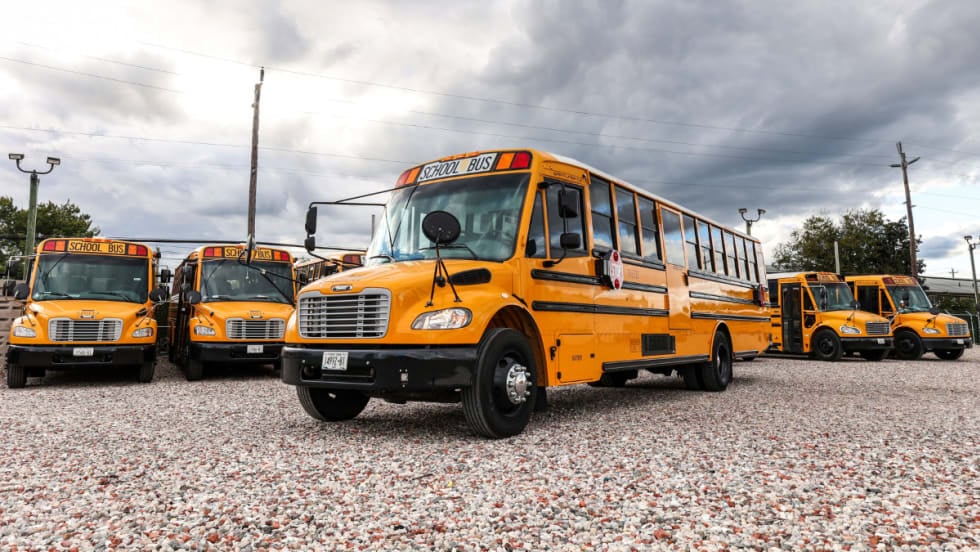
Logan Bus Company Rolls Out AI Phone System for NYC School Bus Families
A summer pilot found that AI agents could handle most routine calls, freeing up time for customer service staff to focus on emergencies and complex family concerns.
Read More →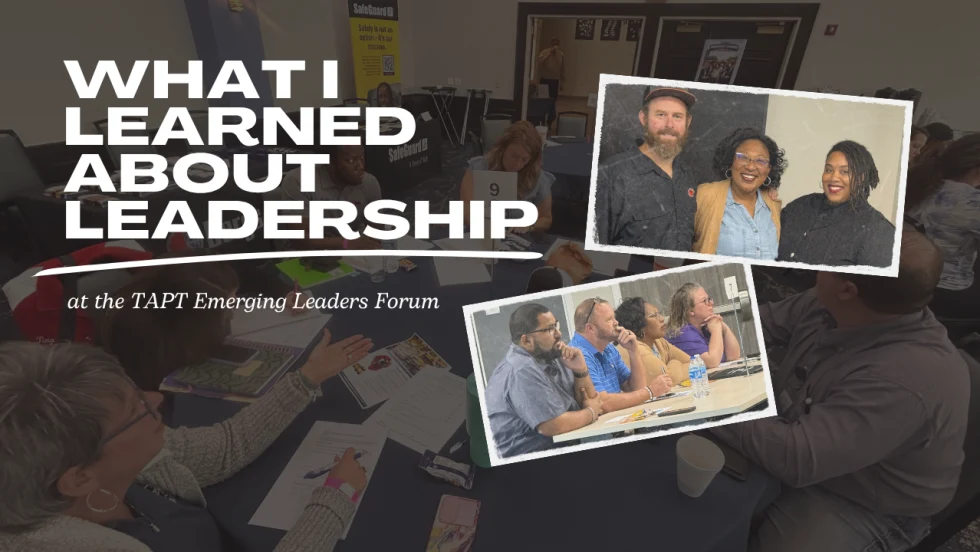
From Intent to Impact: What I Learned About Leadership from TAPT
A Texas transportation supervisor shares lessons on self-awareness, accountability, managing stress and building trust — and why investing in leadership development matters at every stage of your career.
Read More →
NAPT Names 2026 Award Recipients, Hall of Fame Inductee
Who earned national recognition for their work in student transportation? This year, NAPT named five recipients of its 2026 awards for service, safety, and leadership, plus its newest Hall of Famer.
Read More →
2026 State of Student Transportation Report
Driver shortages. Rising costs. Growing safety expectations. More data, but not enough time to act on it. The 2026 State of Student Transportation Report reveals what transportation leaders say is putting the most pressure on their operations—and where they’re investing next. See how your priorities compare.
Read More →
How to De-Escalate an Angry Person: 5 Steps for Handling Workplace Conflict
What makes emotions run high, and how should you handle an angry colleague or parent? Follow these steps for staying calm, listening, showing empathy, and resolving conflict.
Read More →
What Readiness Looks Like This School Year
Learn about the challenges shaping the 2026–2027 school year, from persistent driver shortages and budget pressure to technology and readiness gaps. See how school districts are responding and adapting in Zonar’s 2026 Back-to-School Readiness Report.
Read More →