




Multifunction activity bus approved
WASHINGTON, D.C. — A new subcategory of school buses — the multifunction school activity bus (MFSAB) — has been given the green light by the National ...

WASHINGTON, D.C. — A new subcategory of school buses — the multifunction school activity bus (MFSAB) — has been given the green light by the National Highway Traffic Safety Administration (NHTSA). A final rule on the new school bus category was published on July 29 and took effect 30 days later.
The MFSAB is defined as a bus that is sold for purposes that do not include transportation between home and school for students from kindergarten through 12th grade. Because the bus is not intended for roadside picking up and dropping off of children, it will not be required to have traffic-control devices such as stop arms and flashing yellow and red lights.
Although not required to have traffic-control equipment, the bus must meet all other school bus crashworthiness and post-crash standards.
NHTSA officials say the MFSAB provides a safer alternative to 15-passenger vans used by some schools, Head Start agencies and childcare centers.
“This modification allows institutions to take advantage of the safety benefits associated with school buses, which are by far the safest means of transporting children,” said NHTSA Administrator Jeffrey Runge.
NHTSA officials also believe the new rule will facilitate efforts by the Federal Transit Administration to provide funding to Head Start programs and coordinated transportation providers to purchase the buses. Officials said they expect the buses to be used for coordinated transportation purposes by state and local service agencies, which may, for example, use the buses to transport children from Head Start facilities to school in the morning and to transport the elderly later in the day.
In the final rule published in the Federal Register, NHTSA said it received 48 public comments about the proposal. Most of the comments were favorable; however, the state of Maine asserted that the lack of traffic-control features on the bus could increase potential hazards by creating “a level of complexity . . . without producing a significant offsetting benefit.”
NHTSA agreed with Maine’s assertion that the new category adds greater complexity for school districts, but contends that the final rule makes it easier for transportation providers other than schools or school districts to buy the MFSAB, “which will be a safer transportation alternative to the 15-passenger van and motorcoach bus for use by Head Start programs or senior citizens.”
In its proposed rulemaking, NHTSA suggested a weight limit of 15,000 GVWR for the MFSAB, but removed the limit in the final rule. NHTSA officials said the removal of the weight limit gives transportation providers more options.
NHTSA will not upgrade seat flammability resistance
WASHINGTON, D.C. — The National Highway Traffic Safety Administration (NHTSA) has terminated a 15-year-old proposed rulemaking to consider upgrading flammability resistance requirements for school bus seats.
The rulemaking was initiated in response to the 1988 Carrollton, Ky., crash of a church activity bus that resulted in the deaths of 27 passengers. The tragedy was caused by a pickup truck that swerved into oncoming traffic and collided with the activity bus, sparking a fuel-fed fire that spread to the interior of the bus.
Contributing to the severity of the accident was the partial blockage of the rear bench seats that led to the emergency door, which impeded passenger escape. The flammability of the seat cushions was also a factor, NHTSA said.
In its termination notice, NHTSA pointed out that the risks of school bus fires are minimal and that the agency’s 1992 upgrade of emergency exit requirements allows for faster evacuation of school buses.
NHTSA officials also noted that the church activity bus involved in the Carrollton crash was built in 1977, shortly before upgraded federal school bus standards went into effect. Those standards include fuel tank guards and improved access to emergency exits.
NHTSA’s termination notice also mentioned that upgrading the flammability requirements would pose significant additional expense for school bus operators with minimal benefits.
More Safety
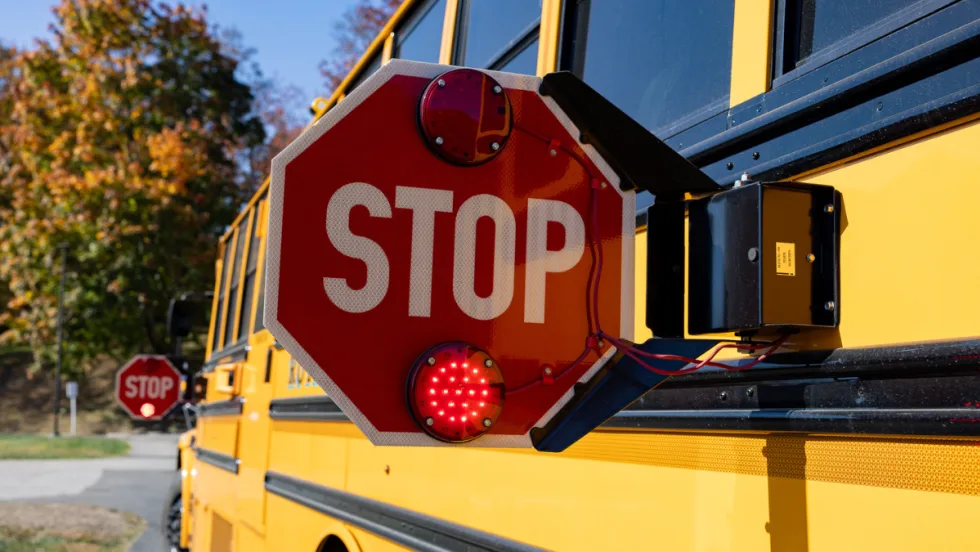
Illegal School Bus Passing Drops 24% in New York Districts
With fewer than 5% of citations involving repeat offenders, Westchester County officials said enforcement, education, and community partnerships are helping change driver behavior.
Read More →
School's Back. Here's What Happened to Traffic, Speeding & Distraction
What happens to traffic when school resumes? New data analysis examines changes in distracted driving, congestion, and speeding around schools.
Read More →
Geotab Expands Fleet Safety Tools With Video Coaching, Risk Insights
New safety and video capabilities aim to help fleet managers assess risk, support drivers, and take targeted action through video coaching, red-light violation detection, and more.
Read More →

How to Build a Better School Bus Driver Training Program
Is it time to strengthen your driver training? Here’s how to pick the right talent and improve recruitment, retention, and safety. This video is brought to you by IC Bus.
Read More →
Recent School Bus Accidents Leave 2 Dead, 2 Injured
Four school bus crashes in Florida, Illinois, and Georgia highlight risks in transportation lots, at bus stops, and during student loading and unloading.
Read More →
When Every Second Matters, Clarity Keeps Routes Moving
From routine delays to urgent incidents, strong communication practices help drivers, dispatchers, schools, and families respond with confidence.
Read More →
What Happens When a School Bus Catches Fire — and What Can Help
School bus fires are rare but can be devastating. Learn how advances in fire suppression and asset protection help fleets detect fires earlier, reduce damage, and improve safety.
Read More →
Geotab Launches Tool to Help Fleets Investigate Road Incidents
Geotab Investigations combines telematics data, video, documents, and other evidence to help fleets reconstruct incidents, resolve claims, and determine what happened.
Read More →
Texas Sixth Grader Wins 2026 National School Bus Safety Poster Contest
Sai Darshana Yekolu of Moseley Middle School in Prosper, Texas, was named the newest winner for her artwork, bringing the theme of “Safe Rides, Everyday Heroes” to life.
Read More →
Doing More With Less: How Transportation Directors Can Prioritize Safety Amid Budget Uncertainty
With diesel prices soaring and nearly one-third of transportation directors expecting budget cuts, maintaining student safety has never been more challenging. Download this guide to learn how leading districts are prioritizing risk, funding critical safety technology, and building stronger budget cases with data.
Read More →