Maintaining Safety With Electronic Stability Control
Even though ESC is not required on new school buses in the U.S.,many OEMs are making the technology standard, guaranteeing school districts provide safe, efficient transportation for students.
Sadiah Thompson・Assistant Editor
March 7, 2019
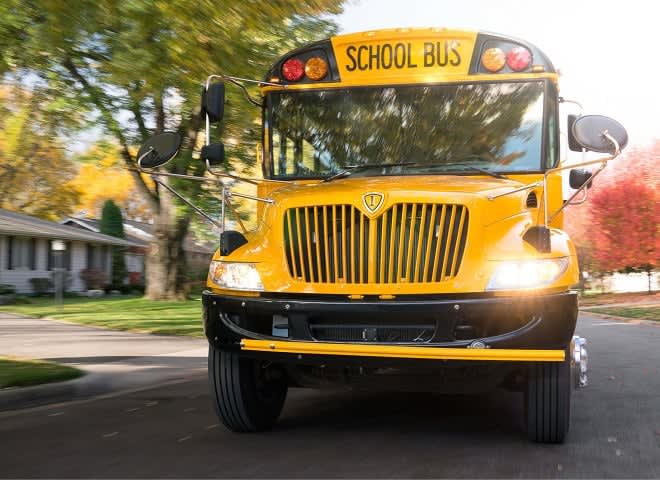
IC Bus recently made electronic stability control standard on its buses. The technology system features sensors that monitor vehicle movement and direction, and can help mitigate vehicle rollovers and loss-of-control situations.
Photo: Bendix
5 min to read
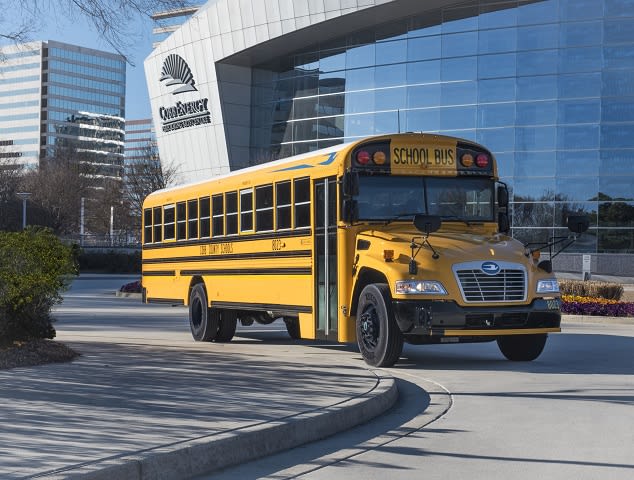
Electronic stability control and backup cameras will be standard on all new Blue Bird school buses built in 2019.
Photo: SBF
Nearly two years ago, David Ogilvie, the director of transportation for Collier (Fla.) County Public Schools, received a call about one of his bus drivers being involved in a rollover accident. The driver, who experienced a strong glare from the sun while driving, veered off of the roadway, overcorrected, and then lost control of the vehicle, causing the bus to turn over onto its side.
Thankfully, there were no students on board at the time of the accident, and the driver was not seriously injured. However, Ogilvie says, this would have been the perfect opportunity for the district to have its buses equipped with electronic stability control (ESC).
Ad Loading...
In 2014, the National Highway Traffic Safety Administration (NHTSA), reported rollover accidents as the most dangerous and the second most harmful event for school buses. Almost a year after the report, the NHTSA issued a final rule to require ESC systems on heavy trucks and some large buses, but with the exception of school buses.
Even though ESC is not required on new school buses in the U.S., many OEMs, such as IC Bus, Thomas Built Buses, and more recently Blue Bird, are making the technology standard, guaranteeing school districts provide safe, efficient transportation for students.
“Our scale and ability to bring this technology to school buses at an affordable cost to customers is important to us and part of our consideration to make [ESC] standard,” says Trish Reed, vice president and general manager of IC Bus.
“By avoiding accidents, school districts can save lives, as well as money on repairs, and avoid the downtime that may result from an accident,” says Ken Hedgecock, Thomas Built Buses vice president of sales, marketing and service. “At the end of the day, we are dedicated to building and designing buses that are safe, and by making ESC standard, we are ensuring a safer ride for students.”
Keeping Buses on Track
For those who may not be familiar with the technology, ESC systems have sensors that monitor vehicle movement and direction. The system, in conjunction with automatic, anti-lock braking, and a number of other components, help mitigate vehicle rollovers and loss-of-control situations by reducing the throttle of the engine, and applying brakes when necessary.
Ad Loading...
For example, if a driver is accelerating around a curved roadway or exit ramp, the system will be able to detect the stability and dynamics of the bus well before the driver can, ultimately helping reduce the chance of an accident.
“The problem with stability control accidents, particularly rollovers, is that they sneak up on the driver,” says Rob Mansilla, executive director of Wabco’s North America OEM sales for truck, bus, and car. “The driver is unaware that his or her vehicle is exceeding the angle where the vehicle is stable, the inside wheels lift, the driver loses control or rolls, and it is too late for the driver to do anything about it.”
Hedgecock adds that this may be especially likely on a slippery curve or during an evasive maneuver on a dry road.
While the system is designed to reduce rollover risk, Mansilla notes that it is not designed to prevent “tripped rollovers,” which can be caused by the vehicle hitting a curb, sliding into a ditch, or traveling on a soft shoulder roadway.
Boosting Driver Safety
Operating buses with ESC ultimately allows the driver to maintain control during a variety of over-steer and under-steer situations on both wet and dry surfaces.
Ad Loading...
Josh Buhro, the director of transportation for East Noble (Ind.) School Corp., says that ESC technology has given him and his bus drivers added peace of mind when picking up speed on curved or slippery roadways.
“There are times when even myself or the drivers are going around a curve, and you wouldn’t even think that speed would be an issue,” Buhro explains. “But, the way [ESC] works, it takes the power away and slows the bus down.”
Ogilvie agrees, and says that ESC is particularly helpful when navigating buses in harsh weather conditions.
“In southwest Florida we don’t really have any major tight curves or hills to travel, but we do have lots of rain,” he explains. “When you’re doing neighborhood driving in the rain, it’s just one of those things where [ESC] would help prevent your bus from sliding or tipping over.”
Ease of Adoption
While the technology may not require much on the maintenance end, Fred Andersky, the director of marketing, demonstrations, and interaction for Bendix, says there are two things districts should keep in mind when adding buses with ESC to their fleets.
Ad Loading...
The first, he notes, is the importance of conducting routine maintenance checks on the buses’ brakes to ensure brake pads and tires are in good condition for the ESC system to operate.
The second is the need for recalibrating the steer-angle sensor of the ESC system when shop technicians conduct front-end wheel alignments on a school bus. Andersky says this is usually achieved by steering straight on a flat roadway.
School bus manufacturers and ESC suppliers often host demonstrations and trainings to discuss best practices for maintaining buses with the safety systems.
In March, Bendix Commercial Vehicle Systems is launching their Advanced Technology Training, which includes training courses on Bendix’s Electronic Stability Program (ESP) and the supplier’s Wingman Advanced and Wingman Fusion driver assistance systems. The trainings will be held in Nevada and Ohio, before concluding in November, Andersky says.
IC Bus’s Reed adds that the school bus manufacturer is also working with Bendix to conduct more ESC demos in 2019.
ESC, Backup Cameras Standard on Some Blue Bird Buses
Blue Bird is the latest school bus manufacturer to announce that it is making electronic stability control (ESC) a standard feature on its school buses.
The manufacturer, in partnership with braking systems provider Bendix, is making ESC available for buses equipped with air brakes, and is applying backup camera systems to all new school buses built in 2019.
Mark Terry, the chief commercial officer at Blue Bird, says the manufacturer first introduced ESC technology to customers in 2015 because they saw the feature as necessary to improving school bus safety.
In addition to ESC, Blue Bird has also added a rear backup camera as a standard feature on all of its new school buses. The single camera placed at the back of the vehicle will allow drivers to have a 150-degree field of vision image of the rear of the bus. The image shows when the bus is in reverse, and features night vision capability.
“Beyond the obvious safety aspects of a backup camera system, many new bus drivers are used to having backup cameras in their personal vehicles,” Terry says. “Providing additional safety features on buses not only keeps our children safe, it also gives drivers greater confidence while operating the bus.”
Is it time to strengthen your driver training? Here’s how to pick the right talent and improve recruitment, retention, and safety. This video is brought to you by IC Bus.
Four school bus crashes in Florida, Illinois, and Georgia highlight risks in transportation lots, at bus stops, and during student loading and unloading.
School bus fires are rare but can be devastating. Learn how advances in fire suppression and asset protection help fleets detect fires earlier, reduce damage, and improve safety.
Geotab Investigations combines telematics data, video, documents, and other evidence to help fleets reconstruct incidents, resolve claims, and determine what happened.
Sai Darshana Yekolu of Moseley Middle School in Prosper, Texas, was named the newest winner for her artwork, bringing the theme of “Safe Rides, Everyday Heroes” to life.
With diesel prices soaring and nearly one-third of transportation directors expecting budget cuts, maintaining student safety has never been more challenging. Download this guide to learn how leading districts are prioritizing risk, funding critical safety technology, and building stronger budget cases with data.
As thefts and overnight security threats continue, school transportation leaders are combining stronger operational practices with AI-enabled surveillance to better protect buses, facilities, and staff.
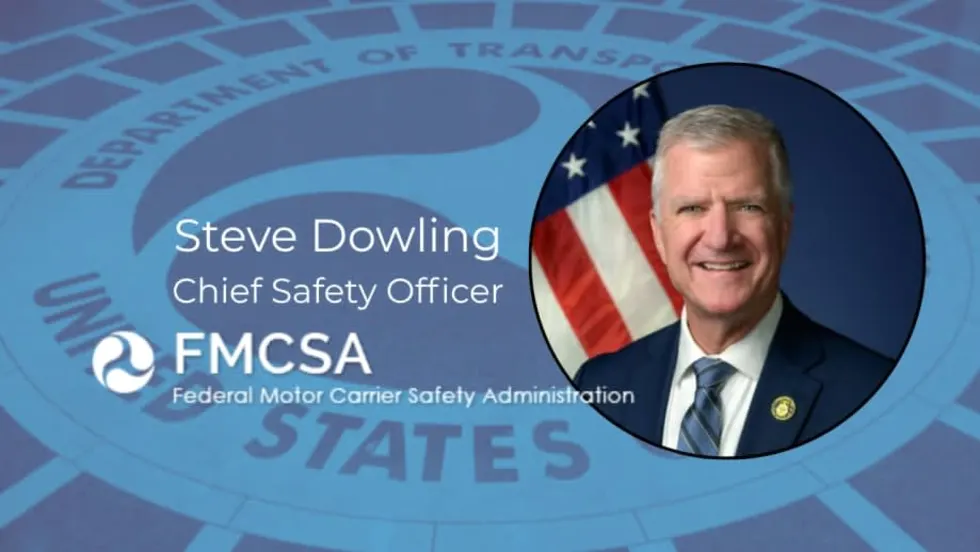
Steve Dowling is set to lead the federal agency's efforts to advance commercial motor vehicle safety and reduce crashes, fatalities, and injuries on the nation's roadways.