




LED Trend Glows Brighter in School Buses
Lighting systems on school buses play a critical role in ensuring the highest levels of safety for passengers, drivers and other motorists. It's not s...
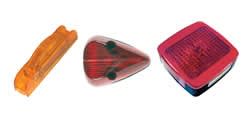
Lighting systems on school buses play a critical role in ensuring the highest levels of safety for passengers, drivers and other motorists. It's not surprising, however, that the industry has been slow to make the transition to LEDs (light-emitting diodes), trailing the heavy-duty trucking and transit bus industries.
Fleet managers in the school transportation industry tend to be conservative and are rarely "early adopters" of new technologies. The reason is relatively simple: new technologies typically require a larger investment than the status quo. In addition, the existing equipment works quite well, judging from the school bus industry's extraordinary safety record.
Even so, there's no doubt that LEDs are making inroads into the school bus market. Fleet managers are spec'ing LED units for a variety of systems, including tail/brake lights, turn-signal lights, clearance/marker lights and eight-way warning lights.
"More states are adding LED lights to their specifications all the time," says Travis Ward, OEM account manager for Sound Off in Hudsonville, Mich.
Key benefits cited
The advantages of LEDs are numerous.
They are more durable than incandescent lights. "Our LEDs are designed to last around 10 years or 100,000 hours," says Scott Comisar, general manager of Doran Mfg. in Cincinnati. "That's basically the life of a school bus." By contrast, incandescent bulbs can be expected to last from 1,000 to 5,000 hours.
This longevity reduces maintenance costs because mechanics don't have to spend as much time changing out light bulbs. Although incandescent bulbs are relatively inexpensive, the time invested in replacing them is not. And, if a bus needs to be pulled from service for replacement of lights, the downtime is also expensive.
In addition, LEDs react faster than incandescent lights. That is, they illuminate instantly. On average, LEDs are said to respond 0.2 seconds faster than incandescent lamps, which doesn't sound like much but makes a difference, especially when vehicles are traveling at higher speeds.
Tricia Epstein, in charge of marketing at Weldon Inc. in Columbus, Ohio, says this instant-on feature in LED brake lights gives trailing motorists an additional 24 feet of reaction time at 65 mph. {+PAGEBREAK+} Epstein believes that the school bus industry will make a large-scale switch-over to LEDs in the next five years or so. "I'd like to think it would be sooner," she says.
LEDs also have an advantage over their incandescent counterparts because they draw less current from the electrical system. According to manufacturers, LEDs draw only one-tenth the amps of incandescents.
This reduced power consumption is important in school buses because of the number of auxiliary applications that drain the electrical system, such as wheelchair lifts, two-way radios, video surveillance equipment, stereo systems and crossing gates and stop arms.
Most importantly, LEDs have higher visibility than incandescents. Enhanced brightness, like the LED's instant-on feature, is a safety benefit that is attractive to school bus operators.
With all of these advantages, LEDs are certain to grow in popularity. Prices for the units are coming down for two reasons: the diode manufacturers are improving the efficiency of their product, which lowers the number required in each lamp, and an increase in demand in the trucking, bus and automotive industries is creating economies of scale in production. "There's no reason why someone should shy away from going to all LED," says Ward.
Cost is a concern
But that doesn't mean that cost is not a factor. Eight-way light systems, in particular, are considerably more expensive when equipped with LEDs.
Brandon Billingsley, vice president of Heavy Duty Truck Parts in Willis, Texas, says the price for LEDs in an eight-way overhead light system can be $800, about $100 per light.
Some of that additional cost, he says, can be attributed to the microprocessor that's required to drive the lights.
Thomas Spellman, shop supervisor at Lake Washington School District in Redmond, Wash., says he's tested two different brands of LED eight-way warning light systems, with mixed results. One had problems because its flasher system and the LEDs were not compatible; the other worked fine right out of the box.
"Both sets of lights have one big advantage: They get the driver's attention!" Spellman says, adding, however, that the cost factor will prevent him from installing these LED systems on more buses.
The cost differential is smaller for less complicated lights. For example, LED tail lights are only $25 to $30, about the same as incandescents, Billingsley says. And the quality of these LEDs has improved over the years. "Manufacturers had to realize that every component on the printed circuit board had to be as reliable as the LED itself," he says.
Billingsley says school bus operators are ramping up their orders of LEDs. "We sold twice as many LED units in 2003 as we did in 2002," he says. "They're becoming more comfortable with LEDs because they're beginning to withstand the proof of time." {+PAGEBREAK+} Enthusiasm is high
Although LEDs are relatively new to the school bus community, some fleets have been using them for several years.
"I started spec'ing LEDs three years ago and have replaced zero lamps, with the notable exception of one that argued with a tree limb," says Richard Skibitski, fleet manager at Wayne (N.J.) Board of Education. "The LED brake lamps react faster and are brighter than their incandescent counterparts."
Skibitski says his fleet has about a dozen buses with a mix of LED and standard brake lamps, allowing him to compare the relative brightnesses. "You can actually see the difference," he says. "In the future, I can see a time in which we'll spec LED 100 percent of the time."
Not everyone's convinced
Some have yet to hop on the LED bandwagon. John Gislason, a fleet manager for a school bus contractor in Roseville, Minn., says he's not sold on the product, for a couple of reasons.
Gislason says the LED lamps can lose a few diodes each year, creating the potential for non-conformance with federal lighting regulations. "At what point will my state inspectors or any other enforcement officer decide that too many [diodes] are inoperative and write a ticket?" he says.
The other reason for not spec'ing LEDs, Gislason says, is a concern about the wiring and grounding of the LED units. "Until someone can prove the LED lamps will not rot away on us, I'm not going to pay to upgrade to them," he says. The compliance issue
Gislason's concern about failed inspections brings up a good point. How many LED units have to fail before a lamp no longer meets federal safety standards? Or, put another way, what percentage of the diodes must work properly for the light to conform to the standards?
When a standard tail light is disabled because the incandescent bulb burns out, it's obvious that the unit needs to be repaired. However, its LED counterpart could fail in incremental stages, with, say, four of 60 individual diodes failing. This creates a bit of a dilemma. How would a maintenance manager know when the lamp no longer meets the requirements of Federal Motor Vehicle Safety Standard (FMVSS) 108?
To look into this question, Heavy Duty Bus Parts commissioned a study by CalCoast Lab in Emeryville, Calif., of a 7-inch red and amber tail light.
Based on photometry data collected in a controlled test facility, researchers discovered that the intensity of the light was directly proportional to the number of diodes that performed properly. That is, if 20 percent of the diodes failed, the lamp's intensity was diminished by 20 percent.
One of the recommendations of the study is that other LED lamp manufacturers conduct their own studies to determine how many diodes can fail before the lamp falls below minimum performance standards. It also suggests that manufacturers display their findings on the back of lamps to aid garage staff and inspection officials.
More Safety
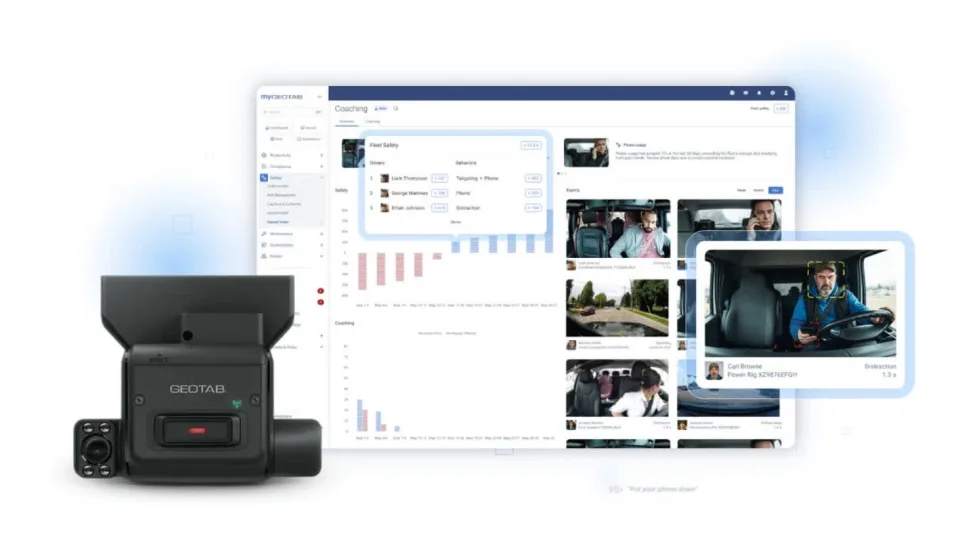
Geotab Expands Fleet Safety Tools With Video Coaching, Risk Insights
New safety and video capabilities aim to help fleet managers assess risk, support drivers, and take targeted action through video coaching, red-light violation detection, and more.
Read More →
How to Build a Better School Bus Driver Training Program
Is it time to strengthen your driver training? Here’s how to pick the right talent and improve recruitment, retention, and safety. This video is brought to you by IC Bus.
Read More →
Recent School Bus Accidents Leave 2 Dead, 2 Injured
Four school bus crashes in Florida, Illinois, and Georgia highlight risks in transportation lots, at bus stops, and during student loading and unloading.
Read More →

When Every Second Matters, Clarity Keeps Routes Moving
From routine delays to urgent incidents, strong communication practices help drivers, dispatchers, schools, and families respond with confidence.
Read More →
What Happens When a School Bus Catches Fire — and What Can Help
School bus fires are rare but can be devastating. Learn how advances in fire suppression and asset protection help fleets detect fires earlier, reduce damage, and improve safety.
Read More →
Geotab Launches Tool to Help Fleets Investigate Road Incidents
Geotab Investigations combines telematics data, video, documents, and other evidence to help fleets reconstruct incidents, resolve claims, and determine what happened.
Read More →
Texas Sixth Grader Wins 2026 National School Bus Safety Poster Contest
Sai Darshana Yekolu of Moseley Middle School in Prosper, Texas, was named the newest winner for her artwork, bringing the theme of “Safe Rides, Everyday Heroes” to life.
Read More →
Doing More With Less: How Transportation Directors Can Prioritize Safety Amid Budget Uncertainty
With diesel prices soaring and nearly one-third of transportation directors expecting budget cuts, maintaining student safety has never been more challenging. Download this guide to learn how leading districts are prioritizing risk, funding critical safety technology, and building stronger budget cases with data.
Read More →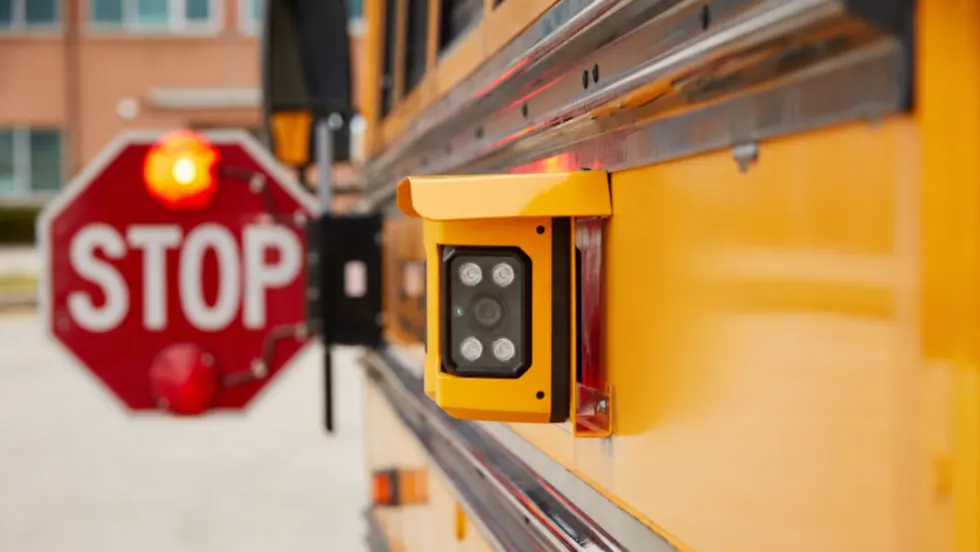
Walton County Schools Adds Gatekeeper Stop-Arm Enforcement System
The Florida district will deploy Gatekeeper’s updated Student Protector technology, which now incorporates AI to improve video evidence.
Read More →
How To Build a More Secure School Bus Yard During and After Hours
As thefts and overnight security threats continue, school transportation leaders are combining stronger operational practices with AI-enabled surveillance to better protect buses, facilities, and staff.
Read More →