




Learn to Detect the Signs of Drug and Alcohol Abuse
Even over-the-counter drugs, such as cough syrup and pain medication, can impair a driver’s abilities. Drivers and supervisors need to be aware of this and other substance-abuse facts.
Though the school transportation industry conducts federally mandated drug and alcohol tests of its drivers, is it doing everything it can to prevent an impaired driver from getting behind the wheel? According to transportation officials and substance-abuse professionals, a successful drug and alcohol prevention program must go beyond testing and focus on training. Drivers need to know how to monitor their own behavior and supervisors need to know how to identify the signs of abuse in their employees.
Know the risks of abuse
Don’t fall into the trap of thinking that substance abuse must entail using illicit drugs or alcohol directly before or during work. More often than not, says Paul Keith, area general manager for Laidlaw Education Services in Boston, abuse comes in the form of increased fatigue the morning after the use of a non-illicit substance, such as alcohol. “It isn’t necessarily a case of sneaking out between your schools and chugging down a six pack,” he says. “If alcohol is a problem, it sneaks in on Monday morning, when someone has had too much to drink on Sunday night. They’re not drunk, but they’re tired and therefore maybe a little bit impaired.” Identifying and avoiding this type of risky behavior is something his drivers learn in training, he says. Doug Thooft, vice president of Corporate Drug and Alcohol Specialists in Eagan, Minn., agrees that casual use is a serious, and often misunderstood, issue. “Even the best school bus drivers may sometimes have alcohol in the evening — at bowling, for example, or while watching football on Sunday or Monday night,” he says. Depending on how much and at what time a driver drinks, he could still be legally impaired when it is time to get behind the wheel in the morning, Thooft says. Someone with a blood alcohol concentration of .17 at 1 a.m. would still be at a level of .08 at 7 a.m., Thooft explains. This level is considered illegal for motorists in many states. Professional truckers can have a blood alcohol level of no more that .04 in their system before their license may be revoked. The driving abilities of most people are significantly impaired at a level of .08, says Thooft. “If you polled your parents, how many of them would say that .08, or even .06, is an acceptable blood alcohol level for the person driving their child?” he asks. Many over-the-counter or prescription drugs can also impair a person’s ability to drive safely. “I have had drivers impaired to some degree because they’d taken a few too many Tylenol with codeine for a toothache,” says Keith. They don’t realize until they’re taught that you need to be cautious when taking any type of medicine and to heed such warnings as, “Do not operate heavy machinery.” Anti-depressants, cold medicines, diet pills and others can have serious effects on motor skills. Certain prescription drugs, says Thooft, have the same effect as having five drinks in a short time. And combining drugs with alcohol, or illegal with legal drugs, can have a synergistic effect — compounding the effects of one of the drugs alone.
Use professional trainers
Many school transportation providers who don’t have the time or the expertise to conduct their own substance-abuse training use outside sources, such as Corporate Drug and Alcohol Specialists. Some substance-abuse training companies will also provide testing and ongoing support services. Ronald Despenza, transportation director at Clark County School District in Las Vegas, Nev., recommends using an outside source to avoid any possible charges of discrimination. “Sometimes, in random testing, drivers repeatedly come up for testing two or three months in a row. If this was done in-house, these drivers would definitely think that we were setting them up,” he says. Testing procedures vary from operation to operation. Laidlaw Boston conducts testing on five occasions: pre-employment, reasonable suspicion, random, post-accident and return to duty. Drivers are immediately terminated upon failure of a reasonable suspicion test. Upon failing a random test, however, drivers receive unpaid medical leave for rehabilitation. Clark County drivers are terminated for a failed test of any variety, in accordance with a zero-tolerance policy on drug and alcohol abuse.
Take action, cautiously
Reasonable suspicion tests pose a great challenge to the transportation supervisor, who must be able to identify the physical and behavioral indicators of substance abuse. Red eyes and slow response time, for example, may indicate marijuana use. A chronic runny, red nose may be a sign of cocaine use. Inappropriate laughter and nervousness might suggest the use of stimulants. The illicit drugs that Keith and Despenza have seen abused the most frequently are marijuana, cocaine and methamphetamines. Keith warns that education is necessary, not only to identify the signs of substance abuse, but also to understand what other conditions could lead to an impaired state. One of his drivers was once taken in for an alcohol test due to slurred speech, unfocused eyes and wobbly movement. At the testing site, it was determined that she was in diabetic shock. Pulling her off the route was the right thing to do, but it took training to do it in the right way. Never accuse anyone of substance abuse before administering a test, explains Keith. You say, instead, “There appears to be something wrong here. In order to be safe, we’re requiring that you submit to a test.”
It can happen to you
Thooft tells the following story: Officials at a suburban district outside of St. Paul, Minn., thought substance abuse was not a problem — until the Minnesota State Patrol got an anonymous call from a woman who said she was selling marijuana to a school bus driver. The dealer was worried about the safety of the students, because she knew that her customer was driving while high on marijuana. The State Patrol turned the case over to regional drug task force agents, who arrested the driver for not only using on the job, but for selling as well. The implications of a situation such as this are manyfold — loss of contracts, accumulation of legal expenses and attraction of negative media attention. Training, of course, is the first step toward reducing the likelihood of such an occurrence. But even training is not enough. Thooft recommends making sure your substance-abuse policy is up to date and accessible, with managerial staff prepared to implement it. Teach supervisors to not only detect impairment, but to document specific behaviors and physical characteristics indicating abuse so that they are prepared to follow through on their observations. As Keith points out, a single substance-abusing driver taints the image of the entire profession. “If someone is impaired out there in our workforce, it reflects badly on all of us,” he says.
Doug Thooft, vice president of Corporate Drug and Alcohol Specialists in Eagan, Minn., contributed to the writing of this article.
More Management

The Back-to-School Checklist Every Director Should Complete Before the First Bell
Help your transportation team start the school year strong with these tips for contingency planning, communication, fleet visibility, technology, and trip management.
Read More →
How a New York District Cut Nearly $1M in Transportation Costs While Expanding Bus Access
A data-driven overhaul with BusRight reduced Poughkeepsie City School District's planned routes from 26 to 17 while extending school bus service to about 1,200 additional students.
Read More →
Budgets Down, Enrollment Shifting: What the Data Says Districts Should Watch
School transportation departments face two converging challenges this year: tightening budgets and shifting enrollment. Most districts still address these issues separately, but the assumption that either trend will simplify operations is proving incorrect.
Read More →
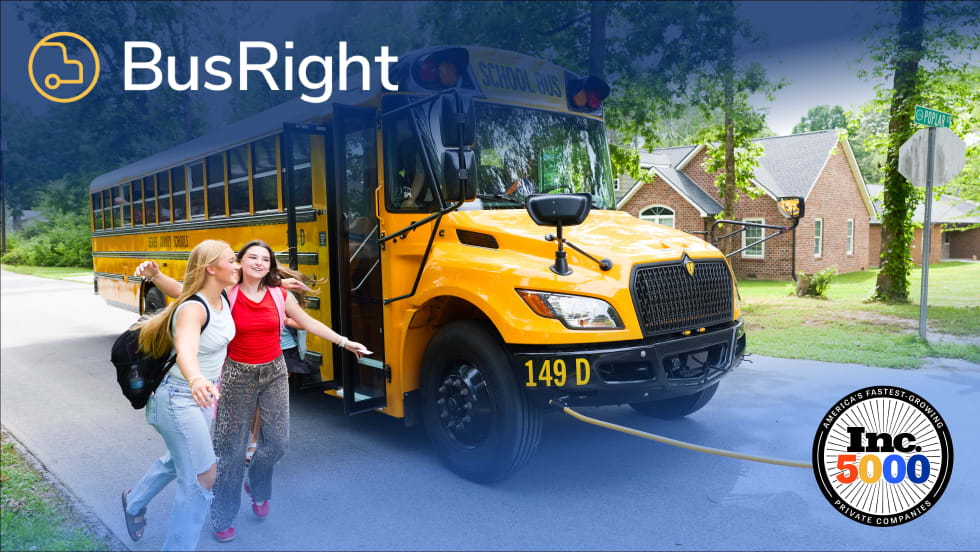
These 8 School Transportation Companies Made the 2026 Inc. 5000 List
Find out which school transportation contractors, technology providers, and suppliers ranked among America’s fastest-growing private companies.
Read More →
The Link Between Emotional Intelligence and School Bus Safety
How can emotional intelligence help transportation pros navigate stress, manage change, and build stronger relationships? Listen to find out.
Read More →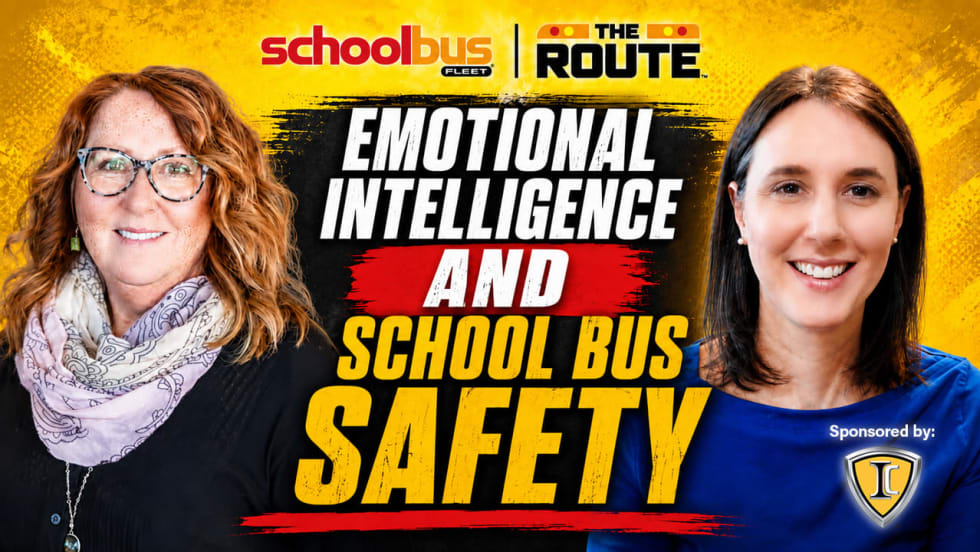
What Emotional Intelligence Has to Do With School Bus Safety
In this video, discover how emotional intelligence can help transportation leaders and drivers navigate stress, manage change, and build stronger relationships. The Route is sponsored by IC Bus.
Read More →
Beyond Two-Way Radios: School Bus Communications Evolve With Push-to-Talk Over Cellular
PRYME Radio and PositionPTT join forces to advance hands-free radio use and reduce distracted driving. See how PoC compares with traditional radios on range, cost, safety, and connectivity.
Read More →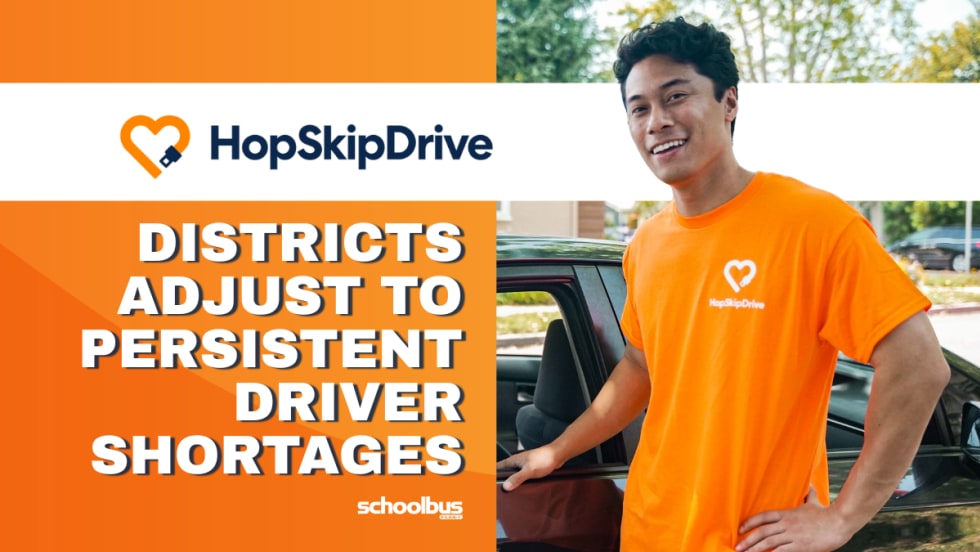
Have School Districts Adapted to Bus Driver Shortages or Simply Accepted Less Service?
According to a recent report from HopSkipDrive, many districts appear to have recalibrated what "normal" transportation service looks like.
Read More →
Reliable Transportation Linked to Better Student Outcomes, New EverDriven Study Finds
See why new research suggests transportation consistency improves student outcomes while influencing attendance, funding, IEP compliance, and family trust.
Read More →
Switzer-CARTY Enters the U.S. with New Acquisition
The Canadian contractor’s acquisition of Minnesota-based Agnes Corporation marks its first cross-border expansion into the United States and adds 350 vehicles.
Read More →