




Key performance indicators — where to start?
Often, just by tracking and displaying results, employees become more aware of their own influence on the measurements.

Dayna Ashley-Oehm is managing partner of The Oehm Group, which is managing NAPT’s KPI project and has produced the Colorado Transportation Efficiency Study for the past 25 years.
In theory, almost everyone working in pupil transportation would agree that analyzing and understanding data is critical to managing operations. However, not every district has the same resources to develop and compare key performance indicators (KPIs).
During the National Association for Pupil Transportation (NAPT) Summit in October, the association’s KPI project was covered comprehensively, from a keynote speaker to several general sessions. A strong case was made for establishing industry-specific KPIs, which will allow school transportation directors to compare their operation to those of other school districts.
In one session, several school districts provided examples of transportation KPIs, many of which are tracked and reported to compare internal operations over time.
Keith Paulson of Anoka-Hennepin School District in Anoka, Minn., explained to the audience that his transportation department established KPIs as part of a district-wide initiative to measure and compare internal operations from one year to the next. Directors report KPIs on standardized vision cards or dashboards.
Smaller districts may not require their departments to report data on a vision card, but many track components to improve internal operations.
If you are a director in a small district with no history of using KPIs, where do you start? Telling your operational story requires a plot; you must decide what your plot will include.
Since gathering and analyzing data can be a daunting task, begin with something simple and easy to track. As Bill Bair of Colorado Springs (Colo.) School District 11 said, “It’s really just a matter of starting.”
Use your district’s existing vision, mission and goals to help determine your priorities. Most districts have a transportation vision statement sharing common terms. These include safety, reliability and efficiency. So start gathering internal data to establish a safety measure, a reliability measure and an efficiency measure.
1. Safety — number of accidents. Begin to record the number of accidents daily. Define accidents simply or in accordance with your state reporting definition. For instance, in Colorado, all accidents with more than $1,000 of damage must be reported to the Colorado Department of Education.
2. Reliability — number of road calls. Begin tracking the total number of road calls each day. First, define a road call — this could be as simple as tracking an interruption in service. Tally these daily; total them monthly and then annually. You now have a benchmark to compare with in the coming year.
3. Efficiency. Begin tracking the number of students riding the bus monthly. GPS programs make student tracking much easier, but even if you lack GPS, bus drivers can track actual ridership on a monthly basis. Pick the same day each month — for example, the first Tuesday of each month. Have each driver count the number of kids on the morning trip and the number on the afternoon trip. Divide the morning and afternoon total by two to establish an average.
Simple procedures can be used to track the data measures. Begin by using an Excel spreadsheet to input all monthly totals.
Once you begin tracking data, share the results with your staff. Often, just by tracking and displaying results, employees become more aware of their own influence on the measurements.
Just like with any new task, starting can be half the battle. Make this small step toward measuring three components, and you will have a wealth of knowledge to build upon in future years.
More Management

Zum Reaches 19 States With New York Expansion
The addition of the Empire State to the student transportation company's roster marks a growing expansion in the Northeast as it scales its tech and school bus services.
Read More →
First Student Updates Its Parent App
First View connects both yellow bus and alternative transportation, giving families one platform to track student trips for the new school year, with 15 languages supported.
Read More →
The Back-to-School Checklist Every Director Should Complete Before the First Bell
Help your transportation team start the school year strong with these tips for contingency planning, communication, fleet visibility, technology, and trip management.
Read More →
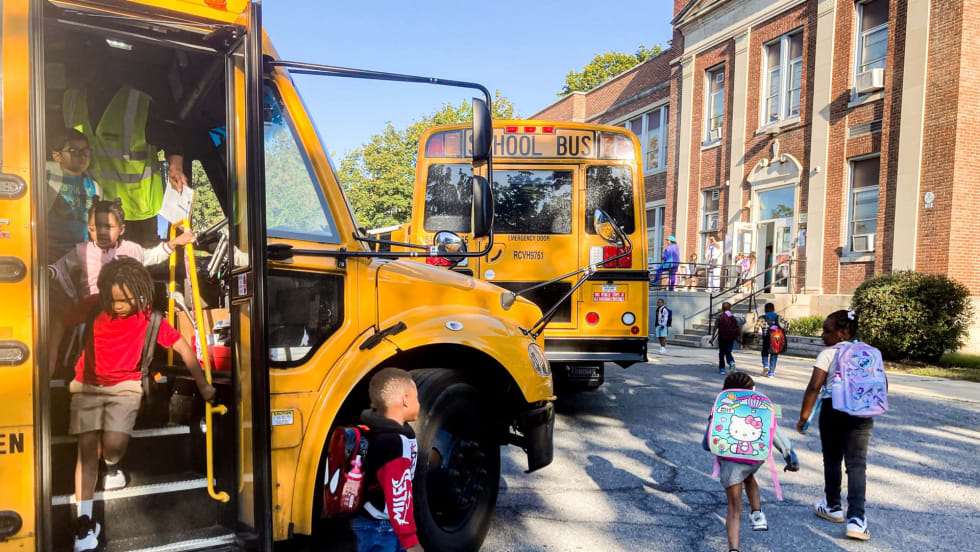
How a New York District Cut Nearly $1M in Transportation Costs While Expanding Bus Access
A data-driven overhaul with BusRight reduced Poughkeepsie City School District's planned routes from 26 to 17 while extending school bus service to about 1,200 additional students.
Read More →
Budgets Down, Enrollment Shifting: What the Data Says Districts Should Watch
School transportation departments face two converging challenges this year: tightening budgets and shifting enrollment. Most districts still address these issues separately, but the assumption that either trend will simplify operations is proving incorrect.
Read More →
These 8 School Transportation Companies Made the 2026 Inc. 5000 List
Find out which school transportation contractors, technology providers, and suppliers ranked among America’s fastest-growing private companies.
Read More →
The Link Between Emotional Intelligence and School Bus Safety
How can emotional intelligence help transportation pros navigate stress, manage change, and build stronger relationships? Listen to find out.
Read More →
What Emotional Intelligence Has to Do With School Bus Safety
In this video, discover how emotional intelligence can help transportation leaders and drivers navigate stress, manage change, and build stronger relationships. The Route is sponsored by IC Bus.
Read More →
Beyond Two-Way Radios: School Bus Communications Evolve With Push-to-Talk Over Cellular
PRYME Radio and PositionPTT join forces to advance hands-free radio use and reduce distracted driving. See how PoC compares with traditional radios on range, cost, safety, and connectivity.
Read More →
Have School Districts Adapted to Bus Driver Shortages or Simply Accepted Less Service?
According to a recent report from HopSkipDrive, many districts appear to have recalibrated what "normal" transportation service looks like.
Read More →