




Keeping Drivers Clean and Sober
Based on the success of drug and alcohol testing programs established in the armed forces during the early 1980s, the United States Department of Tran...

Based on the success of drug and alcohol testing programs established in the armed forces during the early 1980s, the United States Department of Transportation implemented an anti-drug campaign in 1989 to educate, test and treat employees involved with safety in the transportation industry. Norton Medical Industries, a nationwide provider of drug and alcohol testing programs in Van Nuys, Calif., helps transportation operations implement comprehensive systems for meeting federal drug and alcohol standards. George Boujie, executive VP, explained how these programs work. SBF Plus: How is a drug prevention program initiated? Boujie: When a company wants to implement a testing program, we first get a list of employees that they want covered and put them into a pool for random testing. Then, with this database, we select at random at least 50 percent of the workforce to be tested each year. That puts teeth into the program. It also serves as an early-warning system to detect whether any drivers are using drugs but not displaying behavior yet. We also conduct pre-employment drug testing, post-accident testing, reasonable suspicion and return-to-duty testing, in which employees must pass a test to return to work after rehabilitation. SBF Plus: What kind of education and training do you provide? Boujie: Basically, we educate workers — drivers and mechanics — about how employers and employees are affected by drug use, how drug use affects work performance, how drug use affects family life, how long certain drugs stay in the system, how drug addictions start and what worker rights are in respect to drug testing. We also educate and certify supervisors on how to recognize a potential drug problem. We do this with written materials, tests, seminars, videos and audio tapes. SBF Plus: Will it cost an operation more to outsource these programs? Boujie: In the long run, it costs much less to outsource a drug and alcohol testing program. There are so many components that it takes away from an operation’s core competency to set up an in-house program. For instance, you have to have a licensed medical review officer (MRO) who is an M.D. The MRO’s job is to contact an employee who fails a test to find out if there is a problem. If need be, the MRO must refer the employee to a substance abuse professional (SAP) who is trained and certified. The MRO and the SAP work together to decide if the person is getting the best treatment. It would be very costly for a company to supply their own MRO and SAP. They would also have to set up a federally-approved laboratory and acquire compliant education materials. SBF Plus: Are school districts in need of better-managed programs? Boujie: As far as I have seen, school districts are in need of a higher quality in their testing materials and the administration of their programs. For more information, go to www.nortonmedical.com or call George Boujie at (800) 243-7669.
More Management
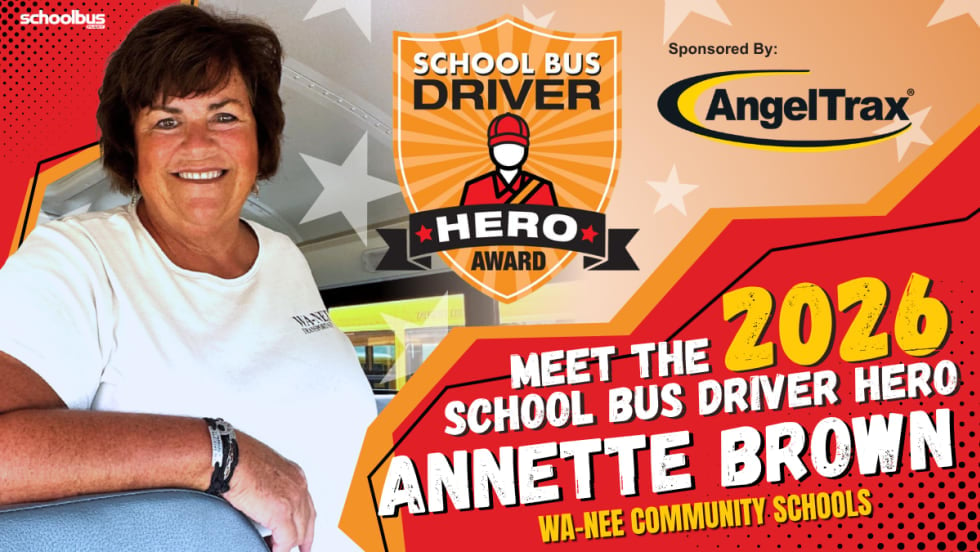
Annette Brown Always Takes the Extra Time: Meet Our 2026 School Bus Driver Hero
For more than 30 years, the Wa-Nee Community Schools driver has treated students like family, combining safety, compassion, and servant leadership to make a lasting difference on and beyond the school bus.
Read More →
How to Build a Better Driver Training Program
Ready to boost up your school bus instructor training? Here’s how to pick the right talent and improve recruitment, retention, and safety.
Read More →
CALSTART and Forth Combine to Form Catalyst Mobility
The new name represents a renewed vision for the nonprofit focused on advancing clean, equitable, and affordable transportation solutions that move people and goods.
Read More →
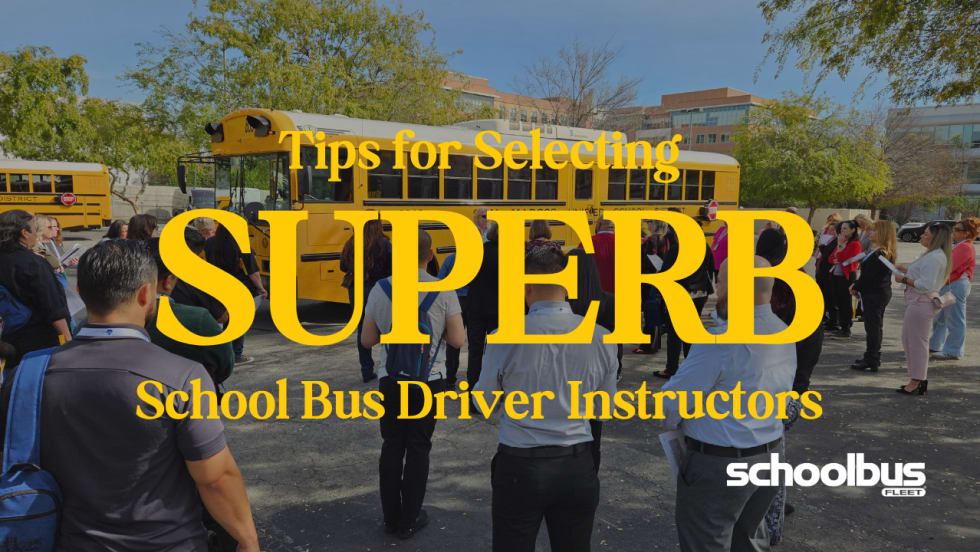
What Makes a Great School Bus Driver Trainer?
Choosing the right school bus driver trainer takes more than experience. Learn six keys to selecting and developing trainers and evaluating program effectiveness.
Read More →
School Bus Contractors Expand Through New Deals, Acquisitions & Partnerships
STA's Canadian division acquires Ontario-based G&L Stevenson Transport; Durham School Services adds a new district in California; First Student expands in New Jersey; and Minnesota Coaches rebrands and acquires Halo Transportation.
Read More →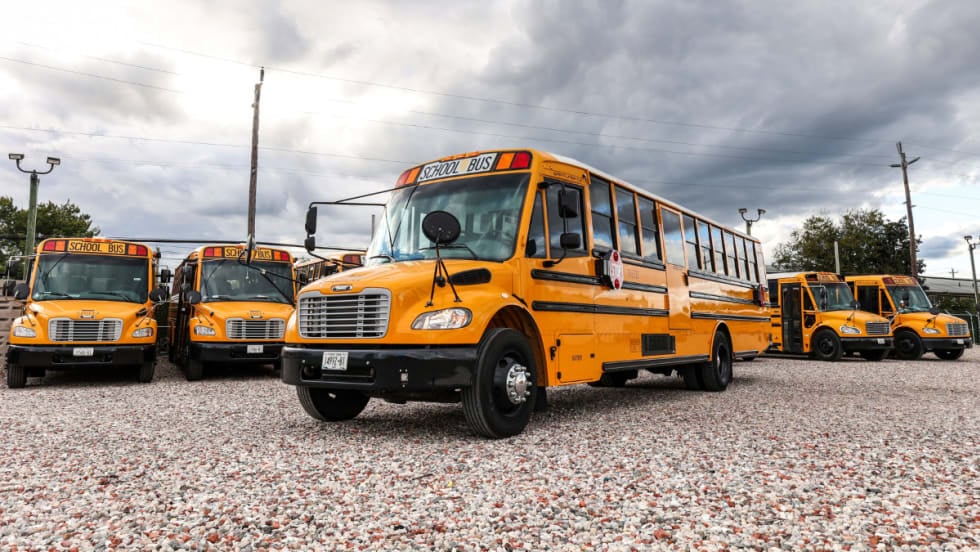
Logan Bus Company Rolls Out AI Phone System for NYC School Bus Families
A summer pilot found that AI agents could handle most routine calls, freeing up time for customer service staff to focus on emergencies and complex family concerns.
Read More →
From Intent to Impact: What I Learned About Leadership from TAPT
A Texas transportation supervisor shares lessons on self-awareness, accountability, managing stress and building trust — and why investing in leadership development matters at every stage of your career.
Read More →
NAPT Names 2026 Award Recipients, Hall of Fame Inductee
Who earned national recognition for their work in student transportation? This year, NAPT named five recipients of its 2026 awards for service, safety, and leadership, plus its newest Hall of Famer.
Read More →
2026 State of Student Transportation Report
Driver shortages. Rising costs. Growing safety expectations. More data, but not enough time to act on it. The 2026 State of Student Transportation Report reveals what transportation leaders say is putting the most pressure on their operations—and where they’re investing next. See how your priorities compare.
Read More →
How to De-Escalate an Angry Person: 5 Steps for Handling Workplace Conflict
What makes emotions run high, and how should you handle an angry colleague or parent? Follow these steps for staying calm, listening, showing empathy, and resolving conflict.
Read More →