




Is Your Head Start Training on the Back Burner?
Frequently I receive calls regarding Head Start transportation regulations. Despite the fact that the regulations were published approximately four ye...

Frequently I receive calls regarding Head Start transportation regulations. Despite the fact that the regulations were published approximately four years ago, the number of Head Start employees who are not familiar with 45 CFR 1310 — the Head Start transportation “bible” — is alarming.
Some questions reflect a misunderstanding regarding the interim final rule issued in January 2004. You may recall that Head Start agencies were given a reprieve of sorts. Implementing the requirement for using child safety restraints and for placing monitors on all Head Start vehicles was delayed for up to 150 days automatically. But training was not included in the extension; training requirements have been in effect since January 2002.
Has your Head Start agency placed training on the back burner? If that is the case, you should read on!
By this time, perhaps you are wondering what is required in terms of transportation-related training for Head Start. Here follows a review of training in terms of who, what and when.
What you need to know
Who. All drivers and monitors, whether employed by Head Start, by a school district or other agency or by a private contractor must undergo training. All parents and children who attend Head Start programs must be trained. And because teachers and classroom aides share in the responsibility for training, they also need to be trained. Classroom activities should reflect a clear understanding of child safety issues.
What. Drivers must receive instruction in the following areas:
Operating the vehicle in a safe and efficient manner.
Loading and unloading children.
Railroad crossing procedures.
Other specialized driving procedures.
Administering basic first aid procedures.
Handling emergency situations, including vehicle evacuation procedures.
Operating special equipment (e.g., wheelchair lifts, assistance devices, etc.)
Conducting routine maintenance and safety checks of the vehicle.
Maintaining accurate records as necessary.
Topics listed in 45 CFR 1304.52(k)(1), (2) and (3)(i) and the provisions of the Head Start Program Performance Standards for Children with Disabilities (45 CFR 1308).
Applicable state laws, local ordinances and applicable regulations. {+PAGEBREAK+} Monitors must receive instruction in the following areas:
Loading and unloading children.
Using child restraint systems.
Completing required paperwork.
Responding to emergencies, including assisting in vehicle evacuation procedures.
Using special equipment.
Knowing and following child pick-up and release procedures.
Assisting with pre-trip and post-trip vehicle checks.
Parents must receive instruction in the following areas:
Understanding the importance of escorting children to and from vehicle stops.
Reinforcing the training provided by Head Start to children regarding vehicle safety.
Children must receive developmentally appropriate training in the following areas:
Safe riding practices.
Safety procedures for boarding or leaving the vehicle.
Safety procedures in crossing the street to and from the vehicle at stops.
Recognition of the danger zones around the vehicle.
Emergency evacuation procedures, including participating in an emergency evacuation drill conducted on the vehicle the child will be riding.
When. When the training must occur is clearly described in 45 CFR 1310. For new drivers and monitors, training must be provided before they transport any child. For veteran drivers, training is required on an annual basis.
Generally, parents and children must receive training within the first 30 days of the program year. With respect to emergency evacuation drills, however, a bit of explanation is required. The first drill must be within the first 30 days of the program year and must involve the respective vehicles on which the children are transported to and from the center each day. The second and third drills are to be conducted during the program year, but types of vehicles to be used in drills are not specified in the regulation.
I strongly urge that evacuation drills be conducted on the different vehicles in the fleet so that children become familiar with emergency exits and other characteristics of various vehicles. {+PAGEBREAK+} Beyond the regs
So much for what 45 CFR 1310 requires. What more do children need to learn, and who can provide essential training?First, let us consider the purpose of Head Start: to prepare children to enter kindergarten. In terms of transportation, that means getting them ready to ride a school bus to and from school and/or to ride buses on activity trips. Children will ride to and from kindergarten in a different environment. Many Head Start agencies transport children on Type A buses; on the ride to kindergarten classes, larger buses are likely. Child safety restraints, so familiar to thousands of Head Start children, will not be provided on most Type C or D buses, except in a limited number of states. Likewise for monitors — most school districts do not provide monitors (aides) on general-education buses. Children will have to become more independent.
The bus stop environment will be different, as well. Kindergartners may be required to cross roadways unescorted on the way to and from bus stops, a practice discouraged by Head Start regulations. Kindergarten students may be required to meet the bus or leave the bus without adult supervision, and they may have to walk to and from central pickup and drop-off points. The Head Start “chain of custody requirement” — releasing the child only to a person authorized in writing by the child’s parent or guardian — is not a requirement in many (if not most) school districts.
Reach out to peers
Knowing the specific requirements of local school districts is a starting point for the transitional training. You might wish to request assistance from district transportation supervisors. A district bus driver can describe the kindergarten bus ride and demonstrate noticeable differences between Head Start and school district buses. Invite a school crossing guard to describe proper procedures to be used in school crosswalks. Use all the resources that may be available in your respective communities.Safety training can be incorporated in classroom instruction and playtime activities so that children are learning life safety skills in addition to learning social skills and reaching educational goals, essential in preparing them for kindergarten.
If your Head Start training is on the back burner, move it to the front burner and get cooking! Head Start children will be moving on to kindergarten in a very short time, and their safety is at stake.
More Safety
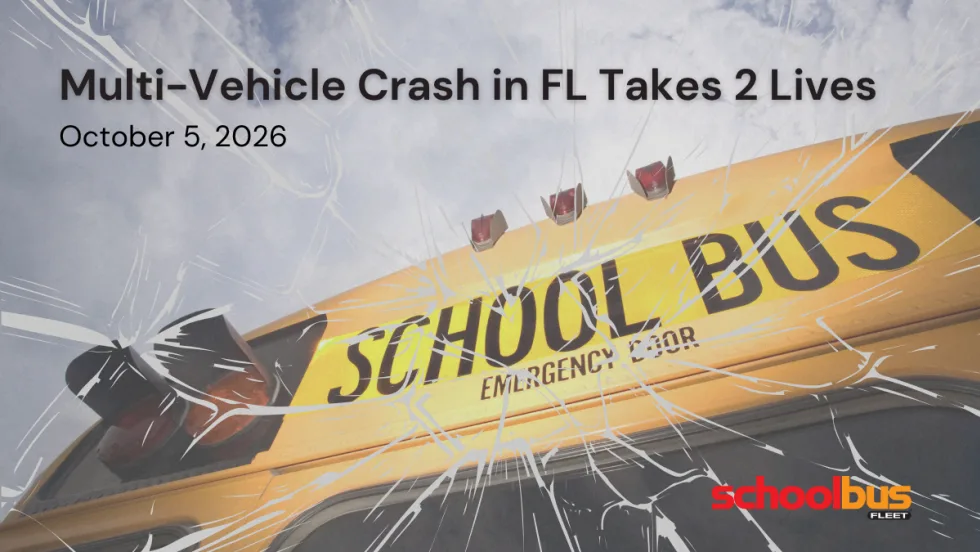
2 Killed, Dozens Injured in Florida School Bus Crash
A multi-vehicle collision caused a Polk County school bus carrying 37 students to overturn on its way to Winter Haven High School.
Read More →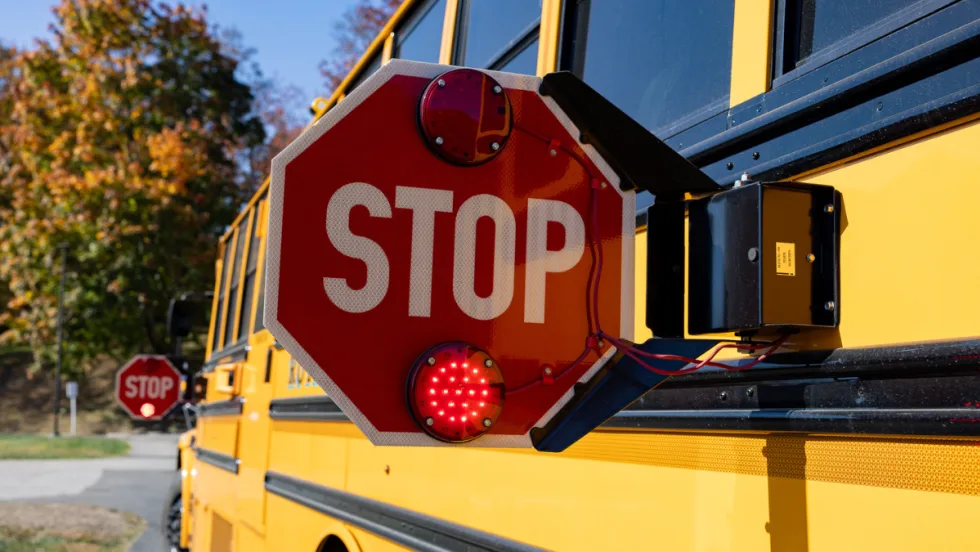
Illegal School Bus Passing Drops 24% in New York Districts
With fewer than 5% of citations involving repeat offenders, Westchester County officials said enforcement, education, and community partnerships are helping change driver behavior.
Read More →
School's Back. Here's What Happened to Traffic, Speeding & Distraction
What happens to traffic when school resumes? New data analysis examines changes in distracted driving, congestion, and speeding around schools.
Read More →
Geotab Expands Fleet Safety Tools With Video Coaching, Risk Insights
New safety and video capabilities aim to help fleet managers assess risk, support drivers, and take targeted action through video coaching, red-light violation detection, and more.
Read More →
How to Build a Better School Bus Driver Training Program
Is it time to strengthen your driver training? Here’s how to pick the right talent and improve recruitment, retention, and safety. This video is brought to you by IC Bus.
Read More →
Recent School Bus Accidents Leave 2 Dead, 2 Injured
Four school bus crashes in Florida, Illinois, and Georgia highlight risks in transportation lots, at bus stops, and during student loading and unloading.
Read More →
When Every Second Matters, Clarity Keeps Routes Moving
From routine delays to urgent incidents, strong communication practices help drivers, dispatchers, schools, and families respond with confidence.
Read More →
What Happens When a School Bus Catches Fire — and What Can Help
School bus fires are rare but can be devastating. Learn how advances in fire suppression and asset protection help fleets detect fires earlier, reduce damage, and improve safety.
Read More →
Geotab Launches Tool to Help Fleets Investigate Road Incidents
Geotab Investigations combines telematics data, video, documents, and other evidence to help fleets reconstruct incidents, resolve claims, and determine what happened.
Read More →
Texas Sixth Grader Wins 2026 National School Bus Safety Poster Contest
Sai Darshana Yekolu of Moseley Middle School in Prosper, Texas, was named the newest winner for her artwork, bringing the theme of “Safe Rides, Everyday Heroes” to life.
Read More →