




Interest Grows in Tracking of Students on Buses
Although tracking of vehicles using GPS (global positioning systems) is becoming increasingly common in commercial transportation, it’s still rarely u...
Although tracking of vehicles using GPS (global positioning systems) is becoming increasingly common in commercial transportation, it’s still rarely used by school bus operators, mainly because of cost but also because vehicle tracking alone doesn’t necessarily satisfy the needs of school transportation programs.
After all, school buses operate along set routes and follow rigid schedules. If deviations are necessary, nearly all buses are equipped with two-way radios that allow drivers to communicate with dispatch.
Many people believe GPS tracking would be more useful if it were linked to another application, such as student tracking. That would provide transportation officials, site administrators and possibly even parents with vital real-time information — namely, the whereabouts of buses and students.
"School administrators are interested in knowing where the kids get on the bus and where they get off the bus," says Agnes Mazeffa, assistant transportation coordinator at Hunterdon Central/Flemington Raritan Regional High School District in New Jersey.
That information has become more pertinent in the wake of last year’s hijacking of a school bus in Pennsylvania. The bus was discovered several hours later in the Washington, D.C., area. No one was hurt in the incident.
Test shows promise
Last spring, transportation officials at Hunterdon/Flemington tested a system that combined GPS with student tracking. The results of the three-month pilot project were promising, Mazeffa says.
Six buses were equipped with GPS units and card strip readers. At the beginning of each route, the driver would scan his identification card through the reader, which would download a list of authorized student riders. When students boarded the buses, they swiped their student identification card through the reader. They also swiped the card when exiting. Mazeffa said the card swiping worked about 95 percent of the time.
As the bus pulled away from each stop, the vehicle’s location and the names of its riders were transmitted back to the transportation center using a cellular-based data-only messaging service.
That information eventually made its way to the assistant principals, but Mazeffa says the site administrators wanted the information more quickly than it was being delivered. "They wanted the information e-mailed to them right after the bus was parked at the school in the morning," she says. Instead, the information was faxed within a few hours. "Improving that process would have been part of the next phase," she adds.
Due to staffing changes, the program was not continued beyond its three-month trial, but Mazeffa says she was impressed that VersaTrans Solutions Inc. in Latham, N.Y. (the routing software provider) and TracerNET Corp. in Chantilly, Va., (the hardware provider) were able to integrate the system successfully. "There are GPS systems at other school districts, but none with student tracking," she says.
'Dead zone' problem
The communication system was not flawless. Mazeffa says there were cellular "dead zones" where the transmitter was unable to transmit data. One of the advantages of cellular communication, however, was that the six buses could be tracked in areas where two-way radio communication was difficult.
Mazeffa says bus drivers were initially apprehensive about having to deal with the new system. "But they relaxed when they realized that they just had to drive the bus and tell the kids to swipe the card," she says. Because it was a pilot project, students were allowed to ride the bus even if they didn’t have their ID cards.
Doug Hamlin, president of VersaTrans, says the system is helpful in alerting drivers to student mix-ups. "Although the pilot project was for high-school students, another valuable application of this technology is for grade-school students who frequently board the wrong bus,” he says.
Hamlin says interest in student tracking is growing and will eventually reach critical mass. "This is going to be a pretty big technology in pupil transportation, for student tracking, asset management and route optimization," he says.
Competition abounds
Other GPS companies are making headway in pupil transportation.
One of those companies, Everyday Wireless LLC in West Lawn, Pa., already provides school districts with real-time tracking of buses and is working on a student tracking system. "It's a logical extension of the GPS platform," says Joe Winkler, president of Everyday Wireless. The company’s HereComesTheBus GPS system not only tracks the speed and location of buses but also has a feature that provides parents with bus stop arrival information.
Unlike its competitors, HereComesTheBus uses radio frequency transmissions to relay tracking data from the transceiver on the bus to base every 15 seconds. Because it uses radio frequencies, data transmission is free. Winkler says this is a huge advantage over cellular-based transmission, which he says costs from $20 to $40 per month per bus.
It's these monthly fees, not the initial equipment costs, Winkler says, that have kept school districts from embracing GPS systems. He estimates that fewer than 50 school districts nationwide are using GPS. The majority of those, he adds, use the HereComesTheBus system.
One drawback of radio frequency communication is that its range is 20 to 30 miles, unlike the nearly unlimited range of cellular systems.
How to track students
There are conflicting opinions about the most effective way of tracking students on and off the bus. As Mazeffa mentioned, the swipe-card system used at Hunterdon Central worked fairly well, but it required students to stop and swipe their cards. If the card wasn’t read properly, the driver would have to manually override it.
The problem is that card swiping slows the boarding process, Winkler says. Not only can this slowdown throw off route schedules, it can also burn extra fuel while buses are waiting for passengers to swipe during loading and unloading.
In addition, the cards themselves must be purchased and distributed, unless the students already have magnetic school identification cards as they do at Hunterdon Central.
Another method of tracking uses RFID (radio frequency identification) tags that can be attached to key fobs or backpacks, for example. Unlike cards with magnetic stripes, these tags don’t require swiping. They need only be brought within several inches of the reader to be recognized. An advantage of this tracking method is that it’s quicker than card swiping, especially for young children who might have a difficult time with proper card swiping.
Winkler says his company is working on an RFID system. "My requirement is that it be economical and completely or almost completely passive," he says.
The most high-tech tracking method is fingerprint recognition. This would eliminate the problem of children who forget their magnetic cards or RFID key fob. It would simply require that the child place his or her finger on the reader. Even that method has drawbacks, however, because the fingerprints of young children often are not fully developed and can be difficult to read, according to Bob Batwinis, a sales representative for TracerNET.
More Management
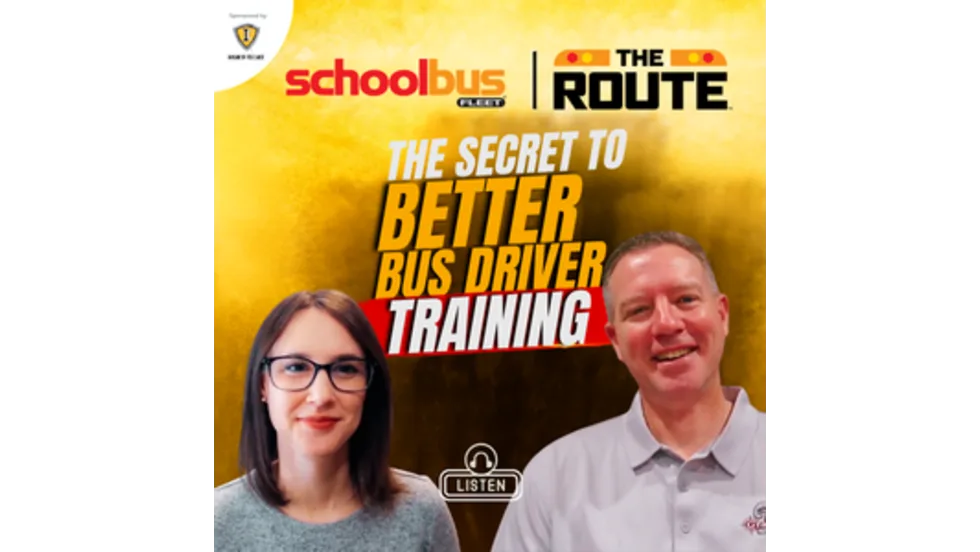
How to Build a Better Driver Training Program
Ready to boost up your school bus instructor training? Here’s how to pick the right talent and improve recruitment, retention, and safety.
Read More →
CALSTART and Forth Combine to Form Catalyst Mobility
The new name represents a renewed vision for the nonprofit focused on advancing clean, equitable, and affordable transportation solutions that move people and goods.
Read More →
What Makes a Great School Bus Driver Trainer?
Choosing the right school bus driver trainer takes more than experience. Learn six keys to selecting and developing trainers and evaluating program effectiveness.
Read More →

School Bus Contractors Expand Through New Deals, Acquisitions & Partnerships
STA's Canadian division acquires Ontario-based G&L Stevenson Transport; Durham School Services adds a new district in California; First Student expands in New Jersey; and Minnesota Coaches rebrands and acquires Halo Transportation.
Read More →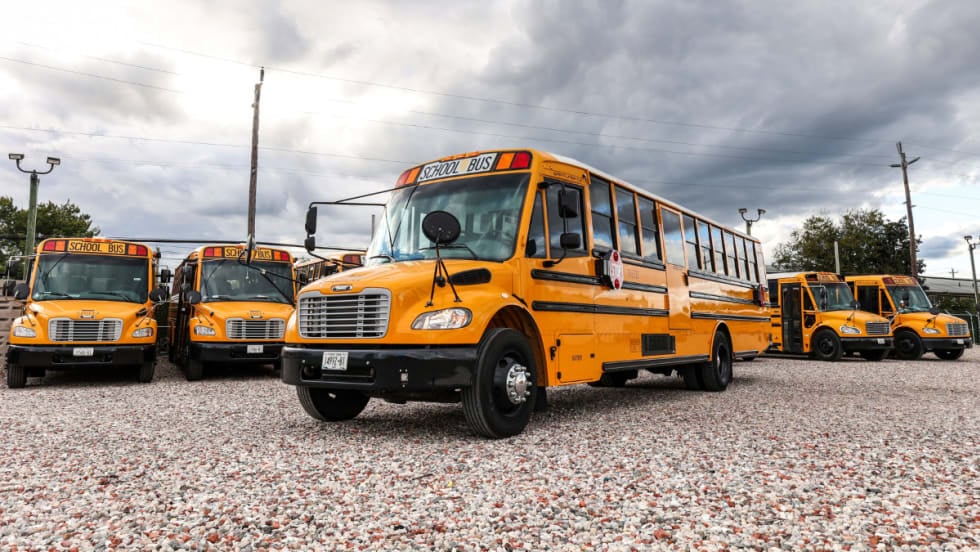
Logan Bus Company Rolls Out AI Phone System for NYC School Bus Families
A summer pilot found that AI agents could handle most routine calls, freeing up time for customer service staff to focus on emergencies and complex family concerns.
Read More →
From Intent to Impact: What I Learned About Leadership from TAPT
A Texas transportation supervisor shares lessons on self-awareness, accountability, managing stress and building trust — and why investing in leadership development matters at every stage of your career.
Read More →
NAPT Names 2026 Award Recipients, Hall of Fame Inductee
Who earned national recognition for their work in student transportation? This year, NAPT named five recipients of its 2026 awards for service, safety, and leadership, plus its newest Hall of Famer.
Read More →
2026 State of Student Transportation Report
Driver shortages. Rising costs. Growing safety expectations. More data, but not enough time to act on it. The 2026 State of Student Transportation Report reveals what transportation leaders say is putting the most pressure on their operations—and where they’re investing next. See how your priorities compare.
Read More →
How to De-Escalate an Angry Person: 5 Steps for Handling Workplace Conflict
What makes emotions run high, and how should you handle an angry colleague or parent? Follow these steps for staying calm, listening, showing empathy, and resolving conflict.
Read More →
What Readiness Looks Like This School Year
Learn about the challenges shaping the 2026–2027 school year, from persistent driver shortages and budget pressure to technology and readiness gaps. See how school districts are responding and adapting in Zonar’s 2026 Back-to-School Readiness Report.
Read More →