




In a teen's cool world, buses are a last resort
A recent article in the New York Times affirmed what we have known for years: Many teenagers won't ride a school bus because it's "uncool." Those teen...
A recent article in the New York Times affirmed what we have known for years: Many teenagers won't ride a school bus because it's "uncool." Those teens fortunate enough to have a driver's license and their own car prefer to drive themselves to and from school or to hitch a ride with a friend or their parents — anything rather than ride the "loser cruiser."
The article focused on the lack of parking space at high school campuses in Connecticut, a situation created partly by the reluctance of teens to ride available school buses. Because of the teens' unwillingness to ride the "loser cruiser" to school, the article said campus parking spaces are scarce and school buses are arriving at school with few students aboard.
This is a sad state of affairs in more ways than one. Not only does it suggest that school transportation programs are an inefficient use of taxpayer money, but it also accentuates the fact that teens would rather drive themselves than take the bus.
Oldest are least likely to ride
The New York Times article cites a Connecticut study performed by Dunlap & Associates that shows that younger students are the most likely to take the bus and older students the least likely. According to the Transportation Research Board's (TRB) recent study, "The Relative Risks of School Travel," teens driving themselves and friends to and from school are far more likely to be killed than those who walk, bicycle and, especially, ride the bus.
A study by the Insurance Institute for Highway Safety bolsters the TRB study's findings: Teen drivers have the highest death rate per miles driven than any other age group. Not surprisingly, 16-year-olds have the highest death rate among teens. Parents should be aware of this statistic before handing their teenage sons and daughters keys to the car, or allowing them to ride to and from school with teenage friends.
Are parents who drive their own cars to and from work rather than using public transportation setting a bad example for their children? That is, why should kids ride the school bus when their parents hop in the car every morning for their commute?
It's a good question, but not always valid. In many cases, public transportation is less convenient than school bus transportation. School bus stops are generally less than a half mile from a childÕs home, whereas transit stops may be farther away. Also, adults often work long distances from their homes, making it difficult to use public transportation without time-consuming transfers and other trade-offs.
Still, adults should use public transportation when it's convenient, even if only a couple times a week. Like school buses, transit buses help to reduce traffic congestion and pollution.
A few suggestions
Rather than just gripe about this situation, I'd like to offer a few suggestions. Why not convince parents to encourage their children to ride the bus through presentations at parent-teacher organization meetings? Or how about packaging some information about the results of the TRB study and including it in school newsletters sent to parents? It's the parents, after all, who need to persuade — or order — their children to ride the bus. Maybe the parents can't get full compliance, but even if they can get their children to leave the car at home twice a week, that would probably save lives.
If you have any other ideas on how to get the kids back on the school bus, please e-mail them to me. I'd like to hear what you think.
More Safety
School's Back. Here's What Happened to Traffic, Speeding & Distraction
What happens to traffic when school resumes? New data analysis examines changes in distracted driving, congestion, and speeding around schools.
Read More →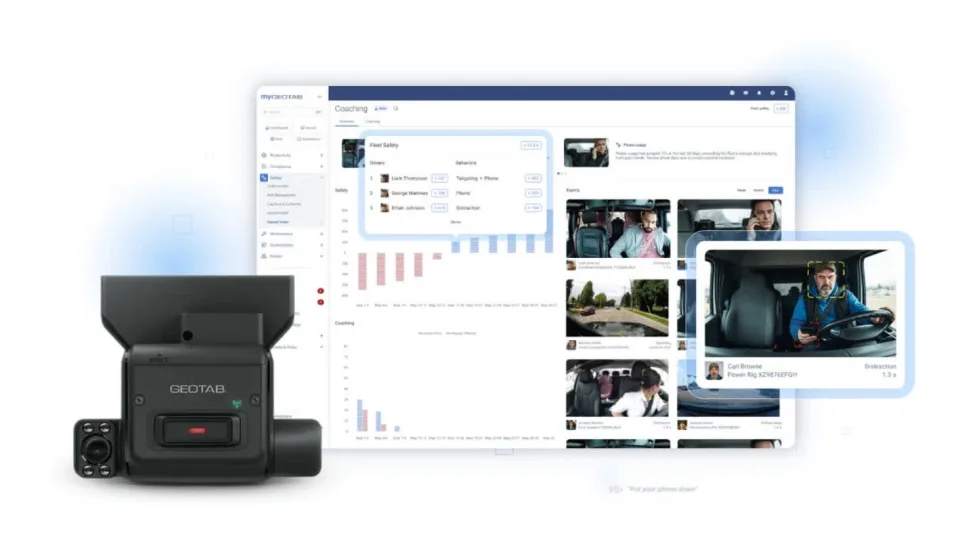
Geotab Expands Fleet Safety Tools With Video Coaching, Risk Insights
New safety and video capabilities aim to help fleet managers assess risk, support drivers, and take targeted action through video coaching, red-light violation detection, and more.
Read More →
How to Build a Better School Bus Driver Training Program
Is it time to strengthen your driver training? Here’s how to pick the right talent and improve recruitment, retention, and safety. This video is brought to you by IC Bus.
Read More →

Recent School Bus Accidents Leave 2 Dead, 2 Injured
Four school bus crashes in Florida, Illinois, and Georgia highlight risks in transportation lots, at bus stops, and during student loading and unloading.
Read More →
When Every Second Matters, Clarity Keeps Routes Moving
From routine delays to urgent incidents, strong communication practices help drivers, dispatchers, schools, and families respond with confidence.
Read More →
What Happens When a School Bus Catches Fire — and What Can Help
School bus fires are rare but can be devastating. Learn how advances in fire suppression and asset protection help fleets detect fires earlier, reduce damage, and improve safety.
Read More →
Geotab Launches Tool to Help Fleets Investigate Road Incidents
Geotab Investigations combines telematics data, video, documents, and other evidence to help fleets reconstruct incidents, resolve claims, and determine what happened.
Read More →
Texas Sixth Grader Wins 2026 National School Bus Safety Poster Contest
Sai Darshana Yekolu of Moseley Middle School in Prosper, Texas, was named the newest winner for her artwork, bringing the theme of “Safe Rides, Everyday Heroes” to life.
Read More →
Doing More With Less: How Transportation Directors Can Prioritize Safety Amid Budget Uncertainty
With diesel prices soaring and nearly one-third of transportation directors expecting budget cuts, maintaining student safety has never been more challenging. Download this guide to learn how leading districts are prioritizing risk, funding critical safety technology, and building stronger budget cases with data.
Read More →
Walton County Schools Adds Gatekeeper Stop-Arm Enforcement System
The Florida district will deploy Gatekeeper’s updated Student Protector technology, which now incorporates AI to improve video evidence.
Read More →