




Improving Safety in the Danger Zone
Accidents that occur during school bus loading and unloading are known as “danger zone” accidents. The danger zone refers to the areas extending 15 fe...

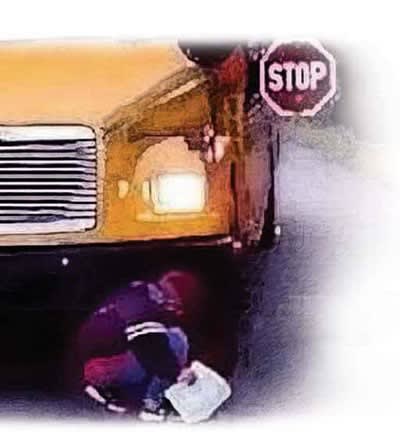
Accidents that occur during school bus loading and unloading are known as “danger zone” accidents. The danger zone refers to the areas extending 15 feet to the front, rear and sides of the bus, where children are in danger of being hit by passing vehicles or by their own bus.
Just as motorists must be aware of the blind spot for passenger cars, bus drivers must monitor the danger zone carefully. Although the number of fatalities incurred by danger zone accidents each year is relatively small, implementing a few simple procedures could help in bringing that number down to zero.
Safety begins with the driver
In some states, safe crossing procedures have been established to reduce student fatalities at the bus stop. California requires drivers to exit the bus and stop traffic before allowing students to cross, and New York has developed a universal crossing signal for drivers to use.
While these practices provide a measure of protection for school bus passengers in those states, industry experts agree that it falls to the driver to ensure passenger safety at all times, but particularly during loading and unloading. Transportation directors must also take responsibility for making sure that drivers receive thorough danger zone training.
Ted Finlayson-Schueler, president of Syracuse, N.Y.-based Safety Rules!, maintains that this training should include classroom discussion of proper loading and unloading procedures as well as reference to accidents documented each year in the Kansas State Department of Education’s annual study of loading and unloading fatalities in order to illustrate the dangers of neglecting to follow proper danger zone protocol.
Once on the road, drivers must put their training into practice every day, making an effort to remain diligent and alert at all times. Jim Ellis, transportation director at Moravia (N.Y.) Central School District, attributes bus drivers rushing through their runs as a major cause of by-own-bus fatalities in the danger zone. If a driver is in a hurry to get to the next stop or back to the bus yard, or if they’re running late, this sense of rushing can distract the driver from paying full attention to the danger zone.
“There’s so little margin for error when there’s a little child outside this big vehicle,” says Ellis.
If bus drivers are making 40 stops a day, 180 days a year, says Finlayson-Schueler, that adds up to about 14,400 stops a year, making it easy for a driver to slip into a routine. He recommends that during stops drivers ignore other students on the bus who might be disruptive and refrain from answering the cell phone or radio. In addition, drivers should scan the environment for any dangers and make sure all passengers are accounted for before moving the bus.
Ellis also encourages drivers to be methodical and err on the side of caution, securing the parking brake at every bus stop, whether the state requires it or not, and checking and rechecking their pedestrian crossover mirrors.
Develop a universal signal
Ellis, who helped create a definitive guide on bus stop safety in the 1990s (“School Bus Safety is One Bus Stop at a Time,” available at www.emsc.nysed.gov/schoolbus), says he would like to see the school bus industry adopt a universally recognized safe-to-cross signal, similar to New York state’s.
“This would be a consistent hand signal directing children that it’s safe to cross the road, and consistent across the country,” he explains.
Whenever crossing the road, whether to board the bus or after unloading, Finlayson-Schueler says that children must wait for a signal from the driver before crossing.
“This signal must not be ambiguous to stopped motorists so that they might think the driver is signaling them to move,” he notes. Bus drivers must also know to use the horn to alert kids to oncoming cars or other dangers, he says.
Dick Fischer, president of Peyton, Colo.-based Trans-Consult, notes that drivers should also turn on the interior dome light, especially at dawn or dusk and during other low-light conditions, so kids outside the bus are still able to see the driver.
Train kids every day
School bus drivers are required by the federal government to provide safety training for students twice a year. However, Fischer asks, “If I do it in August, what happens when a kid comes in October? Do I wait until January to train him?” Fischer agrees with other experts that, to be effective, safety must be taught every day.
The most effective school districts, according to Ellis, have programs that reinforce this training in the classroom. “Often, drivers themselves go in between runs and do classroom programs, especially for the younger kids.”
Derek Graham, section chief of transportation services at the North Carolina Department of Public Instruction, emphasizes that daily training is important for younger children because the safety message must be repeated for it to register with this age group.
“Most of the loading zone fatalities are very small children — kindergarten through third grade,” says Graham. “We have to realize that not every family is able to send an adult to the bus stop. There are health situations and working schedules and different levels of awareness as well. The one constant is the school bus driver.”
{+PAGEBREAK+} In the 1970s, there were about 75 danger zone fatalities per year, Ellis says, while today the number is usually less than 20. “But we’re transporting many more children, the children are more challenging than they used to be and the environment is more challenging,” he says, crediting safety education for the reduction. Ellis estimates that since the 1970s, at least 1,200 children’s lives have been saved because of better danger zone training for drivers and passengers.
Bus stop location
The consensus seems to be that bus stops should not be located near intersections, as they increase the risk of danger zone fatalities caused by other motorists. But all factors impacting safety around the bus stop need to be weighed against each other on a case-by-case basis to create the safest possible stop environment, says Finlayson-Schueler.
Ellis says the real expert on bus stop safety is the driver who is assigned to the run, as he or she is likely to know it better than anyone else. Ellis recommends that administrators and drivers together annually visit each stop to evaluate potential safety hazards. “It should be done regularly, not just after something bad happens,” he notes.
According to Finlayson-Schueler, standard questions to ask during stop evaluation include:
Is there sufficient visibility (which could be affected by hills, curves or roadside structures) in both directions for cars to see the bus stopping and respond?
Are there specific recurrent weather issues such as flooding, fog or ice?
Is there an unusual source of big truck traffic, such as a quarry or warehouse?
Are there social factors impacting safety in the area, such as drug houses or convicted sex offenders living nearby?
Finlayson-Schueler goes further to suggest that drivers evaluate stops on a daily basis. “Even a well planned bus stop can become unsafe if traffic patterns change, landscaping is planted or grows out of control, an unknown adult is loitering near the stop, new signs or buildings are erected, threats are made to the bus or driver, or there are changes in the number or age of children at the stop,” he explains. “Bus drivers are the eyes and ears of the transportation department, and no detail is so small that it should not be reported.”
Ellis also recommends that stops be situated to avoid dangerous crossovers. “There are still places where very young children are expected to cross 55 mph, multi-lane highways,” he says. “Maybe there are situations where they are unavoidable, but I don’t care how well you train a child or how much the penalty is for passing a stopped school bus, something’s going to happen there.”
Equipment boosts visibility
Through recent redesigns of bus hoods and development of Federal Motor Vehicle Safety Standards (FMVSS) for mirrors, manufacturers and the federal government have helped to improve visibility around the bus, Finlayson-Schueler says.While blind spots around the bus have been reduced, accurate mirror adjustment is still vital for monitoring the danger zone. According to Fischer’s experience, most school bus drivers neglect to set the crossover mirrors to meet FMVSS 111, the regulation addressing mirror adjustment using the field-of-view test.
“The drivers are using them as driving mirrors to see to the rear, not to the front of the bus,” and this reduces the field of vision from 12 feet to 4 feet in front of the vehicle, Fischer says.
Finlayson-Schueler recommends that schools and bus companies paint a mirror grid on the bus yard pavement so that drivers can check their mirrors daily.
Ellis calls the field-of-vision test one of the most productive training sessions for bus drivers, and he says he is better able to help drivers learn, while avoiding singling anyone out, by turning the test into a game.
With a bus parked in the parking lot, Ellis blindfolds drivers, and then places items in the danger zone, like orange hazard cones. Next, he removes the blindfold and times the driver to see how long it takes for him or her to find all the items.
“It’s really very instructive, even for veteran drivers who have been driving for a long time,” Ellis says. “Sometimes it’s an eye-opener. Many drivers kind of give mirrors short shrift. They’ll glance at them, but unless the driver really searches those mirrors, really moving in the seat to change the angles of vision as they’re looking in those mirrors, they’ll miss a child.”
The crossing control arm that aims to force children to walk farther out in front of the bus when loading and unloading so that the driver can see them has been mandatory equipment for public school buses in North Carolina since the 1980s. Graham credits the devices with the decrease in the number of by-own-bus fatalities in the state. “We believe very strongly in the benefit of the crossing control arm, and our state has argued, at least for the last two National Congresses on School Transportation that I’ve been involved in, to make them a [nationwide] requirement, but that hasn’t come to pass yet,” he says.
Others, however, caution against relying too heavily on crossing arms. “I am not a big advocate of them because there have been by-own-bus fatalities with crossing arms,” Ellis says. “I think they sometimes give a false sense of security.”
Stop arm violations persist
Stop arms and flashing lights on school buses notify passing motorists that the bus is loading or unloading. Despite this, stop arm violations happen frequently and aren’t likely to be completely eliminated. Ellis compares the challenge to stopping motorists from running red lights.Graham notes that in North Carolina, motorists pass stopped school buses 2,000 times a day. “You have to do continuing enforcement and education to get the word out to the public. But you also have to plan for the eventuality that you’re not going to get the word to everybody. So drivers and students have to go under the assumption that other vehicles just may not stop,” he says.
Ellis points out that there have been cases of vehicles passing a stopped bus on the passenger discharge side. He says children must also be trained to pause at the bottom step of the bus before exiting and to look to the back of the bus to make sure no vehicles are attempting to pass on the right.
“Districts and drivers that really take this seriously even have older kids stopping at the bottom step,” Ellis says. “Kids will rise to the occasion of what drivers expect of them.”
How parents can help
Experts stress the important role parents play in reinforcing safe school bus procedures. Ted Finlayson-Schueler of Safety Rules! notes that the 2005 National School Transportation Specifications and Procedures suggests that parents and guardians should assist their children in understanding school bus safety procedures. The specifications also state that parents or guardians are responsible for the conduct and safety of their children at all times prior to the arrival and after the departure of the bus at a stop.“If a child has to cross the road to the bus in the morning, the parent should wait for the bus and follow the safe crossing signal and procedure, just as the child would be required to do if the parent was not present,” Finlayson-Schueler says. “This modeling of safe bus stop behavior will be a powerful safety lesson for their child.”
More Safety
School's Back. Here's What Happened to Traffic, Speeding & Distraction
What happens to traffic when school resumes? New data analysis examines changes in distracted driving, congestion, and speeding around schools.
Read More →
Geotab Expands Fleet Safety Tools With Video Coaching, Risk Insights
New safety and video capabilities aim to help fleet managers assess risk, support drivers, and take targeted action through video coaching, red-light violation detection, and more.
Read More →
How to Build a Better School Bus Driver Training Program
Is it time to strengthen your driver training? Here’s how to pick the right talent and improve recruitment, retention, and safety. This video is brought to you by IC Bus.
Read More →

Recent School Bus Accidents Leave 2 Dead, 2 Injured
Four school bus crashes in Florida, Illinois, and Georgia highlight risks in transportation lots, at bus stops, and during student loading and unloading.
Read More →
When Every Second Matters, Clarity Keeps Routes Moving
From routine delays to urgent incidents, strong communication practices help drivers, dispatchers, schools, and families respond with confidence.
Read More →
What Happens When a School Bus Catches Fire — and What Can Help
School bus fires are rare but can be devastating. Learn how advances in fire suppression and asset protection help fleets detect fires earlier, reduce damage, and improve safety.
Read More →
Geotab Launches Tool to Help Fleets Investigate Road Incidents
Geotab Investigations combines telematics data, video, documents, and other evidence to help fleets reconstruct incidents, resolve claims, and determine what happened.
Read More →
Texas Sixth Grader Wins 2026 National School Bus Safety Poster Contest
Sai Darshana Yekolu of Moseley Middle School in Prosper, Texas, was named the newest winner for her artwork, bringing the theme of “Safe Rides, Everyday Heroes” to life.
Read More →
Doing More With Less: How Transportation Directors Can Prioritize Safety Amid Budget Uncertainty
With diesel prices soaring and nearly one-third of transportation directors expecting budget cuts, maintaining student safety has never been more challenging. Download this guide to learn how leading districts are prioritizing risk, funding critical safety technology, and building stronger budget cases with data.
Read More →
Walton County Schools Adds Gatekeeper Stop-Arm Enforcement System
The Florida district will deploy Gatekeeper’s updated Student Protector technology, which now incorporates AI to improve video evidence.
Read More →