




How to Reduce the Chances of a Brake Failure Tragedy
A very unusual accident occurred in St. Paul, Minn., last fall that could easily have been the worst school bus accident in state history. Thankfully,...
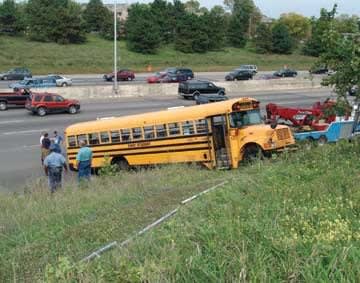
After the engine shut down on a steep grade, a school bus rolled backward about 300 feet before it jolted to a stop in the exit lane of a freeway.
A very unusual accident occurred in St. Paul, Minn., last fall that could easily have been the worst school bus accident in state history. Thankfully, no students were seriously injured; however, this accident provides a valuable lesson for all school bus operators.
On Sept. 15, 2006, a First Student bus operating under contract to St. Paul Public Schools left a magnet school on its afternoon take-home route. The bus left the complex via Concordia Avenue, which is the frontage road on the south side of Interstate 94.
The bus proceeded east on Concordia and turned south onto Arundel Street, which has a significant grade between Concordia and Carroll Avenue, with the higher elevation at Carroll.
When the bus reached the top of the hill, the engine shut down and the bus began to roll backward toward Concordia. The driver said she attempted to stop the bus by pushing on the service brakes, slamming the gear selector on the automatic transmission into low gear and pulling the parking brake. (Following the accident, the transmission selector was in low gear and the parking brake was engaged.)
The bus traveled backward down Arundel, across Concordia, through a chain link fence fronting the freeway right-of-way and down the hill to Interstate 94. The rear wheels of the bus went across the guardrail adjacent to the Marion Street exit lane and came to rest with the bumper against the pavement, with the bus partially blocking the lane.
No students were seriously injured in this accident; however, had the grade been less steep, the bus would have continued rolling backward across three lanes of the freeway. Had the driver attempted to turn the bus onto Concordia, there is a possibility that the bus could have rolled and gone down the embankment sideways.
Following the on-scene investigation, the bus was towed to a First Student terminal and examined by commercial vehicle inspectors and First Student technicians.
Why the shutdown?
The Minnesota State Patrol inspection report indicates that no violations were found on the school bus. All mechanical and safety systems were fully functional prior to and following the accident.
The inspection determined that the school bus engine shut down due to low fuel. This school bus is equipped with a 60-gallon fuel tank, which would have approximately a 55-gallon useable fuel capacity under normal circumstances.
As the bus went up the grade on the Arundel Street hill, the fuel shifted to the rear of the tank, exposing the drawtube to air. The engine stopped after it pulled the remaining fuel from the fuel line and filter.
The bus involved in this incident was equipped with a high-power-type hydraulic brake system. When the engine shut down, the primary power assist to the brake system also stopped, creating a condition known as "high pedal." The backup system was operational, and the bus still had working brakes.
The circumstances of the accident were unprecedented in the memories of the contractor and district staff. Both immediately took steps to determine what occurred and to determine if actions should be implemented in response to the accident.
Key changes instituted
Following the crash, First Student staff took actions designed to prevent a reoccurrence. These included changes in fueling procedures and implementation of a brake-loss component as part of its training program in which the driver experiences actual loss of primary braking power in a school bus equipped with hydraulic brakes. This experience is conducted in a controlled environment with the bus driver bringing the bus to a stop after the engine has been shut down with the vehicle traveling at 10 to 15 mph.
After reviewing First Student's actions, the school district ultimately amended its contract requirements to include a brake-loss experience as part of both the driver training program and the annual driver evaluation procedure required by the contract. The brake-loss component must be documented in the driver qualification file that is required under the contract.
The contract was further amended to specify that as part of the pre-trip inspection, each driver of a bus equipped with high-power-type hydraulic brakes shall depress the brake pedal with the ignition switch in the "off" position to verify that the backup electric power assist unit is operational. If the backup electric power assist unit cannot be heard with the brake pedal depressed and the ignition in the "off" position, the unit cannot be used to transport students until repaired.
The driver shall then turn the ignition switch to the "on" position to verify that the brake pressure light is operational. The driver shall then start the engine to check that the brake pressure light goes off. If the brake pressure light does not light when the ignition is turned to the "on" position with the engine off, or goes out after the engine is started, the unit cannot be used to transport students until repaired.
While these checks should always be made, specific inclusion in the transportation contract allows the application of serious penalties for failure to perform the required checks.
Training component added
The contract was also amended to require that each contractor that operates buses with hydraulic brake systems must provide drivers with a basic understanding of the design and operation of the hydraulic brake system, as well as the procedures to follow in the event of a failure of the primary braking system. The district has offered each contractor a copy of the video production "Inspecting Hydraulic Brake Systems," featuring Inspector Irwin Gage of Minnesota State Patrol, to assist in this training.
Each contractor must require each driver to accurately describe the basic operation of the hydraulic brake system and the proper emergency procedures to follow in the event of a failure of the primary brake system prior to releasing the driver from the training program and as part of the annual school bus driver evaluation required under the contract.
While this accident was highly unusual, many school districts have steep streets or highways that could create such a scenario. First Student's response to this accident was appropriate, professional and reflected concern for the transported students. All of our contractors understood that this could have occurred with one of their buses and immediately addressed the lessons learned.
Information about the hydraulic brake inspection videotape may be obtained at www.isp-video.com/order Videos/ViewCategories.action. Click on the "Inspecting Vehicles and Drivers" link. Harold Turnquist is the transportation director at St. Paul (Minn.) Public Schools.
More Safety
School's Back. Here's What Happened to Traffic, Speeding & Distraction
What happens to traffic when school resumes? New data analysis examines changes in distracted driving, congestion, and speeding around schools.
Read More →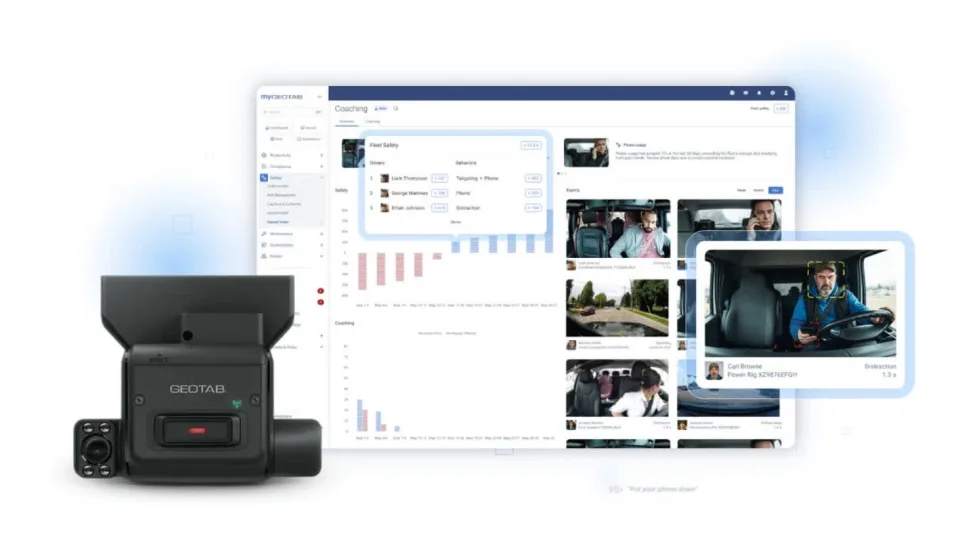
Geotab Expands Fleet Safety Tools With Video Coaching, Risk Insights
New safety and video capabilities aim to help fleet managers assess risk, support drivers, and take targeted action through video coaching, red-light violation detection, and more.
Read More →
How to Build a Better School Bus Driver Training Program
Is it time to strengthen your driver training? Here’s how to pick the right talent and improve recruitment, retention, and safety. This video is brought to you by IC Bus.
Read More →

Recent School Bus Accidents Leave 2 Dead, 2 Injured
Four school bus crashes in Florida, Illinois, and Georgia highlight risks in transportation lots, at bus stops, and during student loading and unloading.
Read More →
When Every Second Matters, Clarity Keeps Routes Moving
From routine delays to urgent incidents, strong communication practices help drivers, dispatchers, schools, and families respond with confidence.
Read More →
What Happens When a School Bus Catches Fire — and What Can Help
School bus fires are rare but can be devastating. Learn how advances in fire suppression and asset protection help fleets detect fires earlier, reduce damage, and improve safety.
Read More →
Geotab Launches Tool to Help Fleets Investigate Road Incidents
Geotab Investigations combines telematics data, video, documents, and other evidence to help fleets reconstruct incidents, resolve claims, and determine what happened.
Read More →
Texas Sixth Grader Wins 2026 National School Bus Safety Poster Contest
Sai Darshana Yekolu of Moseley Middle School in Prosper, Texas, was named the newest winner for her artwork, bringing the theme of “Safe Rides, Everyday Heroes” to life.
Read More →
Doing More With Less: How Transportation Directors Can Prioritize Safety Amid Budget Uncertainty
With diesel prices soaring and nearly one-third of transportation directors expecting budget cuts, maintaining student safety has never been more challenging. Download this guide to learn how leading districts are prioritizing risk, funding critical safety technology, and building stronger budget cases with data.
Read More →
Walton County Schools Adds Gatekeeper Stop-Arm Enforcement System
The Florida district will deploy Gatekeeper’s updated Student Protector technology, which now incorporates AI to improve video evidence.
Read More →