




How I Added Punch to My ‘Buster’ Presentation
To hold short attention spans, Faye Stevens trimmed the show length, added an original song and used a Buster-sized two-way street to directly involve the children.
In August 1990 I was hired by the Board of Cooperative Educational Services (BOCES) in Watertown, N.Y., to design and implement a school bus safety program suitable for kindergarten through second-grade students. At that time, my transportation experience consisted of substitute school bus driving. I knew what should be included in a safety program, but I didn’t know how to organize or present it. My prospects for success were bleak. I was told that the longest any safety program had lasted was two years, and that as soon as I finished writing this one, I had better be thinking about my next project - if I still wanted to work!
What does, doesn't work
On my first day at the BOCES, I was introduced to Buster the Bus, a school bus robot manufactured by Robotronics in Springville, Utah. I learned that he would be my sidekick during the safety presentations. However, Buster actually is designed as a two-person operation - one person wears a headset and "speaks" through the robot to the children, while the other person stands next to Buster and talks directly to the kids. But I was on my own, so I decided to tape Buster’s remarks using my voice and developed a skit that created some interchange between us. Problems arose on the first day. My program was one hour - too long, I found out, especially for kindergarten audiences. I was losing their attention after 15 minutes. I also quickly discovered that Buster was not enough of a gimmick to hold the attention of today’s media-savvy youngsters. I hadn’t realized how uncomfortable I, and perhaps my audience, was with the sound of my voice coming out of Buster. It soon began to seem that predictions of a two-year run actually were optimistic. I knew the children liked Buster, and I was convinced of the importance of a safety program. I just had to figure out what I was doing wrong. I had three months before my last scheduled presentation, and resolved to transform my program.
Be your own best critic
I started by rewriting my script, constantly asking myself, "What should the children learn today?" I changed the order of topics, cutting some less important sections and condensing others to improve the program’s flow. I had new posters printed that covered only the program’s most pertinent points. I also designed coloring books imprinted with my safety rules. Then I gave Buster a makeover. First, he got a paint job, which made him look more like an authentic school bus. Next, I changed his voice, recording the script at a local radio station and mechanically altering my voice. I also enlisted the help of a music teacher, who wrote and recorded a new song for Buster. Then I turned to my "stage." I wrote letters to all teachers, telling them that I would need their classrooms as clear as possible, giving Buster more space to move around and allowing the children to sit close to the action. I added a two-lane, Buster-sized road (made of folded cardboard for portability) to make the show more realistic and visually interesting. To make the learning process more interactive, I incorporated movements for the children to make during the presentation. I also waited until later in the script before moving Buster around the room, so that his movements were less of a distraction to the learning process. In October 1991, Buster and I hit the schools again. The new program was a hit. With renewed confidence, I began distributing evaluations to the teachers, who made several valuable suggestions. Buster has been so popular that he spawned two new safety courses - "Freddie the Truck" and "Andy the Ambulance" - both incorporating the lessons I learned with Buster. Kids won’t learn if they don’t listen Our media-saturated society has molded today’s youngsters into surprisingly sophisticated critics. Don’t let a lackluster presentation obscure your message and leave your youthful audience longing for the TV remote. In my eight years with Buster the Bus, I've learned several important lessons for getting across the safety message to young children.
Get training. Don't assume that children won't be critiquing your teaching style. Remember, this group has grown up with Sesame Street, so they have seen the best.
Have something to say . If you don't believe that what you are saying is important to the lives and safety of children, neither will they.
Keep it simple . Gear your program to the age and attention span of your audience - children.
Don't let the "gimmick" overshadow the program. I use Buster to get children's attention, but I teach the safety lessons.
Be prepared to make changes. Of course, you want a well-written program going in, but it should never become stagnant. If the program needs to be changed, then change it.
Don't be afraid to pester the schools. Merely sending out a mailing may not get you in the door; follow it up with a telephone call. Let them know in advance what your requirements are - and stick to them.
Author Faye Stevens is safety training specialist for the Jefferson-Lewis-Hamilton-Herkimer-Oneida School District.
More Safety
HopSkipDrive Reports Progress on Safety Advisory Council
More than a year after forming the council, independent safety experts have helped shape new rider-safety features and policy progress, with a new goal to address rider behavior.
Read More →
What the 2026 National School Bus Safety Month Resolution Means for Student Transportation
The bipartisan resolution highlights illegal school bus passing, student safety during loading and unloading, and the need for driver training and public education.
Read More →
School Bus Stop-Arm Violations Decline 53% Across Verra Mobility Programs
Verra Mobility shares how school bus stop-arm cameras and school zone safety programs are changing driver behavior, reducing violations, and protecting students.
Read More →
Most Bus Crashes Aren’t Your Fault. Here’s How to Prove It.
A guide for what to do in between a school bus crash and a claim: what to preserve, who to notify, and how to keep the facts available when they matter.
Read More →
National School Bus Safety Week 2026: Tips, Toolkits & Resources to Keep Students Safe
School bus safety takes more than awareness. Explore expert tips, enforcement strategies, and free resources to help protect students on every ride.
Read More →
2 Killed, Dozens Injured in Florida School Bus Crash
A multi-vehicle collision caused a Polk County school bus carrying 37 students to overturn on its way to Winter Haven High School.
Read More →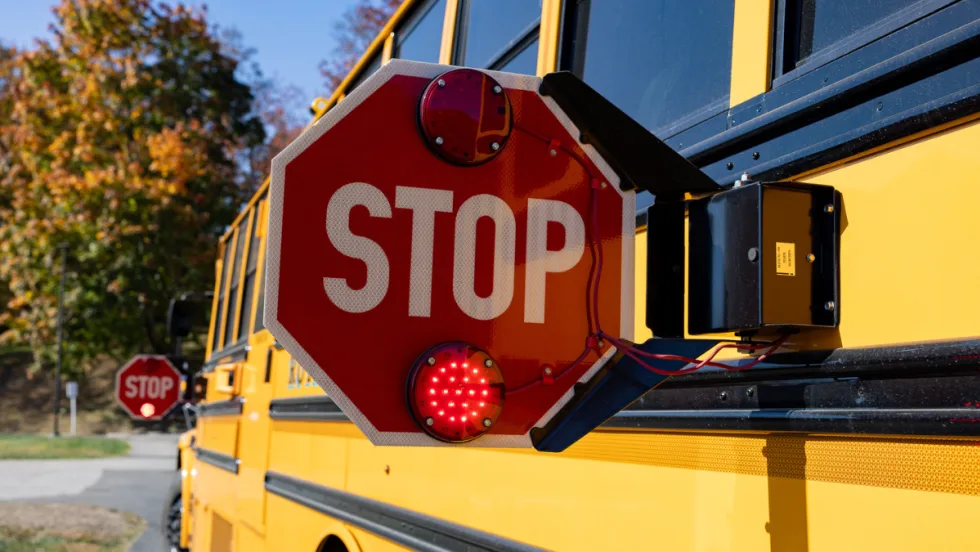
Illegal School Bus Passing Drops 24% in New York Districts
With fewer than 5% of citations involving repeat offenders, Westchester County officials said enforcement, education, and community partnerships are helping change driver behavior.
Read More →
School's Back. Here's What Happened to Traffic, Speeding & Distraction
What happens to traffic when school resumes? New data analysis examines changes in distracted driving, congestion, and speeding around schools.
Read More →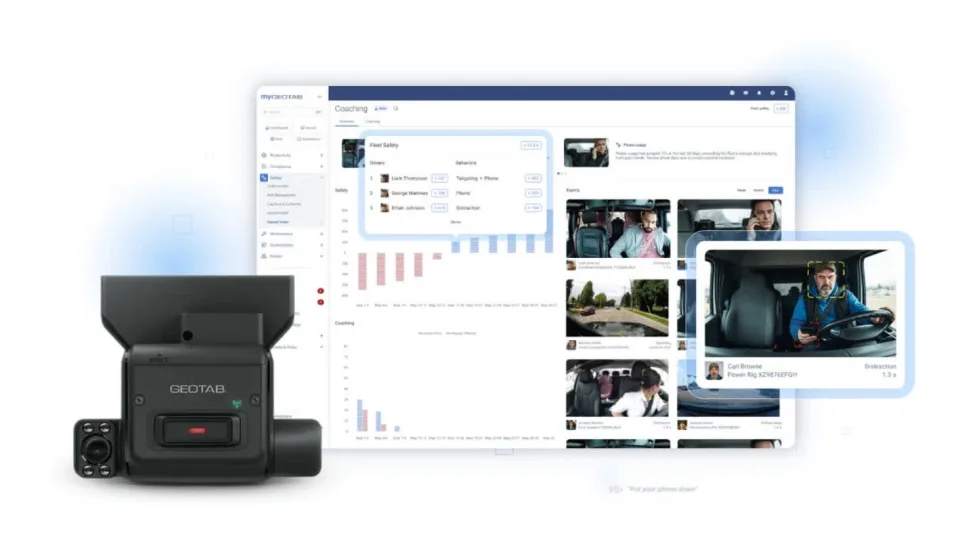
Geotab Expands Fleet Safety Tools With Video Coaching, Risk Insights
New safety and video capabilities aim to help fleet managers assess risk, support drivers, and take targeted action through video coaching, red-light violation detection, and more.
Read More →
How to Build a Better School Bus Driver Training Program
Is it time to strengthen your driver training? Here’s how to pick the right talent and improve recruitment, retention, and safety. This video is brought to you by IC Bus.
Read More →