




How Google Tools Can Streamline Data Access for School Bus Fleets
A dispatcher at a Washington school district details how his transportation team has used G Suite and Google Sheets to reduce recurring questions, misinformation, confusion, and distractions for more efficient operations.
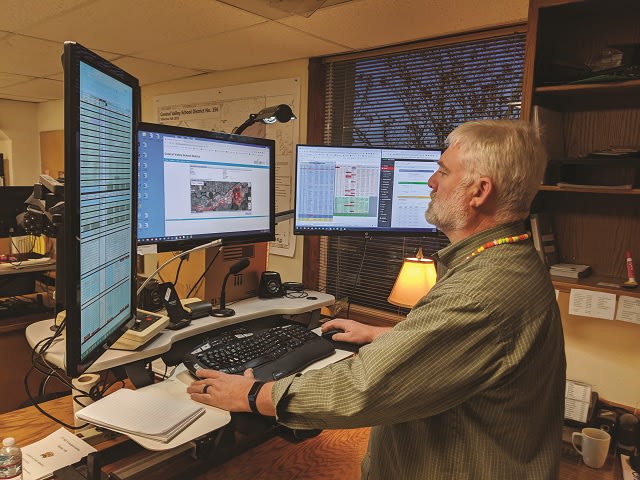
Photo courtesy Central Valley School District
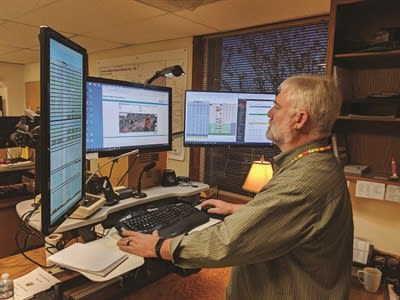
Photo courtesy Central Valley School District
School districts across the U.S. — small, medium, and large — are feeling the strain of budgets, rising student enrollment, increasing scrutiny, legal pressure, regulatory requirements, and more. For transportation departments, these struggles are compounded by often falling low on budget priority lists.
My background includes work as an emergency management systems dispatcher, motorcoach driver, and a school bus driver for 12 years. When I was hired by Central Valley School District in Spokane Valley, Wash., in dispatching in a communication center one year ago, I was asked by transportation management staff to be a catalyst to upgrade process, systems, and technology for our department. Improving operations infrastructure was one of my first projects.
Our district is made up of 13,000 students and approximately 100 vehicles transport them. We were functioning in a paper environment. There were many versions of documents floating around, with little to no coordination or consistency, causing significant confusion and errors.
Going Paperless
Our top priority was to transition transportation staff to the use of accurate, real-time, and practical information for daily operations. This required an electronic solution. While Microsoft Office tools were evaluated, it became clear that web-based tools were the better solution, because it is easier to set up permissions among all employees, share documents, and make updates in real time.
We evaluated the Google G Suite product and found it to be applicable to many areas of transportation. While free of charge to and sometimes used by schools for educational collaboration, these products are not typically used for transportation operations. This is unfortunate, as operations could be significantly improved by real-time data availability and accuracy, flexibility, and managed information access. (We also use Transfinder for route planning and mapping.)
This value cannot be underestimated. Benefits to management include filling empty routes; managing absences, special circumstances training inventories; tracking driver seniority for trips, and special weather-related procedures. Another benefit: the IT director said it cost nothing.
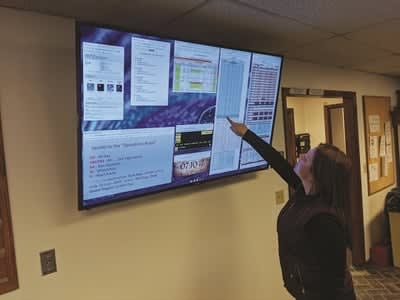
The transportation department’s operations board is a series of Google Sheets with data covering routes, driver, and district information managed by dispatch and displayed on a 64-inch monitor. Photo courtesy Central Valley School District
Greater Access, Flexibility
Given the nature of the products, all this information is portable and available to anyone, based on access levels, at any location with internet on personal computers, tablets, or mobile devices. It also allows us to have duplicate versions — even if they are formatted differently — on screens at separate locations.
We manage information in our dispatch center, but it is displayed in a uniquely designed format in the driver’s lounge. For example, we aligned our editable versions of key spreadsheets to other versions designed for the large screen — vertically-oriented spreadsheets fit better on the large screen. However, they are edited by us on horizontally-oriented versions that automatically update in real time on the large screen version. This real-time capability is vital during early morning operations, especially when combined with inclement weather.
We currently use a “master grid,” which is a Google Sheet, to manage a matrix of all buses, routes, drivers, and assistants, as well as route start and end times. This grid also includes tabs with:
• Driver certifications.
• Staff contact information.
• The district calendar.
• Student overflow information matrix shared by various schools.
• Special transportation (gifted, homeless) program information.
• Snow route and delay procedures.
• Absences.
In addition to the “master grid” sheet, we built a Google Sheet we call our “sub worksheet.” We use this to manage substitute drivers and their daily a.m., p.m., and mid-day routes. It looks forward one week, is managed in real time, and color-coded for easy reference.
We manage these sheets in dispatch but display them on a 64-inch monitor in the driver’s lounge, along other web-based apps, including NOAA Weather, the weekly maintenance schedule, a rotating slide show with training and department information, and the Atomic clock (a device that uses a hyperfine transition frequency for more accurate time).
This operations board, or “Ops Board,” has become the heart of the transportation department. It has reduced recurring questions, clutter, misinformation, confusion, and dispatch distractions by 75%. I can equate this to a savings of .25 full-time equivalent (FTE) hours. Districts that are similar in size to ours could see this kind of service improvement and cost savings, or even greater.
Requirements
It is important to note that transitioning to electronic infrastructure requires more screen space. Thus, transportation staff members — specifically in dispatch — need three monitors for taking advantage of the information. This can be a challenge given where transportation departments fall on the priority list for technology in the average school district. With some creative assistance from the IT department, we got it done. We implemented G Suite on a wireless network, added email addresses and edited permission levels, and installed a large screen donated by a school in the drivers lounge, along with the Chromebox that runs Google Chrome’s operating system.
Stuart Vogelman is a dispatcher for Central Valley School District in Spokane Valley, Wash. He has also worked as a senior executive, international business consultant, pastor, and chaplain for a state police agency. He can be contacted at (509) 558-5493.
More Management

How to Build a Better Driver Training Program
Ready to boost up your school bus instructor training? Here’s how to pick the right talent and improve recruitment, retention, and safety.
Read More →
CALSTART and Forth Combine to Form Catalyst Mobility
The new name represents a renewed vision for the nonprofit focused on advancing clean, equitable, and affordable transportation solutions that move people and goods.
Read More →
What Makes a Great School Bus Driver Trainer?
Choosing the right school bus driver trainer takes more than experience. Learn six keys to selecting and developing trainers and evaluating program effectiveness.
Read More →


School Bus Contractors Expand Through New Deals, Acquisitions & Partnerships
STA's Canadian division acquires Ontario-based G&L Stevenson Transport while Durham School Services adds a new district contract in California, First Student adds a New Jersey contract, and Minnesota Coaches acquires Halo Transportation.
Read More →
Logan Bus Company Rolls Out AI Phone System for NYC School Bus Families
A summer pilot found that AI agents could handle most routine calls, freeing up time for customer service staff to focus on emergencies and complex family concerns.
Read More →
From Intent to Impact: What I Learned About Leadership from TAPT
A Texas transportation supervisor shares lessons on self-awareness, accountability, managing stress and building trust — and why investing in leadership development matters at every stage of your career.
Read More →
NAPT Names 2026 Award Recipients, Hall of Fame Inductee
Who earned national recognition for their work in student transportation? This year, NAPT named five recipients of its 2026 awards for service, safety, and leadership, plus its newest Hall of Famer.
Read More →
2026 State of Student Transportation Report
Driver shortages. Rising costs. Growing safety expectations. More data, but not enough time to act on it. The 2026 State of Student Transportation Report reveals what transportation leaders say is putting the most pressure on their operations—and where they’re investing next. See how your priorities compare.
Read More →
How to De-Escalate an Angry Person: 5 Steps for Handling Workplace Conflict
What makes emotions run high, and how should you handle an angry colleague or parent? Follow these steps for staying calm, listening, showing empathy, and resolving conflict.
Read More →
What Readiness Looks Like This School Year
Learn about the challenges shaping the 2026–2027 school year, from persistent driver shortages and budget pressure to technology and readiness gaps. See how school districts are responding and adapting in Zonar’s 2026 Back-to-School Readiness Report.
Read More →