




Greener Fuel-Procurement Solutions
The rising cost of crude oil is affecting us all, where it hurts most — our pocketbooks. As such, transportation managers are exploring ways to defray...
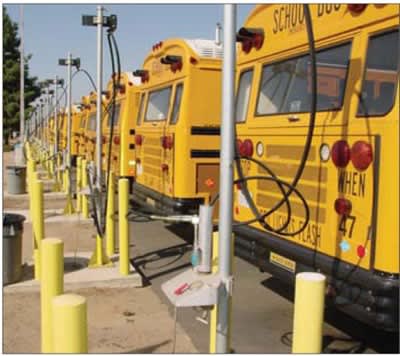
The rising cost of crude oil is affecting us all, where it hurts most — our pocketbooks. As such, transportation managers are exploring ways to defray rising fuel costs.
Common measures include reduced idling time, properly inflated tires, strategic route planning, bell staggering for school departure times and solid preventive maintenance programs.
While these strategies help enormously, many transportation directors are also exploring the use of alternative fuels as a means to power their fleets. Today, more and more fleets are becoming “green” — as in more environmentally friendly — and, as a result, some transportation managers are discovering that an alternative-fuel solution is saving them a lot of money. And when you marry the long-term fuel-procurement benefits of the alternative fuels with the long-term environmental benefits, it appears that alternative fuels are here to stay.
Biodiesel is gaining converts
One alternative fuel that’s gaining momentum is biodiesel. Although it often costs more than diesel fuel, biodiesel has the benefit of reducing the country’s reliance on foreign oil and curtailing emissions of carbon monoxide, unburned hydrocarbons and particulate matter.
According to the National Biodiesel Board, more than 250 school bus operators nationwide are using biodiesel blends. Many of them are reporting a more pleasant odor from the tailpipes and no change in the efficiency or maintenance of the buses.
Biodiesel can be made from any fat or vegetable oil, such as soybean oil, and can be used in differing blends with regular diesel fuel, from as low as 1 or 2 percent (B1 or B2) to as high as 100 percent (B100).
Propane works in Portland
While many school bus operators are experimenting with biodiesel, the fleet managed by Philip Weber, the acting director of transportation for Portland (Ore.) Public Schools, runs solely on propane.
Weber, who is relatively new to the industry, oversees a split fleet of buses, with some contracted to Laidlaw Education Services. Weber says the fleet was converted to propane in the 1980s after the district conducted extensive research.
“I wasn’t a big fan of propane when I took the job,” says Weber. “But I am now convinced it is the best available fueling method. Yes, there is an initial upfront capital cost, but this cost is compensated for in the long run by the fuel cost savings. This is a very efficient, reliable, affordable fuel.”
California’s CNG solution
In California, many fleets are using alternative fuels as their fuel-procurement solutions. According to statistics cited by the California Energy Commission, its Safe School Bus Clean Fuel Efficiency Demonstration Program, which promotes the use of alternative fuels, is paving the way to a cleaner, greener school bus fleet statewide.
The program has enabled 826 school buses built before 1977 to be replaced with cleaner buses. More than half of these buses are alternatively fueled. Approximately 270 vehicles are powered by compressed natural gas (CNG) and 150 by methanol. Also, all the buses are equipped with advanced safety features.
Furthermore, additional statistics posted on the Energy Commission’s Fact Sheet cite that it has provided more than $4 million in grant cost-share funding for about 40 CNG fueling stations, the incremental cost of light-duty vehicles and the purchase of 369 CNG-powered school buses.
Joe Bjerke, transportation director for Clovis (Calif.) Unified School District, says his district has been operating its CNG buses on its longest routes due to the cost-efficiency benefit. Also, his district is taking advantage of tax incentives and government grants.
“We have been involved in numerous programs to minimize our overall costs,” says Bjerke. “We have utilized a bid process for our fuel needs for several years. We have received grants to offset some of our fuel costs when operating fuels other than what is current on the street, and we have been operating CNG buses for 14 years. This program started out for reasons of improved air quality, but we have now found a new benefit to operating CNG, and that is the reduced cost per mile CNG provides.”
Bjerke added that his district was looking forward to capitalizing on the newly instated 50-cent-per-gallon incentive that the federal government provided CNG last fall.
More Alternative Fuels
Alt-Fuel Moves: Electric Bus Rollouts, Bidirectional Charging & Propane Growth
See which fleets are adding electric and propane school buses as districts and operators invest in charging infrastructure, bidirectional technology, and alternative-fuel expansion.
Read More →
Nobody Told Diesel Prices They Were Supposed to Come Down
With diesel prices surging, school bus fleets have new reason to stress-test fuel costs, consider diversification, and calculate what each route really costs to operate.
Read More →
Why Gasoline School Buses Are Making a Comeback
Gasoline is gaining ground in full-size school buses. See how today’s options stack up against diesel on cost, maintenance, emissions, performance, and more.
Read More →
EPA Opens $180M DERA Funding Round for Diesel Upgrades
The 2026 Diesel Emissions Reduction Act program seeks applications from eligible organizations to accelerate the retirement of legacy diesel vehicles.
Read More →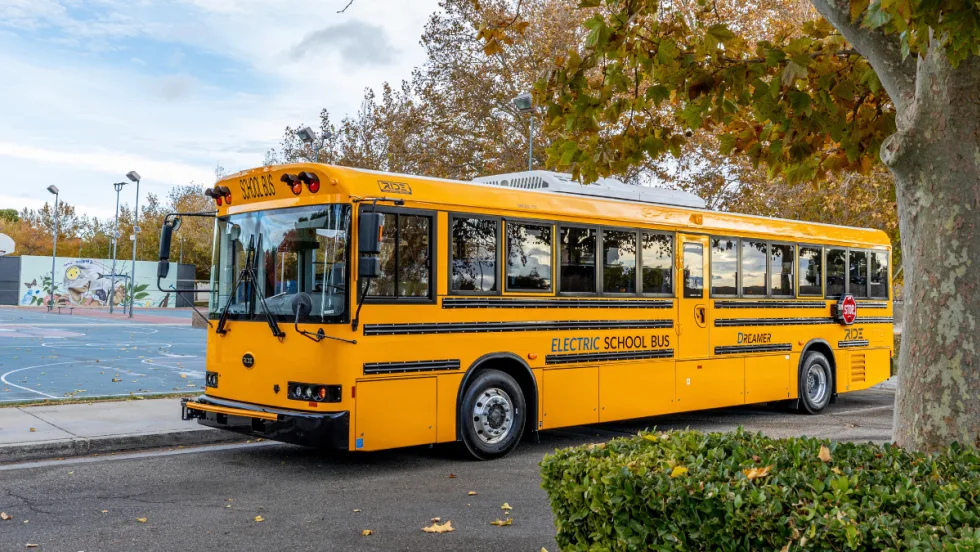
The Secret Life of an Electric School Bus Battery
Batteries change throughout years of daily routes, but degradation doesn’t necessarily mean the end. Here’s what operators should know about performance, safety, and second life.
Read More →
CALSTART and Forth Combine to Form Catalyst Mobility
The new name represents a renewed vision for the nonprofit focused on advancing clean, equitable, and affordable transportation solutions that move people and goods.
Read More →
Alt-Fuel Moves: New Buses, Charging Hubs & Real-World EV Testing
Propane and electric school bus deployments continue to grow as districts add new vehicles, expand charging infrastructure, and gather more real-world operating data.
Read More →
Fewer Electric School Bus Models Reshape the U.S. Market
WRI’s latest buyer’s guide points to a consolidating electric school bus market, but fewer options may reflect a maturing industry rather than fewer meaningful choices for school bus operators.
Read More →
The Fuel Budget You Can Actually Predict: How Propane Autogas Keeps Money in the Classroom
Learn how propane autogas helps school districts manage fuel costs with predictable pricing, lower maintenance, and reduced emissions from former transportation director Joel Stutheit.
Read More →
Hendrickson, Driventic Introduce New Electric Powertrain for School Buses
ELECTRAAX, the electrified, lightweight drive axle offers integrated ePowertrain efficiency and modular flexibility for Class 6–7 school bus use.
Read More →