




Good Maintenance Requires Your Personal Best
Providing good bus maintenance is a year-round job, but cannot be performed if you are not maintaining yourself as well.
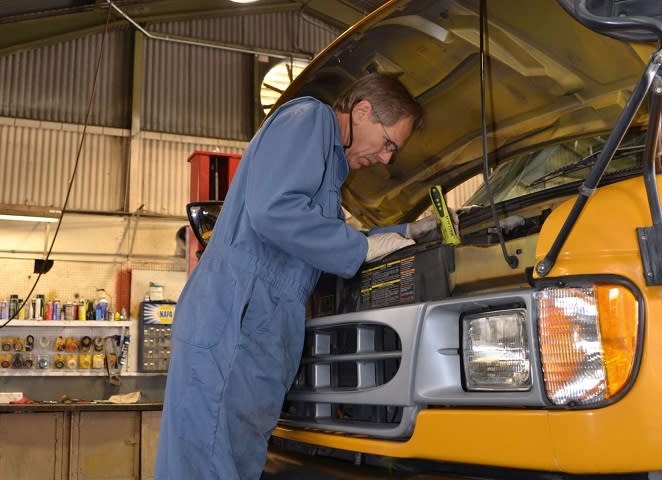
File photo
File photo
Summer is upon us. This is the season, in which for some, things are less stressful, while for others there may be no change at all.
Regardless of your situation, I recommend not letting your guard down concerning bus — or personal — maintenance. Doing so may cause problems once the coming school year gets rolling.
If you work for a small fleet (20 buses or less), now is the time to perform all your annual service work, if it’s not already done. For all fleets, large and small, place extra emphasis on the following:
1. Spare buses. These can become neglected during the school season due to high usage.
2. Buses equipped with wheelchair lifts and/or air conditioning. Getting these systems operating at peak performance improves reliability when they are needed most.
3. If time allows, make those shop repairs you have been putting off and get the service trucks worked over and restocked.
Annual bus maintenance should include emphasis on:
1. Testing cooling system pressure and radiator caps, and routine replacement of hoses and clamps.
2. Electrical systems, which includes removing, cleaning, and repairing all battery power and ground terminal connections wherever they attach, regardless of how they appear on the outside. These attaching points include the battery, alternator, starter, battery cutoff switch and all frame ground connections. Also, ensure all ECM/TCU feeds are clean and protected where applicable. After these have been cleaned and reassembled, take the time to coat all connections with a waterproofing compound such as liquid electrical tape or battery terminal protective coating. Take the time to open PDUs, too. Remove all fuses and push in relays, and ensure all terminal sockets are clean and tight. Oftentimes, moisture gets inside these so-called water resistant housings, causing corrosion. I have found a great corrosion cleaner called Deoxit D5S, which is fantastic for cleaning those hard-to-reach terminals.
3. Passenger windows are often overlooked, too. If split sash windows are difficult to close or they fall down on one side, maintenance is required. Usually all they will need is lubrication with a non-oily and non-sticky lubricant. I recommend using an aerosol automotive silicone spray such as NAPA 8300. To do this, lower all split sash windows fully. Spray the lubricant liberally on both side rails and across the top of the frame. Also, using the nozzle straw, lubricate around the latches while working them back and forth. Make other repairs as needed. The windows should close easily now.
On a personal note, some of you may be planning family vacations during the coming weeks. Take that time to become refreshed and relaxed. Renew yourself as well as the relationships with friends and those individuals who are really important to you. Doing so will help you cope once you’re back at work.

Brad Barker is a veteran shop manager and technician.
According to takebackyourtime.org, studies have shown that taking time for your personal maintenance helps to reduce stress and illness, prevent heart disease, maintain focus, boost weight loss, improve relationships and quality of sleep, make you more productive at work, and generally make you happier.
Providing good bus maintenance is a year-round job, but cannot be performed if you are not maintaining yourself as well. Be sure to take time whenever you can for that special someone: You!
Brad Barker has more than 40 years of experience in school bus maintenance as a shop manager and technician. He has written numerous articles for SBF. He can be reached at schoolbuspm@outlook.com.
More Maintenance
The Essential Guide to School Bus Maintenance and Student Safety
Your district's buses carry students to school every day. This guide shows how predictive maintenance powered by fleet data helps keep buses reliable, drivers accountable and students safer from the first bell to the last stop.
Read More →
Kerry Brothers Grows Michigan School Bus Repair Network
The acquisition of Downriver Truck and Bus expands Kerry Brothers’ school bus maintenance footprint across southeast Michigan, adding repair capacity, diagnostic resources, and state inspection support.
Read More →
Noregon Introduces CAN Bus Diagnostic Tool, Expands JPRO Features
CAN Mentor and the latest JPRO update aim to simplify vehicle network diagnostics and improve repair efficiency for technicians of all experience levels.
Read More →
Cummins on Smarter, Simpler Engine Innovation
Cummins discusses its first-ever gasoline engine for school buses, EPA 2027, and why bus fleets still want durable, simpler internal combustion options.
Read More →
Report: 72% of Diesel School Buses Now Use Advanced Low-Emission Engines
New data shows advanced low-emission diesel technology continues expanding across school bus fleets, even as electric bus adoption gains momentum.
Read More →
Vampire Tools' CAIMAN 7.5-Inch Multi-Purpose Screw Extractor Long-Nose Pliers with Crimper
Vampire Tools introduced the VAMPLIERS Caiman 7.5-inch multi-purpose pliers, combining screw extraction, cutting, crimping, and gripping functions into a single tool designed for fleet maintenance professionals.
Read More →
How Advanced Diagnostics Helps Bus Fleets Stay Ahead of Repairs
Chat with Noregon’s Kevin Smallhorn at ACT Expo about bus diagnostic tools, telematics integration, CNG maintenance support, and strategies to help reduce downtime and improve uptime.
Read More →
How School Bus Fleets are Getting Ahead of Breakdowns
Don’t let bus downtime wear you down. Here’s how bus operators are shifting from manual processes to AI-powered, data-driven maintenance systems for improved reliability and safety.
Read More →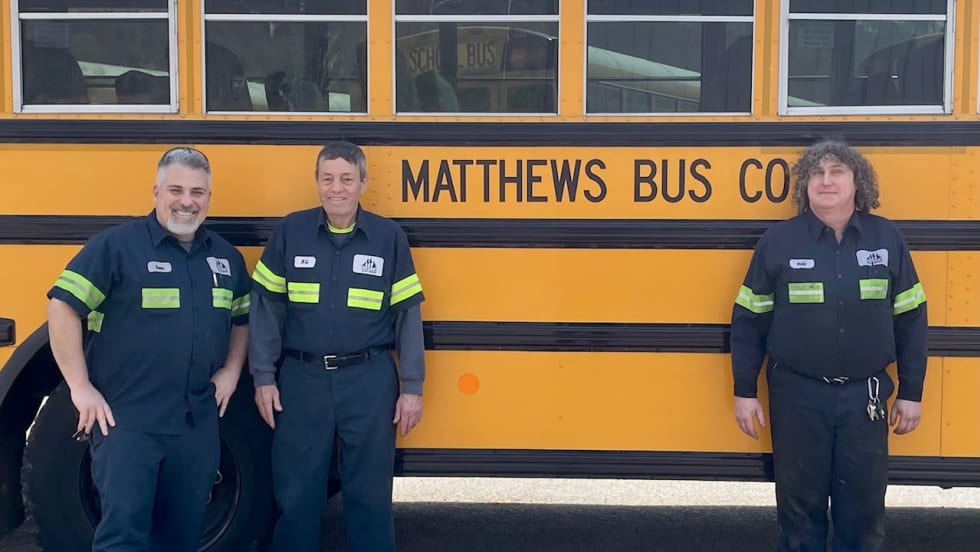
Pennsylvania School Bus Maintenance Team Praised for Dedication to Safety
Matthews Bus Company’s West Jefferson received a letter of commendation from the Pennsylvania State Police for their fleet inspections.
Read More →
From Chaos to Clarity: How School Districts Are Running Leaner Transportation Operations
Covering 38 routes on a Friday afternoon. Buses idling while routes overlap. Parents calling nonstop about late arrivals. Sound familiar? This whitepaper explores how district transportation leaders solved these exact problems — and what measurable results followed.
Read More →