




FTA Clarifies Role of Transit Agencies
Washington, D.C. — The Federal Transit Administration (FTA) has released two new documents important to the school bus industry. These ite...

Washington, D.C. — The Federal Transit Administration (FTA) has released two new documents important to the school bus industry.
These items — a brochure called “Public Transportation and School Buses” and an accompanying letter from FTA Administrator Jenna Dorn — are the result of more than two years of collaboration between the agency and the National School Transportation Association (NSTA).
The NSTA had two goals in pursuing these issues — to clarify for school administrators, school bus operators and transit agencies the rules governing the use of transit buses for tripper and charter service for school transportation and to promote the use of school bus companies in transit operations.
NSTA President Dale Krapf described the brochure as a “valuable weapon in protecting school transportation contracts against increasingly aggressive marketing by both urban and rural transit agencies.”
The brochure sets out in easy-to-understand question-and-answer format the federal regulations that limit the use of transit buses to transport students. In its introduction, the brochure states that, in general, recipients of FTA grants cannot provide transportation for students and school personnel if that transportation excludes the general public or competes with private school bus operators.
Here are a couple of sample questions and answers from the brochure.
Question: Does the prohibition against providing school bus service apply to school field trips or trips to other school-sponsored activities, like football games?
Answer: Yes. The prohibition against school bus service applies to both home-to-school transportation and transportation for school-sponsored activities or trips. However, an FTA grantee may use buses, facilities and equipment for the transportation of school students, personnel and equipment for incidental charter bus operations, if one or more of the charter bus service exceptions apply. These include situations where there are no willing and able private charter operators to provide the service, or when the trip involves a significant number of persons with disabilities. For a complete description of the charter bus exceptions, please refer to the charter service regulations (49 CFR 604). They are available at www.fta.dot.gov/library/legal/charterservice/index.html .
Question: How can a private school bus operator file a complaint about a violation of the school bus regulations?
Answer: Information concerning the service should be sent in writing to the FTA regional administrator. Include as many specifics as possible, such as who provided the service, date and time of the service, origin, destination and equipment uses. After consideration of this information, the regional administrator will make a preliminary determination as to whether probable cause exists to believe that a violation of the agreement has taken place. If probable cause exists, the regional administrator will investigate the complaint and make a written determination of whether there has been a violation and may impose a remedy.
The complete text of the FTA’s school bus operators regulations, 49 CFR Part 605, can be accessed online at www.fta.dot.gov/library/legal/Schoolbus .
In Dorn’s accompanying letter, she advises FTA grantees that “working with private school bus operators to provide supplemental public transportation services can help communities make more efficient use of their resources while increasing mobility for community residents.” She also encourages transit agencies to include school bus operators in their planning.
“So often we are the forgotten segment in transportation planning,” said Terry Thomas, president of Community Bus Services in Youngstown, Ohio. “We are grateful that Administrator Dorn sees the value we can bring to public transportation.”
The NSTA is developing a step-by-step guide for school bus contractors to help them pursue transit opportunities. Finding Your Seat at the Transit Table: A Guide for School Bus Companies will be available from the NSTA office. For more information, call (703) 684-3200.
More Safety
Illegal School Bus Passing Drops 24% in New York Districts
With fewer than 5% of citations involving repeat offenders, Westchester County officials said enforcement, education, and community partnerships are helping change driver behavior.
Read More →
School's Back. Here's What Happened to Traffic, Speeding & Distraction
What happens to traffic when school resumes? New data analysis examines changes in distracted driving, congestion, and speeding around schools.
Read More →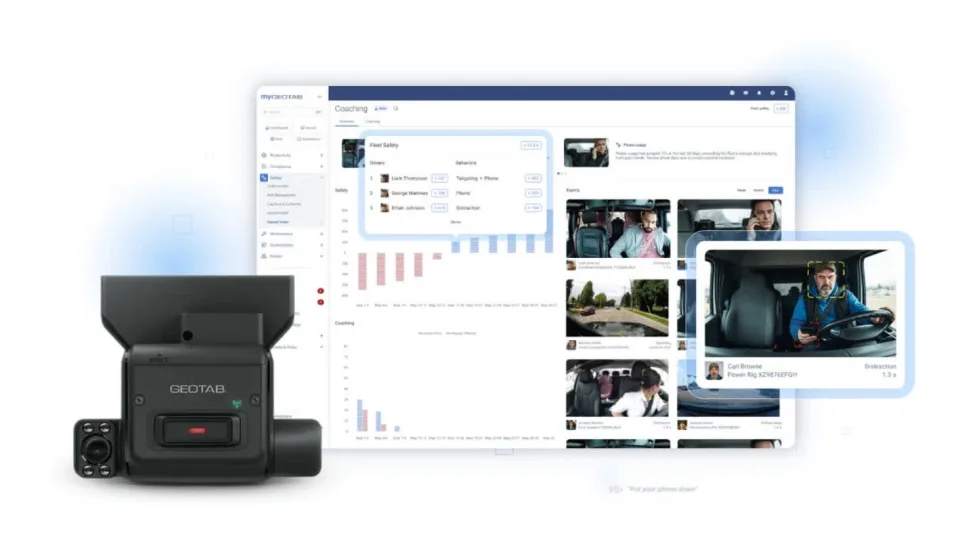
Geotab Expands Fleet Safety Tools With Video Coaching, Risk Insights
New safety and video capabilities aim to help fleet managers assess risk, support drivers, and take targeted action through video coaching, red-light violation detection, and more.
Read More →

How to Build a Better School Bus Driver Training Program
Is it time to strengthen your driver training? Here’s how to pick the right talent and improve recruitment, retention, and safety. This video is brought to you by IC Bus.
Read More →
Recent School Bus Accidents Leave 2 Dead, 2 Injured
Four school bus crashes in Florida, Illinois, and Georgia highlight risks in transportation lots, at bus stops, and during student loading and unloading.
Read More →
When Every Second Matters, Clarity Keeps Routes Moving
From routine delays to urgent incidents, strong communication practices help drivers, dispatchers, schools, and families respond with confidence.
Read More →
What Happens When a School Bus Catches Fire — and What Can Help
School bus fires are rare but can be devastating. Learn how advances in fire suppression and asset protection help fleets detect fires earlier, reduce damage, and improve safety.
Read More →
Geotab Launches Tool to Help Fleets Investigate Road Incidents
Geotab Investigations combines telematics data, video, documents, and other evidence to help fleets reconstruct incidents, resolve claims, and determine what happened.
Read More →
Texas Sixth Grader Wins 2026 National School Bus Safety Poster Contest
Sai Darshana Yekolu of Moseley Middle School in Prosper, Texas, was named the newest winner for her artwork, bringing the theme of “Safe Rides, Everyday Heroes” to life.
Read More →
Doing More With Less: How Transportation Directors Can Prioritize Safety Amid Budget Uncertainty
With diesel prices soaring and nearly one-third of transportation directors expecting budget cuts, maintaining student safety has never been more challenging. Download this guide to learn how leading districts are prioritizing risk, funding critical safety technology, and building stronger budget cases with data.
Read More →