




Forest River Working to Redefine Reliability, Responsibility in the Bus Industry
As the transportation landscape continues to evolve in the wake of the pandemic, few manufacturers have faced, or embraced, change as decisively as Forest River Bus.

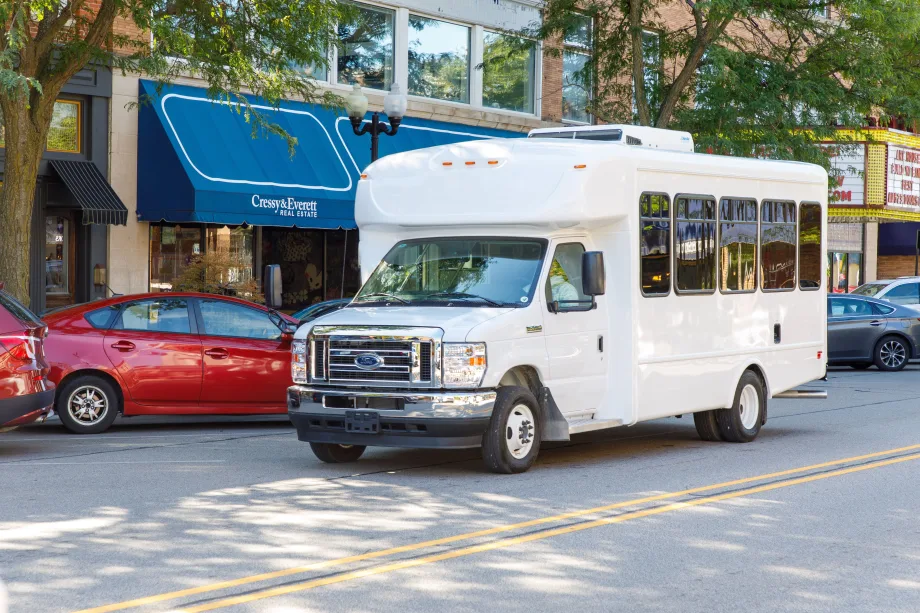
Forest River’s diverse lineup of buses — spanning shuttle, school, and mobility models — reflects the company’s commitment to reliability, accessibility, and performance across transit sectors.
Credit: Forest River
As the transportation landscape continues to evolve in the wake of the pandemic, few manufacturers have faced, or embraced, change as decisively as Forest River Bus.
With a legacy of craftsmanship and customer loyalty spanning decades, Forest River has emerged with a renewed mission: to elevate product quality, service responsiveness, and customer trust across every mile its vehicles travel.
From shuttle buses and mobility vans to Type A school buses through its Collins brand, Forest River’s products move some of society’s most vulnerable passengers — children, seniors, and people with disabilities.
According to Douglas Wright, president of Forest River’s Bus and Van Divisions, that responsibility drives every decision the company makes.
“We transport the most vulnerable members of our society,” he says. “That comes with a tremendous responsibility. Whether it’s a welder on the line or a customer service agent on the phone, everyone here understands that the product they touch could be taking someone’s grandmother to a doctor’s appointment or a child to school. That mindset defines how we build, service, and support our vehicles.”
A New Era for a Market Leader
Forest River entered the 2020s as an industry powerhouse due to the acquisition of several of REV Group brands.
However, the timing of that deal, just weeks into the COVID-19 shutdowns, presented unprecedented challenges, Wright explains.
“All of a sudden, we owned our largest competitor at a time when no one was buying buses,” he says. “Then came the chip shortage, the chassis shortage, and the long road back to normal. We essentially had to rebuild the business in a completely changed market.”
That rebuilding effort has led to a more agile, innovation-focused company, adds Wright.
While many operators kept vehicles longer or diversified into new forms of mobility, Forest River used the downturn to modernize its product lines and reimagine its customer support model.
Today, as the industry stabilizes, the company views both the present and the future as a launchpad for what it calls the “post-COVID era of improvement.”
“This year is probably the first year we can say is the sort of normal post-COVID year,” says Wright. “Now, that allows us to ask: what do we want our company to look like in this new era?”
Borrowing heavily from automotive principles, Wright is working to embed a culture of continuous improvement across Forest River’s operations, a philosophy he developed during his time in the automotive industry with brands including Lexus.
In just the past several months, the company has made more than 40 changes to its products and processes. These range from design refinements and quality upgrades to expanding its paint facilities by 50% and introducing a new, high-efficiency paint process, launching in early 2026.
One particularly innovative change came from rethinking how operators access maintenance information. Historically, technical documentation was provided on a thumb drive with each bus — a simple solution that often failed in practice.
“The first thing that happens when you sell a bus is the thumb drive disappears,” says Wright.
Now, every Forest River bus features a QR code system linking technicians directly to maintenance schedules, schematics, and warranty resources online; a small innovation with significant implications for uptime and serviceability.
Looking to Raise the Bar
Forest River’s approach to warranty coverage underscores its customer-first mentality. Its five-year, 100,000-mile warranty covers every component installed on the bus, not just structural elements or specific systems.
“Most of our competitors limit coverage to what they directly build,” says Wright. “We take a different view. If we installed it — whether it’s a lift, camera system, or A/C unit — we cover it. We feel our customers deserve that confidence.”
The company is also transitioning toward handling all warranty claims in-house, eliminating the need for operators to deal with third-party suppliers.
Wright says that by centralizing warranty management, Forest River aims to reduce vehicle downtime significantly.
“If a bus is out of service, someone’s missing a doctor’s appointment or can’t get to work,” Wright emphasized. “We can’t allow that. Our responsibility doesn’t end when the bus leaves the factory.”
Customization has long been a hallmark of the bus industry, but Forest River has refined its approach to evaluating and integrating new components. Each potential addition to its vehicles must meet four criteria: stability, support, simplicity, and value.
That process ensures customers get meaningful options without compromising reliability.
Meanwhile, the integration of the former REV brands into Forest River’s manufacturing network has created a more unified production environment. Shared components across multiple product lines have improved parts availability and service turnaround times — a critical advantage in a market still grappling with supply chain uncertainty, says Wright.
“We try to make the build as simple as possible because we want it to be easy to maintain,” he explains. “Every extra feature is evaluated on four principles: stability of the company, support, simplicity, and value. If it doesn’t meet those, we won’t add it.”
Douglas Wright continues to guide Forest River through a new era of innovation, emphasizing quality, customer trust, and operational excellence across its bus and van divisions.
Credit: Forest River
Looking Ahead: Building on Trust
Forest River’s future strategy centers on a straightforward goal: to build the best buses on the market — and to make owning them the best experience ever. That means continued investment in production efficiency, enhanced dealer relations, and a greater focus on customer communication.
For a company that now commands the lion’s share of the U.S. shuttle and mid-size bus market, complacency is not an option.
“In 1983, the best-selling car in America was the Oldsmobile Cutlass Sierra,” says Wright. “That same year, Toyota introduced the Camry. Back then, everyone wanted to be an Oldsmobile dealer. But Oldsmobile went out of business, and Toyota became what it is today. We’re not going to be Oldsmobile.”
With a reputation for durability, Forest River has positioned itself as the benchmark for modern bus manufacturing. Its leadership team sees a future built not just on market dominance, but on trust, transparency, and purpose.
“We’re proud of where we are,” Wright concluded. “But we’re even more focused on where we’re going — building safer, better, and more reliable buses for every community we serve.”
Originally posted on Metro
More Management

How to Build a Better Driver Training Program
Ready to boost up your school bus instructor training? Here’s how to pick the right talent and improve recruitment, retention, and safety.
Read More →
CALSTART and Forth Combine to Form Catalyst Mobility
The new name represents a renewed vision for the nonprofit focused on advancing clean, equitable, and affordable transportation solutions that move people and goods.
Read More →
What Makes a Great School Bus Driver Trainer?
Choosing the right school bus driver trainer takes more than experience. Learn six keys to selecting and developing trainers and evaluating program effectiveness.
Read More →


School Bus Contractors Expand Through New Deals, Acquisitions & Partnerships
STA's Canadian division acquires Ontario-based G&L Stevenson Transport while Durham School Services adds a new district contract in California, First Student adds a New Jersey contract, and Minnesota Coaches acquires Halo Transportation.
Read More →
Logan Bus Company Rolls Out AI Phone System for NYC School Bus Families
A summer pilot found that AI agents could handle most routine calls, freeing up time for customer service staff to focus on emergencies and complex family concerns.
Read More →
From Intent to Impact: What I Learned About Leadership from TAPT
A Texas transportation supervisor shares lessons on self-awareness, accountability, managing stress and building trust — and why investing in leadership development matters at every stage of your career.
Read More →
NAPT Names 2026 Award Recipients, Hall of Fame Inductee
Who earned national recognition for their work in student transportation? This year, NAPT named five recipients of its 2026 awards for service, safety, and leadership, plus its newest Hall of Famer.
Read More →
2026 State of Student Transportation Report
Driver shortages. Rising costs. Growing safety expectations. More data, but not enough time to act on it. The 2026 State of Student Transportation Report reveals what transportation leaders say is putting the most pressure on their operations—and where they’re investing next. See how your priorities compare.
Read More →
How to De-Escalate an Angry Person: 5 Steps for Handling Workplace Conflict
What makes emotions run high, and how should you handle an angry colleague or parent? Follow these steps for staying calm, listening, showing empathy, and resolving conflict.
Read More →
What Readiness Looks Like This School Year
Learn about the challenges shaping the 2026–2027 school year, from persistent driver shortages and budget pressure to technology and readiness gaps. See how school districts are responding and adapting in Zonar’s 2026 Back-to-School Readiness Report.
Read More →