




Fine-Tuning Special-Needs Training Programs
The highest risk time for lift-bus collisions, employee or student injuries or other incidents is with new drivers. Drivers obtaining their CDLs are q...
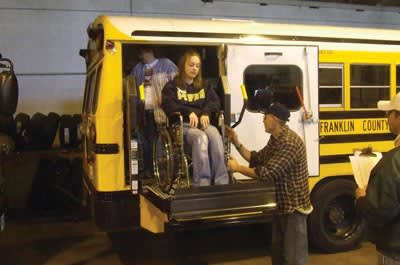
The highest risk time for lift-bus collisions, employee or student injuries or other incidents is with new drivers. Drivers obtaining their CDLs are qualified to operate a school bus but are not qualified to be a special-needs or lift-bus operator, or to take the lead on a special- needs driver team.
Advanced pre-service training ensures that any driver with a lift-bus route has demonstrated competency in special equipment operation (including lift operation), wheelchair or scooter securement, occupant restraints and installing child safety seats and safety vests. This training also prepares the driver for interaction with parents, attendants and school personnel.
Special-needs drivers should undergo advanced pre-service training and receive a written statement of special handling requirements for each student before the first student is loaded for a safe lift-bus trip to school.
Pre-service training
Advanced pre-service driver training prepares the driver for any special handling his or her passengers will require. Both team members — the driver and the bus attendant — should be present for the training. The attendant must know everything that the driver knows about the lift-bus equipment and the students on board.
At some districts, conventional pre-service training for the lift-bus attendant may not include the requirement to complete basic first aid and CPR certification before they join the special-needs driver with students on board. However, the time required for the driver to pull over, secure the bus and get to a student in distress increases the risk when the attendant cannot immediately respond to that student. Attendants are better situated to apply immediate first aid or CPR to students with disabilities.
Special-needs driver pre-service training usually focuses on equipment rather than on interaction with students. The driver team training should be timely and specific, and should adequately prepare the team for the special-needs students on the bus. Best results are achieved when training is given to small groups, rather than at in-service settings where larger groups usually attend.
In-service programs
Conventional in-service content is often geared toward regular drivers and not special-needs drivers. Advanced in-service training should be geared toward two groups with two separate sessions: the regular route driver in-service and the special-needs driver team in-service. While conventional in-service content may not recognize or address the training needs of the special-needs bus attendant, advanced in-service training addresses driver-attendant teams together and should provide them with information specific to special needs, including situational training (i.e., what would you do if…?), as well as recognizing special-needs driver teams for their experience and competence in their jobs.
Large in-service training groups may not provide presentations that are new, fresh or relevant to engage and inform the audience. Audiences should be split up into smaller groups with common interests and concerns.
Questions addressed to the in-service presenter — in some cases, the driver supervisor — may be ridiculed by others in the audience not facing those situations. Many employees are very reticent to stand up and ask any questions and are relieved when a peer is willing to boldly stand and ask “their question.” Since questions are often student-specific, situational, real-world and complex, the answers cannot be easily simplified by the presenter to provide the best answer.
Questions from the audience tend to occur repeatedly over the years. Supervisors may provide different answers to those same questions, causing confusion and placing the employees in a dilemma about what is current policy or a best practice and what is not. Supervisors who say, “I will get back to you on that,” sometimes do not follow through or provide blanket solutions, quote policy and avoid specifics that their audience requests, thereby eroding the supervisor’s authority and credibility.
The supervisors themselves sometimes are not fully informed about special-needs transportation best practices and are unable to provide their personnel with accurate information.
Advanced in-service training catalogues the content of all in-services, along with any questions asked and the answers given. It enables the supervisor to quote from the school district’s transportation handbook and from state and federal laws. Quoting the law to an audience of special-needs driver teams does not inform them on how to comply with that law or how their own bus route and student passengers fit into complex special-education laws and statutes. Advanced in-service training allows supervisors to establish best practice standards to which driver teams must comply.
Documenting sessions
Software geared toward special-needs driver training can help prepare drivers for their assigned lift bus routes before the first student steps on the bus or rides the lift into a wheelchair securement location. Using an online computer system to train special-needs driver teams also allows districts to document training sessions. Advanced in-service training software should document the training content, record attendance at each session and provide an accessible file for every in-service training topic covered, going back several years. This software can be built by any school district using spreadsheets.
Supervisors can use spreadsheets to track which topics the different drivers have been trained on, allowing them to provide retraining for any topics a driver has not yet mastered. Documenting training sessions also gives pupil transportation providers legal protection in court if it must be proven that driver team members were fully informed about a student’s special needs. School districts and contractors need to be able to prove that specific employees received specific training and implemented the appropriate skills and knowledge on the bus.
It is essential for transportation supervisors to receive systematic feedback from the audience to determine what topics are of interest. Supervisors should also rate every in-service training session on a validity scale to monitor the performance and effectiveness of presenters. The ratings would be a part of a digital archive of all advanced in-service training presentations done in the past.
Such evaluations can greatly improve the content presented, the way it is presented and the effectiveness of the presenter. The results of this evaluation will also enable a better match between the needs of the audience and the safety issues that must be covered.
During in-service presentations, special-needs drivers will likely need to leave early because of midday routes with their attendant. To address this matter, transportation departments can videotape training sessions and in-service presentations and make the digital file accessible online so that those not present can view the session later with a supervisor.
Drivers requesting or needing reviews of specific in-service content should be tracked on a calendar, either manually or in conjunction with use of the online training materials. The online calendar will “red flag” individuals whose supervisors need to reschedule specific online in-service sessions and content.
Supervisors typically do not provide handouts of in-service training content for each driver and attendant to keep in their onboard bus binder. With no record of past in-service training topics or who attended each session, supervisors cannot document on an employee-by-employee basis what specific in-service training was provided. Under these circumstances, a driver team may state, “We were never informed about this safety procedure,” after a bus collision or other incident.
An advanced in-service training program provides hard copies of archived content, along with video of each in-service training session. The date and time on each in-service training subtopic covered can also be retrieved online to review content already covered, and to retrain or to refresh a driver team’s understanding of relevant issues that specifically apply to them, their bus route and their students. For further information on special-needs training, e-mail Dr. Ray Turner atdrturner@earthlink.net.
More Special Needs Transportation
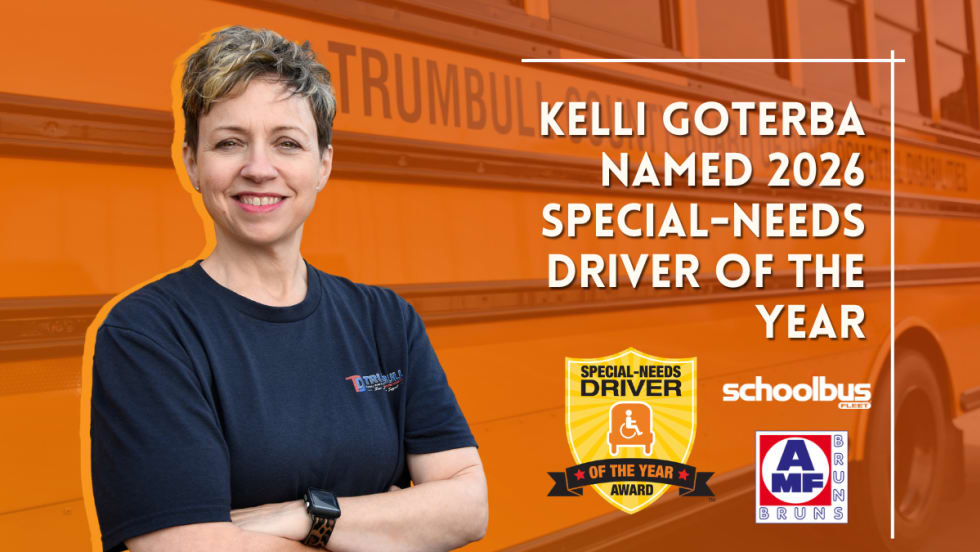
Kelli Goterba Named 2026 Special-Needs School Bus Driver of the Year
Through building trust with students and strengthening her transportation team, Goterba exemplifies the impact special-needs drivers can make.
Read More →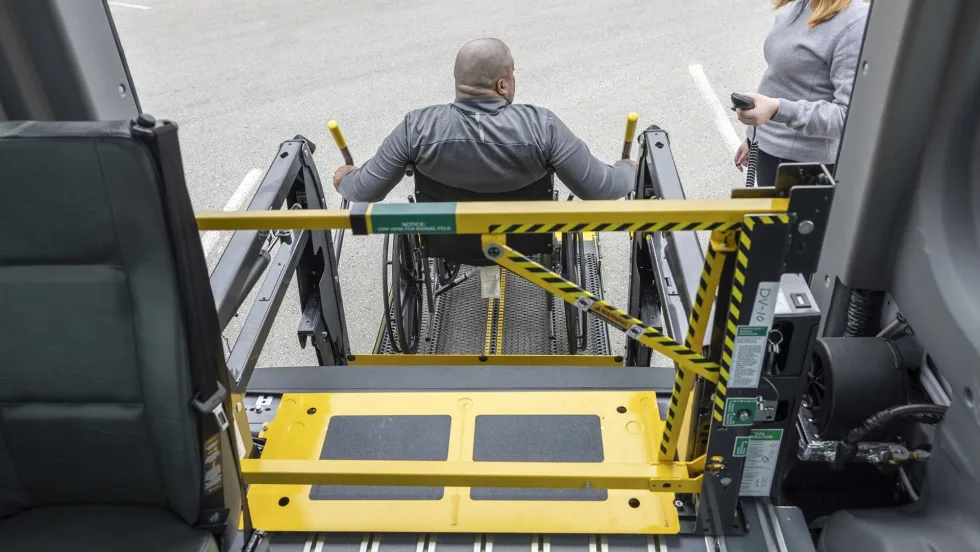
BraunAbility Introduces New Safety Barrier for Wheelchair Lifts
LiftSentinel is designed to add another layer of protection during wheelchair loading and unloading and can be retrofitted to many existing commercial lift installations.
Read More →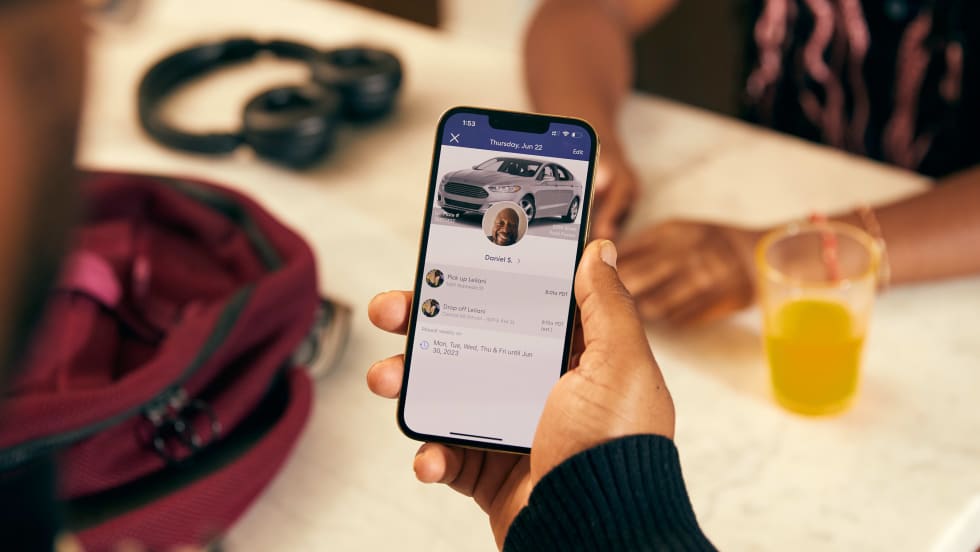
HopSkipDrive Launches New Safety, Driver Consistency Features for 2026-27 School Year
The company’s free ride recording, live ride tracking, and consistent driver assignments aim to improve safety and continuity for diverse student transportation needs.
Read More →
The Most Common Wheelchair Securement Mistakes on School Buses (and How to Fix Them)
Small missteps in wheelchair securement can have serious consequences. Here are 32 tips from experts to reduce risk and increase student safety on the bus.
Read More →
Inside AMF Bruns’ New Showroom: School Bus Securement Solutions Explained
Go inside AMF Bruns America’s new Ohio showroom with Maritza Valentin to see its FutureSafe technology, driver training tools, securement systems, and seating innovations.
Read More →
What AMF Bruns’ New Facility Means for Customers [Video]
Inside AMF Bruns’ new Stow, Ohio, operations: See how expanded space and innovation will enhance customer support and operations.
Read More →
AMF Bruns Expands in Ohio, Investing in Growth and Community
With expanded production space, local investment, and a growing workforce, AMF Bruns is scaling its U.S. presence. Here’s an exclusive first look inside the new Stow, Ohio, HQ.
Read More →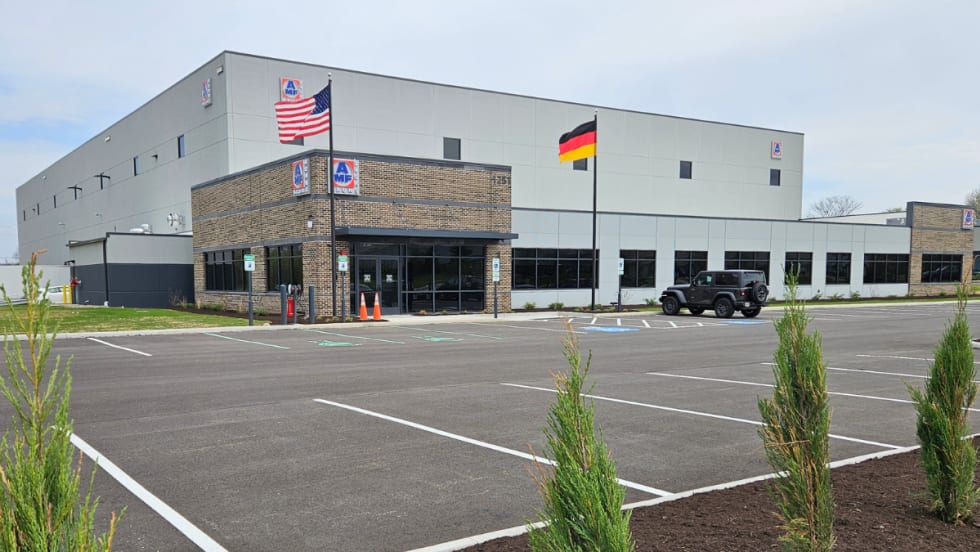
Inside AMF Bruns of America’s New Ohio Manufacturing Facility [Photos]
Take a behind-the-scenes look at AMF Bruns of America’s new 41,000-square-foot Stow, Ohio, headquarters, featuring advanced manufacturing, expanded space, and future-ready mobility solutions.
Read More →
First Student Boosts Student Support in Wichita & Texas
First Student and Wichita Public Schools are using behavioral support strategies to improve student ride experiences, while a separate initiative expands access to after-school programs through a bus donation.
Read More →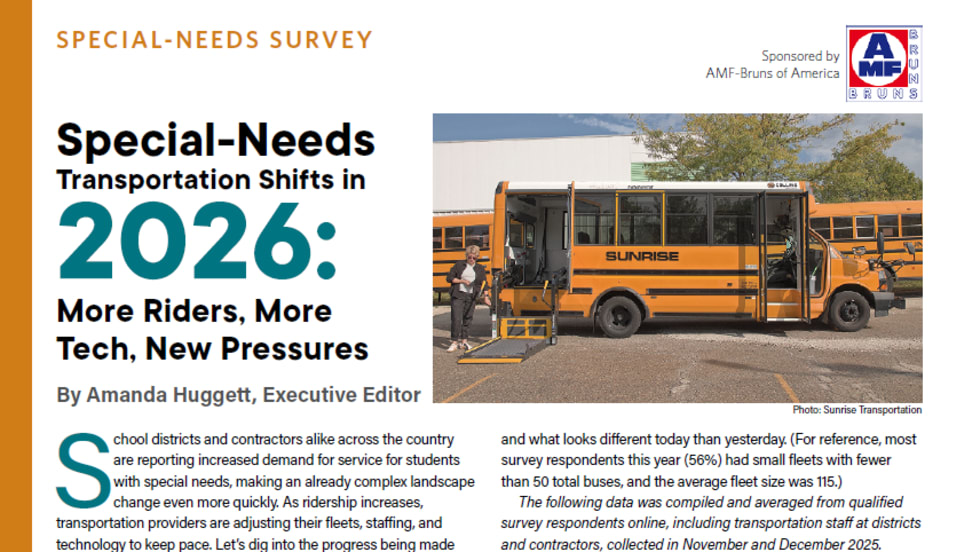
2026 Special-Needs Transportation Survey
What’s changing in special-needs transportation? This year, student transportation operators report a rising need, easing driver shortages, growing tech adoption, and evolving challenges. Sponsored by AMF Bruns of America.
Read More →