




Finding tires that are right for your operation
Industry professionals offer tips on how to select the best tires for a fleet of buses and discuss the value of running tests to help determine which tires are well suited for an operation's needs.

[IMAGE]483[/IMAGE]Choosing tires that are well suited for the buses they will be mounted on and the environment they will be operating in is as important as making certain that the tires are in good condition.
Goodyear offers two tools to help customers choose the best tires for their applications.
“TVTrack helps track tire performance, and TireValuCalc can help calculate the total costs of running various combinations of tires to help decide if certain tires offer cost-saving advantages over other tires,” Goodyear’s Timothy Miller says.
Both tools are available at www.goodyear.com/truck/fleethq/fleet_tools.html.
Brad Barker at Park City (Utah) School District encourages technicians to run tests on tires to determine which are best to meet their needs. “Data to gather includes the vehicle number, meter readings (miles) at the time of installation, the date of installation, the tire brand and model number, the tread depth when the tire is new and the position the tire was installed in,” Barker says. “Also, record the price paid for the tire. This will be used to calculate costs per mile and cost per 32nd inch of tread.”
During the test, watch tire wear. At each preventive maintenance session, tire rotation may be necessary to maintain even wear and to obtain the highest mileage.
Rear traction tires may start to heal and toe. If this occurs, rotate the tires side to side so that the rotation direction is reversed. This applies to directional tread designs as well, Barker says.
Steer tires will sustain different types of wear, typically wearing on the right-hand, outside rib first.
“This occurs due to turning differences between left- and right-hand turns. Right-hand turns are almost always slower and sharper, so there is less side to side scrub on the tire with the slower speed. Left-hand turns are usually wider and faster,” Barker explains.
Turning left wears the tire on the right-hand rib on left and right steer tires, and it wears the tire from the right to the left. This wear pattern should be monitored closely. It is not uncommon to rotate front steer tires side to side during every oil change to keep this issue in check.
When the tires have worn out, Barker recommends recording the lowest tread depth on the tire that is being removed, then subtracting this measurement from the tread depth that was recorded at installation. You can then calculate costs per mile, cost per 32nd and miles per 32nd from the other data recorded earlier.
“Do this for every tire installed on a bus. After some time you will begin to see which tires are performing best,” Barker says.
To discuss the tire test or other maintenance issues with Barker, visit his Website, www.theschoolbuspm.com, or the Professional Garage forum on Schoolbusfleet.com.
More Maintenance
The essential guide to school bus maintenance and student safety
Reactive maintenance puts students at risk of breakdowns, delays and roadside emergencies. This guide gives transportation directors a data-driven framework to predict failures, extend bus lifespans and improve fleet reliability across every route.
Read More →
The Evolution of DEF Header Technology: What School Bus Operations Should Know at Replacement Time
See what school bus fleets should consider when replacing DEF headers to improve reliability, reduce repeat repairs, and control maintenance costs.
Read More →
Kerry Brothers Grows Michigan School Bus Repair Network
The acquisition of Downriver Truck and Bus expands Kerry Brothers’ school bus maintenance footprint across southeast Michigan, adding repair capacity, diagnostic resources, and state inspection support.
Read More →
Noregon Introduces CAN Bus Diagnostic Tool, Expands JPRO Features
CAN Mentor and the latest JPRO update aim to simplify vehicle network diagnostics and improve repair efficiency for technicians of all experience levels.
Read More →
Cummins on Smarter, Simpler Engine Innovation
Cummins discusses its first-ever gasoline engine for school buses, EPA 2027, and why bus fleets still want durable, simpler internal combustion options.
Read More →
Report: 72% of Diesel School Buses Now Use Advanced Low-Emission Engines
New data shows advanced low-emission diesel technology continues expanding across school bus fleets, even as electric bus adoption gains momentum.
Read More →
Vampire Tools' CAIMAN 7.5-Inch Multi-Purpose Screw Extractor Long-Nose Pliers with Crimper
Vampire Tools introduced the VAMPLIERS Caiman 7.5-inch multi-purpose pliers, combining screw extraction, cutting, crimping, and gripping functions into a single tool designed for fleet maintenance professionals.
Read More →
How Advanced Diagnostics Helps Bus Fleets Stay Ahead of Repairs
Chat with Noregon’s Kevin Smallhorn at ACT Expo about bus diagnostic tools, telematics integration, CNG maintenance support, and strategies to help reduce downtime and improve uptime.
Read More →
How School Bus Fleets are Getting Ahead of Breakdowns
Don’t let bus downtime wear you down. Here’s how bus operators are shifting from manual processes to AI-powered, data-driven maintenance systems for improved reliability and safety.
Read More →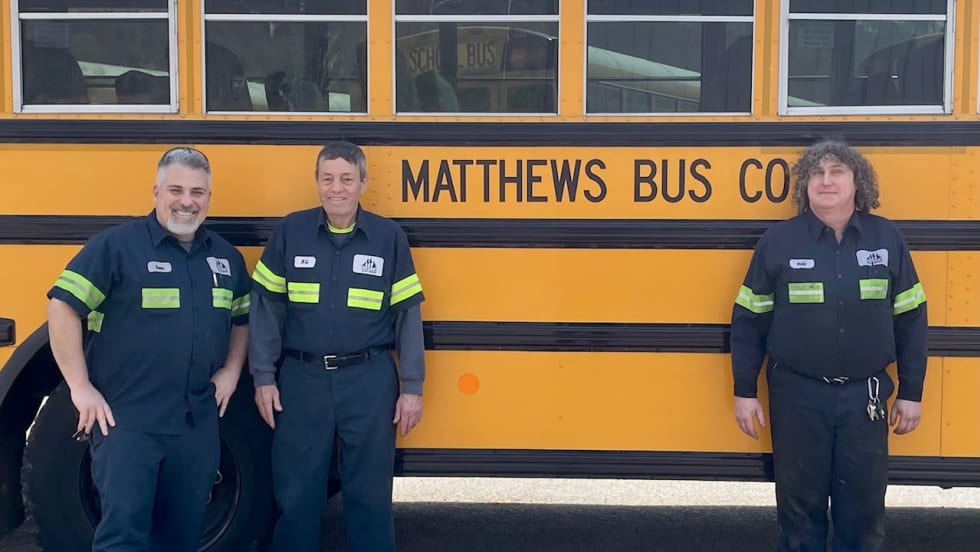
Pennsylvania School Bus Maintenance Team Praised for Dedication to Safety
Matthews Bus Company’s West Jefferson received a letter of commendation from the Pennsylvania State Police for their fleet inspections.
Read More →