




Finding positives in cost challenges
First, I’d like to extend my condolences to family and friends of Dennis Hammell, a venerable school bus contractor in New Jersey who served the indus...
First, I’d like to extend my condolences to family and friends of Dennis Hammell, a venerable school bus contractor in New Jersey who served the industry for decades before his untimely death while attending the 14th National Congress on School Transportation in Warrensburg, Mo., in mid-May.
Dennis’ passing leaves a void in the industry that will be hard to fill, but also provides us with greater perspective on the daily challenges we face. The annoyances caused by angry parents, poorly behaved students and stubborn traffic snarls pale in comparison to the sudden death of a friend or loved one. We need to remember that.
Since this is our annual contractor issue, I’d like to discuss some of the data in Senior Editor Tom McMahon’s survey. The findings give us a revealing snapshot of the contractor industry, which, as always, faces steady challenges in its role as a provider of private school bus service.
Some positive indicators
The good news is that contractors, as a group, are planning to replace 10 percent of their fleet for the 2005-06 school year. That’s a bit higher than predictions for the 2004-05 school year, which suggests that the economic recovery is fueling optimism among contractors.
Another positive indicator is the increase in average salaries of bus drivers and terminal managers. According to Tom’s research, both groups saw their wages increase slightly in the past year. That’s another sign that conditions are improving.
But the survey also found some reasons for contractors to keep their pencils sharpened. Key among the challenges is the increasing cost of doing business.
The high cost of fuel is the primary concern of many contractors. Nearly three-fourths of the respondents characterized the problem of rising fuel prices as “severe” or “desperate.”
Let’s hope that oil prices trend downward. But in the meantime, here are some steps that all fleet managers can take.
Battling high fuel prices
Minimize idling time. Drivers need to be reminded to turn off their engines when their buses are going to be stationary for extended periods. This simple act can help to reduce fuel costs significantly. Exceptions, of course, can be made during extremely cold weather. Even then, however, drivers should try to congregate in one heated bus — or better yet, in a designated place inside the school — if they are waiting en masse at a school site.
Air up the tires. Poor inflation increases the chance of tire damage and reduces the fuel mileage of a bus significantly. Low air pressure, especially, should be avoided because it causes tires to overheat (a dangerous situation) and reduces their efficiency. A program to regularly check tire pressures will pay for itself many times over with savings in fuel consumption.
Invest in new buses. As I mentioned earlier, it’s a good sign that contractors are accelerating their bus replacement. Not only do new buses require less upkeep, they’re also more fuel-efficient than their aging counterparts. In addition, new buses tend to be treated better by drivers. Rather than jamming down the throttle at every opportunity, they’re more likely to use fuel-efficient driving strategies with new buses.
Yes, the high cost of fuel is a challenge, just like rising insurance rates, tight school budgets and finding and keeping good drivers. Successful contractors embrace these challenges and focus on the solutions, not the problems.
More Management

The Back-to-School Checklist Every Director Should Complete Before the First Bell
Help your transportation team start the school year strong with these tips for contingency planning, communication, fleet visibility, technology, and trip management.
Read More →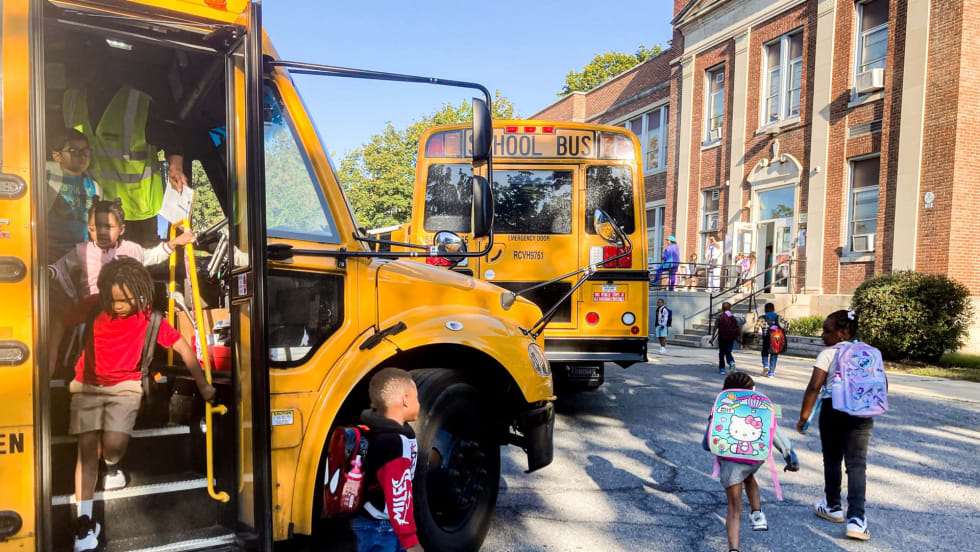
How a New York District Cut Nearly $1M in Transportation Costs While Expanding Bus Access
A data-driven overhaul with BusRight reduced Poughkeepsie City School District's planned routes from 26 to 17 while extending school bus service to about 1,200 additional students.
Read More →
Budgets Down, Enrollment Shifting: What the Data Says Districts Should Watch
School transportation departments face two converging challenges this year: tightening budgets and shifting enrollment. Most districts still address these issues separately, but the assumption that either trend will simplify operations is proving incorrect.
Read More →
These 8 School Transportation Companies Made the 2026 Inc. 5000 List
Find out which school transportation contractors, technology providers, and suppliers ranked among America’s fastest-growing private companies.
Read More →
The Link Between Emotional Intelligence and School Bus Safety
How can emotional intelligence help transportation pros navigate stress, manage change, and build stronger relationships? Listen to find out.
Read More →
What Emotional Intelligence Has to Do With School Bus Safety
In this video, discover how emotional intelligence can help transportation leaders and drivers navigate stress, manage change, and build stronger relationships. The Route is sponsored by IC Bus.
Read More →
Beyond Two-Way Radios: School Bus Communications Evolve With Push-to-Talk Over Cellular
PRYME Radio and PositionPTT join forces to advance hands-free radio use and reduce distracted driving. See how PoC compares with traditional radios on range, cost, safety, and connectivity.
Read More →
Have School Districts Adapted to Bus Driver Shortages or Simply Accepted Less Service?
According to a recent report from HopSkipDrive, many districts appear to have recalibrated what "normal" transportation service looks like.
Read More →
Reliable Transportation Linked to Better Student Outcomes, New EverDriven Study Finds
See why new research suggests transportation consistency improves student outcomes while influencing attendance, funding, IEP compliance, and family trust.
Read More →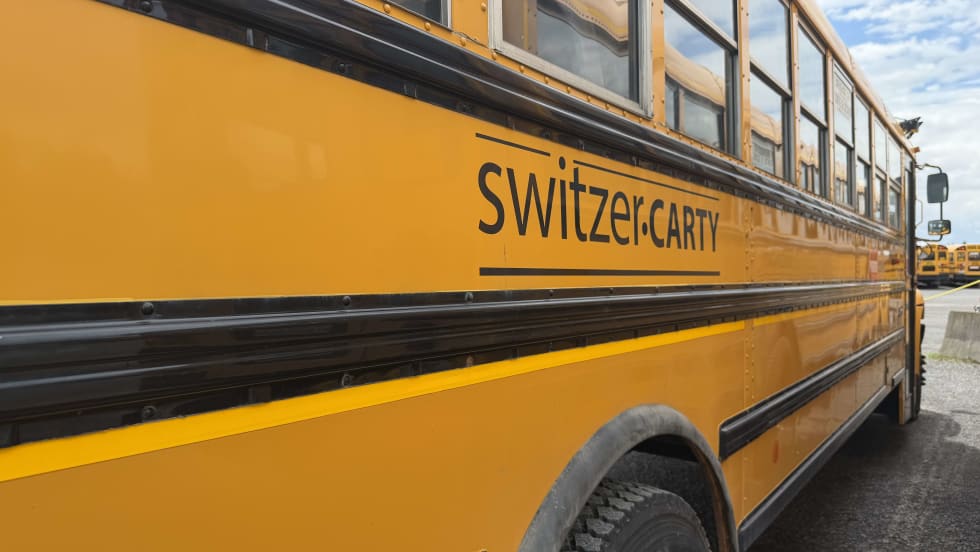
Switzer-CARTY Enters the U.S. with New Acquisition
The Canadian contractor’s acquisition of Minnesota-based Agnes Corporation marks its first cross-border expansion into the United States and adds 350 vehicles.
Read More →