




Feds say no to Title 1 funds
WASHINGTON, D.C. — School districts may not use federal funds under Part A of Title I to pay for transporting homeless students to and from the...

WASHINGTON, D.C. — School districts may not use federal funds under Part A of Title I to pay for transporting homeless students to and from their school of origin.
That point was emphasized by Ronald J. Tomalis, acting assistant secretary of the U.S. Department of Education, in a Nov. 24, 2003, letter to Deborah Lincoln, president of the National Association of State Directors of Pupil Transportation Services.
Lincoln had earlier expressed concerns about the federal government’s guidance that Title I, Part A funds could not be used to pay for transporting the homeless. In a June 20, 2003, letter to Education Secretary Rod Paige, Lincoln wrote, “Without the flexibility to use Title I resources to supplement transportation to the school of origin, school districts simply will not have the resources to comply with the law.”
Lincoln was referring to the McKinney-Vento Homeless Assistance Act, which was reauthorized under the No Child Left Behind Act of 2001. Under McKinney-Vento, school districts are required to provide or arrange for the transportation of homeless children and youth to and from their school of origin at the request of a parent or guardian.
Lincoln was asking Paige to issue new guidance that allows the Title I, Part A funds to be used to supplement districts’ efforts to transport homeless students to their schools of origin. “We believe such a policy is consistent with federal law and is essential to the administration’s goal of closing the academic achievement gap between disadvantaged students and their more fortunate peers,” Lincoln wrote.
In his one-page letter, Tomalis said the issue was “carefully reviewed and remains a part of our guidance to states.”
Head Start deadlines extended by 151 days
WASHINGTON, D.C. — An interim final rule has been issued by the Department of Health and Human Services (DHHS) that extends for 150 days the parts of the Head Start transportation regulation (45 CFR Part 1310 ) that require each vehicle used to transport children be equipped with child safety restraint systems and that each bus have a bus monitor.
According to the DHHS, implementation of the transportation regulations could cause many children to be denied transportation services to and from their Head Start programs and many grantees being cited with deficiencies that could lead to the termination of their Head Start grants.
Federal agencies such as the National Highway Traffic Safety Administration cite greater potential dangers with the regulation, because many families without bus transportation to Head Start programs could resort to transporting their children via private vehicles, a less safe method of travel.
The interim final rule will allow transportation operators an extension of 150 days, extending the original deadline of Jan. 20, 2004, to June 21, 2004, to either comply with the child safety restraint and monitor requirements of 45 CFR Part 1310 or submit applications for extensions.
For the full report on the Head Start transportation regulation, view the Federal Register at http://a257.g.akamaitech.net/7/257/2422/14mar20010800/edocket.access.gpo.gov/2004/04-1096.htm.
Ski injury doesn’t qualify
PIERRE, S.D. — The state Supreme Court has ruled that a school bus driver who was injured while skiing during an activity trip is not entitled to worker’s compensation.
The Associated Press reported that Renee Norton, a driver for Deuel (S.D.) School District, injured a ligament and suffered a blood clot in an accident that occurred while she was skiing with the students who rode her bus on an activity trip.
Norton was seeking lost wages and medical expenses for the injuries, which occurred March 10, 2001, at a ski resort near Alexandria, Minn. She had driven 15 students to the outing and was given a free ski ticket by the chaperone. The high court ruled that Norton’s injuries were not related to her job as the bus driver and did not qualify for compensation. “The evidence clearly indicated that she chose to ski for her own pleasure and gratification,” wrote Justice Richard W. Sabers.
Norton countered that she was supervising students on the slopes, though she acknowledged that she was not instructed to perform in that capacity.
More Safety
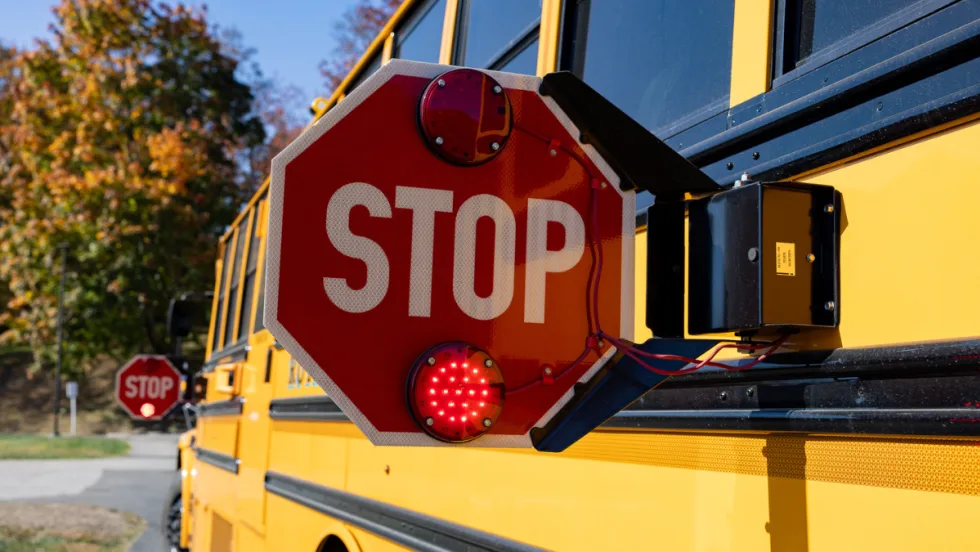
Illegal School Bus Passing Drops 24% in New York Districts
With fewer than 5% of citations involving repeat offenders, Westchester County officials said enforcement, education, and community partnerships are helping change driver behavior.
Read More →
School's Back. Here's What Happened to Traffic, Speeding & Distraction
What happens to traffic when school resumes? New data analysis examines changes in distracted driving, congestion, and speeding around schools.
Read More →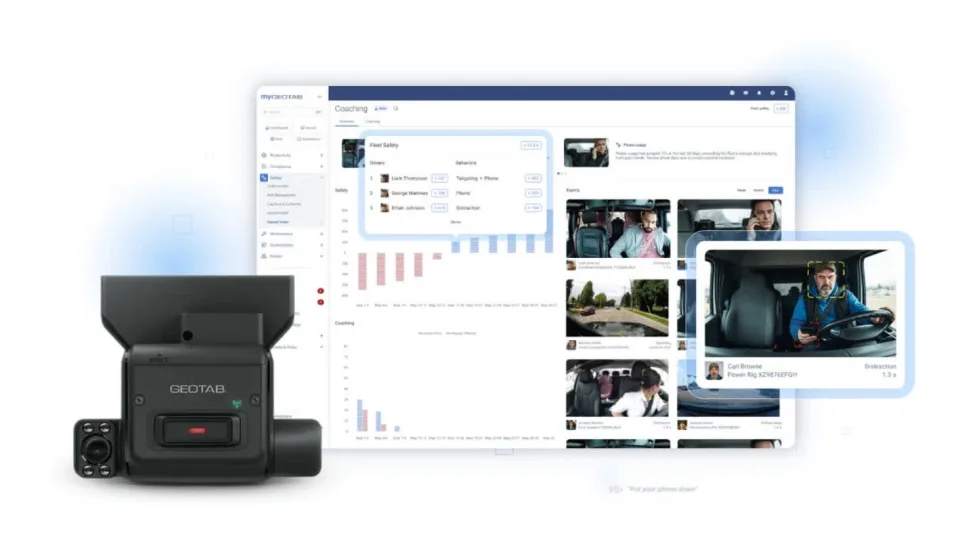
Geotab Expands Fleet Safety Tools With Video Coaching, Risk Insights
New safety and video capabilities aim to help fleet managers assess risk, support drivers, and take targeted action through video coaching, red-light violation detection, and more.
Read More →

How to Build a Better School Bus Driver Training Program
Is it time to strengthen your driver training? Here’s how to pick the right talent and improve recruitment, retention, and safety. This video is brought to you by IC Bus.
Read More →
Recent School Bus Accidents Leave 2 Dead, 2 Injured
Four school bus crashes in Florida, Illinois, and Georgia highlight risks in transportation lots, at bus stops, and during student loading and unloading.
Read More →
When Every Second Matters, Clarity Keeps Routes Moving
From routine delays to urgent incidents, strong communication practices help drivers, dispatchers, schools, and families respond with confidence.
Read More →
What Happens When a School Bus Catches Fire — and What Can Help
School bus fires are rare but can be devastating. Learn how advances in fire suppression and asset protection help fleets detect fires earlier, reduce damage, and improve safety.
Read More →
Geotab Launches Tool to Help Fleets Investigate Road Incidents
Geotab Investigations combines telematics data, video, documents, and other evidence to help fleets reconstruct incidents, resolve claims, and determine what happened.
Read More →
Texas Sixth Grader Wins 2026 National School Bus Safety Poster Contest
Sai Darshana Yekolu of Moseley Middle School in Prosper, Texas, was named the newest winner for her artwork, bringing the theme of “Safe Rides, Everyday Heroes” to life.
Read More →
Doing More With Less: How Transportation Directors Can Prioritize Safety Amid Budget Uncertainty
With diesel prices soaring and nearly one-third of transportation directors expecting budget cuts, maintaining student safety has never been more challenging. Download this guide to learn how leading districts are prioritizing risk, funding critical safety technology, and building stronger budget cases with data.
Read More →