




Fed Mandate for Lap-Shoulder Belts Looks Unlikely
It was no big surprise that NTSB’s latest report calls for lap-shoulder belts on school buses. What was surprising was how the agency decided to direct that recommendation: not to the feds, but to the states.

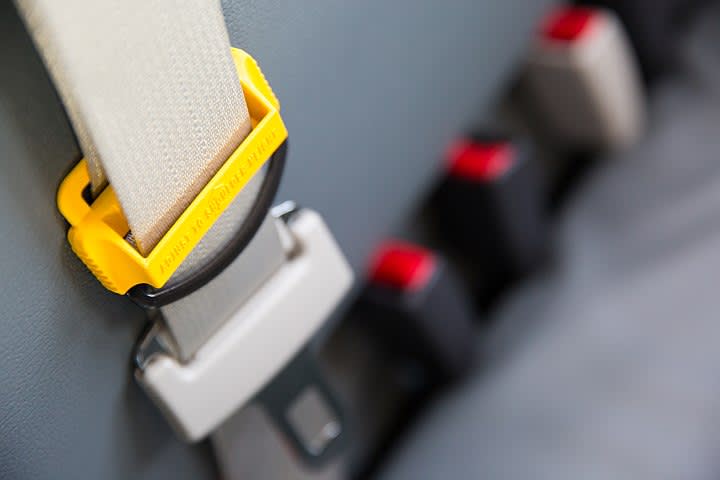
File photo courtesy Des Moines (Iowa) Public Schools
File photo courtesy Des Moines (Iowa) Public Schools
If you’ve followed the National Transportation Safety Board’s (NTSB’s) crash investigations in recent years, it was no big surprise that the agency’s latest report calls for lap-shoulder belts on school buses. What was surprising was how NTSB decided to direct that recommendation: not to the feds, but to the states.
NTSB met on May 22 to review its special investigation report on the fatal 2016 school bus crashes in Baltimore, Maryland, and Chattanooga, Tennessee.
In past crash investigations and reports, NTSB has pointed to the benefits of lap-shoulder belts for student passengers, particularly in side impacts and rollovers. The agency has even produced a video in which it likens lap-shoulder belts to “closing the lid on the egg crate” of compartmentalization — in other words, ensuring that properly buckled passengers will stay inside the seating compartment in any type of crash.
With that in mind, it was no shock to hear NTSB, in the May meeting, reiterate its assertion that lap-shoulder belts provide the best protection for school bus passengers. In the Chattanooga crash analysis, investigators found that the swerving of the bus threw passengers out of their seating compartments before the impact, and “compartmentalization was rendered ineffective,” according to the agency.
While NTSB cited multiple factors in its Chattanooga probable cause determination, the agency also listed the lack of lap-shoulder belts on the bus as “contributing to the severity of the crash.”
During the May 22 meeting, NTSB Chairman Robert Sumwalt said that the agency previously made a “weak recommendation” about school bus operations considering the added safety benefit of lap-shoulder belts. “It’s time to take a hard stance on this,” Sumwalt said.
Then NTSB proceeded to recommend that states, instead of federal regulators, enact their own requirements for lap-shoulder belts on new large school buses. That’s a rather puzzling approach when you consider that NTSB made other equipment recommendations to the National Highway Traffic Safety Administration (NHTSA), includng a call to mandate collision avoidance systems and automatic emergency braking for all new school buses.
So why didn’t NTSB direct the lap-shoulder belt recommendation to NHTSA to make it a national standard? We asked NTSB that question, and they pointed to a 2008 final rule in which NHTSA developed performance standards for lap-shoulder belts for large school buses but couldn’t justify a requirement.
“Based on these performance standards and the continued high safety of school buses, the NTSB believes that the states are now in the best position to require passenger lap/shoulder belts on all new, large school buses,” an NTSB spokesman said.
Some additional background helps shed light on this sticky subject. NHTSA’s last administrator, Mark Rosekind, famously declared in 2015 that “every child on every school bus should have a three-point seat belt.” However, the agency did not propose to turn that statement into a mandate before Rosekind’s tenure ended.
Now, NHTSA has been without an administrator since President Trump took office in January 2017. The president’s recent nomination for the post, current Deputy Administrator Heidi King, had her confirmation vote postponed in the Senate in May, apparently due to Democrats’ dissatisfaction with King’s stances on the Takata air bag recall and car emission standards.
With NHTSA in leadership limbo, several lawmakers launched an effort in Congress to require seat belts on school buses nationwide. However, the bill doesn’t specify that the mandate be for lap-shoulder belts — only that the Department of Transportation “consider” the benefits and NTSB findings on lap-shoulder belts.
So where does that leave us? For now, it remains up to the states to make the call on seat belts for school buses. Interestingly, that fits a common position in the industry — that the decision should be made at the state or local level.
So far, only three states — California, Nevada, and Texas — have passed lap-shoulder belt regulations for their school buses. Three others — Florida, New Jersey, and New York — currently require lap belts. (Update: New Jersey and New York are considering legislation that would upgrade their requirements to lap-shoulder belts.)
Over the years, many state lawmakers have tried to mandate seat belts on school buses, and most of those attempts have failed due to cost concerns or other issues.
Will that change now that NTSB has formally recommended that all states require lap-shoulder belts on new school buses? Although NTSB has no regulatory authority, its recommendations do carry a certain clout.
As state legislatures convene for their next sessions, look for lap-shoulder belts to be back on the agenda. But don’t hold your breath for a federal rulemaking.
More Safety

How to Build a Better School Bus Driver Training Program
Is it time to strengthen your driver training? Here’s how to pick the right talent and improve recruitment, retention, and safety. This video is brought to you by IC Bus.
Read More →
Recent School Bus Accidents Leave 2 Dead, 2 Injured
Four school bus crashes in Florida, Illinois, and Georgia highlight risks in transportation lots, at bus stops, and during student loading and unloading.
Read More →
When Every Second Matters, Clarity Keeps Routes Moving
From routine delays to urgent incidents, strong communication practices help drivers, dispatchers, schools, and families respond with confidence.
Read More →

What Happens When a School Bus Catches Fire — and What Can Help
School bus fires are rare but can be devastating. Learn how advances in fire suppression and asset protection help fleets detect fires earlier, reduce damage, and improve safety.
Read More →
Geotab Launches Tool to Help Fleets Investigate Road Incidents
Geotab Investigations combines telematics data, video, documents, and other evidence to help fleets reconstruct incidents, resolve claims, and determine what happened.
Read More →
Texas Sixth Grader Wins 2026 National School Bus Safety Poster Contest
Sai Darshana Yekolu of Moseley Middle School in Prosper, Texas, was named the newest winner for her artwork, bringing the theme of “Safe Rides, Everyday Heroes” to life.
Read More →
Doing More With Less: How Transportation Directors Can Prioritize Safety Amid Budget Uncertainty
With diesel prices soaring and nearly one-third of transportation directors expecting budget cuts, maintaining student safety has never been more challenging. Download this guide to learn how leading districts are prioritizing risk, funding critical safety technology, and building stronger budget cases with data.
Read More →
Walton County Schools Adds Gatekeeper Stop-Arm Enforcement System
The Florida district will deploy Gatekeeper’s updated Student Protector technology, which now incorporates AI to improve video evidence.
Read More →
How To Build a More Secure School Bus Yard During and After Hours
As thefts and overnight security threats continue, school transportation leaders are combining stronger operational practices with AI-enabled surveillance to better protect buses, facilities, and staff.
Read More →
FMCSA Names New Chief Safety Officer: What School Bus Operators Should Know
Steve Dowling is set to lead the federal agency's efforts to advance commercial motor vehicle safety and reduce crashes, fatalities, and injuries on the nation's roadways.
Read More →