



Enhance Employee Retention with Driver Rewards
School districts and contract bus companies are often looking for ways to support and motivate their transportation supervisors and managers. Encourag...
School districts and contract bus companies are often looking for ways to support and motivate their transportation supervisors and managers. Encouraging at-tendance at conferences, special-interest projects, tuition for cutting-edge training courses and professional development seminars all serve this purpose. However, it is the drivers and monitors who will frequently have the most direct effect on the safe transportation of children. Motivating managers is important, but motivating drivers is equally pivotal to an operation's success. The nationwide driver shortage makes retention of transportation staff critical. When the neighboring district or contractor offers signon bonuses, more money per hour, better benefits and a reputation for treating its drivers well, you must take special measures to get your drivers to stay. To encourage your drivers through reward, consider several key points. Reinforce success
First, remember that when behaviors are reinforced, they are almost always repeated. Thus, basic compensation will encourage merely basic performance, whereas rewards will promote "much more." Achieving that "much more" is essentially what makes an employee want to stay in a given environment. With so many serious responsibilities for the safety of the children, it isn't hard to understand why we are experiencing a driver shortage. But when employees see that management acknowledges good work, they often attempt to go a step further. Giving even a small reward can increase the chances that an employee will strive to come up with a creative solution the next time a problem arises. Build relationships
For a reward to be effective it must be personal and fit the individual's needs. Giving rewards drivers place no value in will not make them feel important to you or the operation. The reward doesn't have to be expensive, but it should be something befitting that particular employee. Ask your drivers how they prefer to be rewarded for their accomplishments. Ironically, rewarding people can sometimes generate resentment within the ranks, especially if you are giving undesirable rewards. To better satisfy the desires of your drivers, get more involved with their lives. Once you know their interests, you will have access to new outlets of motivation. In the process, you will build meaningful relationships, making employees less likely to leave. Set reward requirements
Honor employees in a sincere manner and with an air of respect. A condescending attitude on the part of management will undermine the reward. Likewise, recognizing slackers might insult employees who work hard. Let drivers know what kind of work is considered reward-worthy. That way, drivers will be able to visualize their goals, increasing their pride and work ethic. Clear criteria for a reward lends credibility to the accomplishment it-self and enhances the confidence and loyalty of drivers who meet the criteria. Create a reward program
Having a unique driver recognition program will keep employees focused on the importance of their work and the benefits of a job well done. At Brewster (N.Y.) Central Schools, Transportation Director Patricia Bailey awards a jacket to any employee who uses one or fewer sick days in the school year. Bailey uses certificates, letters of recognition and the local media to communicate her school district's pride in the drivers who go beyond what is expected. Throughout the year, parties, luncheons and dinners are held to express appreciation for staff efforts. In addition, corsages are presented to each driver on the district's Transportation Appreciation Day. During the summer, Bailey sends all of her employees handwritten notes, keeping them informed of summer "happenings" and stressing their importance to the organization. Set a good example
To ensure that your drivers are giving their best effort, you must show them that you are giving yours. Says Bailey, "We work hard to help them be the best they can be — we need to work hard to keep them too, for the safety of our students." Bailey has also learned that treating the drivers well results in them treating the students well, creating a win-win situation for the organization. In setting this example, it is very important to stay consistent. "Driver and employee recognition should not be something the manager addresses once or twice a year. Rather, communication concerning every extra effort made by an employee should be given constantly," says Bailey. Generate driver pride
Recognition from the boss is not so much about the reward itself as it is about honor. Stickers, pins or silly prizes may hold as much meaning to a driver as an expensive reward. Rewarding is about management noticing employee effort, giving it value and saying "thank you" in some way. Creating symbols of excellence such as patches or pins that can be collected or worn generates pride, enthusiasm and ownership much like being a member of a championship sports team. When feasible, financial incentives are a strong method of reward and recognition. For instance, financial bonuses for safe and accident-free driving, position longevity and good attendance all increase driver morale and retention. Use outside organizations
There are many outside entities, such as insurance companies and national safety organizations, that can help fuel a rewards program. The National Safety Council offers the "Million Mile Club" and the "Safe Driver" and "Expert Driver" awards programs. Jonathan Ross, director of transportation for the Southern Westchester Board of Cooperative Educational Services (BOCES) in North White Plains, N.Y., uses all of these national programs in addition to local programs. Ross makes recognition a staff tradition, holding a safe driver awards ceremony in the fall, recogniz-ing staff at holiday parties and on School Transportation Appreciation Day, holding end-of-the-year events and honoring outstanding attendance. Appreciation for drivers at the Southern Westchester BOCES is also expressed through letters, newsletters and memoranda. "To promote a positive culture within our transportation department, we recognize and reward our drivers with good pay and benefits, excellent equipment, an outstanding support structure and recognition for sustained, outstanding performance," says Ross. Appreciate your drivers
It can be said that the greater part of wisdom is appreciation. A transportation director's great idea will not amount to anything without drivers and monitors to implement it. Without their efforts — which are supreme at times — no one in management would have an impact on the safety of children. Will a raise of 50 cents per hour make a difference in your turnover rate? Or will drivers be more likely to stay because of the deep appreciation expressed through your recognition practices? To the best drivers, driving a school bus is not about the money. It's about the kids and the extraordinary efforts put forth to care for them. Recognition of those efforts can have an overwhelming influ-ence on driver morale and retention. Kathy Furneaux is a training specialist for the Pupil Transportation Safety Institute in Syracuse, N.Y.
More Management

The Back-to-School Checklist Every Director Should Complete Before the First Bell
Help your transportation team start the school year strong with these tips for contingency planning, communication, fleet visibility, technology, and trip management.
Read More →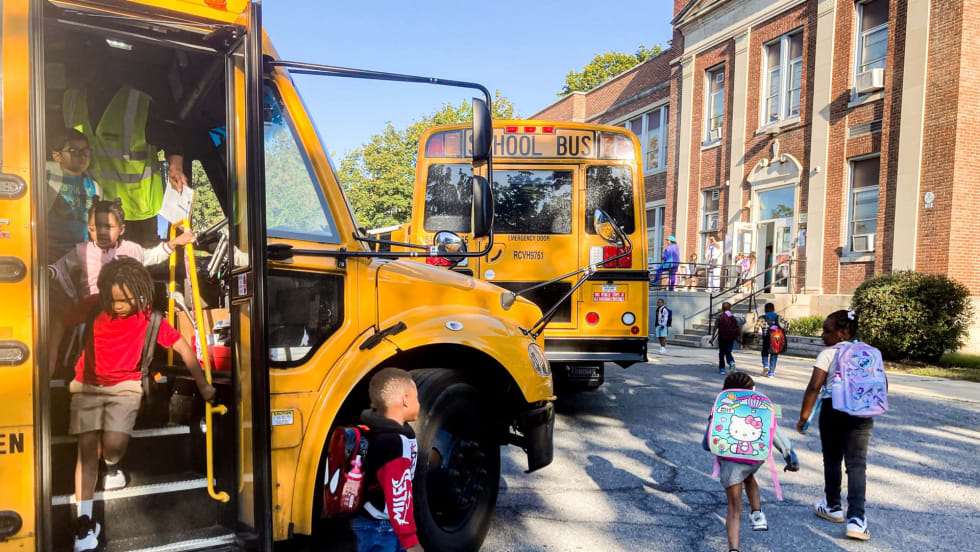
How a New York District Cut Nearly $1M in Transportation Costs While Expanding Bus Access
A data-driven overhaul with BusRight reduced Poughkeepsie City School District's planned routes from 26 to 17 while extending school bus service to about 1,200 additional students.
Read More →
Budgets Down, Enrollment Shifting: What the Data Says Districts Should Watch
School transportation departments face two converging challenges this year: tightening budgets and shifting enrollment. Most districts still address these issues separately, but the assumption that either trend will simplify operations is proving incorrect.
Read More →
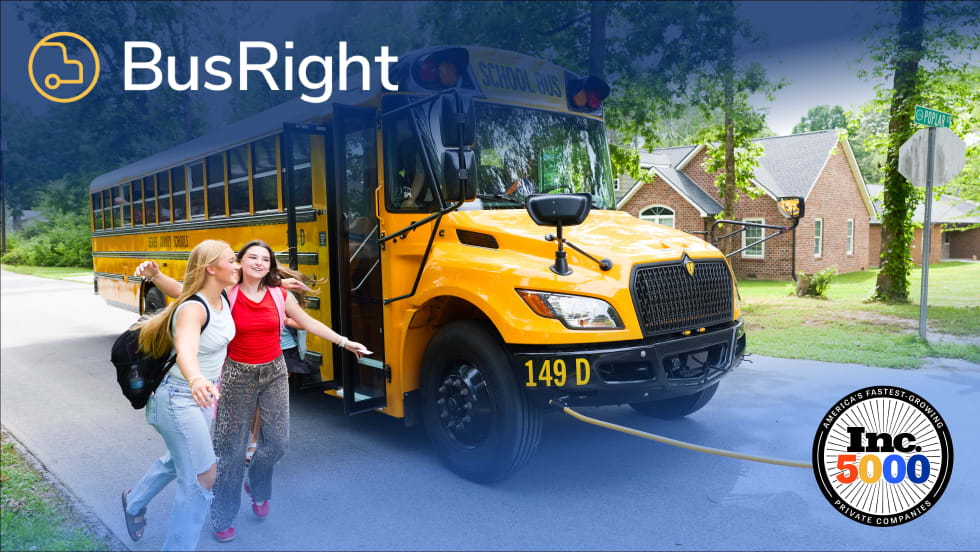
These 8 School Transportation Companies Made the 2026 Inc. 5000 List
Find out which school transportation contractors, technology providers, and suppliers ranked among America’s fastest-growing private companies.
Read More →
The Link Between Emotional Intelligence and School Bus Safety
How can emotional intelligence help transportation pros navigate stress, manage change, and build stronger relationships? Listen to find out.
Read More →
What Emotional Intelligence Has to Do With School Bus Safety
In this video, discover how emotional intelligence can help transportation leaders and drivers navigate stress, manage change, and build stronger relationships. The Route is sponsored by IC Bus.
Read More →
Beyond Two-Way Radios: School Bus Communications Evolve With Push-to-Talk Over Cellular
PRYME Radio and PositionPTT join forces to advance hands-free radio use and reduce distracted driving. See how PoC compares with traditional radios on range, cost, safety, and connectivity.
Read More →
Have School Districts Adapted to Bus Driver Shortages or Simply Accepted Less Service?
According to a recent report from HopSkipDrive, many districts appear to have recalibrated what "normal" transportation service looks like.
Read More →
Reliable Transportation Linked to Better Student Outcomes, New EverDriven Study Finds
See why new research suggests transportation consistency improves student outcomes while influencing attendance, funding, IEP compliance, and family trust.
Read More →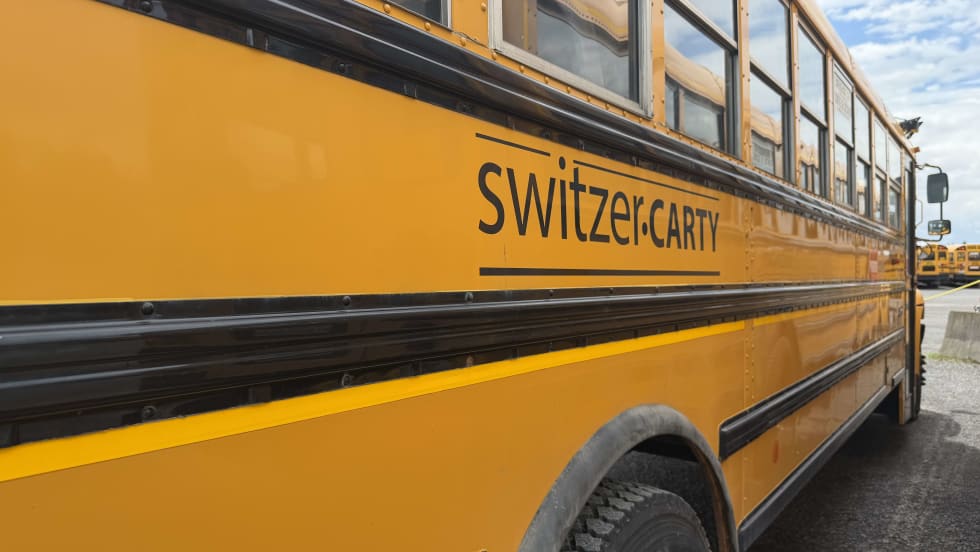
Switzer-CARTY Enters the U.S. with New Acquisition
The Canadian contractor’s acquisition of Minnesota-based Agnes Corporation marks its first cross-border expansion into the United States and adds 350 vehicles.
Read More →