




Emission-control technology offers low-maintenance solutions
Diesel particulate filters, mufflers and engine pre-heaters help school bus operators keep the air in and around their vehicles clean with minimal maintenance required. Technology upgrades now allow for optimal operation and pre-programmable engine pre-heating in even lower temperatures.

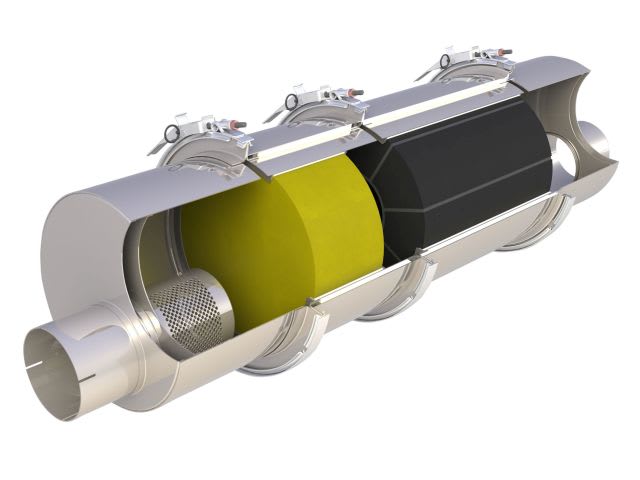
CDTi’s Purifilter™ EGR diesel particulate filter, an update to the technology on its Purifilter™ model, can now operate at even lower temperatures.
Whether taking students on a long route for a field trip or a routine pickup and drop-off route, keeping the air around them as clean and as free of particulate matter as possible and maintaining the emissions-control equipment that does this is becoming even easier. Product offerings such as diesel particulate filters (DPFs) and mufflers get rid of up to 90% of particulate matter with minimal maintenance.
Additionally, engine pre-heaters help school bus operators keep their buses comfortable during cold weather without idling and prolong the life of DPFs by reducing the load on the engine. For example, Paul Baczewski, school bus account manager for Webasto, says, a recent study conducted by an independent emissions testing lab showed that the amount of particulate matter being introduced into a DPF at 70 F can be reduced by almost one-third simply by pre-heating the engine.
SBF spoke with officials from five suppliers of these products to get the latest details on their emission-control offerings.
Clean Diesel Technologies Inc.
Clean Diesel Technologies Inc. (CDTi) now offers the Purifilter™ EGR DPF for school buses, an update of the technology on its Purifilter™ model. Both are EPA-certified and provide California Air Resources Board (CARB)-certified level 3-plus performance, with more than 85% particulate matter reduction, Ian MacDonald, VP of sales and marketing at CDTi, says.
Purifilter™ includes a catalytic coating that oxidizes the gaseous pollutants to carbon dioxide and water, and lowers the ignition temperature of the soot and burns it off during operation. In addition, Purifilter™ EGR also features the coating and augments it with proprietary Mixed Phase Catalyst technology, an upstream diesel oxidation catalyst and thermal insulation, allowing it to operate at significantly lower temperatures than the Purifilter™.
“The Purifilter™ requires 25% of the duty cycle to be over 280 C, while the Purifilter™ EGR can operate at either a condition of 10% above 300 C or 30% over 240 C,” MacDonald says.
Like Purifilter™, the Purifilter™ EGR is also a passive system, meaning minimal operator intervention is needed, even at lower temperatures. The Purifilter™ Plus model features an electrical plug-in that allows operators to only have to clean the filter from time to time, according to MacDonald.
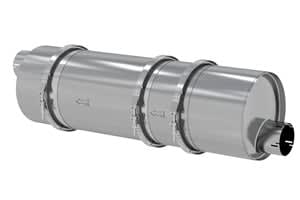
The LNF muffler from Donaldson Co. reduces particulate matter emissions by more than 90%.
Donaldson Co. Inc.
Donaldson’s latest product offerings for school buses include its LNF and LXF mufflers, Todd Lewis, sales manager, says.
The LNF and LXF mufflers reduce particulate matter emissions by more than 90%. The LNF is designed for model year 1993 to 2006 high nitrogen oxide engines, while the LXF is designed for model year 2002 to 2006 low nitrogen oxide engines.
Both muffler kits are equipped with an Emissions Device Monitor that indicates when DPF cleaning is required. The monitor also sends alerts to the vehicle operator through an in-cab display when abnormal or undesirable operating conditions are detected.
The LNF and LXF mufflers are passive systems. The exhaust gas temperature profile for the LNF is: greater than 235 C for at least 40% of the time or greater than 300 C for at least 10% of the time.
The temperature profile for the LXF muffler is: greater than 245 C for at least 40% of the time or greater than 310 C for at least 10% of the time.[PAGEBREAK]
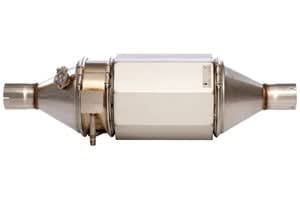
The Horizon, a diesel particulate filter from ESW Group, allows for low-exhaust temperatures that come with route variations.
ESW Group
With the school bus market being one of ESW Group’s largest, particularly in California, ESW offers three emission-control products that cover the entire bus duty cycle: the Thermocat E, Long Mile S and the Horizon, Adam Gross, director of sales at ESW Group, says. All three are EPA-certified and provide CARB-certified level 3-plus performance, with more than 85% particulate matter reduction.
The Horizon is an active product, using electrical plug-in regeneration, and the Long Mile S is a passive system; it regenerates by employing hotter exhaust temperatures.
Meanwhile, the Thermocat E is an active/passive hybrid. It is verified through CARB as an active product because it has an external fuel source that is used to regenerate the product, but it acts passively without any driver or operator interaction, Gross explains.
Neither the Thermocat nor the Horizon require a hot exhaust temperature to regenerate. Both allow for low-exhaust temperatures that come with route variations, from the long haul to a route that picks up kids around the neighhorhood.
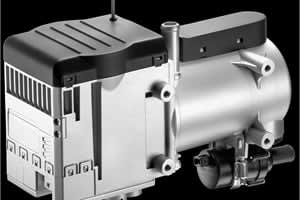
Espar’s new E-Guardian Plus M-II engine pre-heater can be programmed to turn on at a set time on any given day.
Espar Heater Systems
Espar’s E-Guardian Plus series of pre-heaters is programmable to turn on at a set time on any given day, says John Dennehy, VP of marketing and communications.
The E-Guardian Plus D5 and M-II units, both CARB- and EPA-verified, are designed to provide powerful preheating and auxiliary internal heat for bus applications. The units are compact and lightweight, and provide automatic altitude compensation. Additionally, Espar’s M-II heaters offer six operating speeds for reduced battery draw and fuel consumption.
The units start preheating the coolant and circulating it around the engine block and through the coolant chain, which run through the length of the bus and back and to the heat exchange, so it preheats the engine and the bus without the engine idling because it is a completely separate entity from the engine, Dennehy explains.
Espar’s Multi-Max controls the unit and allows operators to preset an entire fleet of buses with one button, Dennehy says.
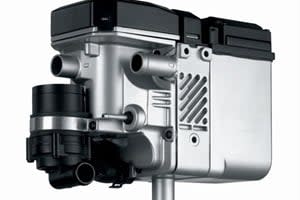
Webasto’s Thermo Top C engine pre-heater is small, lightweight, and reduces the wear and tear on DPFs by cutting the amount of emissions introduced into the DPF.
Webasto
Webasto’s Thermo Top C is small, light in weight, and reduces the wear and tear (extends maintenance cycles) on DPFs by reducing the amount of emissions introduced into the DPF at startup, Baczewski says.
Thermo Top C pre-heats the engine to the starting temperature, considerably reducing the load on the engine caused by a cold start. The engine pre-heater also eliminates the need to idle the engine to heat the bus, which reduces both fuel consumption and CO2 emissions.
Additionally, Scholastic Series Heater, introduced specifically for the school bus industry in 1996, is designed to be a fully functional heating system that not only will pre-heat an engine but also heat the passenger compartment and maintain heat while the vehicle is operating.
More Alternative Fuels

CALSTART and Forth Combine to Form Catalyst Mobility
The new name represents a renewed vision for the nonprofit focused on advancing clean, equitable, and affordable transportation solutions that move people and goods.
Read More →
Alt-Fuel Moves: New Buses, Charging Hubs & Real-World EV Testing
Propane and electric school bus deployments continue to grow as districts add new vehicles, expand charging infrastructure, and gather more real-world operating data.
Read More →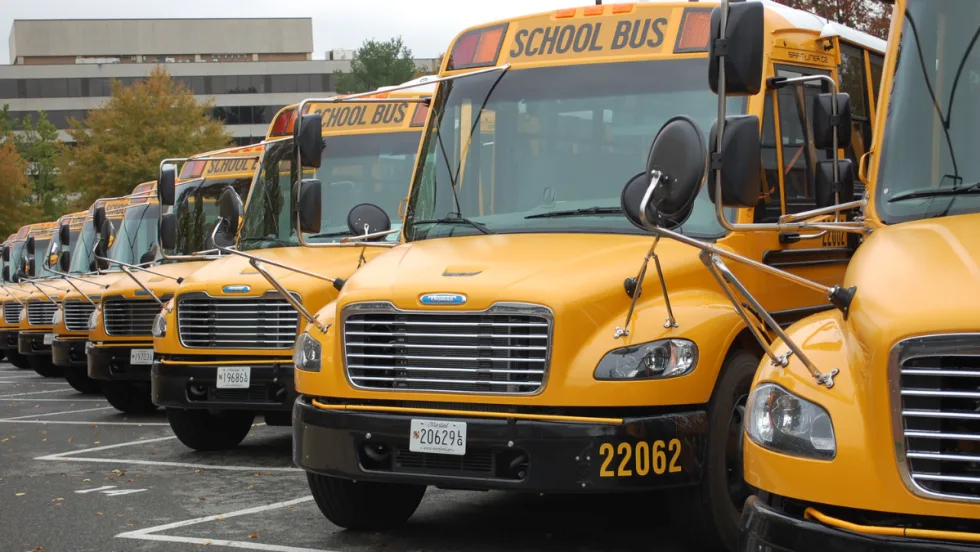
Fewer Electric School Bus Models Reshape the U.S. Market
WRI’s latest buyer’s guide points to a consolidating electric school bus market, but fewer options may reflect a maturing industry rather than fewer meaningful choices for school bus operators.
Read More →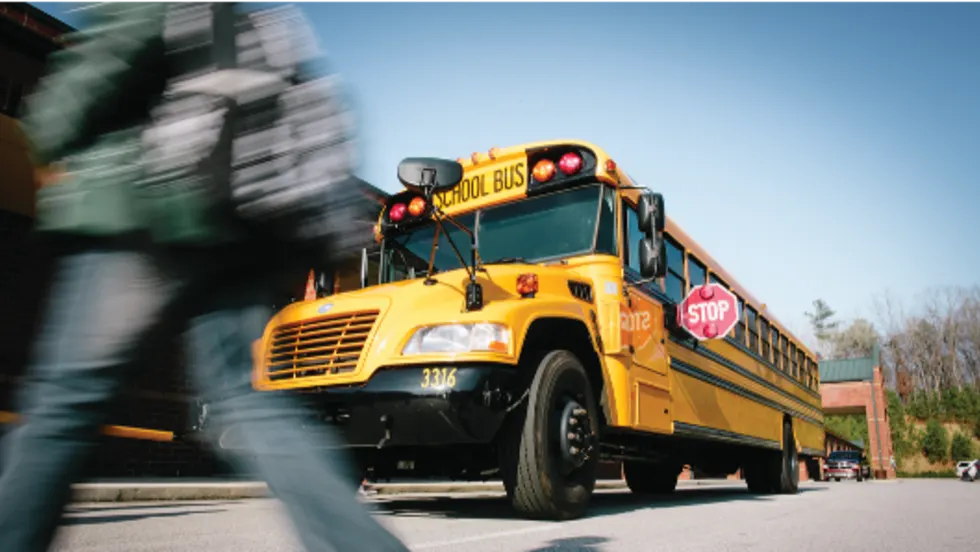
The Fuel Budget You Can Actually Predict: How Propane Autogas Keeps Money in the Classroom
Learn how propane autogas helps school districts manage fuel costs with predictable pricing, lower maintenance, and reduced emissions from former transportation director Joel Stutheit.
Read More →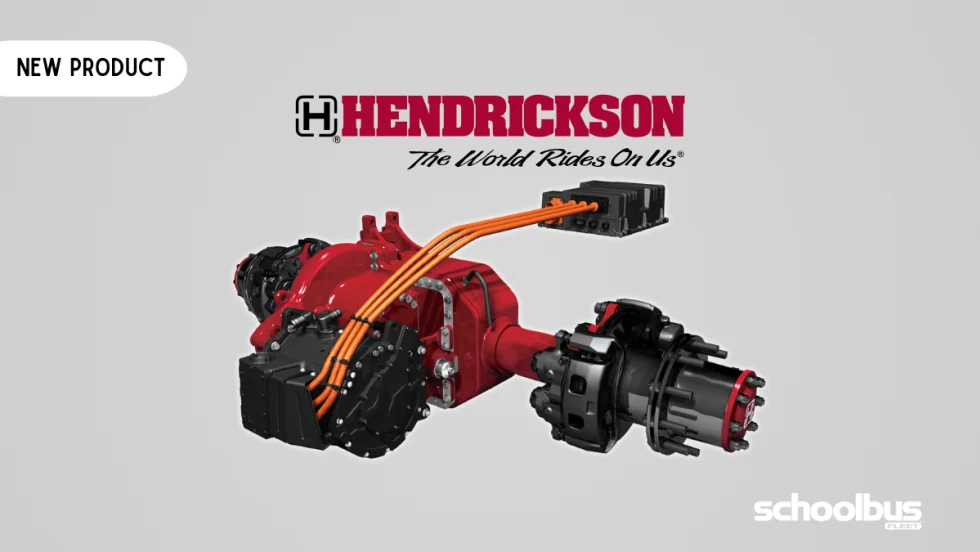
Hendrickson, Driventic Introduce New Electric Powertrain for School Buses
ELECTRAAX, the electrified, lightweight drive axle offers integrated ePowertrain efficiency and modular flexibility for Class 6–7 school bus use.
Read More →
The Mobility House Joins PowerFlex in Fleet Electrification Deal
The acquisition combines intelligent charging software, bidirectional charging expertise, and fleet electrification services to support the growing adoption of electric school buses across North America.
Read More →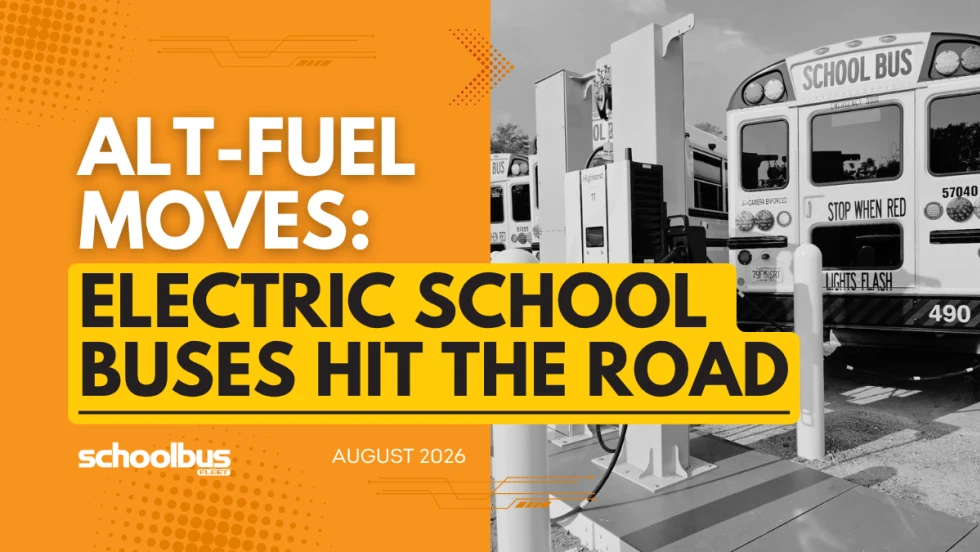
Alt-Fuel Moves: Electric School Bus Investments Hit the Road
See which districts across the U.S. are putting electric school buses into service, expanding charging infrastructure, and planning the next phase of fleet electrification.
Read More →
With Fuel Volatility Ahead, School Districts Turn to Propane
While diesel prices peaked above $5 this spring, districts with propane autogas-powered fleets paid under $2 per gallon, according to PERC.
Read More →
EPA Unveils Proposed Changes to 2027 Heavy-Duty Engine Rules
The federal agency has proposed changes to next year’s targets that would eliminate DEF derates, ease warranty requirements, and retain current NOx emissions standards.
Read More →
Alt-Fuel Moves: EV Charging & Infrastructure Projects Gain Momentum
The latest developments include new funding, charging infrastructure, utility investments, and fleet technologies designed to support the transition to electric school buses nationwide.
Read More →