




The McKinney-Vento Homeless Assistance Act
-requires state educational agencies to ensure homeless youth have equal access to the same free, appropriate public education
-defines "homeless children and youths" as those who lack a fixed, regular, and adequate nighttime residence
-includes migratory children
-does not include foster children
Driving the Displaced: Transporting America's Homeless Students
In a day and age where an education can prove transformative for youth in vulnerable environments, finding solutions to transport them is crucial.

Christy Grimes・Former Senior Editor
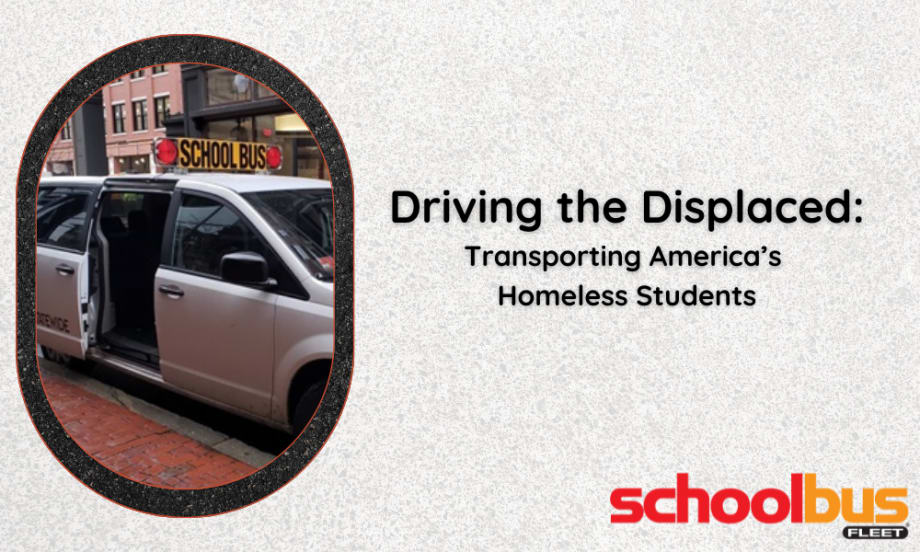
Transporting students whose “home” setting can change almost daily can prove challenging for school districts, which determine bus routes based on the addresses of their students.
Photo: Rhode Island Department of Education/Canva/School Bus Fleet
5 min to read
They are some of the nation’s most vulnerable children: homeless students. Getting an education can be life-changing for these students. But getting them to and from school isn’t always easy. For students whose residence can change daily – from a couch at their uncle’s home, a campground, a local homeless shelter, or even a train station – getting to and from school may not be at the top of their list of priorities.
Despite the challenges these situations can bring, school districts must find a way to help students receive an equitable education, per the McKinney-Vento Act (see the sidebar for more information on the McKinney-Vento Act). That starts with access to transportation.
According to data gathered by the National Center for Homeless Education, nearly 1.1 million students were identified as homeless during the 2020-2021 school year. That’s down from 1.27 million the previous school year. However, this may not paint an accurate picture of homeless students in America. COVID-19 operations impacted the identification of students defined as homeless. In some cases, it became more difficult to count the number of homeless students. That’s because some students simply disenrolled from school during the pandemic. Barbara Duffield, executive director of SchoolHouse Connection, told Education Week that some students moved, while others lost touch during remote learning or otherwise became disconnected from their schools entirely during the pandemic.
Understanding the Importance of Providing Transportation
McKinney-Vento students are often dealing with stressors outside of the classroom that can make it difficult for them to succeed in school. But providing a daily educational setting that is consistent for these students, regardless of what is going on outside of school, can help them grow and develop.
“All students benefit from being fully included members of a school community where they are known by strength, story, and need,” Seattle School Board Vice President and District One Director Liza Rankin says.
That’s why it’s important to continue to transport them to and from the same school, even if their “home” setting changes to a location that is outside the zone for the school they started the school year at. The McKinney-Vento Act requires states to work with school districts to continue to provide transportation to the student’s school of origin, or the school the child attended when they were last permanently housed, or where they were last enrolled.
Since different schools move through curriculum at different rates, staying at one school gives these students the same access to high quality instruction and relationships with educators as their housed peers, Rankin explains. It allows the students to be known and supported by one building staff all school year.
Considering Alternative Transportation Options
This is where alternative transportation providers come in. Companies like EverDriven exist to provide pupil transportation in situations that can be challenging for school districts to find solutions for, especially in cases where students move outside the zone for their school of origin. EverDriven uses alternative modes of transportation like sedans and minivans.
During the previous school year, EverDriven transported 21,000 unique students across the 28 states it provides services in. Of those students, nearly half were considered McKinney-Vento students or students in foster care.
What makes transporting McKinney-Vento students different than traditional students, EverDriven CEO Mitch Bowling explains, is that their pickup and drop-off locations can change almost daily. In some cases, it can change in the middle of the school day. EverDriven has a team that is focused on efficient routing. Team members communicate daily with the school districts they serve. When the district is informed a student will need to be taken to a different location, the routing team works to find the best solution using its proprietary software. That may mean changing a driver’s route, or switching drivers entirely.
Companies like EverDriven don’t exist to replace school buses entirely, Bowling emphasizes. They are meant to work alongside school buses. For instance, if a single student needs to be transported outside of the district they currently have shelter in so they can get to their school of origin, a school bus can be an expensive way to provide that transportation. McKinney-Vento students and students with special needs can benefit from using these alternative modes of transportation.
Going to school is about more than just providing an education for these students, Bowling says. It gives them a sense of routine and allows them to socialize and interact with other students. In many cases, school can also be a child’s only meal for the day. Going to school can mean the difference between eating and not eating for a McKinney-Vento student.
Advice for School Districts Facing Transportation Challenges
School districts may face barriers to providing transportation to homeless students. Funding can lead to poor transportation offerings, Rankin says.
Washington state has one of the largest rates of homeless students, but it does not receive as much McKinney-Vento funding as some other states. That’s because the formula used to allocate funding is based on the percentage of students who qualify for Title I funding, which is given to states to be used for the students most in need of educational help. That doesn’t always necessarily equal the number of students experiencing homelessness. Even if districts don’t receive McKinney-Vento funding, they are still required to use other funding sources, like local education agency (LEA) transportation funds, to transport homeless students.
This comes back to determining whether it makes more sense financially to transport these students using school buses or alternative modes of transportation like the light-duty vehicles EverDriven uses for its services. Choosing not to use school buses allows districts to prevent additional wear-and-tear and save money on fuel.
It’s also worth comparing the cost of using school buses to other types of transportation, like public transportation, says Emily Teeter, state homeless coordinator for the Iowa Department of Education. The department encourages districts to explore alternative modes of transportation, as well as mileage reimbursement or gas assistance. When a student moves out of their school district of origin, or even across state lines, the department encourages districts to share transportation with the district where the student is currently seeking shelter.
The National Center for Homeless Education provides an array of resources for school districts to help them navigate providing for the needs of McKinney-Vento students. Among those is the Homeless Liaison Toolkit, which Iowa uses for its district liaisons. Liaisons act as point persons for homeless students, working alongside them to adequately communicate their needs. The Homeless Liaison Toolkit’s transportation chapter spells out requirements for school districts, as well as advice on considering the best mode of transportation for these students.
“These students deserve just as much access to school as any other student,” Bowling stresses.
Subscribe to Our Newsletter
More Special Needs Transportation
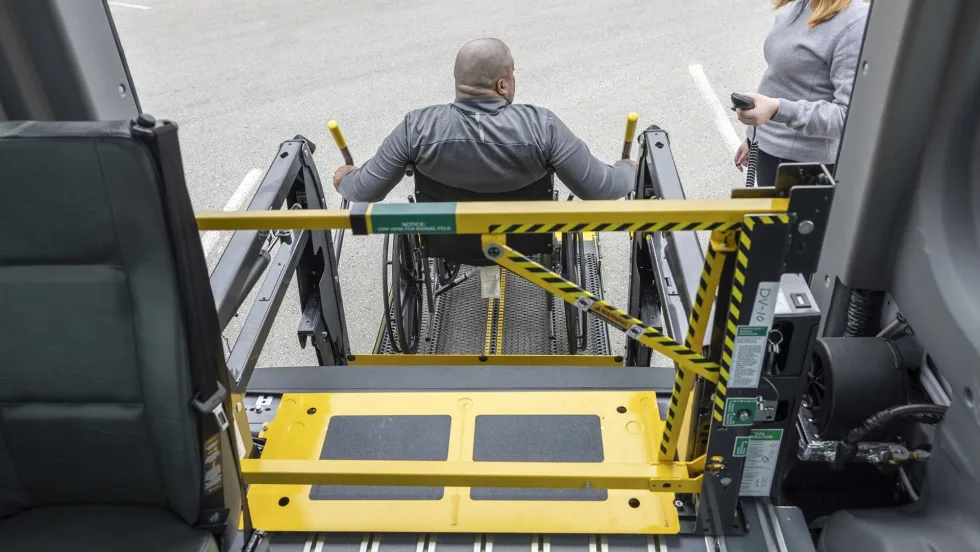
BraunAbility Introduces New Safety Barrier for Wheelchair Lifts
LiftSentinel is designed to add another layer of protection during wheelchair loading and unloading and can be retrofitted to many existing commercial lift installations.
Read More →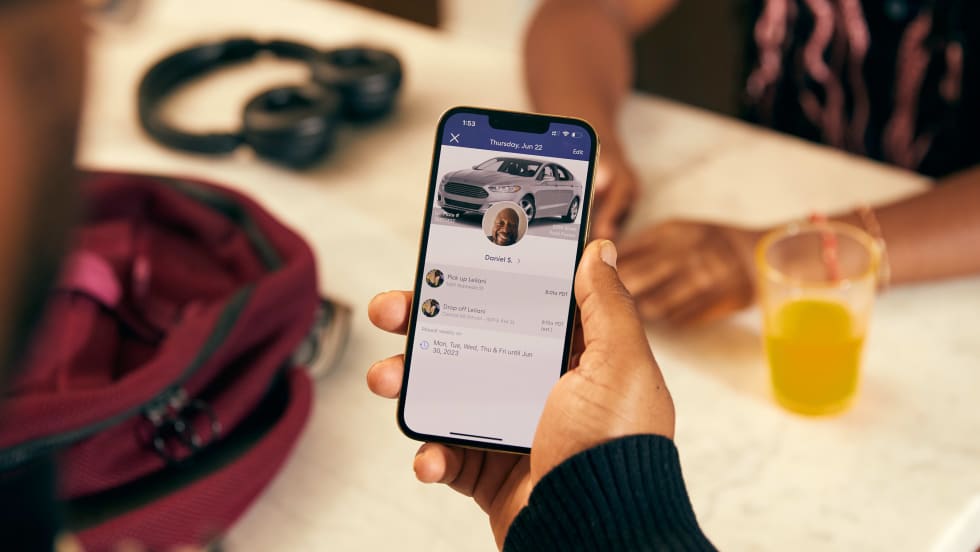
HopSkipDrive Launches New Safety, Driver Consistency Features for 2026-27 School Year
The company’s free ride recording, live ride tracking, and consistent driver assignments aim to improve safety and continuity for diverse student transportation needs.
Read More →
The Most Common Wheelchair Securement Mistakes on School Buses (and How to Fix Them)
Small missteps in wheelchair securement can have serious consequences. Here are 32 tips from experts to reduce risk and increase student safety on the bus.
Read More →
Inside AMF Bruns’ New Showroom: School Bus Securement Solutions Explained
Go inside AMF Bruns America’s new Ohio showroom with Maritza Valentin to see its FutureSafe technology, driver training tools, securement systems, and seating innovations.
Read More →
What AMF Bruns’ New Facility Means for Customers [Video]
Inside AMF Bruns’ new Stow, Ohio, operations: See how expanded space and innovation will enhance customer support and operations.
Read More →
AMF Bruns Expands in Ohio, Investing in Growth and Community
With expanded production space, local investment, and a growing workforce, AMF Bruns is scaling its U.S. presence. Here’s an exclusive first look inside the new Stow, Ohio, HQ.
Read More →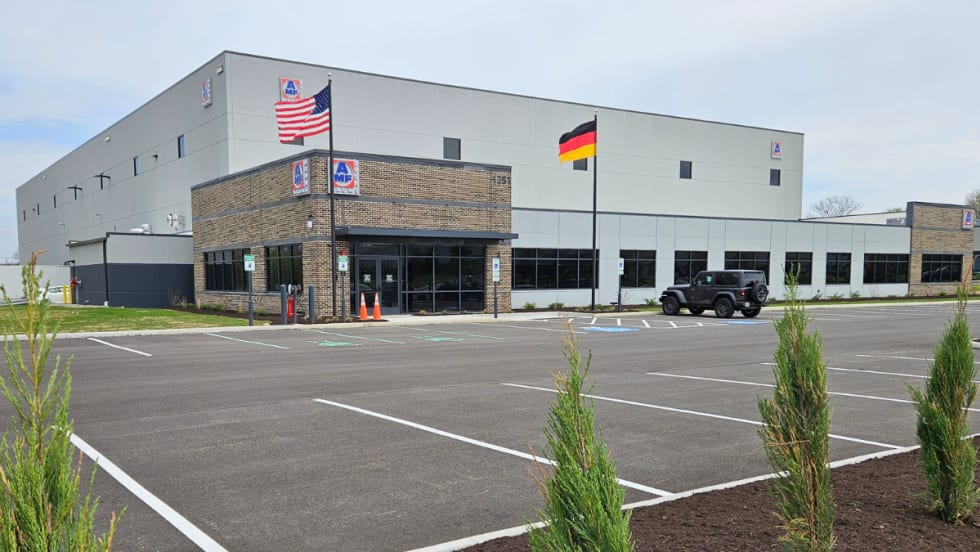
Inside AMF Bruns of America’s New Ohio Manufacturing Facility [Photos]
Take a behind-the-scenes look at AMF Bruns of America’s new 41,000-square-foot Stow, Ohio, headquarters, featuring advanced manufacturing, expanded space, and future-ready mobility solutions.
Read More →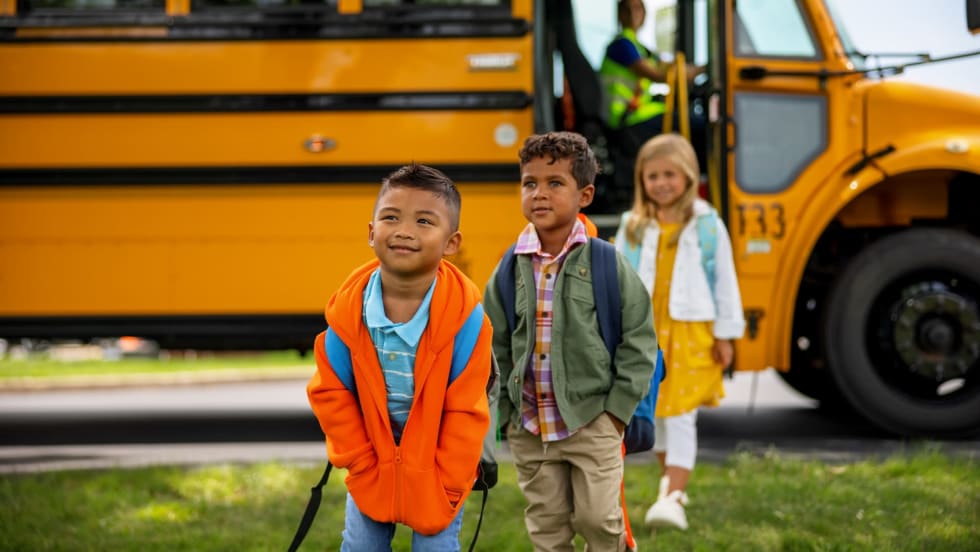
First Student Boosts Student Support in Wichita & Texas
First Student and Wichita Public Schools are using behavioral support strategies to improve student ride experiences, while a separate initiative expands access to after-school programs through a bus donation.
Read More →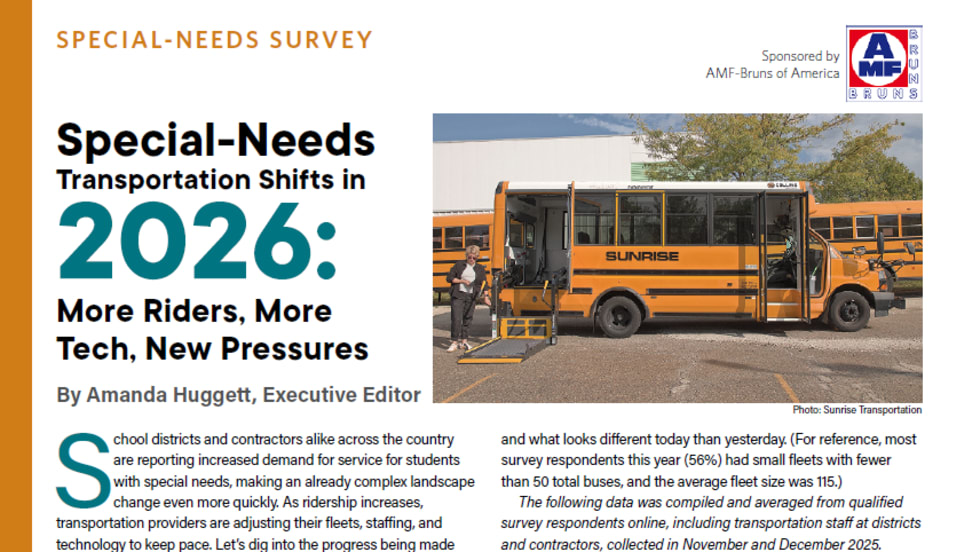
2026 Special-Needs Transportation Survey
What’s changing in special-needs transportation? This year, student transportation operators report a rising need, easing driver shortages, growing tech adoption, and evolving challenges. Sponsored by AMF Bruns of America.
Read More →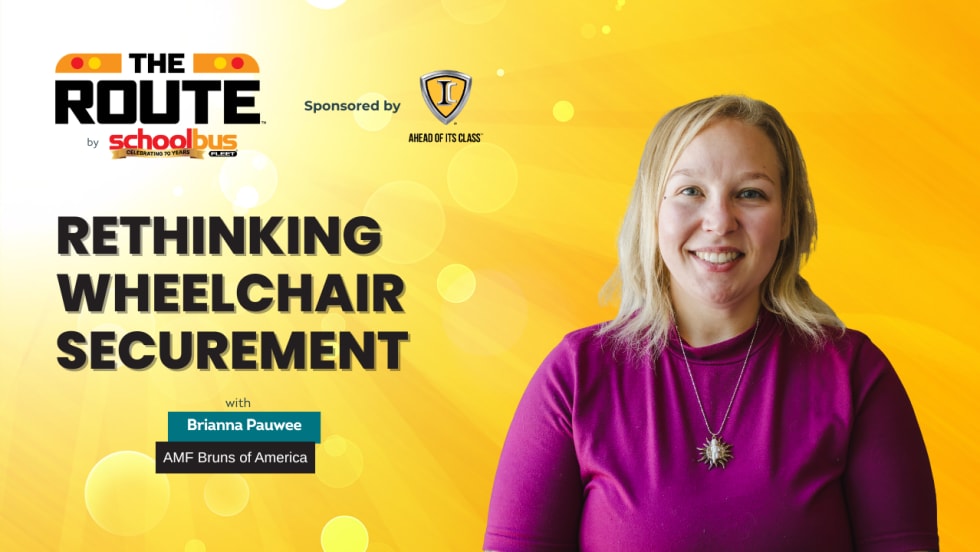
The Lived-Experience Gap in Mobility Tech: An Expert Take on Safe Student Transportation
Brianna Pauwee, a product application specialist at AMF Bruns of America and a wheelchair user, drops in to The Route to share practical securement and training insights, plus the story behind the new “Beyond Mobility” podcast. The Route is sponsored by IC Bus.
Read More →