




Contractors Turn to Partnerships, Tracking to Bolster Security
Partnering with law enforcement, taking advantage of federal security assessments and student tracking are some of the measures contractors are taking to ensure a safer school bus ride.

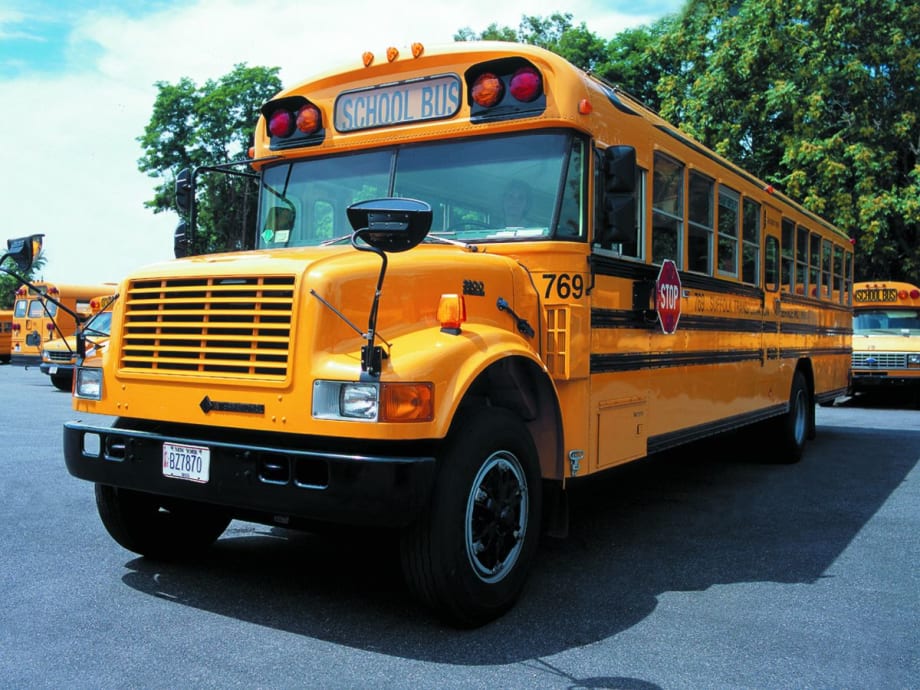
Two years ago, Suffolk Transportation completed the FTA’s Homeland Security Assessment and made several upgrades, the biggest of which was bringing its entire fleet into its yards each night, ending vehicle park outs.
The tragedy in Alabama in January 2013 that led to the shooting death of school bus driver Charles Poland was an eye-opener for many in school transportation that even more emphasis on security was needed.
“It was a real turning point in the history of school bus transportation,” says Dennis Maple, president of First Student. Like other contractors, after that incident, First Student decided to develop even more training tools for drivers to better inform them of how to maintain a security mindset at all times.
Contractors SBF spoke with for this story agree that ensuring the highest level of security on school buses and the corresponding facilities requires a variety of tactics, from staff awareness training to strategic partnerships to student and bus tracking.
Security assessments, training
In 2013, Suffolk Transportation completed the Federal Transit Administration’s Homeland Security Assessment and made several upgrades to its operation, the biggest of which was bringing its entire fleet into its yards each night, ending vehicle park outs, says Phil DiDomenico, chief operating officer of Suffolk Transportation.
“We now have every bus under digital surveillance, behind well-lit locked yards,” he adds. The contractor also employs an outside security firm to help staff members protect the fleet and facilities at night and on the weekends.
Using the Homeland Security facility audit form, Suffolk conducts quarterly audits on all its yards and follows up on issues that are discovered during these audits. Suffolk also conducts criminal background checks on all office staff members, instead of only those in safety-sensitive positions, as a result of the audit.
The contractor also created “My Parking Space,” an employee portal that can be accessed via app or kiosks that have been installed in all driver rooms, allowing employees to communicate any concerns digitally. This system also includes a mass communications web-based component and large screen driver room displays, enabling security alerts to be communicated visually, by text, voice and email to all employees and individual sites.
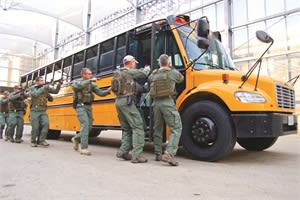
Contractors recommend conducting security trainings with law enforcement similar to the demonstration shown here at the NAPT conference last fall.
Conducting an internal risk assessment of all of its facilities helped The Trans Group identify threats, vulnerabilities and consequences in January 2013. The contractor then volunteered to participate in the Transportation Security Administration (TSA) Highway Baseline Assessment and Security Enhancement Review (BASE) two months later and scheduled another BASE review in February of this year to stay up to date on how to best secure its operations and passengers and limit vulnerability.
“I would highly recommend school bus operators, both public and private, participate in TSA’s BASE review,” says Tim Flood, executive vice president at The Trans Group. “It is an extensive review, and they will be more aware and secure after completing the process.”
The Trans Group also recently participated in a training session developed by the National School Transportation Association (NSTA) Safety and Security Committee and the TSA that includes instructional videos on keeping school buses secure during loading and unloading.
The TSA’s First Observer Program has also helped The Trans Group enhance training for its bus drivers and attendants during their basic course of instruction, including in the safety drills drivers conduct during the year, Flood says. Dispatchers and safety supervisors are also trained on dealing with emergency situations and receive checklists that cover who to contact and other actions to take.
As part of its ongoing enhancement of security measurements, Krapf also successfully completed the TSA Surface Transportation Security Inspection Program, says Shawn McGlinchey, vice president of risk management for Krapf Bus Companies.
“Krapf had great success with the TSA program for school buses,” he says. “Our Chester County operation did an audit with them for our East Coast operations, and it went really well.”
In the fall of 2013, after the tragic event in Alabama, Krapf conducted awareness training with a PowerPoint presentation from the NSTA that came out of the incident, enhanced with additional slides, with its drivers and aides.
In Suffolk Transportation Service’s driver training sessions on how to avoid and identify danger and react to difficult situations, road supervisors and trainers role play under controlled scenarios developed from real-life incidents, such as a bus fire, helping participants prepare and improve reactive skills under choreographed test situations.
First Student’s training tools, which it shared with NSTA, are making a difference, Maple says. “Our bus drivers have reported actions they have taken based on the training that helped to prevent events from escalating and have successfully thwarted harm.”
[PAGEBREAK]

Shawn McGlinchey, vice president of risk management for Krapf Bus Companies, says that partnering with law enforcement is also valuable because it enables first responders to establish familiarity with the framework of the school bus.
Student tracking/GPS
Suffolk is collaborating with SchoolSource Technologies LLC on a new system that identifies children as they enter and leave the bus via passive radio frequency identification (RFID) tags and will also be able to electronically match young riders to their legal guardians at the bus stop, DiDomenico says.
“Our SchoolSource project assists the driver by notifying dispatch if an unauthorized person enters the bus,” DiDomenico explains.
Suffolk also started testing Z-Alert, Zonar’s panic button, which alerts the dispatch department and supervisors of a dangerous situation through a silent alarm, via text message and email, with real-time vehicle location.
Durham and First Student also offer customers the capability to track students with GPS using Zonar’s Z Pass student tracking system. The system can determine if individual students are on a bus at any given time and tracks where students got on and off the bus. The technology may be used alongside GPS to locate children in the event of an emergency, explains Michelle Simon, vice president of safety at National Express, parent company of Durham. The system requires each student to carry and swipe on entry and exit an RFID card that contains an RFID chip.
Partnering with law enforcement
To fortify its increase in awareness training, McGlinchey says Krapf has also partnered with local law enforcement and first responders, such as in a school bus security exercise it conducted with law enforcement last December in Roanoke, Virginia.
The contractor provided the police officers with a bus to use so they could devise a tactical plan for a hypothetical hostage situation.
“We had been fortunate enough to start before the Alabama incident in 2013 to work with law enforcement to enhance awareness training so they’re aware of what we do, and the framework of the school bus,” McGlinchey adds. “Until many members of law enforcement see a school bus up close, they don’t realize that they can gain access through the side windows and the emergency exit.”
McGlinchey advises school bus operators to reach out to their local county or state emergency management services to partner on security training.
“They are a wealth of knowledge, and it’s a cooperative effort,” he says. “They have a lot to learn about the school bus, and they want to learn, and, in turn, they’re a resource for you.”
McGlinchey also recommends donating an old bus if possible to law enforcement so they can reenact accident scenarios and figure out how to cut through a school bus if necessary.
First Student also participates in emergency preparedness drills that are coordinated jointly with Homeland Security, the FBI, and local fire and police departments, allowing the contractor to examine its security measures, Maple says.
Additional measures
Other security measures that The Trans Group has in place include ID badges for all employees and surveillance cameras at all of its facilities.
The contractor’s drivers also incorporate a “security sweep” as part of their daily pre-trip inspection of the bus. They look for tampering to the vehicle, suspicious packages/items, and small but significant details, such as ensuring that the trash can is empty, which eliminates a potential hiding spot for explosives or weapons. Additionally, The Trans Group’s IT department monitors its network and phone systems for potential threats.
Krapf Bus recently enhanced its emergency response radio codes and refreshed staff members on how to use them. Each employee gets a card that lists the codes. For example, a code blue indicates a medical emergency; black, suspicious activity; and yellow, a traffic accident. The reverse side of the card reminds them to review the emergency evacuation guidelines on every trip.
Durham’s safety response guide is used as a reference for local management to address varying types of emergencies, Simon explains. Each location develops site-specific emergency action plan training guides to address situations including, but not limited to, bomb threats, crime in progress and fire.
First Student also developed its own dedicated security team to better manage security issues and further develop best practices, Maple says.
More Safety
Geotab Expands Fleet Safety Tools With Video Coaching, Risk Insights
New safety and video capabilities aim to help fleet managers assess risk, support drivers, and take targeted action through video coaching, red-light violation detection, and more.
Read More →
How to Build a Better School Bus Driver Training Program
Is it time to strengthen your driver training? Here’s how to pick the right talent and improve recruitment, retention, and safety. This video is brought to you by IC Bus.
Read More →
Recent School Bus Accidents Leave 2 Dead, 2 Injured
Four school bus crashes in Florida, Illinois, and Georgia highlight risks in transportation lots, at bus stops, and during student loading and unloading.
Read More →

When Every Second Matters, Clarity Keeps Routes Moving
From routine delays to urgent incidents, strong communication practices help drivers, dispatchers, schools, and families respond with confidence.
Read More →
What Happens When a School Bus Catches Fire — and What Can Help
School bus fires are rare but can be devastating. Learn how advances in fire suppression and asset protection help fleets detect fires earlier, reduce damage, and improve safety.
Read More →
Geotab Launches Tool to Help Fleets Investigate Road Incidents
Geotab Investigations combines telematics data, video, documents, and other evidence to help fleets reconstruct incidents, resolve claims, and determine what happened.
Read More →
Texas Sixth Grader Wins 2026 National School Bus Safety Poster Contest
Sai Darshana Yekolu of Moseley Middle School in Prosper, Texas, was named the newest winner for her artwork, bringing the theme of “Safe Rides, Everyday Heroes” to life.
Read More →
Doing More With Less: How Transportation Directors Can Prioritize Safety Amid Budget Uncertainty
With diesel prices soaring and nearly one-third of transportation directors expecting budget cuts, maintaining student safety has never been more challenging. Download this guide to learn how leading districts are prioritizing risk, funding critical safety technology, and building stronger budget cases with data.
Read More →
Walton County Schools Adds Gatekeeper Stop-Arm Enforcement System
The Florida district will deploy Gatekeeper’s updated Student Protector technology, which now incorporates AI to improve video evidence.
Read More →
How To Build a More Secure School Bus Yard During and After Hours
As thefts and overnight security threats continue, school transportation leaders are combining stronger operational practices with AI-enabled surveillance to better protect buses, facilities, and staff.
Read More →