




Choosing New Bus Lift Requires Proper Grounding
Before installing an in-ground or surface lift, bus operators need to know the pros and cons of each type.
At Gwinnett County Public Schools in Lawrenceville, Ga., Jim Miranda, the district's fleet manager, knew it was time to replace three of his in-ground lifts when the locking mechanisms started to fail. "It was becoming unsafe," he says. "They were installed in 1976 and the pistons were getting rusty." Like many school bus operators, Gwinnett County had to decide whether to replace its aging lifts with new in-ground models or to switch to surface lifts. In this case, Miranda chose surface lifts, specifically, parallelogram lifts manufactured by Advantage Lift Systems in San Diego, Calif. Three of these lifts were installed at the district's main shop last summer, and Miranda has been pleased with them. "We've had very good luck with them," Miranda says. Because the lifts are above-ground, any leaks of hydraulic fluids are easily discovered and cleaned up. Bob Gordon, lead mechanic at the School Board of Volusia County's bus shop in New Smyrna, Fla., says safety is a major factor in choosing a vehicle lift. He says safety locks on the parallelogram lift in his shop are worth the additional inconvenience of the lift's design. "It's cumbersome walking around these two long platforms," Gordon says, "but it's something you have to put up with."
Fear of contamination
Terry Hiatt, shop foreman for the Parker facility at Douglas County (Colo.) schools, chose a surface lift because of environmental concerns. "This building is right on the creek bottom, so we felt it would be best to stay above-ground and not have to deal with leaking oil and the EPA," he says. Hiatt selected a mobile column surface lift manufactured by ARI-Hetra in Fairfax, Va. "The nice thing is that they're portable," he says. Hiatt's shop, which maintains 72 school buses, has eight stalls and often the posts are moved from stall to stall. "They get used every day," Hiatt says. "I only wish we had another set of them." The mobile column lifts can be moved within the garage, and they can also be easily moved to a new garage. "If you're contemplating moving to another site, you can take them with you," says Jim Stark, lead mechanic at Fallbrook (Calif.) Union Elementary School District, which operates 34 buses.
In-grounds still popular
Despite concerns about contamination of the environment, some school bus operators prefer the in-ground lifts because they provide free access to the wheels and the undercarriage. Stark says wheel and brake work is easier using the in-ground lift than the surface lift. Although jack stands allow the column lifts to be removed from under the tires, "it's a lot of extra work," Stark says. Bob Murphy, vehicle maintenance supervisor at Douglas County School District in Minden, Nev., says he's happy with his three in-ground lifts, even though one had an underground leak that had to be mitigated. "Other than that, they are superb," he says.
At Perry (Ohio) Public Schools, mechanic Larry Bonnema says his 19-year-old Weaver in-ground lift is still going strong. "We're tickled with our twin-post," he says. "We've had it since 1979 and never had to do anything to the motor." Until the late 1970s, in-ground lifts were the mainstay of the automotive service industry. In the 1980s, surface lifts began to make significant inroads. These days, sales of surface lifts far surpass their in-ground counterparts. "The in-ground lifts are dinosaurs," says Steve Perlstein, sales and marketing manager for Mohawk Lifts in Amsterdam, N.Y. "It's old technology." Perlstein says pricing is a major advantage of most surface lifts over the in-grounds. His company's four-post surface lifts, he says, can be purchased for less than $10,000, while an in-ground lift might go for as much as $20,000 to $30,000.
More Maintenance
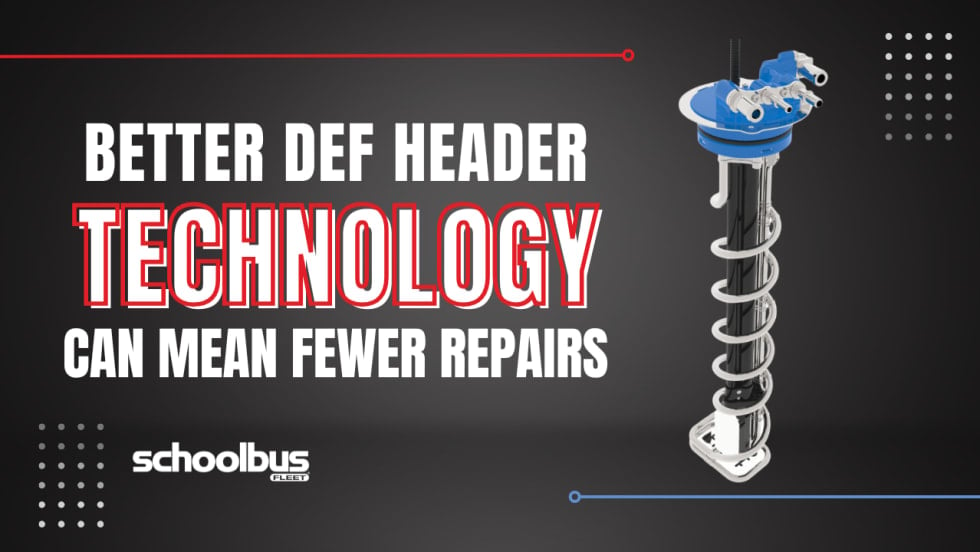
The Evolution of DEF Header Technology: What School Bus Operations Should Know at Replacement Time
See what school bus fleets should consider when replacing DEF headers to improve reliability, reduce repeat repairs, and control maintenance costs.
Read More →
The Essential Guide to School Bus Maintenance and Student Safety
Your district's buses carry students to school every day. This guide shows how predictive maintenance powered by fleet data helps keep buses reliable, drivers accountable and students safer from the first bell to the last stop.
Read More →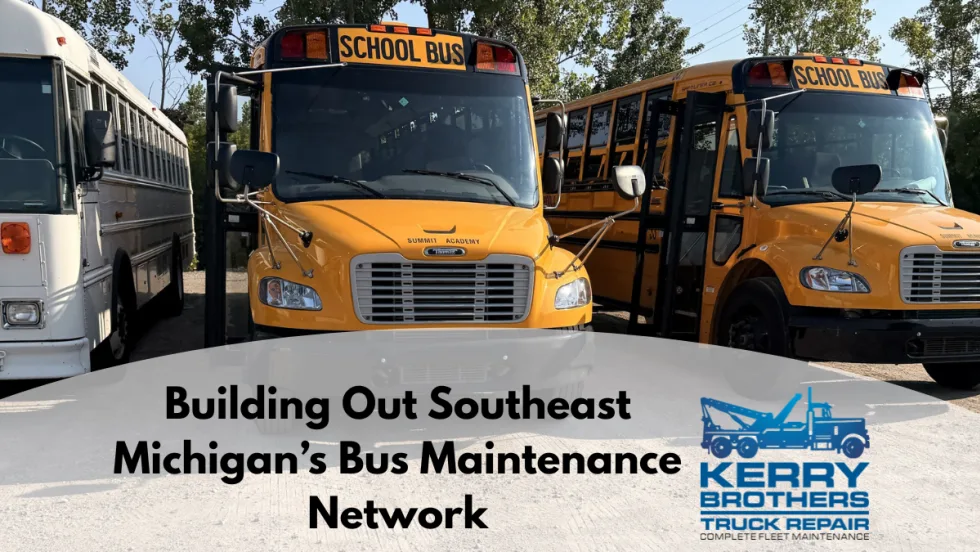
Kerry Brothers Grows Michigan School Bus Repair Network
The acquisition of Downriver Truck and Bus expands Kerry Brothers’ school bus maintenance footprint across southeast Michigan, adding repair capacity, diagnostic resources, and state inspection support.
Read More →
Noregon Introduces CAN Bus Diagnostic Tool, Expands JPRO Features
CAN Mentor and the latest JPRO update aim to simplify vehicle network diagnostics and improve repair efficiency for technicians of all experience levels.
Read More →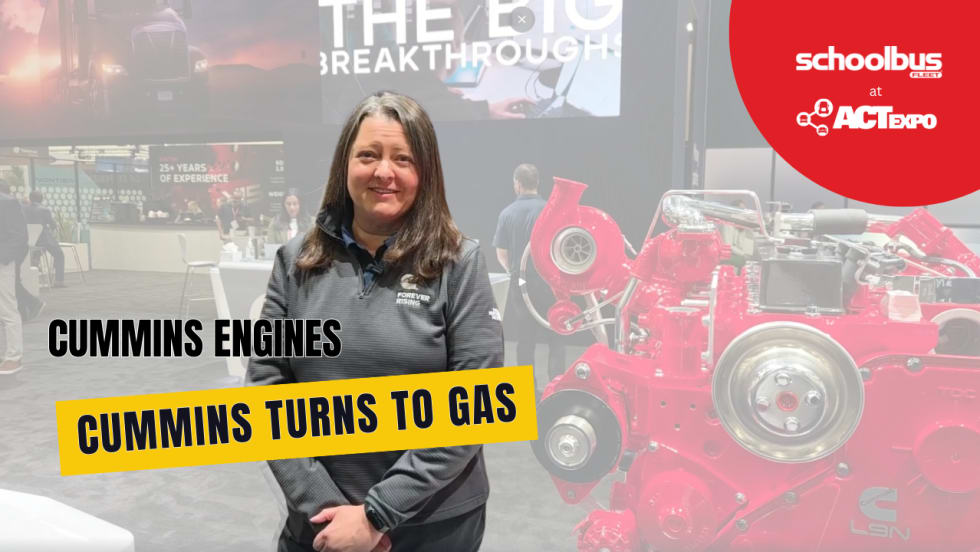
Cummins on Smarter, Simpler Engine Innovation
Cummins discusses its first-ever gasoline engine for school buses, EPA 2027, and why bus fleets still want durable, simpler internal combustion options.
Read More →
Report: 72% of Diesel School Buses Now Use Advanced Low-Emission Engines
New data shows advanced low-emission diesel technology continues expanding across school bus fleets, even as electric bus adoption gains momentum.
Read More →
Vampire Tools' CAIMAN 7.5-Inch Multi-Purpose Screw Extractor Long-Nose Pliers with Crimper
Vampire Tools introduced the VAMPLIERS Caiman 7.5-inch multi-purpose pliers, combining screw extraction, cutting, crimping, and gripping functions into a single tool designed for fleet maintenance professionals.
Read More →
How Advanced Diagnostics Helps Bus Fleets Stay Ahead of Repairs
Chat with Noregon’s Kevin Smallhorn at ACT Expo about bus diagnostic tools, telematics integration, CNG maintenance support, and strategies to help reduce downtime and improve uptime.
Read More →
How School Bus Fleets are Getting Ahead of Breakdowns
Don’t let bus downtime wear you down. Here’s how bus operators are shifting from manual processes to AI-powered, data-driven maintenance systems for improved reliability and safety.
Read More →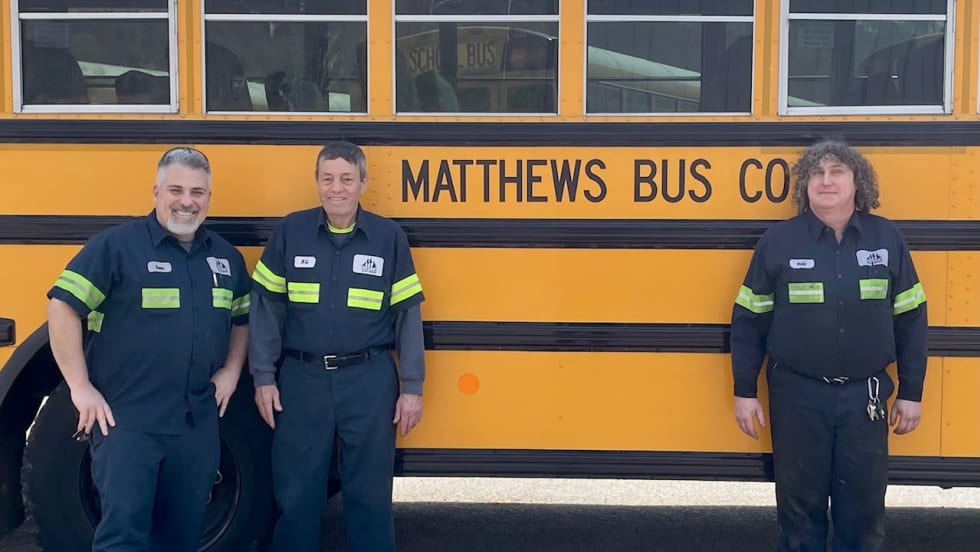
Pennsylvania School Bus Maintenance Team Praised for Dedication to Safety
Matthews Bus Company’s West Jefferson received a letter of commendation from the Pennsylvania State Police for their fleet inspections.
Read More →