




Child-check devices: a vital reminder
To protect kids from being left stranded, drivers have to carefully check their bus. Electronic systems can help keep that duty from being neglected.

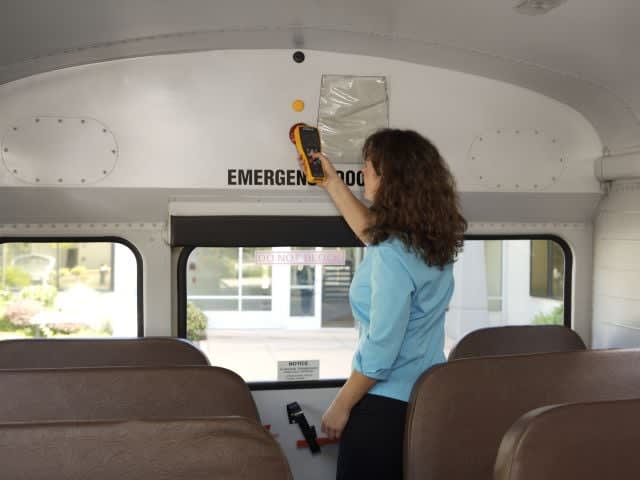
With Zonar’s EVIR system, drivers scan a tag at the back of the bus as part of their vehicle inspection.
When it comes to making sure that no students are left on board, school bus drivers have a vital responsibility after every run: walk to the back of the bus and check for sleepers.
Yet students continue to be left on school buses, sometimes not being discovered for several hours. Young children can be stranded on a very hot or very cold bus, or they might disembark and wander off in an unknown area. Clearly, the stakes are high.
While there may be school bus drivers out there who would intentionally avoid walking to the back of the bus to check for students, even conscientious drivers can be susceptible to getting distracted by a change in routine. A reminder to check the bus serves everyone well.
There is a variety of electronic systems on the market that can provide just such a reminder, requiring drivers to go to the back of the bus to push a button or scan a tag.
Of course, it’s still up to the driver to keep his or her eyes peeled during that walk along the bus aisle.
Driver reminder and more
Child Check-Mate System’s flagship device, the EP 1, positions a button at the back of the bus that drivers have to press at the end of a run to disarm the system.
The newer EP 2 allows for several features in addition to the driver reminder: the Theft-Mate accessory, a speaker and a key fob.
The speaker gives the driver voice commands to perform the child check. The key fob allows technicians and managers to board the bus without setting off the alarm.
Theft-Mate uses motion detection to scan the interior of the bus — both for students and for intruders — after the driver has left.
“Within the first hour after the check has been performed, if there’s a child left on the bus and there’s movement, the system will ask the child to stay on the bus and will let him or her know that someone will be with them shortly,” says Gord Both, president of Child Check-Mate System. “After the first hour, it turns into a vandal deterrent.”
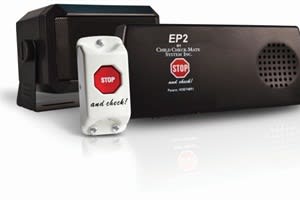
Child Check-Mate’s EP 2 system allows for several features in addition to the driver reminder, including GPS compatibility.
The EP 2 can also be connected to a GPS system, allowing it to give the transportation office instant messages if an alarm goes off, as well as other updates.
“No. 1, you need to know if the system is in operation each day, and it tells you that,” Both says. “No. 2, it tells you when the checks are done. No. 3, it tells you if it goes off.”
Electronic inspection tool
Zonar’s Electronic Vehicle Inspection Report (EVIR) system can also help prevent children from being left on school buses.
A radio-frequency identification (RFID) tag is placed at the back of the bus. Before and/or after a run, the driver has to walk to the back of the bus and scan the tag there as part of a comprehensive vehicle inspection.
“When the driver scans the tag, the date and time are recorded, so you know the exact time it was checked,” says Andrew Johnson, director of marketing for Zonar. “The fleet manager can run a report confirming that the child check was completed.”
For the inspection, drivers use either Zonar’s flagship 2010 EVIR hand-held reader or the new 2020 tablet, which offers numerous additional features, including an hours-of-service application, instant driver feedback, fuel efficiency tracking, two-way messaging and advanced navigation.
[PAGEBREAK]
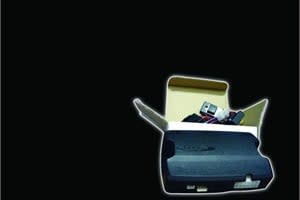
CRS Electronics’ child reminder gives school bus operations a number of options in deciding what will arm the system.
Various arming options
CRS Electronics’ child reminder system gives school bus operations a number of options in deciding what will arm the system.
“It can range from simply starting the vehicle, to starting the vehicle and letting it run a certain period of time, to also running the warning lights or also using the brakes,” says Scott Riesebosch, president of CRS Electronics. “These are all different methods of arming the system, which gives school districts flexibility.”
Riesebosch notes that this flexibility can help avoid hindering technicians in their duties.
“They’re not having to walk to the back of the bus when they’re trying to do routine maintenance,” he says. “If it’s too burdensome for mechanics, they’ll disable it, and we don’t want that.”
Another option on CRS’ system is to have the headlights flash, in addition to the horn honking, if a driver fails to walk to the back of the bus and disarm the system.
Riesebosch notes that there is also a quick way to ensure that the child reminder system is functioning: Open and close the service door twice, and the system will give a couple of honks to confirm that it’s operating properly.
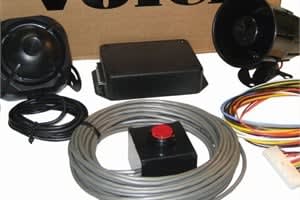
KiddieVoice, from ATWEC Technologies, uses verbal commands to instruct the driver in checking the vehicle.
Locking key system
ATWEC Technologies’ child-check device, KiddieVoice, uses verbal commands to instruct the driver in checking the vehicle.
The system is ignition based — turning the bus on and off activates it.
“A voice comes on: ‘Please check the vehicle,’” says Alex Wiley, owner of ATWEC Technologies. “That message will cycle continuously until the driver goes to the rear of the vehicle, where there’s a childproof locking key system. That ensures that the driver is the one [disarming] it, instead of having a kid do it.”
If the system isn’t disarmed, an electronic siren will sound.
“Nothing beats a physical inspection,” Wiley says. “We’re going to force you to do that inspection.”
More Safety
Illegal School Bus Passing Drops 24% in New York Districts
With fewer than 5% of citations involving repeat offenders, Westchester County officials said enforcement, education, and community partnerships are helping change driver behavior.
Read More →
School's Back. Here's What Happened to Traffic, Speeding & Distraction
What happens to traffic when school resumes? New data analysis examines changes in distracted driving, congestion, and speeding around schools.
Read More →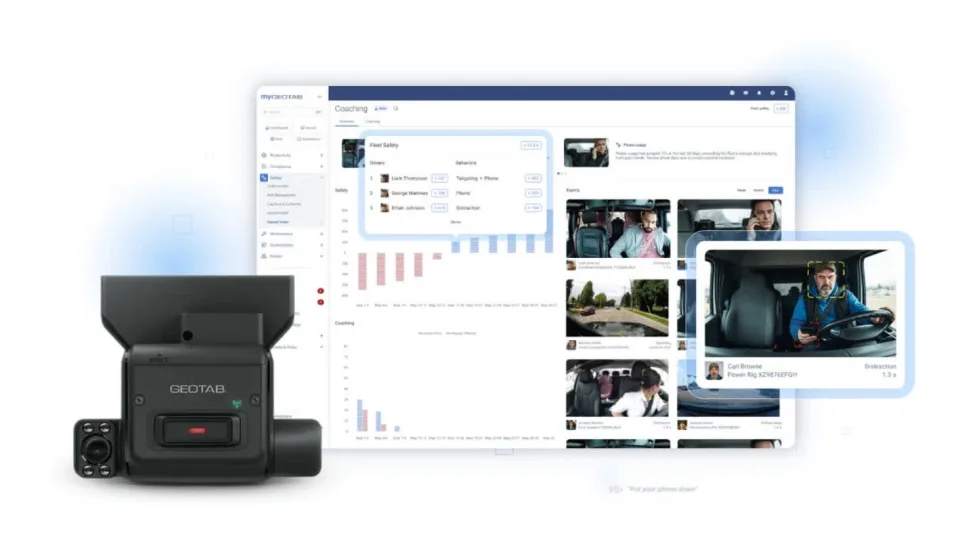
Geotab Expands Fleet Safety Tools With Video Coaching, Risk Insights
New safety and video capabilities aim to help fleet managers assess risk, support drivers, and take targeted action through video coaching, red-light violation detection, and more.
Read More →

How to Build a Better School Bus Driver Training Program
Is it time to strengthen your driver training? Here’s how to pick the right talent and improve recruitment, retention, and safety. This video is brought to you by IC Bus.
Read More →
Recent School Bus Accidents Leave 2 Dead, 2 Injured
Four school bus crashes in Florida, Illinois, and Georgia highlight risks in transportation lots, at bus stops, and during student loading and unloading.
Read More →
When Every Second Matters, Clarity Keeps Routes Moving
From routine delays to urgent incidents, strong communication practices help drivers, dispatchers, schools, and families respond with confidence.
Read More →
What Happens When a School Bus Catches Fire — and What Can Help
School bus fires are rare but can be devastating. Learn how advances in fire suppression and asset protection help fleets detect fires earlier, reduce damage, and improve safety.
Read More →
Geotab Launches Tool to Help Fleets Investigate Road Incidents
Geotab Investigations combines telematics data, video, documents, and other evidence to help fleets reconstruct incidents, resolve claims, and determine what happened.
Read More →
Texas Sixth Grader Wins 2026 National School Bus Safety Poster Contest
Sai Darshana Yekolu of Moseley Middle School in Prosper, Texas, was named the newest winner for her artwork, bringing the theme of “Safe Rides, Everyday Heroes” to life.
Read More →
Doing More With Less: How Transportation Directors Can Prioritize Safety Amid Budget Uncertainty
With diesel prices soaring and nearly one-third of transportation directors expecting budget cuts, maintaining student safety has never been more challenging. Download this guide to learn how leading districts are prioritizing risk, funding critical safety technology, and building stronger budget cases with data.
Read More →