




Bus Configurations Can Create Obstacles for Special-Needs Evacuations
I recently had the opportunity travel to many states throughout the country to present on emergency evacuation methods for students with special needs...
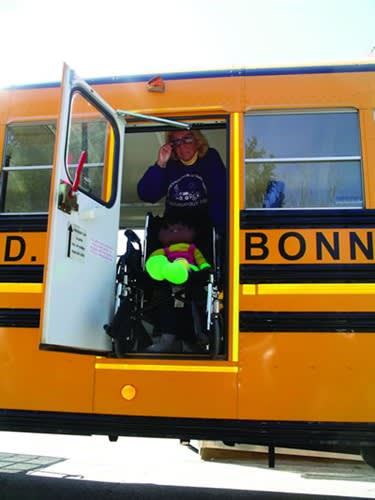
A student in a wheelchair cannot be evacuated from an emergency exit that is 24 inches wide. A manual wheelchair needs at least 30 inches of clearance.
I recently had the opportunity travel to many states throughout the country to present on emergency evacuation methods for students with special needs.
At the workshops, I was provided with different types of school buses, and I performed evacuation drills with help from participants.
During the drills, we ran into several problems that led me to become increasingly concerned about the logistical configuration of the buses that I have been working on.
Creating an evacuation plan is key
Before I relay my findings and subsequent concerns, I must mention that establishing an evacuation plan for special-needs students before they board a school bus is essential to ensure that they remain safe in the event of an emergency, and key members of the district’s transportation staff should be involved in developing the plans. These individuals include the transportation supervisor, the bus driver and attendant, the nurse (if a nurse normally rides with a particular student), the occupational and physical therapists that work with the student, and local emergency teams.
Occupational and physical therapists are important members of a district’s team, as they are familiar with the physical deformities, muscle weaknesses and abnormal muscle activity of individual students. They also understand how each student’s equipment (such as a wheelchair) operates, they know the weight of the equipment and of the student, and they can identify whether the student should be evacuated while he or she is still in the wheelchair or if the student needs to be lifted out of the wheelchair and transferred to an evacuation transporter.
The evacuation plan for each student should be written and shared with all of the individuals who are involved in his or her transport.
Emergency evacuation methods
The most logical way to evacuate special-needs students during an emergency — particularly if their wheelchairs are extremely heavy or custom-molded — is with the bus’ wheelchair lift.
If, however, there is a mechanical problem with the lift or if the entire right side of the bus is blocked because of the crash and there is no way to use the lift, other evacuation methods must be employed.
Some students, due to their physical deformities and muscle movements, are safer being evacuated from the bus in their wheelchair. Other students who travel on the bus seated in a motorized wheelchair would need to be transferred to an evacuation transporter and then manually moved to the bus’ emergency exit.
As a result of performing the emergency evacuation drills, I have found that to successfully evacuate students using these methods, there must be sufficient space within the bus to get to the emergency exit and sufficient width to transport students through the emergency exit.
The first logistical configuration
For the drill at the first workshop I attended, I was provided with a rear-engine, transit-style bus. The lift was on the right ride of the bus, in the middle. On the left side of the bus, an emergency door was located slightly behind the lift.
The emergency scenario that the participants and I created was that a crash had occurred, the lift was blocked and a student in a manual wheelchair needed to be evacuated. It had been predetermined that due to the student’s deformities and abnormal muscle movements, it would be best to evacuate him in his wheelchair.
Because the engine was located at the rear of the bus, there was no rear emergency door, and it was not possible to safely evacuate the student from the bus’ rear window. We then turned to the emergency exit on the left side of the bus. The bus had the required 30-inch aisle to get to that exit; however, the width of the emergency exit itself was only 24 inches. A 24-inch-wide emergency exit does not accommodate a wheelchair-bound student — a manual wheelchair needs approximately 30 inches of clearance.
Our next option was to transfer the student from his wheelchair to an evacuation transporter and pull the student out of the bus. While employing this method, another logistical nightmare developed.
The wheelchair was located directly in front of the left emergency exit door. We lifted the student and lowered him to the evacuation transporter, but as we began to pull him toward the emergency door, we realized that we had no room to turn the student, as there was also an occupied wheelchair tiedown positioned directly across from the door. Valuable time was wasted as we moved that wheelchair.
We then had to angle the evacuation transporter so that it was lined up with the emergency exit door. (It is important to remember that if this was a real emergency situation, we could be pulling a student who weighs more than 125 pounds, making our effort to align him or her with the emergency exit extremely difficult.)
The next problem we encountered stemmed from the emergency exit door. By design, it opened perpendicular to the bus. Best practices recommend that two people perform the “drag and carry” evacuation method. However, the fact that the emergency door only opens 90 degrees minimizes the amount of space available for two people outside the bus to receive a student being pulled from it. Thus, we made the following conclusions:
A 24-inch emergency exit with a door that only opens 90 degrees hinders the evacuation of a student who is still in his or her wheelchair.
If a student has to be removed from the bus on a transporter, there is a lot of lifting, aligning and uneven carrying that must be done to accomplish the evacuation. Maneuvering a large person in a small, confined space puts the student and the transportation team at risk for injury.
Additional logistical configurations
For the evacuation drills at the second and third workshops I attended, the bus’ wheelchair lift was located in the front section of the bus to ensure a more stable ride for the students. The emergency exit was on the left, with a 30-inch aisle leading to the exit’s 24-inch doorway.In both drills, there was a 30-inch rear emergency exit; however, the bus had 39-inch seats on both sides, beginning from behind the left emergency exit, leaving room for an only 12-inch aisle. A student still in his or her wheelchair could never be maneuvered through a 12-inch aisle.
I tried pulling a participant who weighed 102 pounds down the 12-inch aisle on an evacuation transporter to find out whether it was possible. Due to her petite size, it was possible, but it took some time — I had to slow the process to ensure that I didn’t injure my “student” by bumping her shoulders against the legs of the bus seats.
But how many 102-pound students will we be evacuating? The students who need to be removed from a bus by means of the drag method are usually larger students who can weigh up to 225 pounds. These students would never fit through a 12-inch aisle.
The design of the buses that were used for the second and third drills indicates that a student would have to be evacuated by means of a wheelchair lift during an emergency. But again, what if the lift was blocked? Or what if there was a fire on the bus and operating the lift mechanically depended upon the vehicle’s engine being turned on? In most cases, this would mean that the lift would have to be operated manually.
Having only one way to evacuate students who are in their wheelchairs or who must be dragged out of the bus is unsafe.
The front door approach
During one of the workshops, the participants and I decided to try to drag someone out of the bus from its front door. (We chose to try this method based on the assumption that the wheelchair lift cannot be used.) In this scenario, the wheelchair was facing forward, meaning that when we lifted the student onto the evacuation transporter, the student’s head was toward the back of the bus.We pulled the student forward but had problems maneuvering the transporter so that we could evacuate the student headfirst down the stairs of the bus. There was little room to turn the transporter, and we faced having to lift and turn the student around in the driver’s section to be able to pull her out the door headfirst. This is definitely not something that could be done in an emergency situation, when time is critical.
Moreover, our “student” was only 102 pounds and about 5 feet 2 inches — hardly the type that would require a drag method evacuation. I would not recommend carrying someone larger down school bus steps. It took six participants to ensure that our “student” did not get injured.
School bus manufacturers weigh in
Harvey Boatman, a pupil transportation consultant from Maine, attended one of the workshops, and since its completion, he and I have been speaking with officials from the various school bus manufacturers about the problems I encountered during the evacuation drills.The manufacturers shared with us that they have available a left emergency door that has the 30 inches necessary to evacuate a student still seated in his or her wheelchair. It appears that some school systems, in their need to provide maximum capacity on their buses, choose the standard, narrower left-side emergency exit door, not recognizing the need for a wider door.
Given that the standard door does not allow room for a student in a wheelchair to be evacuated, there is a definite need for all of us involved in the transport of special-needs students to insist that school buses be equipped with a 30-inch left emergency exit door in the future.
The manufacturers also posed a possible solution to the problems that arise because the emergency exit door only opens 90 degrees. They suggested designing a door that opens and locks in position at a greater than 90-degree angle from the side of the bus. This would give the people who are receiving a student in a wheelchair or on an evacuation transporter more space in which to properly position themselves to support the student’s weight and lower him or her to the ground.
The 12-inch aisle problem is contingent upon a bus’ specifications. Those involved in spec’ing buses for students with special needs cannot allow a rear emergency exit to essentially be blocked because there is an aisle that is only 12 inches wide that leads to it. The 12-inch aisle effectively eliminates one’s ability to do an effective, time-sensitive drag evacuation on a student who is heavier than 100 pounds.
Take action
We cannot jeopardize students’ lives during an emergency. All students deserve at least two emergency exits on their school bus because, as we discovered, there would be no way to evacuate students if the bus’ wheelchair lift were non-functional.Moreover, we can no longer restrict our thinking to capacity issues. Is an extra row of seating as valuable as the life of a student with special needs?
Major problems have been identified. It is now up to the individuals who work in special-needs transportation to make our voices heard. We need to talk to the administrators and supervisors in our transportation departments and invite them to an evacuation drill so they can witness first hand that spacious bus aisles and wider emergency exits are needed to effectively and safely evacuate special-needs students.
Those of us involved in the writing committees for the National Congress on School Transportation (NCST) have already started a dialogue to include specific changes in the 2010 document. Talk with your state NCST delegates, and make sure they understand the importance of upgrading school bus specifications to facilitate safer emergency evacuations.
Jean Zimmerman is supervisor of occupational and physical therapy at the School District of Palm Beach County in West Palm Beach, Fla.
More Special Needs Transportation
Kelli Goterba Named 2026 Special-Needs School Bus Driver of the Year
Through building trust with students and strengthening her transportation team, Goterba exemplifies the impact special-needs drivers can make.
Read More →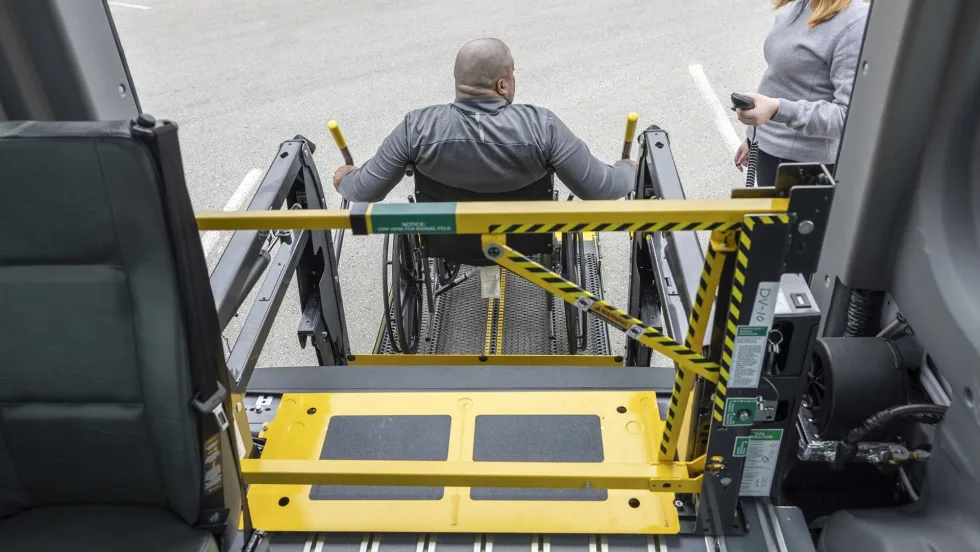
BraunAbility Introduces New Safety Barrier for Wheelchair Lifts
LiftSentinel is designed to add another layer of protection during wheelchair loading and unloading and can be retrofitted to many existing commercial lift installations.
Read More →
HopSkipDrive Launches New Safety, Driver Consistency Features for 2026-27 School Year
The company’s free ride recording, live ride tracking, and consistent driver assignments aim to improve safety and continuity for diverse student transportation needs.
Read More →
The Most Common Wheelchair Securement Mistakes on School Buses (and How to Fix Them)
Small missteps in wheelchair securement can have serious consequences. Here are 32 tips from experts to reduce risk and increase student safety on the bus.
Read More →
Inside AMF Bruns’ New Showroom: School Bus Securement Solutions Explained
Go inside AMF Bruns America’s new Ohio showroom with Maritza Valentin to see its FutureSafe technology, driver training tools, securement systems, and seating innovations.
Read More →
What AMF Bruns’ New Facility Means for Customers [Video]
Inside AMF Bruns’ new Stow, Ohio, operations: See how expanded space and innovation will enhance customer support and operations.
Read More →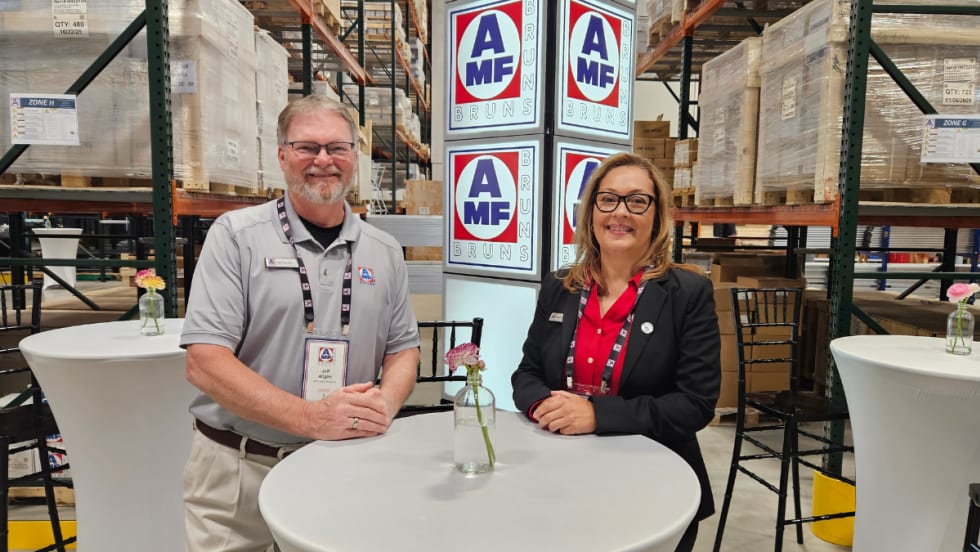
AMF Bruns Expands in Ohio, Investing in Growth and Community
With expanded production space, local investment, and a growing workforce, AMF Bruns is scaling its U.S. presence. Here’s an exclusive first look inside the new Stow, Ohio, HQ.
Read More →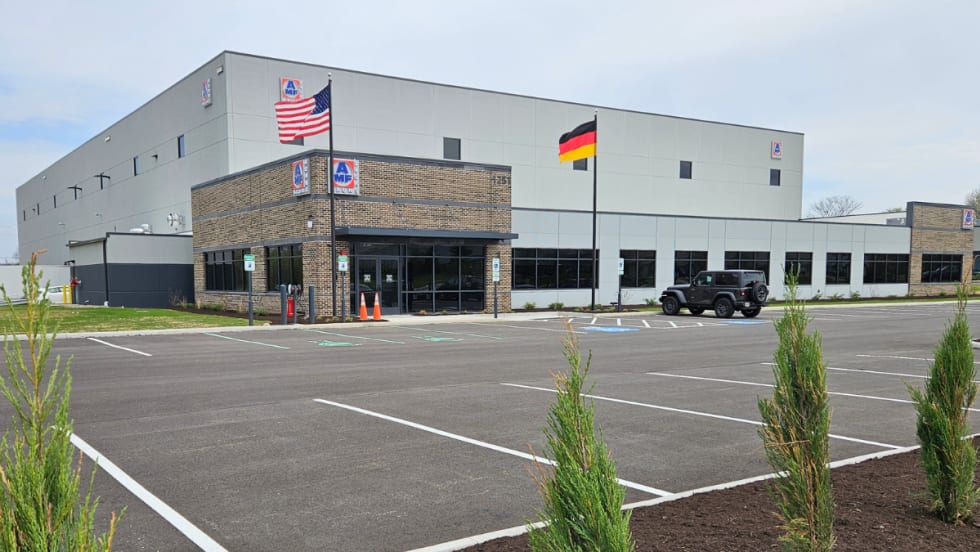
Inside AMF Bruns of America’s New Ohio Manufacturing Facility [Photos]
Take a behind-the-scenes look at AMF Bruns of America’s new 41,000-square-foot Stow, Ohio, headquarters, featuring advanced manufacturing, expanded space, and future-ready mobility solutions.
Read More →
First Student Boosts Student Support in Wichita & Texas
First Student and Wichita Public Schools are using behavioral support strategies to improve student ride experiences, while a separate initiative expands access to after-school programs through a bus donation.
Read More →
2026 Special-Needs Transportation Survey
What’s changing in special-needs transportation? This year, student transportation operators report a rising need, easing driver shortages, growing tech adoption, and evolving challenges. Sponsored by AMF Bruns of America.
Read More →